Designing a Model of Marital Infidelity Proneness Based on Domestic Violence and Marital Distress with the Mediating Role of Marital Burnout
DOI:
https://doi.org/10.61838/kman.aftj.4399Keywords:
marital infidelity proneness, domestic violence, marital distress, marital burnout, structural equation modelingAbstract
Objective: The present study aimed to design and test a structural model of marital infidelity proneness based on domestic violence and marital distress, with marital burnout serving as a mediating variable.
Methods and Materials: This research employed a descriptive–correlational design using the structural equation modeling (SEM) approach. The statistical population included married women residing in Shahriar County in 2024 who had at least five years of shared marital life. Using multi-stage cluster sampling, 240 participants were selected from local cultural centers and mosques. Data were collected using the Polat Marital Infidelity Proneness Questionnaire (2006), the Domestic Violence Against Women Questionnaire by Mohseni Tabrizi et al. (2012), and Pines’s Marital Burnout Questionnaire (2004). Data analysis was performed using descriptive statistics, Pearson correlation, multiple regression, and SEM with SPSS 29 and LISREL 8.8.
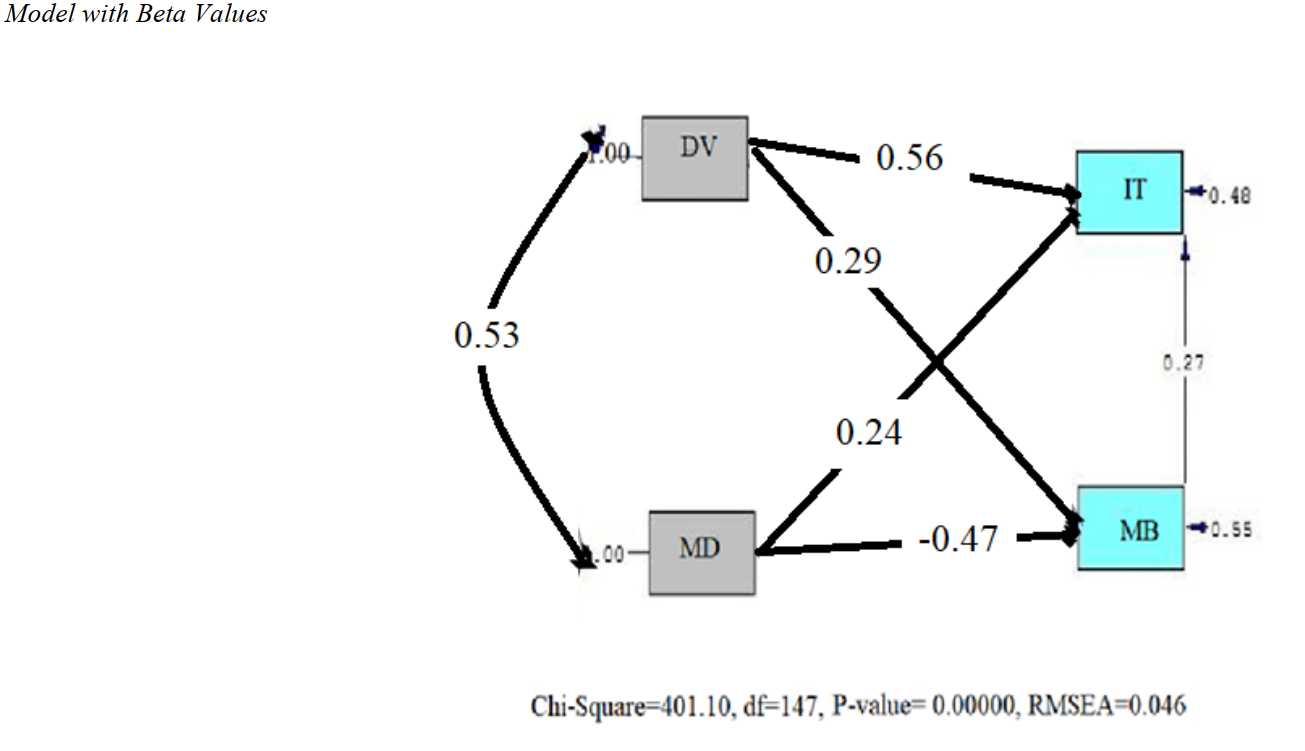
Findings: Confirmatory factor analyses supported the construct validity of all study measures. Structural modeling results indicated that both domestic violence (β = 0.29, p < .05) and marital distress (β = 0.29, p < .05) significantly predicted marital infidelity proneness. Marital burnout had a significant direct effect on infidelity proneness (β = 0.27, p < .05) and mediated the relationship between both domestic violence and marital distress with infidelity proneness. Sobel test results confirmed the mediation of marital burnout in both models (T = 2.54 for domestic violence; T = 2.74 for marital distress), with variance accounted for (VAF) estimates of 0.274 and 0.279 respectively, indicating partial mediation. Model fit indices (χ²/df = 2.37; RMSEA = 0.046; CFI = 0.90; NFI = 0.94; GFI = 0.87) confirmed a good model fit.
Conclusion: Addressing violence, conflict, and burnout reduction strategies in couples’ interventions may serve as effective preventive approaches to reduce infidelity tendencies and promote marital stability.
Downloads
References
Abedi Naghandar, M., Zanganeh Sani, H., & Mohammadbigi, M. (2023). The relationship between emotion regulation and communication skills with the tendency to marital infidelity. 12th International Conference on New Research Achievements in Educational Sciences, Psychology and Social Sciences, Tehran.
Chopani, M., Fatehizadeh, M., Asanjirani, F., & De Castro Correa, A. M. (2021). Existential phenomena in men's marital infidelity. Family Research, 17(3), 483-513. https://doi.org/10.52547/JFR.17.3.483
Darabi, H. (2021). Predicting extramarital relationships based on sexual satisfaction, marital commitment, and marital burnout in couples aged 20 to 40 in Mashhad city Shahand Institute of Higher Education]. Mashhad.
Farivar, M. (2020). Causal modeling of the propensity for marital infidelity based on domestic violence, narcissism, and forgiveness with the mediating role of disinhibition University of Mohaghegh Ardabili]. Ardabil.
Fasehi Permehr, F. (2023). The role of sexual excitation/inhibition, marital conflicts, and marital communication skills in predicting the propensity for marital infidelity in married men Islamic Azad University, Ardabil Branch]. Ardabil.
Ghaem Mohammadi, S. M. R., Rezapour, M. Y., & Arianpour, H. R. (2023). Understanding the lived experiences of the phenomenon of marital infidelity focusing on consequences and strategies in Yazd city. Journal of Disability Studies, 13, 63-63. https://jdisabilstud.org/browse.php?a_id=3082&slc_lang=en&sid=1&printcase=1&hbnr=1&hmb=1
Ghalam Baz, M., & Naghipour, S. (2023). Predicting attitude toward marital infidelity based on marital frigidity, marital violence, and marital disputes among married students of Islamic Azad University, Ahvaz. First International Congress of Education, Social and Cultural Studies with a Futurology Approach, Paris, France.
Ghiasi, N., Haseli, A., & Feli, R. (2023). The interplay of attachment styles and marital infidelity: A systematic review and meta-analysis. Heliyon. https://doi.org/10.2139/ssrn.4521053
Kaygas, Y., & Özbay, Y. (2023). Do Conflicts Strengthen My Relationship?' The Role of Relational Resilience on Conflict Frequency and Relationship Satisfaction from the Viewpoint of Turkish Women. Turkish Psychological Counseling and Guidance Journal, 13(69), 202-215. https://doi.org/10.17066/tpdrd.1214995yy
Nafisa, H., & Ratnasari, Y. (2022). Prediction of Attitudes Towards Infidelity among Married Individuals Based on Marital Satisfaction and Grateful Disposition. Advances in Social Science, Education and Humanities Research,
Najjar, Z., Motabi, F., & Sadeghi, M. (2024). The Lived Experience of the Third Party in Marital Infidelity: A Phenomenological Study. Family Research, 20(4), 91-118. https://scj.sbu.ac.ir/article_105336.html
Nasiri, Z., Honarparvaran, N., Javadvadeh Shahshahani, F., & Samani, S. (2022). Identifying contextual and revealing factors in marital infidelity: A qualitative study. Applied Family Therapy, 3(1), 110-135. https://doi.org/10.61838/kman.aftj.3.1.7
Nazari, A. (2024). Sexual satisfaction and attitude toward marital infidelity among married people in Iran: the role of social media and entertainment preferences. BMC public health, 24(1). https://doi.org/10.1186/s12889-024-19073-w
Ogwuche, C. H., Tyav-Tersoo, K. I., Onah, C., & Orafa, D. T. (2024). Marital Infidelity Among Married Couples: Roles of Emotional Intelligence and Narcissistic Personality Traits in Makurdi, Benue State. Jiped, 28(1), 27-26. https://doi.org/10.29081/jiped.2024.28.1.03
Pasha, D. (2024). Effectiveness of schema therapy on marital relationship quality and emotion regulation in couples affected by infidelity. Jarac, 6(2), 71-78. https://doi.org/10.61838/kman.jarac.6.2.9
Paulinus, C. E. (2022). A PHILOSOPHICAL EXAMINATION OF THE CONCEPT AND NATURE OF INFIDELITY IN MARRIAGE AS A SOCIO-ETHICAL ISSUE IN CONTEMPORARY SOCIETY. GPH-International Journal of Social Science and Humanities Research, 5(07), 36-42. https://gphjournal.org/index.php/ssh/article/view/662
Purwaningsih, Y. R., Arafah, B., & Abbas, H. (2020). An ambition of infidelity "Emma Bovary" as wife: Sexuality problems. Medicina Clínica Práctica. https://doi.org/10.1016/j.mcpsp.2020.100108
Salehzadeh, S., Ghanbari Hashem Abadi, B. A., & Nejat, H. (2024). Structural Equation Modeling of the Tendency Toward Marital Infidelity Based on Significant Five Personality Factors Mediated by Attachment Styles and Sexual Satisfaction. J Health Rep Technol, 10(1), e142998. https://doi.org/10.5812/jhrt-142998
Sarmadi, Y., & Ahmadi, K. (2021). The extent of damages caused by marital infidelity of couples. Family Research, 17(1), 81-98. https://doi.org/10.52547/jfr.17.1.81
Shakeri, S. S., Shabani, J., Aghamohammadian Sharbaf, H. R., & Aghili, S. M. (2019). The mediating role of attitude toward infidelity and marital conflicts in the relationship between the use of virtual social networks and emotional divorce among married teachers in Mashhad. Journal of Health Research, 8(4), 220-227. https://doi.org/10.18502/jchr.v8i4.2077
Sumbaga, M. F., & Lapian, M. E. P. (2023). Attachment insecurity and marital satisfaction as a mediator to see the tendency of partner's infidelity. International Conference on Indigenous Psychology and Culture,
Taziki, Z., Choobforoushzadeh, A., & Rezapour, Y. (2024). The Mediating Role of Marital Intimacy in Relation With Midlife Crisis With a Tendency Toward Infidelity in Middle-Aged Men. Journal of counseling research. https://doi.org/10.18502/qjcr.v23i90.16071
Ventura-León, J., Tocto-Muñoz, S., Lino-Cruz, C., Sánchez-Villena, A. R., Martinez-Munive, R., Talledo-Sánchez, K., & Casiano-Valdivieso, K. (2025). Myths of Romantic Love, Negative Interactions, Relationship Involvement, Satisfaction, Infidelity, and Jealousy in Peruvian Individuals With Couples: Directed and Undirected Network Analysis. Journal of marital and family therapy, 51(2), e70014. https://doi.org/10.1111/jmft.70014
Yousefpouri, M. (2024). Effectiveness of acceptance and commitment-based couples therapy on attitudes towards marital infidelity and emotional regulation in married women. Aftj, 5(2), 103-111. https://doi.org/10.61838/kman.aftj.5.2.12
Zomorodian, N., & Akbari, H. (2021). How extramarital relationships of couples are formed. Social Work Research, 28, 228-267. https://rjsw.atu.ac.ir/article_14228.html?lang=en
Downloads
Additional Files
Publication Timeline
- Submitted
- Revised
- Accepted
Issue
Section
License
Copyright (c) 2025 Maryam Shahrabadi (Author); Reza Khakpour (Corresponding Author); Simindokht Rezakhani (Author)

This work is licensed under a Creative Commons Attribution-NonCommercial 4.0 International License.