Post-Traumatic Paradoxical Couple Therapy : Development and Effectiveness in Couples Affected by Extramarital Infidelity
DOI:
https://doi.org/10.61838/kman.aftj.4455Keywords:
trauma, Infidelity, Extramarital Affairs, Paradoxical couple therapy, Paradox Timetable CureAbstract
Objective: This study was designed to develop a Post-Traumatic Paradoxical Couple Therapy program and to evaluate its effectiveness on mental health dimensions and post-trauma psychological maladjustments among couples Affected by Extramarital Infidelity.
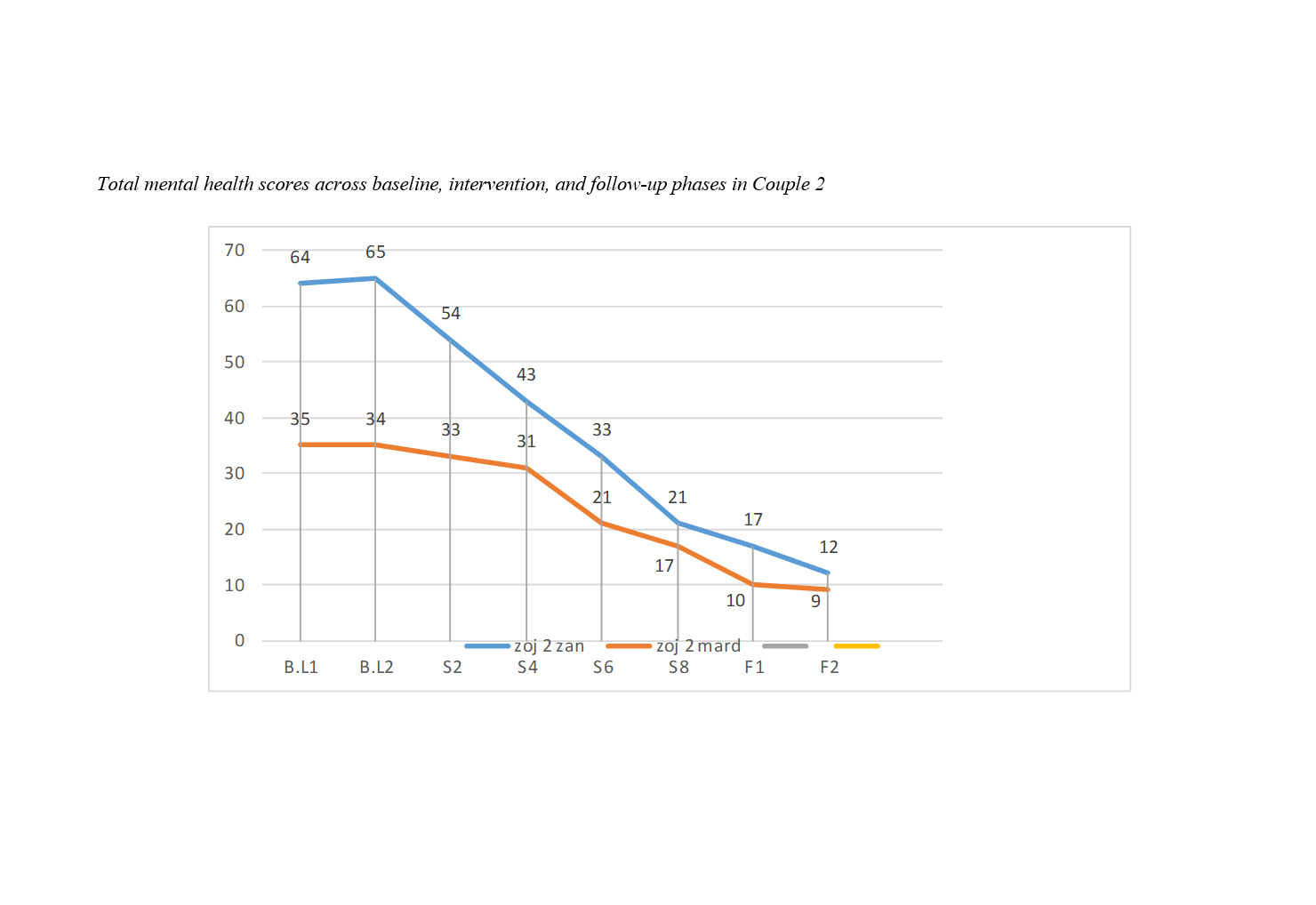
Methods and Materials: A single-subject design (ABA design) with two baseline phases was employed. Four participants (two couples) were selected through convenience sampling from clients at the Mental Health Centre of the Faculty of Psychology, University of Tehran, who had experienced extramarital trauma and decreased marital satisfaction. The research measures included the GHQ-28 questionnaire and a researcher-developed checklist, which were used to assess changes in couples throughout the intervention program. Quantitative data were analysed using visual graph inspection and effect size calculation.
Findings: The findings indicated that the designed Post-Traumatic Paradoxical Couple Therapy model—incorporating techniques such as paradoxical scheduling symptom prescription, paradoxical timetable for reciprocity negotiation The timetable for periodical management, therapeutic communication processes, emotional catharsis facilitation, and session structuring, alongside psychoanalytic, systematic, and psychological mechanisms (e.g., elimination of negative emotions, interactive engagement, ego strengthening, and trust-building)—led to improvements in mental health, reductions in negative emotions, and enhanced relational functioning among couples affected by infidelity.
Conclusion: achieving mental health and quality of life in couples who have experienced marital infidelity is a process mediated by emotional regulation, balance in relational roles, and the restoration of emotional bonds. The Post-Traumatic Paradoxical Couple Therapy program demonstrated its capacity to address one of the most complex challenges in couple therapy and may serve as a valuable model for family and couple therapists.
Downloads
References
Adler, A. (1924). The practice and theory of individual psychology, 2nd ed. rev. Humanities Press. https://psycnet.apa.org/record/1924-15018-000
Afsharzada, M. S., Etemadi, O., & Naghavi, A. (2024). Marital Infidelity: Cognitive, Behavioral, Emotional Reactions, and Coping Strategies among Afghan women. Research in Cognitive and Behavioral Sciences, 14(2), 13-26. https://doi.org/10.22108/cbs.2024.141390.1901
Alizadeh, Z., Sadegnezhadei, D., Mahdilou, S. S., & Smkhani Akbarinejhad, H. (2024). The effectiveness of solution-focused brief couple therapy on forgiveness and sexual intimacy of women affected by marital infidelity [Semi-pilot]. Medical Sciences Journal of Islamic Azad University, 34(4), 431-439. https://doi.org/10.61186/iau.34.4.431
Asayesh, M. H. (2017). Development of a multidimensional post-trauma counseling model and its effectiveness on divorce withdrawal, marital satisfaction, and mental health of women victimized by marital infidelity Allameh Tabataba’i University]. Tehran, Iran.
Asayesh, M. H., Farahbakhsh, K., Delavar, A., & Salimi Bajestani, H. (2017). Psychosomatic Reactions and Physiological Effects of Infidelity among the Female Victims: A Phenomenological Study [Original article]. The Journal of Shahid Sadoughi University of Medical Sciences, 25(8), 641-657. http://jssu.ssu.ac.ir/article-1-4028-en.html
Asayesh, M. H., farahbakhsh, k., Salimi Bajestani, H., & Delavar, A. (2018a). Cognitive Experiences and Reactions of Women to Infidelity: A Phenomenological Study. Journal of Qualitative Research in Health Sciences, 7(2), 188-203. https://jqr1.kmu.ac.ir/article_90930_ca8acbf90eb5a7bca62b5c2705dae18b.pdf
Asayesh, M. H., farahbakhsh, k., Salimi Bajestani, H., & Delavar, A. (2018b). Explanation of Experiences and Emotional Reactions in Women Victims of Infidelity: A Qualitative Study. Journal of Qualitative Research in Health Sciences, 7(4), 355-372. https://jqr1.kmu.ac.ir/article_90905_574fc1b6de02d67d96d7eba97223b1ff.pdf
Asayesh, M. H., farahbakhsh, k., Salimi Bajestani, H., & Delavar, A. (2018c). Identifying and explaining spiritual experiences and reactions of women victimized by marital infidelity: A phenomenological study. Islamic Research on Women and Family, 6(3), 57-78. http://pzk.journals.miu.ac.ir/article_2113_11171458d739ccf5b7913dfae9ba7ab2.pdf
Asayesh, M. H., Farahbakhsh, K., Salimi Bajestani, H., & Delavar, A. (2019). Studying the Communication Reactions of Female Victims of Infidelity: A Phenomenological Study [Research]. Journal of counseling research, 18(69), 31-58. https://doi.org/10.29252/jcr.18.69.31
Asayesh, M. H., & Golpasha, E. (2022). Relationship Quality Between Partners Following Infidelity in the Absence of Renewed Love. In T. DeLecce & T. K. Shackelford (Eds.), The Oxford Handbook of Infidelity (pp. 0). Oxford University Press. https://doi.org/10.1093/oxfordhb/9780197502891.013.25
Asayesh, M. H., Golpasha, E., & Bahonar, F. (2022). Explaining the Behavioral Experiences and Psychological Coping of Women Who Are Victims of an Extramarital Relationship: A Qualitative Study. Journal of Applied Psychological Research, 12(4), 251-269. https://doi.org/10.22059/japr.2022.327642.643921
Asayesh, M. H., & Parsakia, K. (2025). Paradoxical Timetable Therapy and Psychological Problems: Mechanisms of Change and Implications. Mental Health and Lifestyle Journal, 3(3), 1-21. https://doi.org/10.61838/mhlj.3.3.11
Atapour, N., Falsafinejad, M. R., Ahmadi, K., & Khodabakhshi-Koolaee, A. (2021). A Study of the Processes and Contextual Factors of Marital Infidelity [Original Research Article]. Practice in Clinical Psychology, 9(3), 211-226. https://doi.org/10.32598/jpcp.9.3.758.2
Basharpoor, S. (2012). The effectiveness of cognitive processing therapy on the improvement of posttraumatic symptoms, quality of life, self esteem and marital satisfaction in the women exposed to infidelity. Family Counseling and Psychotherapy, 2(2), 193-208. https://fcp.uok.ac.ir/article_9529_b1066ebe29f5cc3324e2c3f52f56ca27.pdf
Baucom, D. H., Snyder, D. K., & Gordon, K. C. (2009). Helping couples get past the affair: A clinician's guide. The Guilford Press. https://psycnet.apa.org/record/2009-04647-000
Besharat, M. A. (2017). Paradox + timetable = cure: A comprehensive model for treating psychological disorders. Roshd Press. https://roshdpress.ir/product/
Besharat, M. A. (2019a). Evaluating the effectiveness of paradox therapy for the treatment of obsessive-compulsive disorder: A case study. Journal of Psychological Studies, 14(4), 7-36. https://doi.org/10.22051/psy.2019.23631.1801
Besharat, M. A. (2019b). Evaluating the effectiveness of paradox therapy for the treatment of social anxiety disorder: A case study [Research]. Journal of Psychological Science, 18(76), 383-396. http://psychologicalscience.ir/article-1-383-en.html
Besharat, M. A. (2020). Evaluating the effectiveness of paradoxical couple therapy for the treatment of couple problems: A case study. Iranian Journal of Family Psychology, 7(1), 1-18. https://doi.org/10.52547/ijfp.7.1.1
Browning, S., & Hull, R. (2021). Reframing paradox. Professional Psychology: Research and Practice, 52(4), 360-367. https://doi.org/10.1037/pro0000384
Chitgarzadeh, M. J., Asayesh, M. H., Besharat, M. A., & Hakkak, F. (2023). Investigating the effectiveness of paradoxical couple therapy (PTC) on marital conflicts and emotion regulation in conflicting couples [Research]. Rooyesh-e-Ravanshenasi Journal(RRJ), 12(2), 39-50. http://frooyesh.ir/article-1-4107-en.html
Davis, J. R., & Gold, G. J. (2011). An examination of emotional empathy, attributions of stability, and the link between perceived remorse and forgiveness. Personality and Individual Differences, 50(3), 392-397. https://doi.org/10.1016/j.paid.2010.10.031
Delavar, A. (2016). Theoretical and practical foundations of research in human and social sciences. Nashr Roshd. https://roshdpress.ir/product
DiBlasio, F. A., & Benda, B. B. (2008). Forgiveness intervention with married couples: Two empirical analyses. Journal of Psychology and Christianity, 27(2), 150-158. https://psycnet.apa.org/record/2008-09062-007
Farahbakhsh, K., & Ghanbari, B. (2006). Evaluation effectiveness or Struetured Reality Therapy Marriage Counseling on reduce the PTSD of infidelity and increase the intimacy relationship whit spouse. Research in Clinical Psychology and Counseling, 07(2), -. https://doi.org/10.22067/ijap.v7i2.6795
Fincham, F. D., & May, R. W. (2017). Infidelity in romantic relationships. Current Opinion in Psychology, 13, 70-74. https://doi.org/10.1016/j.copsyc.2016.03.008
Frankl, V. E. (1939). Philosophie und Psychotherapie. Zur Grundlegung einer Existenzanalyse. [Philosophy and psychotherapy. Bases of an existential analysis.]. Schweizerische Medizinische Wochenschrift, Teil 2, 707-709. https://psycnet.apa.org/record/1940-03532-001
Frederick, D. A., & Fales, M. R. (2016). Upset over sexual versus emotional infidelity among gay, lesbian, bisexual, and heterosexual adults. Archives of Sexual Behavior, 45(1), 175-191. https://doi.org/10.1007/s10508-014-0409-9
Gall, M. D., Gall, J.P. and Borg, W.R. (2006). Educational Research: An Introduction. Pearson Education. https://www.researchgate.net/publication/232559864_Educational_Research_An_Introduction
Ghasemi, H., Demehri, F., & Abooei, A. (2023). Prediction of Mental Health based on Emotional Alexithymia and Marital Burnout of Women Affected by Infidelity. Applied Family Therapy Journal (AFTJ), 4(4), 428-455. https://doi.org/10.61838/kman.aftj.4.4.25
Ghiasi, N., Rasoal, D., Haseli, A., & Feli, R. (2024). The interplay of attachment styles and marital infidelity: A systematic review and meta-analysis. Heliyon, 10(1), e23261. https://doi.org/https://doi.org/10.1016/j.heliyon.2023.e23261
Gholipour Firozjaei, m., Dokaneifard, F., & Jahangir, P. (2023). Comparison of the effectiveness of reality therapy and logotherapy on the components on forgiveness and marital trust of women affected by marital infidelity seeking divorce [Research]. Journal of Psychological Science, 22(124), 791-808. https://doi.org/10.52547/jps.22.124.791
Goldberg, D. P., & Hillier, V. F. (1979). A scaled version of the General Health Questionnaire. Psychological Medicine, 9(1), 139-145. https://doi.org/10.1017/S0033291700021644
Gordon, K. C., & Baucom, D. H. (1998). Understanding betrayals in marriage: a synthesized model of forgiveness. Fam Process, 37(4), 425-449. https://doi.org/10.1111/j.1545-5300.1998.00425.x
Gordon, K. C., Baucom, D. H., & Snyder, D. K. (2005). Treating couples recovering from infidelity: an integrative approach. J Clin Psychol, 61(11), 1393-1405. https://doi.org/10.1002/jclp.20189
Guerrero, S., Castro-Luna, G., Zapata Boluda, R., Freites, A., García, R., & Parrón-Carreño, T. (2021). Incidence and Related Factors of Infidelity among Medical Doctors and Nurses. Int J Environ Res Public Health, 18(11). https://doi.org/10.3390/ijerph18115575
Healy, J. (1976). Family psychotherapy (B. S. Zaker, Trans.). Amirkabir. https://amirkabirpub.ir/book/25970
Hosseini, Z., Fatehizadeh, M. S., & Abedi, A. (2012). Effect of anger control training based on visual analysis in individuals affected by marital infidelity 3rd National Counseling Conference, Tehran, Iran. https://civilica.com/doc/204817/
Hoy, E. Q. W., & Oh, V. Y. S. (2024). The consequences of spousal infidelity for long-term chronic health: A two-wave longitudinal analysis. Journal of Social and Personal Relationships, 41(12), 3720-3740. https://doi.org/10.1177/02654075241276713
Jacobson, N. S., & Truax, P. (1991). Clinical significance: a statistical approach to defining meaningful change in psychotherapy research. J Consult Clin Psychol, 59(1), 12-19. https://doi.org/10.1037//0022-006x.59.1.12
Johnson, S. M. (2005). Broken Bonds. Journal of Couple & Relationship Therapy, 4(2-3), 17-29. https://doi.org/10.1300/J398v04n02_03
Johnson, S. M. (2020). The Practice of Emotionally Focused Couple Therapy: Creating Connection (3rd edition ed.). Routledge. https://psycnet.apa.org/record/2019-48783-000
Johnson, S. M., Makinen, J. A., & Millikin, J. W. (2001). Attachment injuries in couple relationships: A new perspective on impasses in couples therapy. Journal of Marital and Family Therapy, 27(2), 145-155. https://doi.org/10.1111/j.1752-0606.2001.tb01152.x
Karimi, J., Soudani, M., Mehrabizadeh-Moghadam, M., & Nisi, A. (2012). Effectiveness of integrative couple therapy in reducing harms caused by spouse infidelity. Behavioral Sciences Research Journal. https://civilica.com/doc/722964/
Karimi, J., Soudani, M., Mehrabizadeh-Moghadam, M., & Nisi, A. (2013). Comparing the effectiveness of integrative couple therapy and emotionally focused couple therapy on depression and post-traumatic stress symptoms due to extramarital affairs. Journal of Clinical Psychology, 5, 35-46. https://civilica.com/doc/722964/
Khaleghi, M, Mohammadkhani, Sh, & Hasani, J. (2016). Effectiveness of Emotional Schema Therapy in Reduction of Worry and Anxiety's Signs and Symptoms in Patients with Generalized Anxiety Disorder: Single-Subject Design. Journal of Clinical Psychology, 8(2), 43-55. https://doi.org/10.22075/jcp.2017.2235
Knight, A. (2010). Gender differences in defining infidelity [M. A. thesis, The Faculty of Humboldt State University]. https://scholarworks.calstate.edu/downloads/fb494b67x
Leeker, O., & Carlozzi, A. (2014). Effects of Sex, Sexual Orientation, Infidelity Expectations, and Love on Distress related to Emotional and Sexual Infidelity. Journal of Marital and Family Therapy, 40. https://doi.org/10.1111/j.1752-0606.2012.00331.x
MCooperlaw. (2024). Infidelity stats 2024: Who cheats more? 49 startling facts. https://www.mcooperlaw.com/infidelity-stats-2024/
Mohsenzadeh, F., Nazariy, A. M., & Arefi, M. (2011). Qualitative study of factors contributing to marital dissatisfaction and applying for divorce (the case of Kermanshah). Women's Strategic Studies, 14(53), 7-42. https://www.jwss.ir/article_12235_771cb858551068c0161a35fe69e47100.pdf
Momeni Javid, M., & Shia Kazemi, M. . (2012). Effectiveness of psychotherapy interventions on forgiveness of spouse infidelity in married women in Tehran. Social Research Journal, 6(18), 139-155. https://www.sid.ir/paper/164839/fa
Nezamalmolki, M., Bahrainian, S. A., & Shahabizadeh, F. (2023). Effectiveness of Emotion-Focused Couples Therapy on Sexual Function, Marital Intimacy, and Impulsivity in Women Affected by Marital Infidelity. Psychology of Woman Journal, 4(4), 39-47. https://doi.org/10.61838/kman.pwj.4.4.5
Noorbala, A. A., Bagheri Yazdi, S. A., & Mohammadi, K. (2009). The Validation of General Health Questionnaire- 28 as a Psychiatric Screening Tool [Original]. Hakim Research Journal, 11(4), 47-53. http://hakim.tums.ac.ir/article-1-464-en.html
O’Rourke, V., McElvaney, R., & Kirrane, M. (2025). Grappling with Infidelity: The Experiences of Therapists. Journal of Couple & Relationship Therapy, 24(1), 24-48. https://doi.org/10.1080/15332691.2024.2391965
Peluso, P. R., & Freund, R. (2023). Paradoxical interventions: A meta-analysis. Psychotherapy, 60(3), 283-294. https://doi.org/10.1037/pst0000481
Rokach, A., & Chan, S. H. (2023). Love and Infidelity: Causes and Consequences. Int J Environ Res Public Health, 20(5). https://doi.org/10.3390/ijerph20053904
Sadat, S., Taghvaei, D., & Jahangiri, M. M. (2025). Comparison of the Effectiveness of Gottman Couples Therapy and Emotion-Focused Therapy on Relational Covert Aggression in Couples with Emotional Divorce. KMAN Counseling & Psychology Nexus, 3, 1-10. https://doi.org/10.61838/kman.fct.psynexus.3.6
Shackelford, T., Besser, A., & Goetz, A. T. (2008). Personality, marital satisfaction, and probability of marital infidelity. Individual Differences Research, 6, 13-25. https://www.researchgate.net/publication/285749123_Personality_marital_satisfaction_and_probability_of_marital_infidelity
Shahi, A., Ghaffari, E., & Khalili, Q. (2011). The relationship between mental health and marital satisfaction in couples. . Improvement Journal, 15(2), 119-126. https://sid.ir/paper/20693/fa
Shrout, M. R., & Weigel, D. J. (2018). Infidelity’s aftermath: Appraisals, mental health, and health-compromising behaviors following a partner’s infidelity. Journal of Social and Personal Relationships, 35(8), 1067-1091. https://doi.org/10.1177/0265407517704091
Snyder, D. K., Baucom, D. H., & Gordon, K. C. (2008). An Integrative Approach to Treating Infidelity. The Family Journal, 16(4), 300-307. https://doi.org/10.1177/1066480708323200
Varma, P., & Maheshwari, S. (2025). Emotional Consequences of Infidelity: Guilt and Regret Experiences Among Perpetrators of Cheating in Heterosexual Dating Relationships. The Family Journal, 33(3), 392-398. https://doi.org/10.1177/10664807241293150
Downloads
Additional Files
Publication Timeline
- Submitted
- Revised
- Accepted