A Linguistic Analysis of Behavioral Adaptations and Communal Values in The Doll’s House & A Death in the Stadium
DOI:
https://doi.org/10.61838/kman.aitech.3.2.12Keywords:
behavioral adaptations, communal values, linguistic elements, social values, cultural diversityAbstract
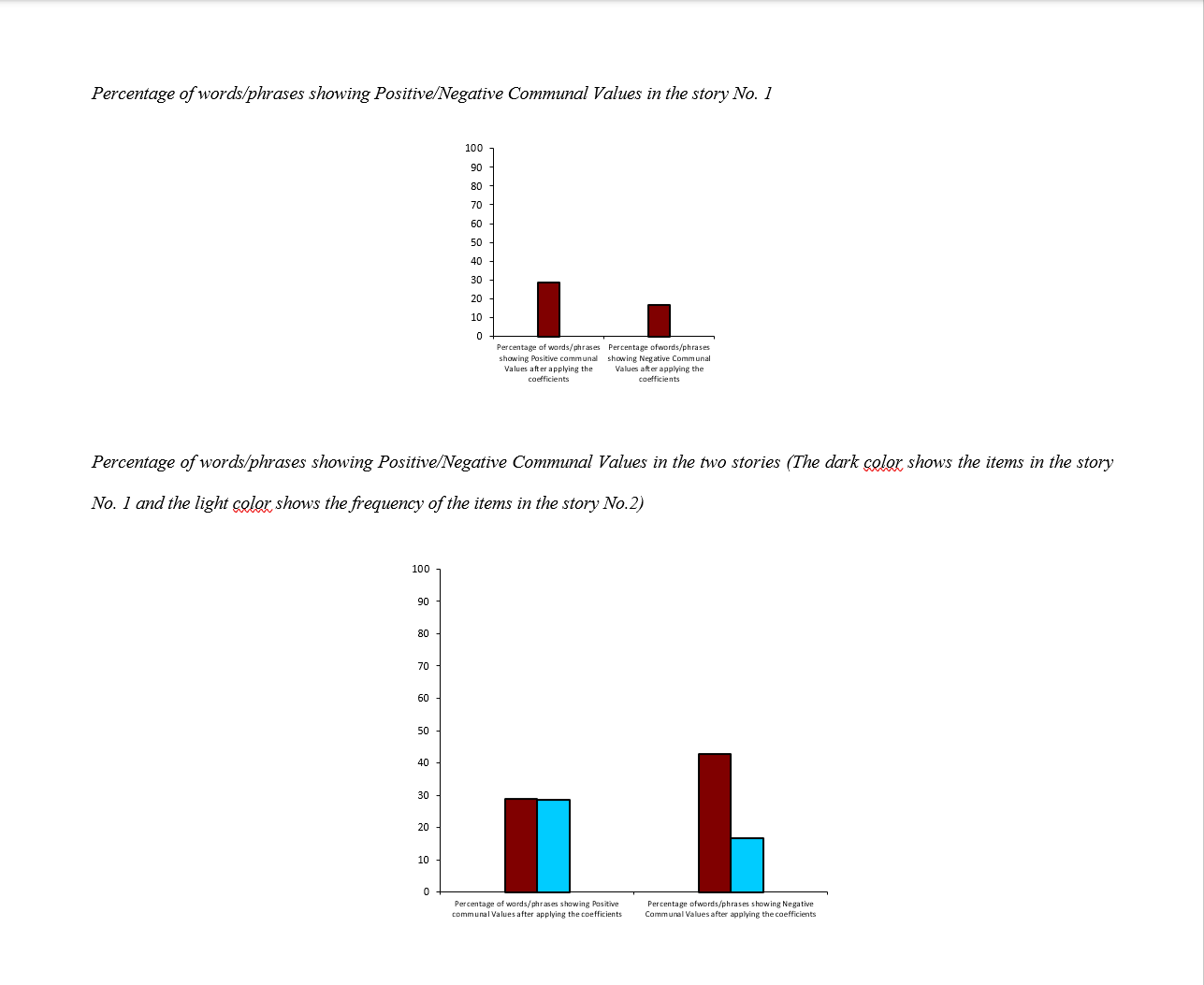
In spite of human beings’ inherent knowledge of cultural behaviors, most of the content of cultural practices—especially those in common with other cultural identities—remain unnoticeable. The present research represents a detailed statistical analysis of linguistic elements depicting the nature and unique characteristics of such unnoticeable values that result in cultural diversities in the settings of The Doll’s House & A Death in the Stadium. Accordingly, the question under study is whether there exist a set of defined linguistic items representing the social discourse flow and to what extent the literary theorists and language practitioners can use them in the comparison of different texts as explanation facts. In fact, in both texts there are some prominent social values and parallel social conflicts. Three of these social values include wealth, hierarchy and hegemony all of which are investigated in details. Having found all representations of these three values in each of the texts, the paper also quantifies the data to have a better understanding of the analyses. Since not all representations of the items were the same regarding their relation to the items, three various coefficients are applied to give them more acceptable weight.
Downloads
References
Bellah, R. N. (1995). Community Properly Understood: A Defense of Democratic Communism. The Responsive Community, 6(1), 1-5. https://condor.depaul.edu/~dmakagon/student/community/Bellah_community_properly.pdf
Bogdan, R., Williamson, D. E., & Hariri, A. R. (2012). Mineralocorticoid receptor iso/val (rs5522) genotype moderates the association between previous childhood emotional neglect and amygdala reactivity. American Journal of Psychiatry, 169, 515-522. https://doi.org/10.1176/appi.ajp.2011.11060855
Braun, J. (2010). To Break Our Chains: Social Cohesiveness and Modern Democracy. Brill ISBN - 9789004190276. https://doi.org/10.1163/ej.9789004190276.i-398
Deardorff, D. K. (2012). Intercultural Competence in the 21st Century: Perspectives, Issues, Application In - Breninger (Ed.), Creating Cultural Synergies. In (pp. 7-23). Cambridge Scholars. https://books.google.com/books?hl=en&lr=&id=s6UwBwAAQBAJ&oi=fnd&pg=PA7&dq=Deardorff,+D.+K.+(2012).+Intercultural+Competence+in+the+21st+Century:+Perspectives,+Issues,+Application+In+-+Breninger+(Ed.),+Creating+Cultural+Synergies,+Cambridge+Scholars:+7-23.+%09&ots=h7X4uj0IKw&sig=BP0GX8Z-28nrPDqgWp8atDqvb0U
Fernández, A., Rebucci, A., & Uribe, M. (2014). Are Capital Controls Countercyclical? Columbia University. https://www.sciencedirect.com/science/article/pii/S0304393215000914
Henrich, J., & McElreath, R. (2003). The Evolution of Cultural Evolution. Evolutionary Anthropology, 12, 123-135. https://doi.org/10.1002/evan.10110
Holmes, G. E., Patterson, J. R., & Stalling, J. E. (2003). Sense of place: Issues in counseling and development. Journal of Humanistic Counseling, Education, and Development, 42, 238-251. https://doi.org/10.1002/j.2164-490X.2003.tb00009.x
Hutnyk, J. (2006). Culture. Theory, Culture & Society, 23, 351-375. https://doi.org/10.1177/0263276406062700
Jakupov, S. M., Tolegenova, A. A., & Slanbekova, G. K. (2012). Emotional intelligence or intellectual emotions as sensitive basis of mental activity. Scientific Journal of al-Farabi Kazakh National University.
Japakiya, I. L. (2008). Islam: the Religion of Peace. Fajar Ulung. https://www.google.com/url?sa=t&source=web&rct=j&opi=89978449&url=https://www.researchgate.net/publication/263089971_Islam_The_Religion_Of_Peace&ved=2ahUKEwii_YCaxZOOAxX3vokEHY9BD3kQFnoECBcQAQ&usg=AOvVaw2A5_slk2KjQpcZMEpM0phN
Kalandides, A. (2011). The problem with spatial identity: revisiting the "sense of place". Journal of Place Management and Development, 4(1), 28-39. https://doi.org/10.1108/17538331111117142
Kolshansky, G. V. (1975). Value of subjective and objective factors in language. Science.
Margaritoiu, A., & Eftimie, S. (2011). Some issues concerning school-family partnerships. Procedia Social and Behavioral Sciences, 11, 42-46. https://doi.org/10.1016/j.sbspro.2011.01.030
Mueller, J. A., & Pope, R. L. (2001). The relationship between multicultural competence and White racial consciousness among student affairs practitioners. Journal of College Student Development, 42, 133-144. https://eric.ed.gov/?id=EJ624505
Northmore, S., & Hart, A. (2011). Sustaining community-university partnerships. Gateways: International Journal of Community Research and Engagement, 4, 1-11. https://doi.org/10.5130/ijcre.v4i0.2356
Suryadinata, L., Arifin, E. N., & Ananta, A. (2003). Indonesia's Population: Ethnicity and Religion in a Changing Political Landscape. Institute of Southeast Asian Studies. https://doi.org/10.1355/9789812305268
Volcic, Z. (2011). Serbian Spaces of Identity. Hampton Press. https://espace.library.uq.edu.au/view/UQ:240527
Downloads
Additional Files
Publication Timeline
Issue
Section
License
Copyright (c) 2024 Mojgan Eyvazi (Author)

This work is licensed under a Creative Commons Attribution-NonCommercial 4.0 International License.