Examining Iran's Business Laws: Protecting Against Soft Technology Abuse in Digital Platforms
DOI:
https://doi.org/10.61838/kman.aitech.4551Keywords:
Soft technologies, Persuasive system design (PSD), Dark patterns, Deceptive design, Digital platform, Commercial lawsAbstract
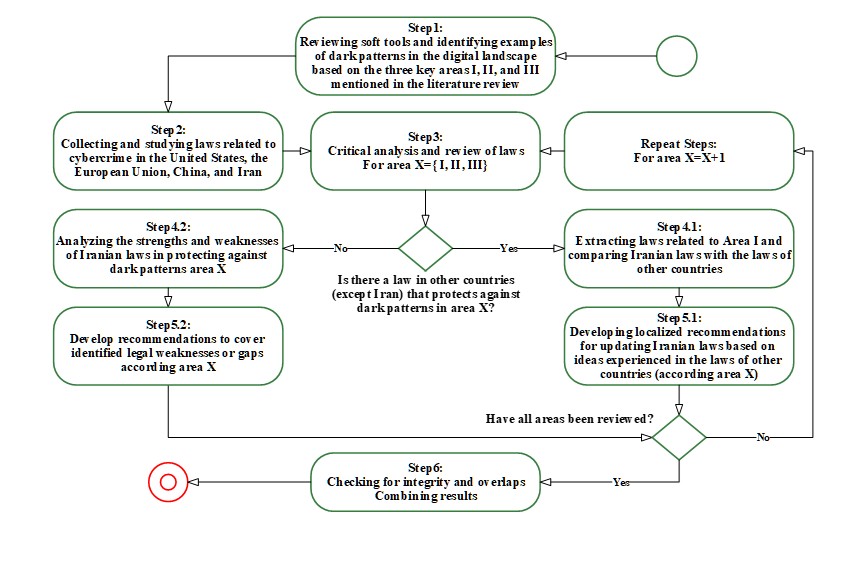
In today's digital economy, maintaining a competitive advantage has become increasingly important for businesses, leading them to adopt various means to attract customers to their products and services. One of the tools gaining more attention recently is the use of soft technologies and persuasive systems, which can be applied in digital and non-digital fields, particularly in e-commerce businesses to mask product weaknesses and emphasize competitive advantages, thus encouraging customers to buy. The study aims to investigate the risks associated with soft technologies, such as psychological pressure and the exploitation of vulnerable individuals, as well as to review the status of Iran's business laws that can protect people from these harms. This applied research utilizes the onion research model. The findings suggest that Iran's commercial laws fall short of international standards in protecting people from deceptive and persuasive designs. As a result, we made several recommendations to improve Iran's commercial laws.
Downloads
Downloads
Publication Timeline
- Submitted
- Revised
- Accepted