An Analysis of Nigerian TVET Graduates' Career Decision Self-Efficacy
DOI:
https://doi.org/10.61838/kman.jarac.4453Keywords:
Career decision self-efficacy, career transition, TVET graduates, counsellors, educators, career coaching, Nigeria, AfricaAbstract
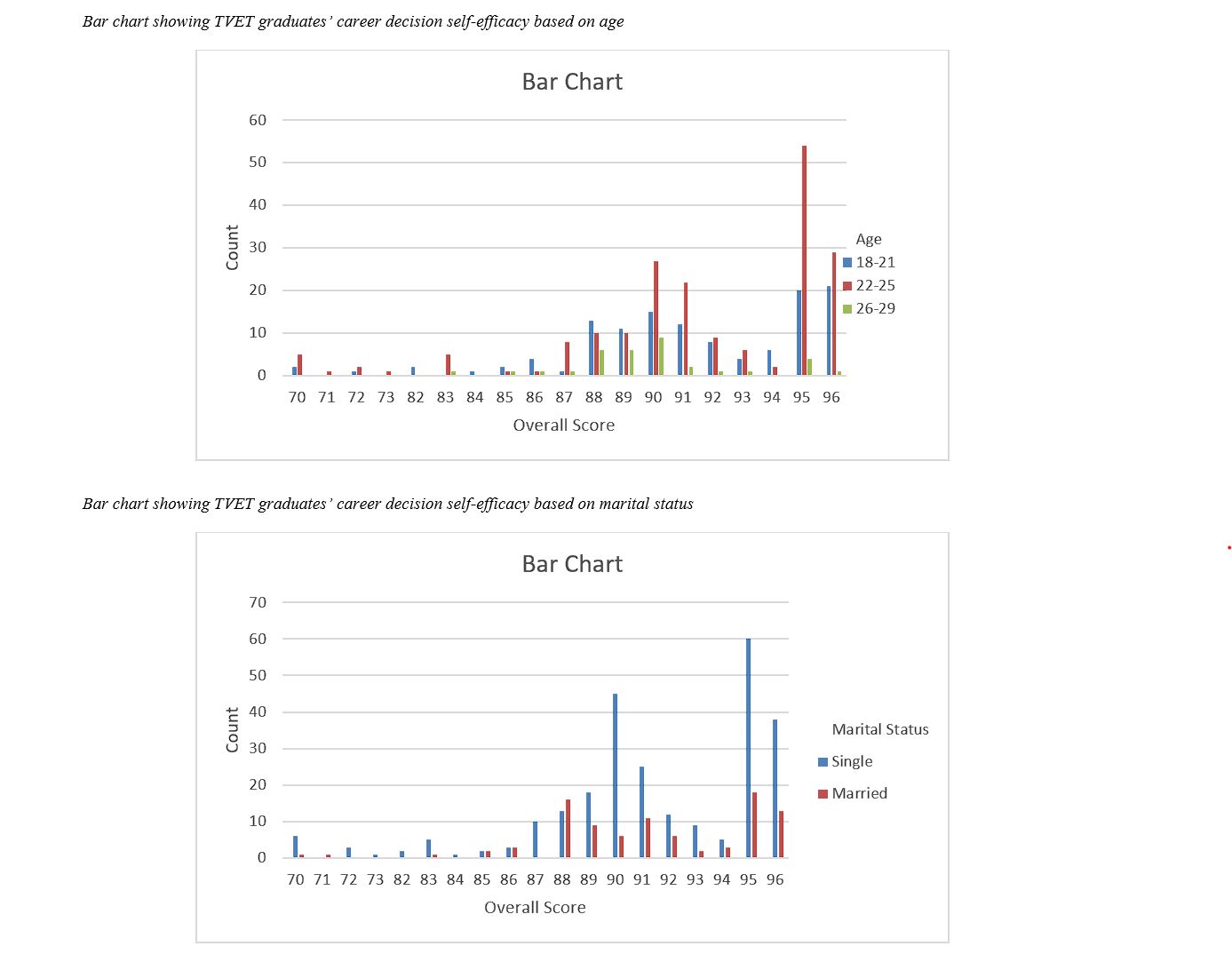
Objective: This study examined the degree of career decision self efficacy among recent graduates of technical vocational education and training in Nigeria. The aim was to understand how these graduates perceive their ability to make informed career choices, and to determine whether demographic characteristics predict their levels of self efficacy.
Methods and Materials: The study employed a quantitative survey design involving three hundred and fifty recent graduates from the southeast region of Nigeria. A purposive sampling approach ensured representation across different technical vocational education programs, genders, ages and marital statuses. Data were gathered using the Career Decision Self Efficacy Scale Short Form, which contains twenty five items rated on a five point Likert scale. Regression analysis was used to examine the predictive influence of demographic variables.
Findings: The results indicated that graduates displayed a high level of career decision self efficacy. The regression model showed that demographic characteristics significantly predicted self efficacy outcomes. Graduates with stronger academic achievement and those enrolled in more relevant technical vocational education programs reported higher levels of self efficacy.
Conclusion: The findings highlight the need for policymakers, counsellors and educators to strengthen targeted interventions that support career planning and transition for technical vocational education graduates. Enhanced guidance programmes may further improve graduates’ confidence and readiness for labour market entry. This study provides empirical insight into the career decision competence of technical vocational education graduates in Nigeria, contributing evidence that can inform national strategies for improving career development support within the sector.
Downloads
References
Bandura, A. (1977). Self-efficacy: Toward a unifying theory of behavioral change. Psychological Review, 84(2), 191-215. https://doi.org/10.1037/0033-295X.84.2.191
Cheng, S., Brand, J. E., Zhou, X., Xie, Y., & Hout, M. (2021). Heterogeneous returns to college over the life course. Science Advances, 7(51). https://doi.org/10.1126/sciadv.abg7641
Falco, L. D., & Summers, J. J. (2019). Improving Career Decision Self-Efficacy and STEM Self-Efficacy in High School Girls: Evaluation of an Intervention. Journal of Career Development, 46(1), 62-76. https://doi.org/10.1177/0894845317721651
Halik Bassah, N. S., & Mohd Noor, M. A. (2023). Employability Skills Needed for TVET Graduates in Malaysia: Perspective of Industry Expert. Online Journal for TVET Practitioners, 8(1). https://doi.org/10.30880/ojtp.2023.08.01.005
National Science, F. (2023). Diversity and STEM: Women, Minorities, and Persons with Disabilities. https://www.nsf.gov/reports/statistics/diversity-stem-women-minorities-persons-disabilities-2023
Nguyen, T. L., Nguyen, H. T., Nguyen, N. H., Nguyen, D. L., Nguyen, T. T. D., & Le, D. L. (2023). Factors affecting students' career choice in economics majors in the COVID-19 post-pandemic period: A case study of a private university in Vietnam. Journal of Innovation and Knowledge, 8(2). https://doi.org/10.1016/j.jik.2023.100338
Okorafor, O., & Nebechi, F. N. (2017). TVET policies and practices in Nigeria: Why the gap TVET. European Journal of Education Studies, 3(4). https://doi.org/10.5281/zenodo.494996
Otu, M. S. (2024). Exploring Career-related Strategies for Strengthening Poverty Reduction Programmes in Nigerian Communities: A Qualitative Study. International Journal of Home Economics, Hospitality and Allied Research, 186-201. https://doi.org/10.57012/ijhhr.v3n1.015
Otu, M. S., & S. M, M. (2025). Strategies for developing Afrocentric career coaching programmes for Neurodiverse College Students
Career coaching and employability skills acquisition. IGI Global Publisher. https://doi.org/10.4018/979-8-3693-4014-1.ch015
Pignault, A., Rastoder, M., & Houssemand, C. (2023). The Relationship between Self-Esteem, Self-Efficacy, and Career Decision-Making Difficulties: Psychological Flourishing as a Mediator. European Journal of Investigation in Health, Psychology and Education, 13(9). https://doi.org/10.3390/ejihpe13090113
Şeker, G. (2025). The mediating role of career decision-making self-efficacy in the relationship between career locus of control and career indecision among Turkish high school students. BMC Psychology, 13(1). https://doi.org/10.1186/s40359-025-03410-8
Söner, O., & Yılmaz, O. (2025). Exploring the associations of career transition components with adolescents' career decision-making self-efficacy and anxiety. BMC Psychology, 13(1). https://doi.org/10.1186/s40359-025-03479-1
Zhao, M., Ozturk, E., Law, F., Joy, A., Deutsch, A. R., Marlow, C. S., Mathews, C. J., McGuire, L., Hoffman, A. J., Balkwill, F., Burns, K. P., Butler, L., Drews, M., Fields, G., Smith, H., Winterbottom, M., Mulvey, K. L., Hartstone-Rose, A., & Rutland, A. (2024). Reciprocal Associations Between Science Efficacy, STEM Identity and Scientist Career Interest Among Adolescent Girls within the Context of Informal Science Learning. Journal of Youth and Adolescence, 53(2). https://doi.org/10.1007/s10964-023-01868-6
Downloads
Additional Files
Publication Timeline
- Submitted
- Revised
- Accepted