The Role of Family in Adaptation to Different Dimensions Following Spinal Cord Injury: A Scoping Review
DOI:
https://doi.org/10.61838/kman.aftj.4578Keywords:
Spinal cord injury, Adaptation, Family, Family support, Scoping reviewAbstract
Objective: This scoping review was conducted to identify, describe, and collate the role of the family in various dimensions of adaptation following SCI and to address the current research gaps.
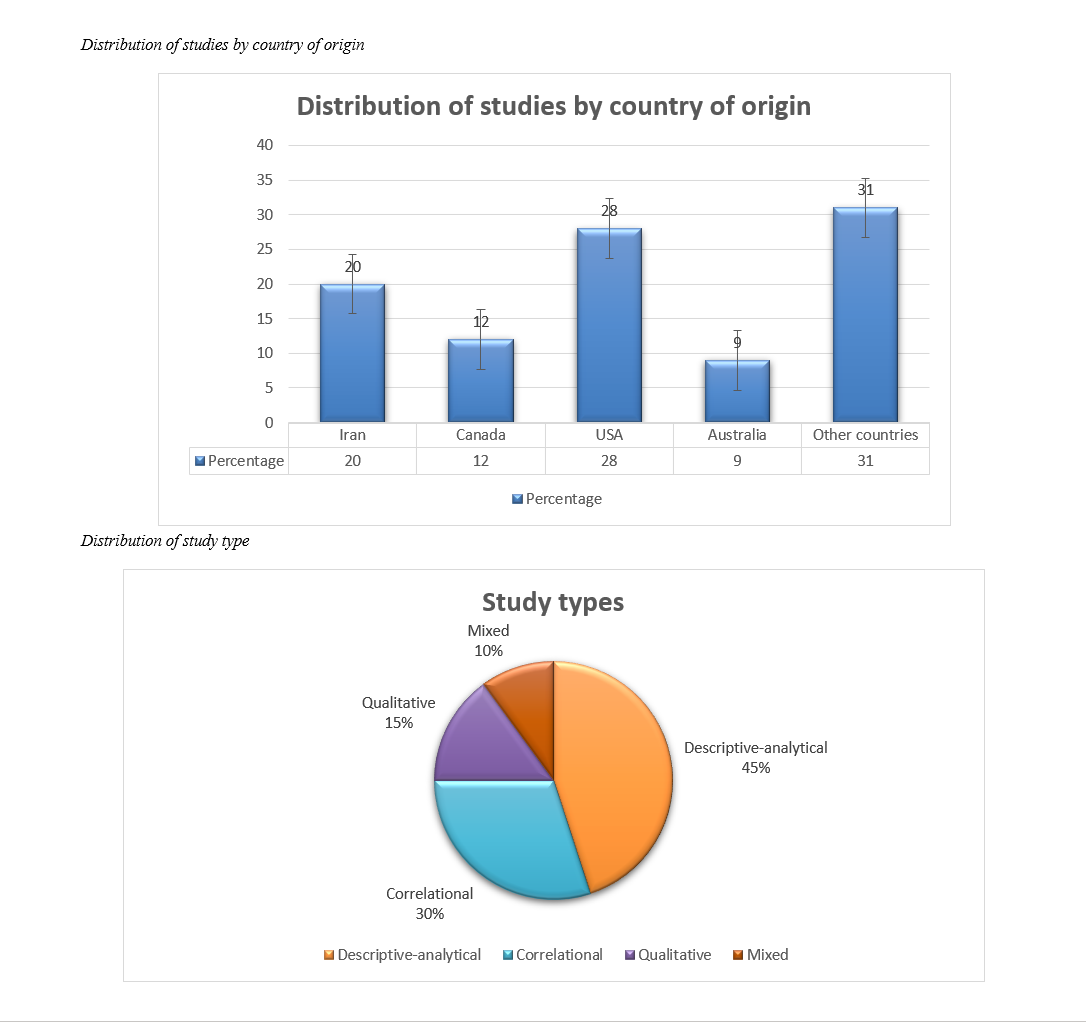
Methods and Materials: This study used a scoping review method based on the Arksey and O’Malley framework. Searches were conducted across PubMed, Scopus, Web of Science, Google Scholar, SID, and Magiran using relevant keywords (including the English terms “spinal cord injury”, “family”, “adaptation”, and their Persian equivalents) from inception to October 2025. After 1,023 duplicate articles were removed from the 3,512 identified articles, 2,489 articles were screened based on title and abstract, of which 315 articles were selected for full-text review. Finally, 148 eligible studies were selected for data charting and analysis.
Findings: Results highlighted a vital and multifaceted role of the family in the adaptation process of SCI patients. This role is manifested in various dimensions, including emotional and psychological support (e.g., reducing depression and anxiety, increasing hope), practical and caring support (e.g., helping with daily activities, managing physical complications), improving family functioning (e.g., increasing cohesion and problem solving), developing coping skills, and facilitating the rehabilitation process. Additionally, challenges such as caregivers’ financial pressure, inadequate knowledge, and burnout were identified as barriers to adaptation.
Conclusion: The family serves as the supportive backbone for SCI patients as they adapt to various aspects of life following injury. However, it seems essential to adopt comprehensive supportive interventions, educate families, address financial challenges, and facilitate access to rehabilitation services. It is suggested that future researchers focus on the effects of family-centered interventions and the role of cultural factors and perform longitudinal studies in this area.
Downloads
References
Abbasi, P., & Shafiei, R. (2023). Role of family in enhancing self-efficacy and personal independence among spinal cord injury patients. Clinical Psychology, 12(1), 70-85.
Afsharipoor, M., & Kalantari, M. (2025). Comparing Quality of Life, Self-Efficacy, and Social Support in People With Spinal Cord Injury and the General Population in Bam City, Iran. The Scientific Journal of Rehabilitation Medicine, 14(1), 162-173. https://medrehab.sbmu.ac.ir/article_1101809_en.html
Alizadeh, F., & Moradi, H. (2018). The role of family in alleviating stress and promoting hope among spinal cord injury patients. Neuroscience, 15(2), 110-125.
Arksey, H., & O'Malley, L. (2005). Scoping studies: Towards a methodological framework. International Journal of Social Research Methodology, 8(1), 19-32. https://doi.org/10.1080/1364557032000119616
Boschen, K. A., Tonack, M., & Gargaro, J. (2003). Long-term adjustment and community reintegration following spinal cord injury. International Journal of Rehabilitation Research, 26(3), 157-164. https://doi.org/10.1097/01.mrr.0000088440.78481.1f
Chaiyachet, P., & Virasiri, S. (2021). The Effects of Family Intervention on Adaptation among Families with Spinal Cord Injury Persons.
Craig, A., Guest, R., & Tran, Y. (2018). Spinal cord injury and psychological distress: A systematic review. Archives of Physical Medicine and Rehabilitation, 99(5), 1010-1022.
DeSanto-Madeya, S. (2003). The Meaning of the Experience of Living with Spinal Cord Injury for the Family Doctoral dissertation, Widener University].
Dyck, D. G., Weeks, D. L., Lederhos Smith, C., & Shaw, M. (2019). Multiple family group intervention for spinal cord injury: Quantitative and qualitative comparison with standard education. Journal of Spinal Cord Medicine, 42(2), 1-12. https://doi.org/10.1080/10790268.2019.1710946
Galvis Aparicio, M., Carrard, V., Kunz, S., Morselli, D., Post, M. W., & Peter, C. (2021). Longitudinal changes in psychological adaptation outcomes during spinal cord injury inpatient rehabilitation. Rehabilitation Psychology, 66(4), 491. https://psycnet.apa.org/fulltext/2022-01162-001.html
Galvis Aparicio, M., Kunz, S., Morselli, D., Post, M. W., Peter, C., & Carrard, V. (2021). Adaptation during spinal cord injury rehabilitation: The role of appraisal and coping. Rehabilitation Psychology, 66(4), 507. https://psycnet.apa.org/fulltext/2021-91327-001.html
Green, T., & Hall, R. (2021). Family advocacy and community reintegration for individuals with SCI. Disability and Society, 36(7), 1070-1085.
Johnson, P., & Taylor, S. (2020). The role of spousal support in reducing depression symptoms in individuals with SCI. Rehabilitation Psychology, 65(1), 50-60.
Karimi, S., & Heydari, M. (2017). Investigating the role of family caregivers in managing physical complications of spinal cord injury patients. Critical Care Nursing, 9(1), 45-58.
Lee, H., & Kim, S. (2019). Family participation in rehabilitation programs for spinal cord injury: A systematic review. Archives of Physical Medicine and Rehabilitation, 100(10), 2000-2010.
Lieberman, J. (2022). The physical, personal, and social impact of spinal cord injury: From the loss of identity to achieving a life worth living. Springer Cham. https://doi.org/10.1007/978-3-031-18652-3
Mair, L., & Moses, J. (2024). Adaptations to adult attachment and intimacy following spinal cord injury: a systematic review. Disability and Rehabilitation, 46(10), 1962-1978. https://doi.org/10.1080/09638288.2023.2218650
Mau, M., Jakobsen, I. S., & Larsen, C. M. (2019). Family Resilience Assessment (FRA) questionnaire: Translation, Cross-Cultural Adaptation and Modification of the Danish version for Spinal Cord Injured (MFRA-SCI-DK). https://www.ucviden.dk/files/134373773/Final_Report_MFRA_SCI_DK.pdf
McKay, R. C., Wuerstl, K. R., Casemore, S., Clarke, T. Y., McBride, C. B., & Gainforth, H. L. (2019). Guidance for behavioural interventions aiming to support family support providers of people with spinal cord injury: A scoping review. Social Science & Medicine, 242, 112456. https://doi.org/10.1016/j.socscimed.2019.112456
Mirzaei, A., & Nouri, S. (2019). Prevalence of depression and anxiety in primary caregivers of spinal cord injury patients. Health and Care, 13(2), 140-155.
Mohammadi, Z., & Ghasemi, M. (2021). Economic challenges of families of spinal cord injury patients in Iran. Research in Rehabilitation Sciences, 7(4), 300-315.
Putzke, J. D., Richards, J. S., Hicken, B. L., & DeVivo, M. J. (2002). Predictors of life satisfaction: A spinal cord injury cohort study. Archives of Physical Medicine and Rehabilitation, 83(4), 555-561. https://doi.org/10.1053/apmr.2002.31173
Rocha, M. A., Coura, A. S., França, I. S. X. D., Feijão, A. R., Almeida, I. J. S. D., & Aragão, J. D. S. (2021). Family functionality and coping strategies in people with spinal cord injury. Acta Paulista de Enfermagem, 34, eAPE000635. https://doi.org/10.37689/acta-ape/2021AO000635
Sandalic, D., Arora, M., Pozzato, I., Simpson, G., Middleton, J., & Craig, A. (2022). A scoping review of research on adjustment to spinal cord injury and mental health: gaps, future directions, and practice recommendations. Psychology research and behavior management, 1997-2010. https://doi.org/10.2147/PRBM.S259712
Smith, J., & Jones, A. (2019). Caregiver burden and mental health in spouses of individuals with spinal cord injury. Journal of Family Studies, 25(2), 180-195.
Soendergaard, P. L., Arango-Lasprilla, J. C., Wolffbrandt, M. M., Dornonville de la Cour, F. L., Biering-Sørensen, F., & Norup, A. (2023). Investigating the effectiveness of a family intervention after acquired brain or spinal cord injury: a randomized controlled trial. Journal of clinical medicine, 12(9), 3214. https://doi.org/10.3390/jcm12093214
Soendergaard, P. L., Wolffbrandt, M. M., Biering-Sørensen, F., Nordin, M., Schow, T., Arango-Lasprilla, J. C., & Norup, A. (2019). A manual-based family intervention for families living with the consequences of traumatic injury to the brain or spinal cord: a study protocol of a randomized controlled trial. Trials, 20(1), 646. https://doi.org/10.1186/s13063-019-3978-z
Stiens, S. A., Kirshblum, S. C., Groah, S. L., McKinley, W. O., & Gittler, M. S. (2002). SPINAL CORD INJURY MEDICINE-4 Optimal Participation in Life After Spinal Cord Injury: Physical, Psychosocial, and Economic Reintegration into the Environment. Archives of Physical Medicine and Rehabilitation, 83(1), S72. https://www.academia.edu/download/94529703/apmr.2002.3217820221120-1-108is0y.pdf
Wang, L., & Chen, Y. (2022). Family support and coping strategies in individuals with chronic spinal cord injury. Journal of clinical nursing, 31(5-6), 660-670.
Wangdell, J., Axwalter, E., Åhrén, G., Lundgren Nilsson, Å., Sunnerhagen, K. S., & Melin, J. (2025). Identified needs to enhance life for people with spinal cord injury: a part of the Swedish Needs Assessment Project. Disability and Rehabilitation, 47(12), 3030-3041. https://doi.org/10.1080/09638288.2024.2406982
Wilson, C. S., DeDios-Stern, S., Bocage, C., Gray, A. A., Crudup, B. M., & Russell, H. F. (2022). A systematic review of how spinal cord injury impacts families. Rehabilitation Psychology, 67(2), 115-131. https://doi.org/10.1037/rep0000431
Yousefi, S., & Hosseini, M. (2019). Investigating the role of family support in improving the quality of life of spinal cord injury patients. Rehabilitation, 22(1), 55-68.
Zahravand, M., & Mohammadi, A. (2019). Psychological adaptation process following spinal cord injury: A qualitative study. Health Psychology, 8(3), 215-230.
Downloads
Additional Files
Publication Timeline
- Submitted
- Revised
- Accepted