Audio-Based Shadowing Technology for Learning English Collocations: A Gateway to AI-Driven Language Pedagogy
DOI:
https://doi.org/10.61838/kman.aitech.4804Abstract
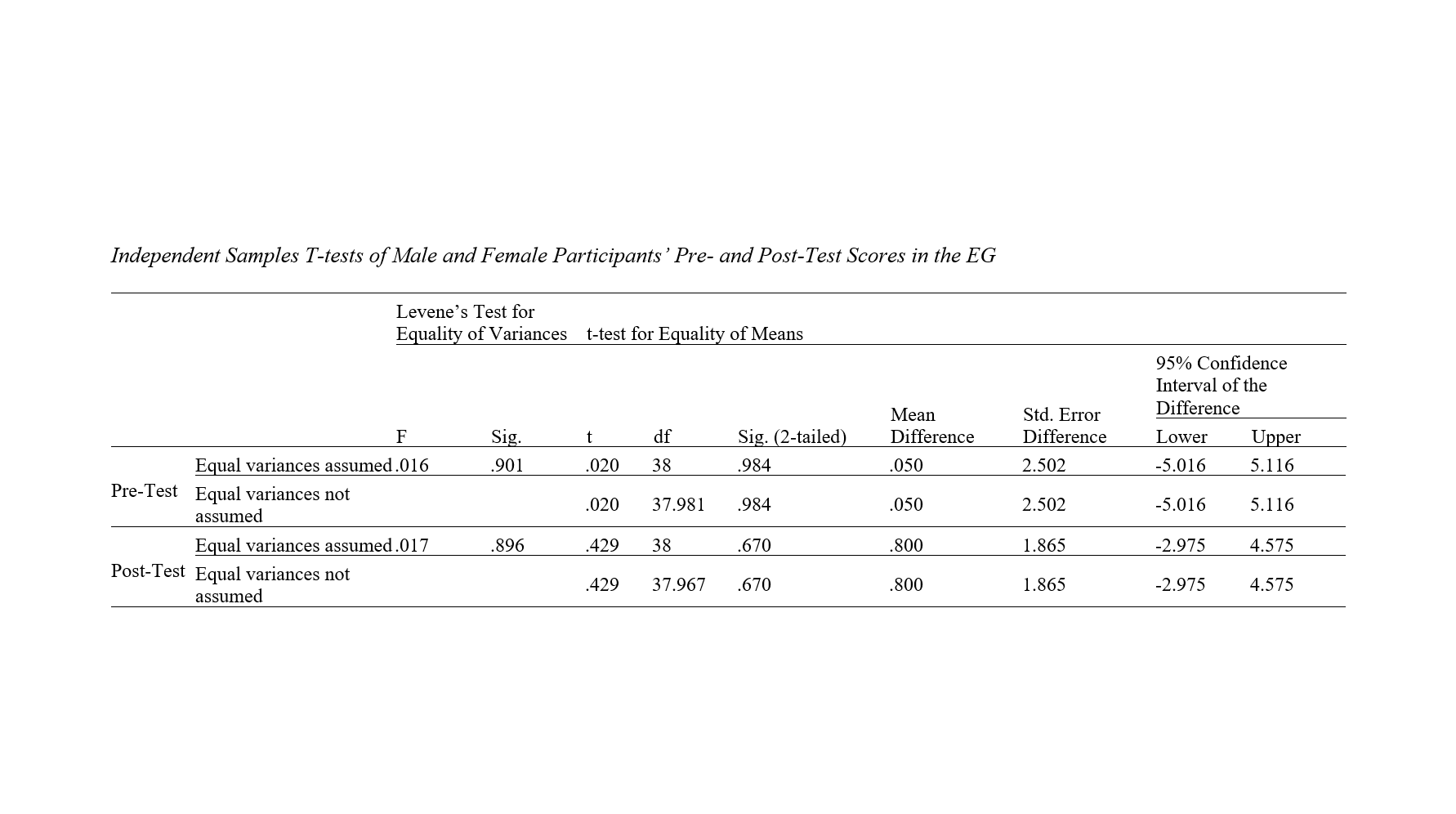
In the evolving landscape of technology-enhanced language learning (TELL), this study investigates the efficacy of a technology-mediated shadowing technique on the acquisition of English collocations among Iranian EFL learners. A sample of 80 intermediate learners was selected and randomly assigned to experimental and control groups. Initially, a pre-test was administered to assess the learners’ prior knowledge of collocations. The experimental group used audio-shadowing technology, while the control group received equivalent instruction through explicit explanation and text-based practice. Following ten 90-minute instructional sessions, participants completed a post-test to evaluate their knowledge gains. A researcher-developed multiple-choice test containing 40 items served as both the pre- and post-test of the study. Paired and independent samples t-tests were performed to answer the research questions. Findings indicated that this simple technological intervention significantly enhances collocational understanding for both male and female learners, with no notable gender differences identified. These results provide valuable insights for educators and curriculum developers seeking to integrate low-threshold technologies into the classroom, and highlight the potential of scalable, audio-based methods as a foundational step towards more sophisticated technology-powered personalized listening and vocabulary acquisition tools.
Downloads
References
Agustinus, T. M., Rini, N., & Clark, M. (2019). A study on English listening activity of shadowing in Indonesian students. Soshum: Jurnal Sosial dan Humaniora, 9(1), 88-99. https://doi.org/10.31940/soshum.v9i1.1224
Al Kayed, M., Samardali, M., Essa, L. B., & Johnson, R. (2022). The effects of shadow-reading on EFL learners' reading comprehension. Journal of Language Teaching and Research, 13(5), 1133-1138. https://doi.org/10.17507/jltr.1305.28
Arifani, Y. (2019). The application of small WhatsApp groups and the individual flipped instruction model to boost EFL learners' mastery of collocation. Call-EJ, 20(1), 52-73. https://callej.org/index.php/journal/article/view/260
Attar, E. M., & Allami, H. (2013). The effects of teaching lexical collocations on speaking ability of Iranian EFL learners. Theory and Practice in Language Studies, 3(6), 1070-1079. https://doi.org/10.4304/tpls.3.6.1070-1079
Bandura, A. (1993). Perceived self-efficacy in cognitive development and functioning. Educational Psychologist, 28(2), 117-148. https://doi.org/10.1207/s15326985ep2802_3
Benson, M., Benson, E., & Ilson, R. (1986). The BBI combinatory dictionary of English. John Benjamin Publishing Company. https://doi.org/10.1075/z.bbi.workbook
Biel, L., Biernacka, A., & Jopek-Bosiacka, A. (2018). Collocations of terms in EU competition law: A corpus analysis of EU English collocations. In Language and Law (pp. 249-274). Springer, Cham. https://doi.org/10.1007/978-3-319-90905-9_14
Brown, D. (2014). Knowledge of collocations. In J. Milton & T. Fitzpatrick (Eds.), Dimensions of vocabulary knowledge (pp. 123-139). Palgrave Macmillan. https://doi.org/10.1075/itl.166.1.06pau
Choi, S. (2017). Processing and learning of enhanced English collocations: An eye movement study. Language Teaching Research, 21(3), 403-426. https://doi.org/10.1177/1362168816653271
Chung, D. U. (2010). The effect of shadowing on English listening and speaking abilities of Korean middle school students. English Teaching, 65, 97-127. https://doi.org/10.15858/engtea.65.3.201009.97
Costa-Font, J., Giuliano, P., & Ozcan, B. (2018). The cultural origin of saving behavior. PLoS One, 13(9), e0202290. https://doi.org/10.1371/journal.pone.0202290
Ding, C., & Reynolds, B. L. (2019). The effects of L1 congruency, L2 proficiency, and the collocate-node relationship on the processing of L2 English collocations by L1-Chinese EFL learners. Review of Cognitive Linguistics, 17(2), 331-357. https://doi.org/10.1075/rcl.00038.din
Ekayati, R. (2020). Shadowing technique on students' listening word recognition. IJEMS: Indonesian Journal of Education and Mathematical Science, 1(2), 31-42. https://doi.org/10.30596/ijems.v1i2.4695
Erol, M., Idsardi, R., Luft, J. A., Myers, D. L., & Lemons, P. P. (2015). Creating active learning environments in Undergraduate STEM courses.
Fanaee, F. (2014). Teaching collocations through task-based instruction: The case of Iranian EFL students. International Journal of Linguistics, 6(1), 1-11. https://doi.org/10.5296/ijl.v6i1.5167
Ghalavandi, F. (2019). The Comparative Study of the Effects of Shadowing and Note-taking on EFL Students' Listening Comprehension Improvement. Applied Linguistics Research Journal, 3(3), 31-40. https://doi.org/10.14744/alrj.2019.52824
Ghonsooli, B., Pishgaman, R., & Mahjoobi, F. (2008). The impact of collocational instruction on the writing skill of Iranians EFL learners: A case of product and process study. Iranian EFL Journal, 1(1), 36-59.
Gilakjani, A. P., & Ahmadi, M. R. (2011). A study of factors affecting EFL learners' English listening comprehension and the strategies for improvement. Journal of Language Teaching and Research, 2(5), 977-988. https://doi.org/10.4304/jltr.2.5.977-988
Hamada, Y. (2012). An effective way to improve listening skills through shadowing. The Language Teacher, 1, 4-9. https://doi.org/10.37546/JALTTLT36.1-1
Hamada, Y. (2014). The effectiveness of pre-and post-shadowing in improving listening comprehension skills. The Language Teacher, 38(1), 3-10. https://doi.org/10.37546/JALTTLT38.1-1
Hamada, Y. (2015). Shadowing: Who benefits and how? Uncovering a booming EFL teaching technique for listening comprehension. Language Teaching Research, 20(1), 35-52. https://doi.org/10.1177/1362168815597504
Hamada, Y. (2016). Teaching EFL Learners Shadowing for Listening: Developing learners' bottom-up skills. Routledge. https://doi.org/10.4324/9781315677118
Hamada, Y. (2024). Developing a new shadowing procedure for listening vocabulary: selective shadowing. Innovations in Language Learning and Teaching, 19(2), 122-135. https://doi.org/10.1080/17501229.2024.2340567
Hamada, Y., & Suzuki, S. (2021). Listening to global Englishes: Script-assisted shadowing. International Journal of Applied Linguistics, 31, 31-47. https://doi.org/10.1111/ijal.12318
Hikmat, S. N., & Hasan, I. A. (2022). A study on the effectiveness of shadowing on SI performance at the university level. International Journal of Health Sciences, 6(9), 3467-3481. https://doi.org/10.53730/ijhs.v6nS9.13349
Hsieh, K. T., Dong, D. H., & Wang, L. Y. (2013). A preliminary study of applying shadowing technique to English intonation instruction. Taiwan Journal of Linguistics, 11(2), 43-65. https://doi.org/10.6519/TJL.2013.11(2).2
Hsu, J. Y. (2005). The effects of direct collocation instruction on the English proficiency of Taiwanese college students in a business English workshop. Soochow Journal of Foreign Languages and Cultures, 21, 1-39. https://e-flt.nus.edu.sg/v4n22007/hsu.pdf
Hsu, J. Y. (2010). The effects of collocation instruction on the reading comprehension and vocabulary learning of Taiwanese college English majors. Asian EFL Journal, 12(1), 47-87. https://www.researchgate.net/profile/Peter-Grimbeek/publication/45192975_Relative_cultural_contributions_of_religion_and_ethnicity_to_the_language_learning_strategy_choices_of_ESL_students_in_Sri_Lankan_and_Japanese_high_schools/links/09e415064a7d665ece000000/Relative-cultural-contributions-of-religion-and-ethnicity-to-the-language-learning-strategy-choices-of-ESL-students-in-Sri-Lankan-and-Japanese-high-schools.pdf#page=47
Huang, J., Li, J., Shu, T., & Zhang, Y. (2022). A Mixed-Methods National Study Investigating Key Challenges in Learning English as a Foreign Language: A Chinese College Student Perspective. Frontiers in Psychology, 13. https://doi.org/10.3389/fpsyg.2022.1035819
Jeensuk, S., & Sukying, A. (2021). An investigation of high school EFL learners' knowledge of English collocations. Journal of Applied Linguistics and Language Research, 8(1), 90-106. https://www.jallr.com/index.php/JALLR/article/download/1152/pdf1152
Jeremy, J., & Spandagou, I. (2025). Shadowing as Qualitative Inquiry: Exploring its Potential and Limitations in Educational Research. International Journal of Qualitative Methods, 24. https://doi.org/10.1177/16094069251330720
Kadota, S. (2007). The science of shadowing and oral reading [Shadoingto ondoku no kogaku]. Language Education & Technology, 48, 1-22. https://www.researchgate.net/publication/324209001_Shadowing_with_Oral_Reading_Effects_of_Combined_Training_on_the_Improvement_of_Japanese_EFL_Learners'_Prosody
Khan, J., & Liu, C. (2020). The impact of colors on human memory in learning English collocations: Evidence from south Asian tertiary ESL students. Asian-Pacific Journal of Second and Foreign Language Education, 5(1), 1-10. https://doi.org/10.1186/s40862-020-00098-8
Laufer, B. (2011). The contribution of dictionary uses to the production and retention of collocations in a second language. International Journal of Lexicography, 24(1), 29-49. https://doi.org/10.1093/ijl/ecq039
Lei, L., & Liu, D. (2018). The academic English collocation list: A corpus-driven study. International Journal of Corpus Linguistics, 23(2), 216-243. https://doi.org/10.1075/ijcl.16135.lei
Lestari, F. D. (2023). Improving students' listening comprehension ability through shadowing technique. Journal of English Teaching and Applied Linguistics, 2(1), 24-28. https://doi.org/10.36655/jetal.v2i1.196
Lien, H. Y. (2003). The effects of collocation instruction on the reading comprehension of Taiwanese college students Indiana University of Pennsylvania]. Pennsylvania. https://www.researchgate.net/publication/266464997_The_Effects_on_Reading_Comprehension_of_Lexical_Collocation_Instruction_Subject_Matter_Knowledge_and_Cultural_Schema
McCarthy, M., & O'Dell, F. (2005). English collocations in use: Intermediate (5th ed.). Cambridge University Press. https://myigcseworksheets.wordpress.com/wp-content/uploads/2019/02/collocations_in_use_intermediate.pdf
Meltzoff, A. N. (2011). Social cognition and the origins of imitation, empathy, and theory of mind. In The Wiley-Blackwell handbook of childhood cognitive development (Vol. 2, pp. 49-75). Wiley-Blackwell. https://doi.org/10.1002/9781444325485.ch2
Moray, N. (1959). Attention in dichotic listening: Affective cues and the influence of instructions. Quarterly journal of experimental psychology, 11(1), 56-60. https://doi.org/10.1080/17470215908416289
Moreno, R. (2005). Instructional technology: Promise and pitfalls. In L. PytlikZillig, M. Bodvarsson, & R. Bruning (Eds.), Technology-based education: Bringing researchers and practitioners together (pp. 1-19). Information Age Publishing. https://www.researchgate.net/publication/204172379_Technology-based_education_Bringing_researchers_and_practitioners_together
Moreno, R., & Mayer, R. (2007). Interactive multimodal learning environments. Educational Psychology Review, 19(3), 309-326. https://doi.org/10.1007/s10648-007-9047-2
Movahed, R. (2014). The effect of metacognitive strategy instruction on listening performance, metacognitive awareness and listening anxiety of beginner Iranian EFL students. International Journal of English Linguistics, 4(2), 88. https://doi.org/10.5539/ijel.v4n2p88
O'Dell, F., & McCarthy, M. (2008). English collocations in use: Advanced. Cambridge University Press. https://smartcom.vn/blog/wp-content/uploads/2024/03/English-Collocations-in-Use-Advanced.pdf
Poulsen, S. (2022). Collocations as a language resource. A functional and cognitive study in English phraseology. John Benjamins Publishing Company. https://doi.org/10.1075/hcp.71
Puspita, L. A., Judiasri, M. D., & Herniwati, H. (2016). Teknik Shadowing dalam Pembelajaran Kaiwa. Pendidikan Dan Pengajaran Bahasa Jepang, 1, 48. https://doi.org/10.17509/japanedu.v1i3.5940
Rahimi, R., & Momeni, G. (2012). The effect of teaching collocations on English language proficiency. Procedia - Social and Behavioral Sciences, 31, 37-42. https://doi.org/10.1016/j.sbspro.2011.12.013
Shahivand, A., & Pazhakh, A. (2012). The effects of test facets on the construct validity of the tests in Iranian EFL students. Higher Education of Social Science, 2(1), 16-20. https://doi.org/10.3968/j.hess.1927024020120201.452
Shiki, O., Mori, Y., Kadota, S., & Yoshida, S. (2010). Exploring differences between shadowing and repeating practices: An analysis of reproduction rate and types of reproduced words. ARELE: annual review of English language education in Japan, 21, 81-90. https://doi.org/10.20581/ARELE.21.0_81
Simons, P. R. J., van der Linden, M. A. A., & Duffy, T. (2000). New learning. Kluwer Academic. https://doi.org/10.1007/0-306-47614-2
Tamai, K. (1997). The effectiveness of shadowing and listening process. Current English Studies, 36, 105-116. https://doi.org/10.53730/ijhs.v6nS9.13349
Thomas, R. M., Nair, S., Benny, M. J., & Almeida, S. M. (2024). Comparative analysis of investment behaviour: exploring investment patterns and decision-making between generation x, generation y, and generation z. Management Journal for Advanced Research, 4(2), 21-35. https://doi.org/10.5281/zenodo.10937791
Vandergrift, L., & Tafaghodtari, M. (2010). Teaching L2 Learners How to Listen Does Make a Difference: An Empirical Study. Language Learning, 60, 470-497. https://doi.org/10.1111/j.1467-9922.2009.00559.x
Yavari, F., & Shafiee, S. (2019). Effects of Shadowing and Tracking on Intermediate EFL Learners' Oral Fluency. International Journal of Instruction, 12(1), 869-884. https://doi.org/10.29333/iji.2019.12156a
Yoon, D. (2021). Designing CAST: a computer-assisted shadowing trainer for self-regulated foreign language listening practice. Proceedings of the 2021 CHI Conference on Human Factors in Computing Systems,
Yuksaj, N., & Chan, K. (2019). The Role of Mainstream Schooling and Shado Education in English Language Teaching: A Case Study in Hong Kong. Educational Journal, 8(1), 16-26. https://doi.org/10.11648/j.edu.20190801.13
Downloads
Publication Timeline
- Submitted
- Revised
- Accepted