Integrating Digital Tools into Compassion-Focused Therapy for Body Image and Eating Disorder Behaviors in Adult Women
DOI:
https://doi.org/10.61838/kman.aitech.5232Keywords:
Compassion-Focused Therapy (CFT); Body Image; Eating Disorders; Self-Compassion; Adult Women.Abstract
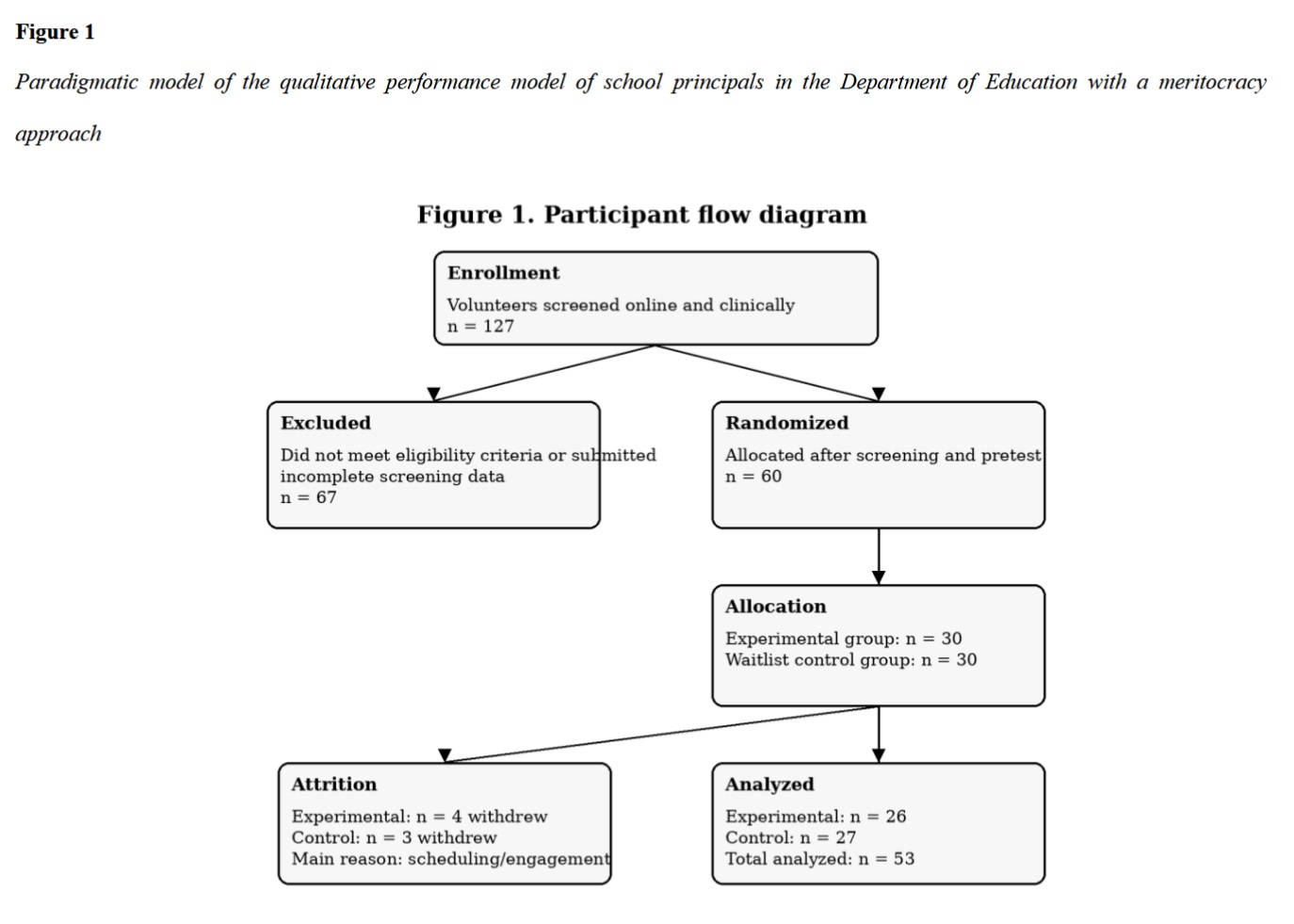
Eating disorders (EDs) and body image disturbance remain major mental health concerns among adult women, and the persistence of shame, self-criticism, and relapse after standard treatment highlights the need for compassion-based interventions. This study investigated the effectiveness of Compassion-Focused Therapy (CFT) integrated with digital tools in improving body appreciation and self-compassion while reducing eating disorder psychopathology in adult women with disordered eating symptoms. Using a semi-experimental pretest–posttest design with a two-month follow-up, 60 women from Tehran, Iran, were randomly assigned to either an intervention group receiving 12 weekly group CFT sessions with digital support or a waitlist control group; 53 participants completed the study (26 in the intervention group and 27 in the control group). Outcomes were assessed using the Body Appreciation Scale-2 (BAS-2), the Eating Disorder Examination Questionnaire (EDE-Q), and the Self-Compassion Scale–Short Form (SCS-SF), and the data were analyzed using mixed ANOVA. The findings showed significant Time × Group interaction effects for all three outcomes, indicating superior improvement in the intervention group relative to controls. Body appreciation increased from 2.85 ± 0.71 at pretest to 3.92 ± 0.64 at posttest and remained stable at 3.88 ± 0.68 at follow-up, with a significant interaction effect, F(1.68, 85.64) = 42.35, p < 0.001, η² = 0.45. Eating disorder psychopathology declined markedly from 3.65 ± 0.89 to 2.10 ± 0.75 and was maintained at 2.15 ± 0.78, F(1.72, 87.72) = 55.18, p < 0.001, η² = 0.52. Self-compassion improved from 2.45 ± 0.62 to 3.55 ± 0.58 and remained at 3.50 ± 0.60, F(1.85, 94.35) = 38.92, p < 0.001, η² = 0.43. In contrast, the waitlist group showed no meaningful change across time. Overall, digitally supported CFT appears to be an effective and durable intervention for improving body image and reducing eating disorder symptoms in adult women.
Downloads
References
Bonfanti, R. C., Melchiori, F., Teti, A., Albano, G., Raffard, S., Rodgers, R. F., & Lo Coco, G. (2025). The association between social comparison in social media, body image concerns and eating disorder symptoms: A systematic review and meta-analysis. Body Image, 52, 101841. https://doi.org/10.1016/j.bodyim.2024.101841
Conboy, L., Mingoia, J., Hutchinson, A. D., Reisinger, B. A. A., & Gleaves, D. H. (2024). Digital body image interventions for adult women: A meta-analytic review. Body Image, 51, 101776. https://doi.org/10.1016/j.bodyim.2024.101776
Dane, A., & Bhatia, K. (2023). The social media diet: A scoping review to investigate the association between social media, body image and eating disorders amongst young people. Plos Global Public Health, 3(3), e0001091. https://doi.org/10.1371/journal.pgph.0001091
Fairburn, C. G., & Beglin, S. J. (2008). Eating Disorder Examination Questionnaire (EDE-Q 6.0)
Cognitive behavior therapy and eating disorders. Guilford Press.
First, M. B., Williams, J. B. W., Karg, R. S., & Spitzer, R. L. (2016). Structured Clinical Interview for DSM-5 Disorders, clinician version (SCID-5-CV). American Psychiatric Association Publishing.
Gilbert, P. (2010). Compassion focused therapy: Distinctive features. Routledge. https://doi.org/10.4324/9780203851197
Goss, K., & Allan, S. (2014). The development and application of compassion-focused therapy for eating disorders (CFT-E). British Journal of Clinical Psychology, 53(1), 62-77. https://doi.org/10.1111/bjc.12039
Kelly, A. C., Wisniewski, L., Martin-Wagar, C., & Hoffman, E. (2017). Group-based compassion-focused therapy as an adjunct to outpatient treatment for eating disorders: A pilot randomized controlled trial. Clinical Psychology & Psychotherapy, 24(2), 475-487. https://doi.org/10.1002/cpp.2018
Liu, K., Gao, R., Kuang, H., E, R., Zhang, C., & Guo, X. (2025). Global, regional, and national burdens of eating disorder in adolescents and young adults aged 10-24 years from 1990 to 2021: A trend analysis. Journal of Affective Disorders, 388, 119596. https://doi.org/10.1016/j.jad.2025.119596
Millard, L. A., Wan, M. W., Smith, D. M., & Wittkowski, A. (2023). The effectiveness of compassion focused therapy with clinical populations: A systematic review and meta-analysis. Journal of Affective Disorders, 326, 168-192. https://doi.org/10.1016/j.jad.2023.01.010
Morgan-Lowes, K. L., Thøgersen-Ntoumani, C., Howell, J., Khossousi, V., & Egan, S. J. (2023). Self-compassion and clinical eating disorder symptoms: A systematic review. Clinical Psychologist, 27(3), 269-283. https://doi.org/10.1080/13284207.2023.2252971
Paranjothy, S. M., & Wade, T. D. (2024). A meta-analysis of disordered eating and its association with self-criticism and self-compassion. International Journal of Eating Disorders, 57(3), 473-536. https://doi.org/10.1002/eat.24166
Pruessner, L., Timm, C., Barnow, S., Rubel, J. A., Lalk, C., & Hartmann, S. (2024). Effectiveness of a web-based cognitive behavioral self-help intervention for binge eating disorder: A randomized clinical trial. JAMA Network Open, 7(5), e2411127. https://doi.org/10.1001/jamanetworkopen.2024.11127
Raes, F., Pommier, E., Neff, K. D., & Van Gucht, D. (2011). Construction and factorial validation of a short form of the Self-Compassion Scale. Clinical Psychology & Psychotherapy, 18(3), 250-255. https://doi.org/10.1002/cpp.702
Stock, M., Beaman, L., Moreton, R., Holland-Borosh, C., Hartland, H., & Hamadi, L. (2025). The efficacy of compassion focused therapy in eating disorders: A systematic review of the literature. Journal of Eating Disorders, 13, 235. https://doi.org/10.1186/s40337-025-01418-4
Thomas, P. C., Curtis, K., Potts, H. W. W., Bark, P., Perowne, R., Rookes, T., & Rowe, S. (2024). Behavior change techniques within digital interventions for the treatment of eating disorders: Systematic review and meta-analysis. JMIR Mental Health, 11, e57577. https://doi.org/10.2196/57577
Torous, J., Jän Myrick, K., Rauseo-Ricupero, N., & Firth, J. (2020). Digital mental health and COVID-19: Using technology today to accelerate the curve on access and quality tomorrow. JMIR Mental Health, 7(3), e18848. https://doi.org/10.2196/18848
Tylka, T. L., & Wood-Barcalow, N. L. (2015). The Body Appreciation Scale-2: Item refinement and psychometric evaluation. Body Image, 12, 53-67. https://doi.org/10.1016/j.bodyim.2014.09.006
Vrabel, K. A. R., Waller, G., Goss, K., Wampold, B., Kopland, M., & Hoffart, A. (2024). Cognitive behavioral therapy versus compassion focused therapy for adult patients with eating disorders with and without childhood trauma: A randomized controlled trial in an intensive treatment setting. Behaviour Research and Therapy, 174, 104480. https://doi.org/10.1016/j.brat.2024.104480
Downloads
Publication Timeline
- Submitted
- Revised
- Accepted