The Effectiveness of Computerized Cognitive Rehabilitation on Academic Engagement Among Students With Academic Underachievement: A Quasi-Experimental Study
DOI:
https://doi.org/10.61838/kman.aitech.5326Abstract
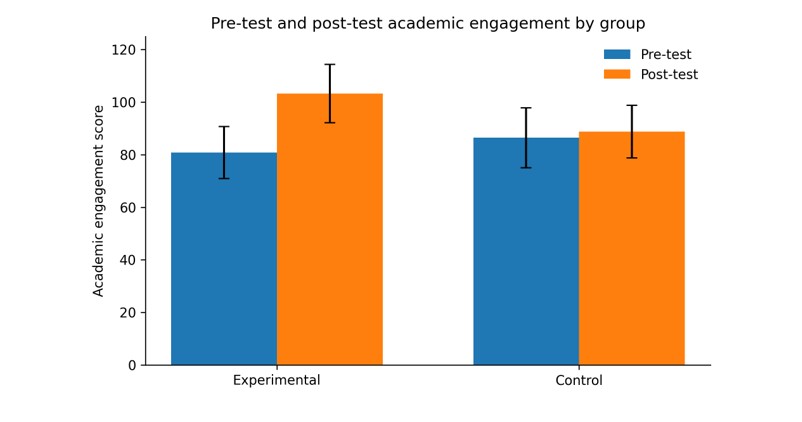
This quasi-experimental study examined the effectiveness of computerized cognitive rehabilitation in improving academic engagement among lower-secondary students experiencing academic underachievement. The study used a pre-test/post-test design with an experimental group and a control group. The statistical population consisted of lower-secondary students with academic underachievement in Tehran during the first semester of the 2023-2024 academic year. Thirty students were selected through convenience sampling and randomly assigned to an experimental group (n = 15) and a control group (n = 15). Academic engagement was measured using the Zarang Academic Engagement Questionnaire, which assesses cognitive, motivational, and behavioral engagement. The experimental group completed a 12-session computerized cognitive rehabilitation program using Captain's Log version 14, delivered twice weekly and designed to train 22 foundational and higher-order cognitive skills, including focused and sustained attention, divided and selective attention, working memory, auditory and visual processing speed, response inhibition, problem solving, and logical reasoning. The control group did not receive the computerized intervention during the study period. Data were analyzed with analysis of covariance after checking the main statistical assumptions. The experimental group showed a marked increase in academic engagement from pre-test (M = 80.86, SD = 9.87) to post-test (M = 103.26, SD = 11.10), whereas the control group showed only a small descriptive increase from pre-test (M = 86.46, SD = 11.36) to post-test (M = 88.80, SD = 10.00). ANCOVA indicated a statistically significant group effect after controlling for pre-test scores, F(1, 27) = 7.11, p = .013, partial eta squared = .208. These findings suggest that computerized cognitive rehabilitation may be a useful school-based adjunct intervention for strengthening academic engagement among students with academic underachievement, although future studies with larger samples, active control conditions, and follow-up assessments are needed.
Downloads
Downloads
Publication Timeline
- Submitted
- Revised
- Accepted