Reported Frequencies of and Initial Psychometric Properties of Measures of Childhood and Current Peer Victimization in a Sample of American Adults
Keywords:
peer victimization, interpersonal violence, retrospective peer victimization, psychometrics, adultsAbstract
Objective: In the present study, we examined the internal consistency, factor structure, and response patterns of two measures of peer victimization a sample of 899 American adults. One measure, the Retrospective Childhood Victimization Scale (RCVPS; (Boulton, 2013)) examines retrospective childhood peer victimization while the other scale, the Pacific Rim Bullying questionnaire (PRB; (Konishi et al., 2009)) measures current peer victimization.
Methods and Materials: Initial factor structure was derived using exploratory factor analysis (EFA); internal consistency and response frequencies were also calculated.
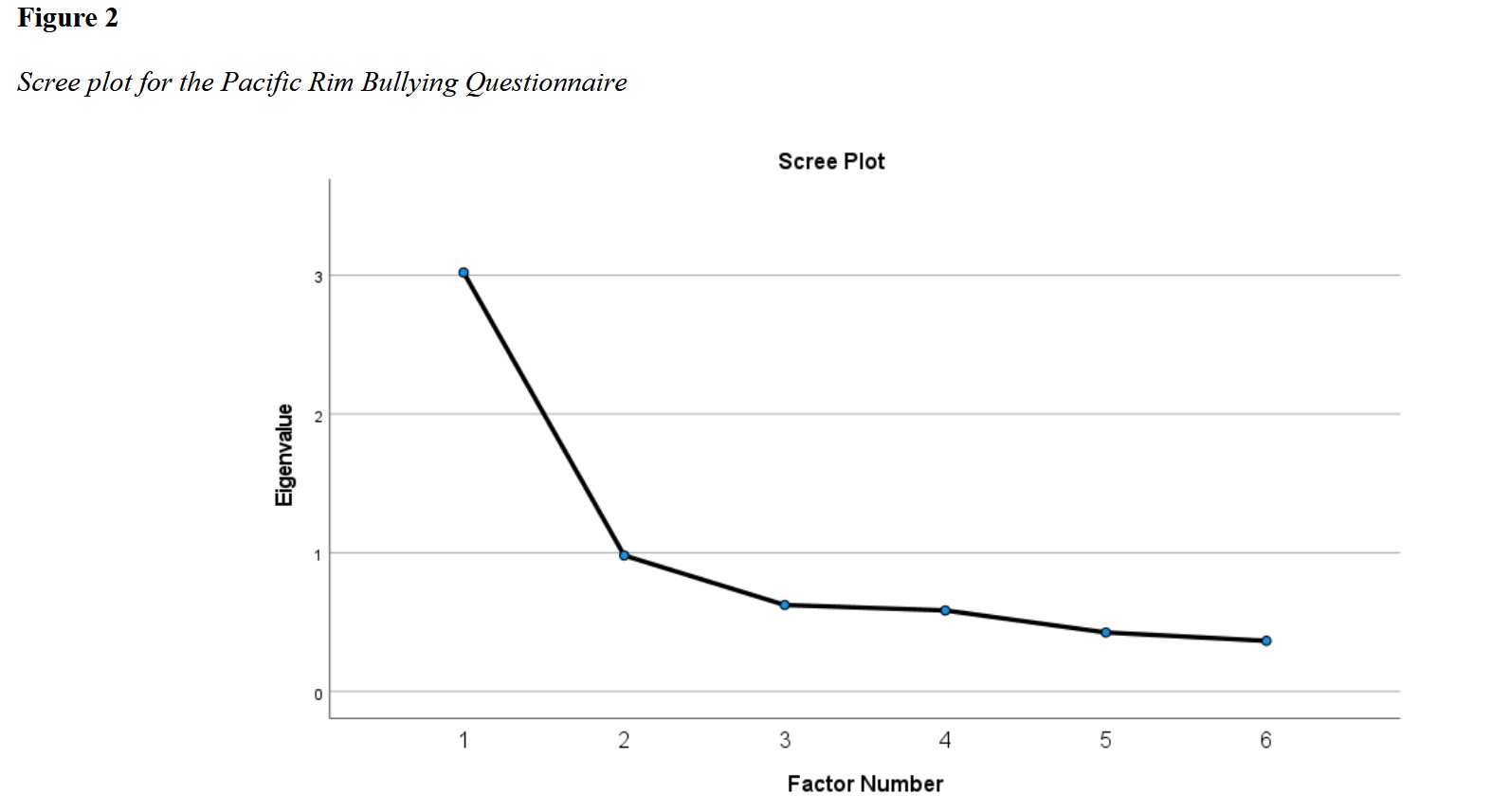
Findings: The RCPVS demonstrated excellent internal consistency, and the PRB demonstrated adequate internal consistency. Both measures fit two-factor models in which physical victimization (and, in the case of the PRB, property theft or damage) loaded into one factor whereas relational and verbal victimization loaded into another factor. Participants also more frequently endorsed experiencing relational and verbal victimization on both measures, indicating that physical victimization may be a somewhat distinct construct that occurs less commonly than other types of interpersonal victimization.
Conclusion: These results lay the groundwork for future psychometric analysis of these measures in adult samples, including confirmatory factor analysis. Relational and verbal peer victimization are more common across the lifespan than either physical victimization or property destruction. Additionally, relational and verbal victimization tend to co-occur. Clinicians should therefore assess for relational and verbal victimization, especially if a client independently reports experiencing one or another. Clinicians should also assess for exposure to physical and property victimization separately.
Downloads
References
Barrios, Y. V., Gelaye, B., Zhong, Q., Nicolaidis, C., Rondon, M. B., Garcia, P. J., & Williams, M. A. (2015). Association of childhood physical and sexual abuse with intimate partner violence, poor general health and depressive symptoms among pregnant women. PLoS One, 10(1), e0116609. https://doi.org/10.1371/journal.pone.0116609
Bogart, K. R., Rottenstein, A., Lund, E. M., & Bouchard, L. M. (2018). Disability self-identification in adults with chronic health conditions: Impairment and contextual influences. Rehabilitation Psychology, 62, 553-562. https://doi.org/10.1037/rep0000132
Boulton, M. J. (2013). Associations between adults' recalled childhood bullying victimization, current social anxiety, coping, and self-blame: Evidence for moderation and indirect effects. Anxiety, Stress & Coping: An International Journal, 26(3), 270-292. https://doi.org/10.1080/10615806.2012.662499
Brunstein, K. A., Sourander, A., & Gould, M. (2010). The association of suicide and bullying in childhood to young adulthood: a review of cross-sectional and longitudinal research findings. Canadian Journal of Psychiatry, 55(5), 282-288. https://doi.org/10.1177/070674371005500503
Buhrmester, M., Kwang, T., & Gosling, S. D. (2011). Amazon's Mechanical Turk: A new source of inexpensive, yet high-quality data? Perspectives on Psychological Science, 6(1), 3-5. https://doi.org/10.1177/1745691610393980
Cerny, C. A., & Kaiser, H. F. (1977). A study of a measure of sampling adequacy for factor-analytic correlation matrices. Multivariate Behavioral Research, 12(1), 43-47. https://doi.org/10.1207/s15327906mbr1201_3
Comas-Díaz, L., Hall, G. N., & Neville, H. A. (2019). Racial trauma: Theory, research, and healing: Introduction to the special issue. American Psychologist, 74(1), 1-5. https://doi.org/10.1037/amp0000442
deLara, E. W. (2012). Why adolescents don't disclose incidents of bullying and harassment. Journal of School Violence, 11, 288-305. https://doi.org/10.1080/15388220.2012.705931
Forber-Pratt, A. J., Merrin, G. J., & Espelage, D. L. (2020). Exploring the intersections of disability, race, and gender on student outcomes in high school. Remedial and Special Education. https://doi.org/10.1177/0741932520941201
George, D., & Mallery, P. (2003). SPSS for Windows step by step: A simple guide and reference. Allyn & Bacon. https://psycnet.apa.org/record/1998-07683-000
Hawker, D. S., & Boulton, M. J. (2000). Twenty years' research on peer victimization and psychosocial maladjustment: A meta‐analytic review of cross‐sectional studies. Journal of Child Psychology and Psychiatry, 41(4), 441-455. https://doi.org/10.1111/1469-7610.00629
Hughes, K., Bellis, M. A., Jones, L., Wood, S., Bates, G., Eckley, L., McCoy, E., & Officer, A. (2012). Prevalence and risk of violence against adults with disabilities: A systematic review and meta-analysis of observational studies. The Lancet, 379, 1621-1629. https://doi.org/10.1016/S0140-6736(11)61851-5
Hughes, R. B., Lund, E. M., Gabrielli, J., Powers, L. E., & Curry, M. A. (2011). Prevalence of interpersonal violence against community-living adults with disabilities: A literature review. Rehabilitation Psychology, 56, 302-319. https://doi.org/10.1037/a0025620
Ipsen, C., Kurth, N., & Hall, J. (2021). Evaluating MTurk as a recruitment tool for rural people with disabilities. Disability and Health Journal, 14(1), 100991. https://doi.org/10.1016/j.dhjo.2020.100991
Katz-Wise, S. L., & Hyde, J. S. (2012). Victimization experiences of lesbian, gay, and bisexual individuals: A meta-analysis. Journal of Sex Research, 49(2-3), 142-167. https://doi.org/10.1080/00224499.2011.637247
Konishi, C., Hymel, S., Zumbo, B. D., Li, Z., Taki, M., & Slee, P. (2009). Investigating the comparability of a self-report measure of childhood bullying across countries. Canadian Journal of School Psychology, 24, 82-92. https://doi.org/10.1177/0829573509331614
Lund, E. M. (2021). Examining the potential applicability of the minority stress model for explaining suicidality in individuals with disabilities. Rehabilitation Psychology, 66(2), 183-191. https://doi.org/10.1037/rep0000378
Lund, E. M., Corr, C., Kinavey, E., Mott, K., Chowdhury, D., Hammond, M., Thomas, K. B., & Schultz, J. C. (2021). Retrospective childhood disability-related abuse: A proof of concept study. Journal of Interpersonal Violence, 36(21-22), 10029-10053. https://doi.org/10.1177/0886260519879240
Lund, E. M., Nadorff, M. R., Galbraith, K., & Thomas, K. B. (2018). Using Amazon Mechanical Turk to recruit participants with disabilities. https://doi.org/10.4135/9781526437280
Lund, E. M., Nadorff, M. R., & Seader, K. (2016). The relationship between suicidality and disability when accounting for depressive symptomology. Rehabilitation Counseling Bulletin, 59, 185-188. https://doi.org/10.1177/0034355215586388
Lund, E. M., & Ross, S. W. (2016). Peer victimization in students who are Deaf and hard of hearing: Exploring educational placement. Journal of the American Deafness and Rehabilitation Association, 50(2), 20-43. https://nsuworks.nova.edu/jadara/vol50/iss2/1/
Lund, E. M., & Ross, S. W. (2017). Bullying perpetration, victimization, and demographic differences in college students: A review of the literature. Trauma, Violence, & Abuse, 17, 348-360. https://doi.org/10.1177/1524838015620818
Mason, L. (2016). "But he didn't hit me": Living with a non-physical-battering sexual abuser. In Perpetrators of Intimate Partner Sexual Violence (pp. 113-125). Routledge. https://www.taylorfrancis.com/chapters/edit/10.4324/9781315693422-19/didn-hit-living-non-physical-battering-sexual-abuser-lindsey-mason
Nielsen, M. B., Matthiesen, S. B., & Einarsen, S. (2010). The impact of methodological moderators on prevalence rates of workplace bullying. A meta‐analysis. Journal of Occupational and Organizational Psychology, 83(4), 955-979. https://doi.org/10.1348/096317909X481256
Olweus, D. (1995). Bullying or peer abuse at school: Facts and intervention. Current Directions in Psychological Science, 4, 196-200. https://doi.org/10.1111/1467-8721.ep10772640
Partridge, B., & Affleck, J. (2017). Verbal abuse and physical assault in the emergency department: Rates of violence, perceptions of safety, and attitudes towards security. Australasian Emergency Nursing Journal, 20(3), 139-145. https://doi.org/10.1016/j.aenj.2017.05.001
Riedl, D., Beck, T., Exenberger, S., Daniels, J., Dejaco, D., Unterberger, I., & Lampe, A. (2019). Violence from childhood to adulthood: The influence of child victimization and domestic violence on physical health in later life. Journal of Psychosomatic Research, 116, 68-74. https://doi.org/10.1016/j.jpsychores.2018.11.019
Ross, S. W., Lund, E. M., Sabey, C. V., & Charlton, C. C. (2017). Students' perspectives on bullying. In Bullying in the school: Perspectives from across campus (pp. 23-47). Palgrave MacMillan. https://doi.org/10.1057/978-1-137-59298-9_2
Samnani, A., & Singh, P. (2012). 20 years of workplace bullying research: A review of the antecedents and consequences of bullying in the workplace. Aggression and Violent Behavior, 17, 581-589. https://doi.org/10.1016/j.avb.2012.08.004
Snedecor, G. W., & Cochran, W. G. (1989). Statistical Methods. Iowa State University Press. https://www.scirp.org/reference/referencespapers?referenceid=2300515
Sürücü, L., Yıkılmaz, İ., & Maşlakçı, A. (2022). Exploratory factor analysis (EFA) in quantitative researches and practical considerations. Gümüşhane Üniversitesi Sağlık Bilimleri Dergisi, 13(2), 947-965. https://doi.org/10.31219/osf.io/fgd4e
Swearer, S. M., Wang, C., Maag, J. W., Siebecker, A. B., & Frerichs, L. J. (2012). Understanding the bullying dynamic among students in special and general education. Journal of School Psychology, 50(4), 503-520. https://doi.org/10.1016/j.jsp.2012.04.001
Thomas, K. B., Lund, E. M., & Bradley, A. R. (2015). Composite trauma and mental health diagnosis as predictors of lifetime non-suicidal self-injury history in an adult online sample. Journal of Aggression, Maltreatment, and Trauma, 26, 623-635. https://doi.org/10.1080/10926771.2015.1049766
Wang, J., Iannotti, R. J., & Nansel, T. R. (2009). School bullying among adolescents in the United States: Physical, verbal, relational, and cyber. Journal of Adolescent Health, 45, 368-375. https://doi.org/10.1016/j.jadohealth.2009.03.021
Wolke, D., Copeland, W. E., Angold, A., & Costello, E. (2013). Impact of bullying in childhood on adult health, wealth, crime, and social outcomes. Psychological Science, 24(10), 1958-1970. https://doi.org/10.1177/0956797613481608
Zou, C., Andersen, J. P., & Blosnich, J. R. (2013). The association between bullying and physical health among gay, lesbian, and bisexual individuals. Journal of the American Psychiatric Nurses Association, 19, 356-365. https://doi.org/10.1177/1078390313510739
Downloads
Additional Files
Publication Timeline
- Submitted
- Revised
- Accepted