Self-Defining Memories and Future Self-Continuity: A Qualitative Study in Emerging Adulthood
DOI:
https://doi.org/10.61838/kman.jarac.7.3.27Keywords:
Autobiographical memory, self-defining memories, future self-continuity, emerging adulthood, narrative identity, cultural psychologyAbstract
Objective: This study aimed to explore how emerging adults in Mexico narrate self-defining memories and how these narratives shape their sense of continuity with their envisioned future selves.
Methods and Materials: A qualitative research design was employed to gain an in-depth understanding of the narrative and temporal processes that support future self-continuity. Twenty emerging adults (12 women and 8 men) aged 18–29 years from various regions of Mexico were recruited through purposive sampling. Data were collected through semi-structured, in-depth interviews focused on personally significant life events, emotional interpretations, and future identity projections. Interviews were audio-recorded, transcribed verbatim, and analyzed thematically following Braun and Clarke’s six-phase framework. Data collection continued until theoretical saturation was achieved, and NVivo 14 software was used to support systematic coding and organization of emerging categories.
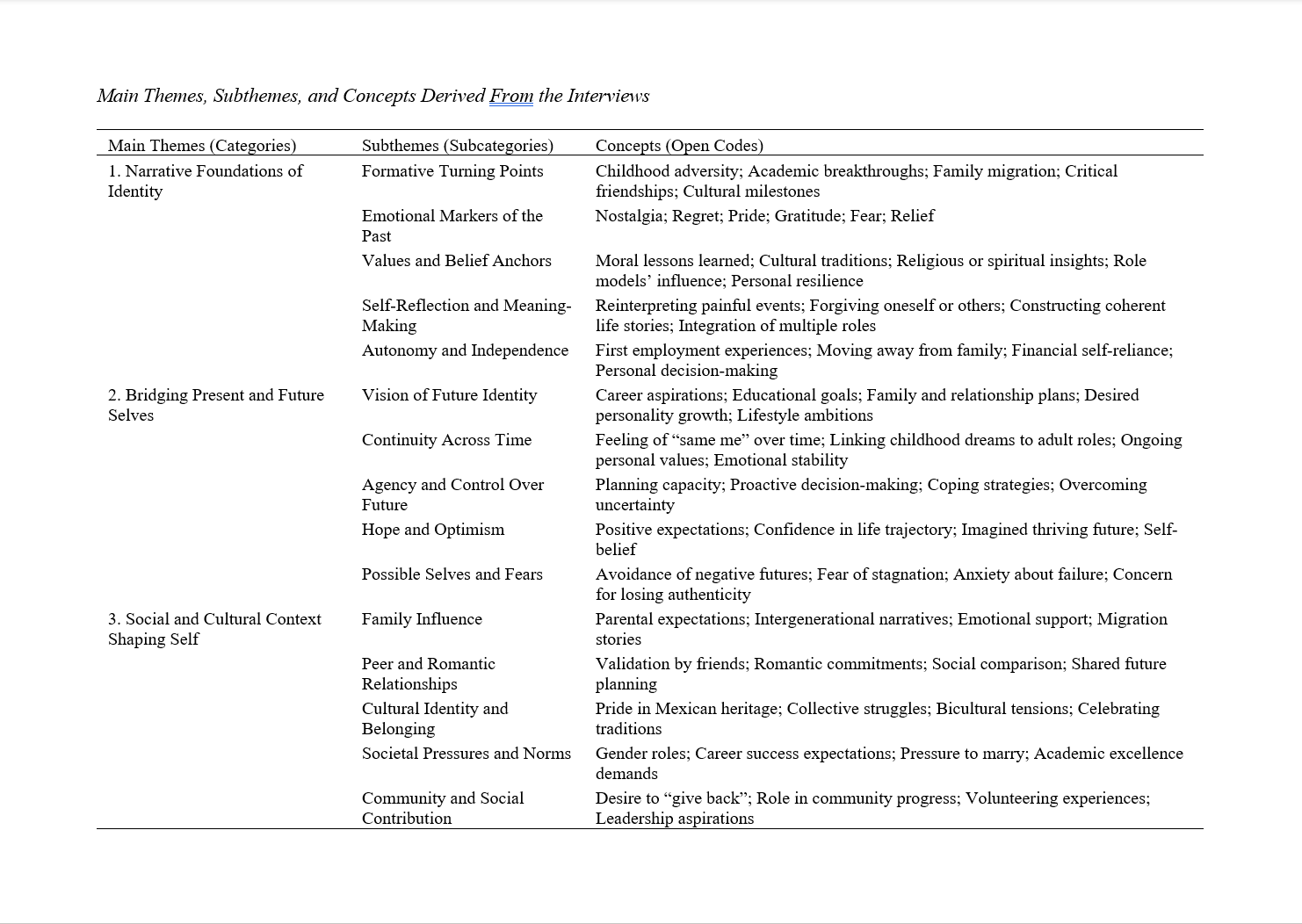
Findings: Analysis revealed three main thematic domains: (1) narrative foundations of identity, including formative turning points, emotional markers of the past, and value anchors; (2) bridging present and future selves, encompassing vision of future identity, continuity across time, and agency over life direction; and (3) social and cultural context shaping self, involving family influence, cultural belonging, and negotiation of societal expectations. Participants demonstrated an active process of meaning-making, reframing adverse experiences into resilience-building narratives and integrating cultural heritage with personal aspirations. Rich, detailed self-defining memories supported optimism and future planning, while vague or fragmented narratives were linked to uncertainty and anxiety about adulthood.
Conclusion: Emerging adults’ self-defining memories serve as psychological resources that maintain identity coherence and promote future self-continuity. Culturally embedded narrative reflection may strengthen resilience, self-agency, and adaptive life planning during the transition to adulthood.
Downloads
Downloads
Additional Files
Publication Timeline
- Submitted
- Revised
- Accepted