Improving Emotional Self-Regulation in Bipolar Disorder Through Cognitive-Behavioral Intervention: Multivariate Evidence from a Controlled Study
DOI:
https://doi.org/10.61838/kman.jarac.5525Keywords:
Cognitive-behavioral Therapy, Emotion Regulation, Bipolar Disorder, Therapeutic intervention, Bipolar PatientsAbstract
Objective: The purpose of the present study was to investigate the effectiveness of cognitive behavioral therapy on emotional self-regulation and its components in patients with bipolar disorder.
Methods and Materials: This quasi-experimental study used a pre-test and post-test design with experimental and control groups. The population included bipolar patients referred to the Rehabilitation and Treatment Center for Chronic Mental Patients in Zahedan, Iran, in 2023. Thirty patients were randomly assigned to experimental and control groups (15 each). The Emotion Regulation Questionnaire by Marqués et al. (2005), with 25 items and five subscales (controllability, disclosure of feelings, needs, assertiveness, and well-being seeking), scored on a 5-point Likert scale, was used. The experimental group received eight 60-minute CBT sessions, while the control group received no intervention. Data were analyzed using multivariate analysis of covariance (MANCOVA) in SPSS version 26.
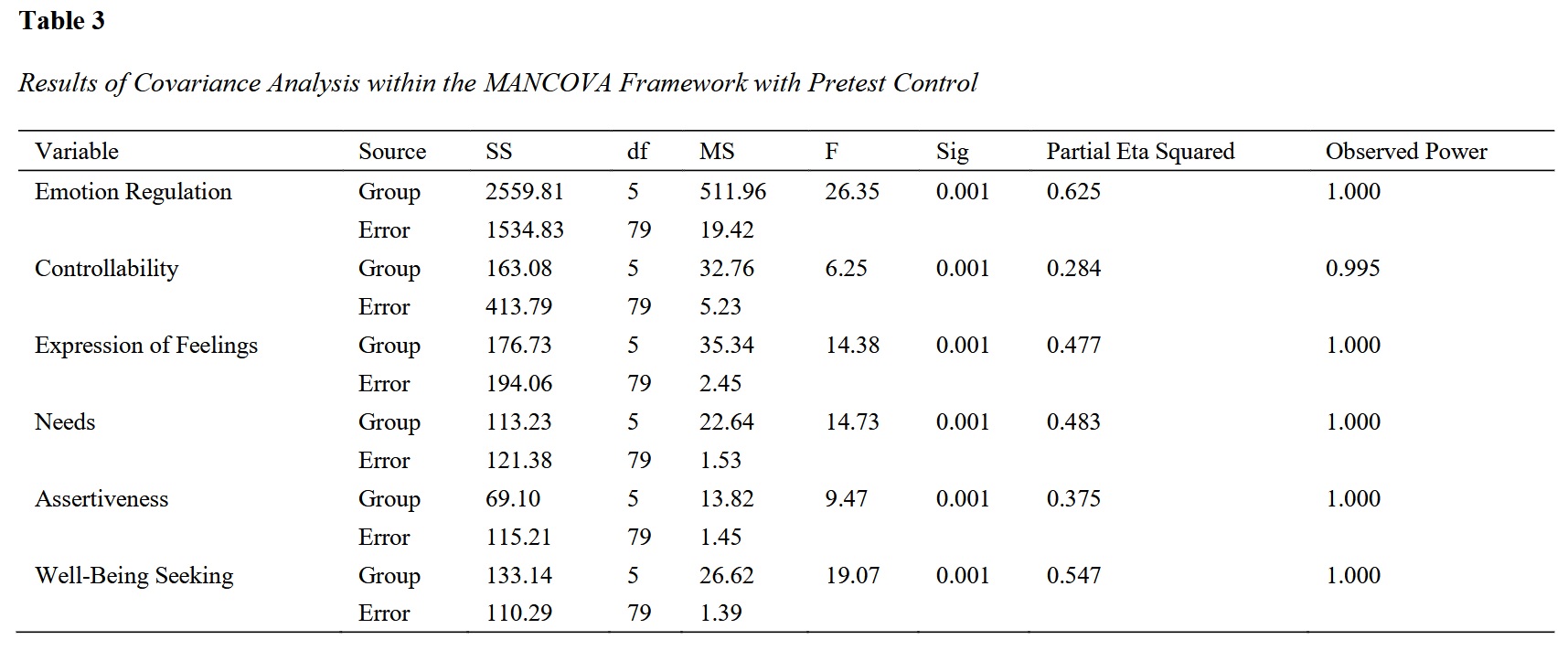
Findings: The results showed that CBT significantly improved emotion regulation and its components in bipolar patients (P<0.001). Effect sizes indicated that 62.5% of the variance in emotion regulation, 28.4% in controllability, 47.7% in disclosure of feelings, 48.3% in needs, 37.5% in assertiveness, and 54.7% in well-being seeking were due to the intervention.
Conclusion: Cognitive-behavioral therapy is an effective intervention for improving emotion regulation in bipolar patients. These findings highlight the need to integrate this approach into their treatment plans.
Downloads
Downloads
Additional Files
Publication Timeline
- Submitted
- Revised
- Accepted