Alexithymia, Trait Avoidance, and Somatic Distress: A Transdiagnostic Model of Emotion–Body Disconnection
DOI:
https://doi.org/10.61838/kman.jppr.5150Keywords:
alexithymia, somatic distress, experiential avoidance, emotion regulation, transdiagnostic modelAbstract
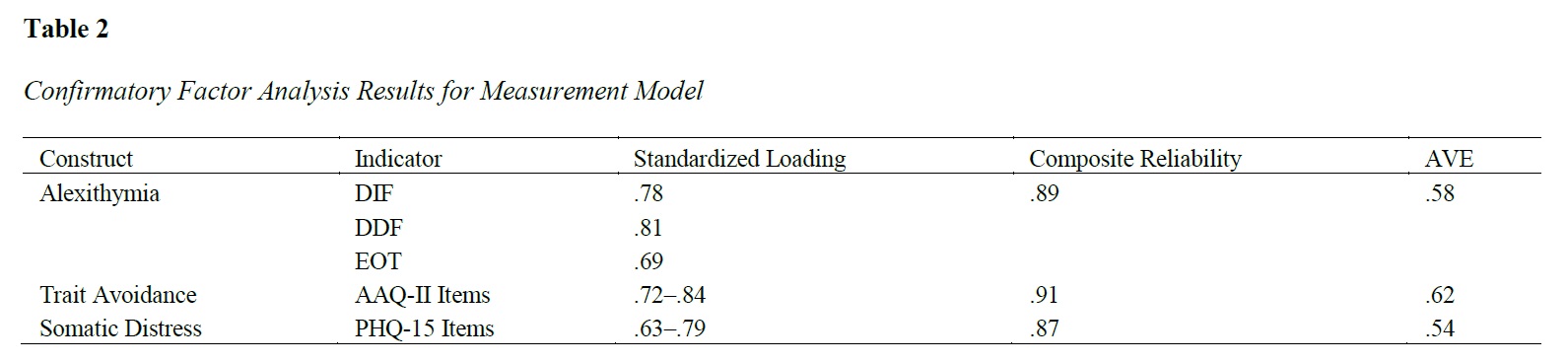
This study aimed to test a transdiagnostic model in which alexithymia is associated with somatic distress both directly and indirectly through trait avoidance. A cross-sectional correlational design was employed in a community sample of adults recruited from Sweden. Participants completed validated self-report measures assessing alexithymia, trait avoidance, and somatic distress. Alexithymia was measured using a multidimensional scale capturing difficulties in identifying and describing feelings as well as externally oriented thinking, trait avoidance was assessed via a measure of experiential avoidance and psychological inflexibility, and somatic distress was evaluated using a standardized instrument indexing the severity of common bodily symptoms. Data were analyzed using structural equation modeling. Preliminary analyses included descriptive statistics, reliability estimation, and correlation analyses. Confirmatory factor analysis was conducted to evaluate the adequacy of the measurement model prior to testing structural paths. Mediation was examined using bootstrapped indirect effects while controlling for relevant demographic variables. Structural equation modeling demonstrated good overall model fit. Alexithymia showed a significant positive direct effect on trait avoidance and a smaller but significant direct effect on somatic distress. Trait avoidance exhibited a strong positive direct effect on somatic distress. Mediation analysis revealed a significant indirect effect of alexithymia on somatic distress through trait avoidance, with the indirect pathway accounting for a substantial proportion of the total effect. The mediation was partial, indicating that alexithymia influenced somatic distress through both avoidance-related and direct pathways. The findings support a transdiagnostic model of emotion–body disconnection in which alexithymia functions as a dispositional vulnerability that increases reliance on avoidance strategies, thereby intensifying somatic distress. Trait avoidance emerged as a central mechanism translating deficits in emotional awareness into bodily symptom burden. These results highlight the importance of targeting emotional awareness and avoidance processes in the assessment and treatment of somatic distress across diagnostic categories.
Downloads
Downloads
Additional Files
Publication Timeline
- Submitted
- Revised
- Accepted