
























Impact of Dietary Protein Reduction on Broiler Performance, Carcass Composition, and Meat Quality
Protein is a crucial nutrient in poultry nutrition, influencing growth, metabolism, and carcass composition. Optimizing dietary crude protein (CP) levels while ensuring adequate amino acid supplementation is essential for maximizing broiler performance and economic efficiency. This study evaluated the effects of reducing dietary CP levels on broiler growth performance, feed efficiency, carcass composition, and meat quality. A total of 150 one-day-old Ross 308 broilers were randomly assigned to three dietary treatments: low protein (LP), medium protein (MP), and high protein (HP). The LP group received 18%-16%-14% CP, the MP group received 20%-18%-16% CP, and the HP group received 22%-20%-18% CP across different growth phases. Results indicated that the HP group achieved the highest final body weight (2.78 kg), followed by the MP (2.53 kg) and LP (2.29 kg) groups (p<0.05). The Feed Conversion Ratio (FCR) was significantly lower in the LP group, indicating higher feed efficiency, although this was associated with reduced weight gain. The HP group exhibited the highest carcass weight, breast muscle percentage, and protein deposition, whereas the LP group had increased abdominal fat accumulation (p<0.05). Meat quality assessments revealed that the LP group had higher pH values, lower water-holding capacity, and reduced texture and tenderness scores compared to the MP and HP groups. These findings suggest that while reducing dietary CP improves feed efficiency and may reduce nitrogen excretion, excessive reductions negatively impact growth performance, carcass composition, and meat quality. A moderate CP reduction and optimized amino acid supplementation may provide a sustainable strategy for balancing economic feasibility, environmental impact, and broiler productivity.
Nutritional Management of Laying Hens for Extended Production Cycles: Evaluation of a Hybrid Feeding Strategy
Extending laying cycles to 100 weeks or more presents significant nutritional challenges for modern high-producing hens. Traditional age-based feeding strategies may no longer meet the birds’ evolving physiological needs. This study evaluates H&N International’s Hybrid Feed system, which integrates pre-lay and early production nutrition into a unified, performance-based approach. Introduced at 17 weeks and maintained until approximately 70% egg production, the Hybrid Feed features reduced energy density, elevated amino acids, moderate fiber, and a high proportion of coarse calcium. Results show improved body weight, feed intake, and metabolic adaptation during early lay. The system supports targeted egg size management through amino acid adjustments and emphasizes energy intake driven by body weight and environment. A three-phase feeding model, with nutrient modifications tailored to production stages rather than age, is proposed. This strategy enhances eggshell quality, skeletal integrity, and overall productivity, offering a dynamic nutritional framework for extended-cycle layer management.
A Case Report on Bacterial Infections, Newcastle Disease Seroconversion, and Aflatoxin Contamination in a Farm in Southwest Nigeria
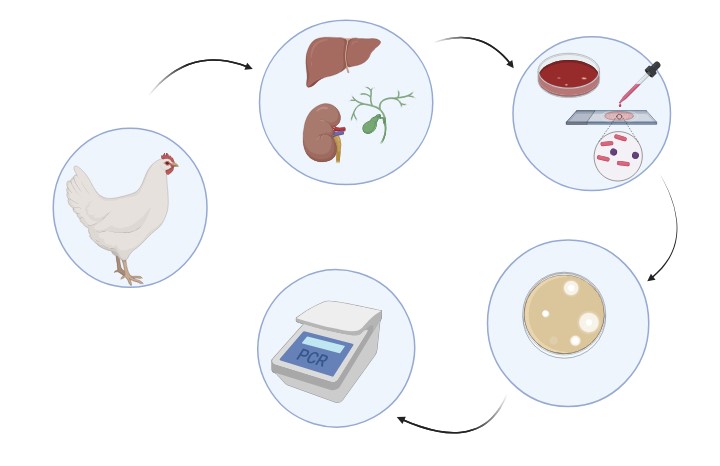
This case report details a multifactorial health challenge affecting a 28-week-old flock of 4,524 Arbor Acre broiler breeders on a commercial poultry farm in Southwest Nigeria. The flock presented with respiratory distress, neck twisting, and increased mortality. Postmortem findings included mucoid tracheitis, fibrinous pericarditis, friable livers, and bleached intestines. Diagnostic investigations identified systemic bacterial infection, adequate Newcastle disease vaccine seroconversion (titers ≥1:16), and severe feed contamination with aflatoxin (315 ppb), far exceeding the permissible limit of 20 ppb for poultry feed. Heavy growth of lactose-fermenting bacteria was isolated from tissue samples, prompting antibiotic sensitivity testing, which identified enrofloxacin and ceftriaxone as effective treatments. The elevated aflatoxin levels likely contributed to immunosuppression and impaired flock productivity. Interventions included administering toxin binders, liver tonics, and iodine solutions and replacing contaminated feed. This case underscores the critical importance of integrated diagnostic approaches, targeted antimicrobial therapy, and stringent feed quality control in managing complex poultry health challenges.
Detection and Molecular Identification of Giardia in Mynahs: A Case Report
Giardia is a protozoan parasite affecting many animals, including humans, mammals and birds. The infection of this parasite is related to the digestive system. The three common species of Giardia in birds include G. psittaci, G. duodenalis, and G. ardeae. Ornamental birds as pets can transmit this organism to humans. For this reason, investigating the presence of this parasite in ornamental birds is of great importance. In general, the studies that have been done in birds for the purpose of molecular identification of Giardia are limited. Also, Giardia duodenalis is usually found in mammals and its report is rare in birds. In this study, the presence of this parasite was investigated in five mynahs with symptoms. For this purpose, several methods including radiology, blood test, wet smear tests, Giemsa stain, and PCR were used to confirm the presence of Giardia. To our knowledge, this is the first report of Giardia parasite presence in mynah in Iran.
Evaluation of Serological Response of Low and Highly Pathogenic Influenza Vaccines in Japanese Quails
Avian influenza A virus (AIV) causes one of the most transmissible diseases. This virus can infect the quails and be spread to other animal species. Vaccination in chickens and ducks has shown that highly pathogenic avian influenza viruses (HPAI) can be controlled. This study evaluated the serological response of low and highly pathogenic influenza vaccines in quails. One hundred forty-day-old quails were divided into seven groups. Before vaccination, 20 blood samples were randomly collected from the quail wing vein. At 21 days of age, Group 2 was vaccinated with the H9N2 vaccine. Quails in Group 4 were vaccinated with the H5N1 influenza vaccine (Harbin). Quails in Group 6 received the H5N1 vaccine (Livaning). At 42 days of age, Groups 3, 5, and 7 were re-vaccinated with the same vaccines as in the previous stage. Blood samples were collected from each group from 20 quails at 20, 42, and 56 days to determine AIV antibodies by the HI test. Three weeks after the second vaccination (H9N2), the antibody titer was higher than in the group that received the vaccine once, but the difference was insignificant. The antibody titer after the second Harbin vaccine (H5N1) was higher than in the group receiving only one dose, but the difference was negligible. The antibody titer at 63 days was higher in the group that received one dose of the Livaning (H5N1) vaccine, and this difference was significant. After the second vaccination, there was a significant difference in the titers between the two doses of H9N2 and H5N1 for the Livaning and Harbin vaccines. The average increase in antibody production following the two doses of H9N2 and Harbin vaccines showed similar trends. However, the Livaning vaccine produced a significantly higher antibody response than the other two (p<0.05).
Transmissible Viral Proventriculitis in Broilers: An Updated Review of Studies from 2015 to 2024
The objective of this review is to analyze transmissible viral proventriculitis (TVP) in poultry, focusing on its etiology, pathogenesis, transmission dynamics, clinical signs, diagnostic approaches, and the economic impact it has on poultry production. A comprehensive review was conducted using scientific literature from multiple sources to examine the various aspects of TVP in broiler poultry. The causative agents of TVP are primarily viruses that lead to significant pathological changes in the proventriculus, with subsequent effects on digestion, growth, and overall poultry health. Transmissible viral proventriculitis causes symptoms such as loss of appetite, lethargy, and digestive disturbances, often leading to reduced productivity, weight gain, and increased mortality rates. Early diagnosis remains challenging due to the similarity of its symptoms to other diseases, and conventional diagnostic tools like PCR, serology, and histopathology are critical for accurate identification. Transmission occurs through horizontal and vertical routes, with environmental factors such as humidity, temperature, and poor biosecurity practices exacerbating the spread. The economic burden of TVP is considerable, encompassing direct costs (e.g., veterinary care, diagnostic testing) and indirect losses due to decreased productivity and higher mortality. Transmissible viral proventriculitis presents considerable challenges to the poultry industry. Although a specific vaccine remains unavailable, effective disease management, including enhanced farm conditions, stringent biosecurity measures, and ongoing research into novel preventive strategies, can help mitigate its economic and health impacts.
Effect of Different Dietary Levels of Energy and Sulfur-Containing Amino Acids, Lysine, and Threonine Levels on Productive and Economic Performance and Carcass Characteristics of Broiler Chickens
An experiment was conducted to investigate the effect of different energy levels and the concentration of methionine, lysine and threonine amino acids on production and economic performance of broiler chickens with the number of 180 Arbor-acres strain broiler chickens in a 3×2 factorial arrangement (2 levels of metabolizable energy, high: 2950, 3000 and 3050 and low: 2850, 2900 and 2950 for starter, grower and finisher phases, respectively × 3 different levels of amino acids methionine, lysine and threonine: the recommended level for Arbor-acres, 15% more and 15% less than that) and three repetitions in a completely random design. The results showed that using a higher level of dietary energy caused a significant increase in feed intake and weight gain in the entire growth period (p<0.05). Although the use of different levels of amino acids did not have a significant effect on feed consumption (p>0.05), body weight was significantly affected by the concentration of amino acids in the diet (p<0.05). The main effects of energy and amino acids on Food Conversion Ratio (FCR) were not significant at 1-42 days of age (p>0.05). Higher energy levels and higher concentrations of amino acids in the feed caused a significant increase in feed cost (p<0.05). However, different energy levels did not significantly affect birds' monetary returns (p>0.05). Different concentrations of amino acids showed a significant effect on the monetary returns of broiler chickens (p<0.05), so the monetary returns of chickens fed with the amino acid recommended by Arbor-acres and 15 percent less than that, was higher than the other group (15% more than recommended level). Other results showed that an increase in dietary energy level resulted in an increase in thigh percentage, and an increase in the density of amino acids resulted in an increase in breast percentage. The interaction effects between dietary energy and amino acids were not significant on any of the traits (p>0.05). The results of this experiment showed that the increased dietary energy and amino acid levels increased the live production performance and percentages of thigh and breast but did not significantly affect the food conversion ratio and did not improve the monetary returns of broiler chickens.
The Effect of Malt Extract on The Lactic Acid Bacteria (LAB) Population And the Lactobacillus Numbers In The Intestine and Crop of Broiler Chickens
In order to study the effect of malt extract on lactic acid bacteria (LAB) population and the Lactobacillus numbers in intestine and crop of broiler chickens, a total of 120 day-old broiler chicks, Ross strain, were purchased and divided into 4 equal groups. Each group divided into 3 subgroup of 10 chicks. Group A , B and C chickens received 0.2% , 0.3% and 0.5% of malt extract respectively in drinking water. Group D chickens did not get malt extract. For determination of Lactobacillus and lactic acid bacteria counts, at the end of the period, three chicks of each subgroup (9 chicks of each treatment) were chosen randomly. One gram of the crop and ileo-cecum content were taken and cultured on MRS for determination of lactic acid bacteria counts and Lactobacillus distinction respectively. The results of this study showed that receiving of malt extract could increase lactobacillus counts of intestine compared to control group. Also receiving of 0.3% of malt extract could increase lactobacil counts of crop compared to all groups. So it concluded that malt extract influences beneficial microflora of intestine and crop.
About the Journal
The journal is now indexed in Scopus
Important Announcement & Congratulations
We are pleased to announce that the Journal of Poultry Sciences and Avian Diseases has been officially accepted and indexed in the Scopus international database.
All articles published from the very first issue of the journal will be indexed in Scopus. This significant achievement has been made possible through the trust, collaboration, and valuable scientific contributions of esteemed authors like you.
We extend our warmest congratulations to all of you who have supported the journal by submitting your research. We look forward to your continued collaboration and to seeing the journal reach even greater visibility and impact in the international academic community.
With sincere appreciation,
Editorial Board
Journal of Poultry Sciences and Avian Diseases
About the Publisher
Publisher: KMAN Publication Inc.
Publisher Office: Unit 5‑10825 Yonge St, Richmond Hill, Ontario, Canada, L4C 3E3
Email: admin@jpsad.com
Telegram: +1 (647) 656‑4401 | WhatsApp: +1 (437) 429‑3507
KMAN Publication Inc. is a scholarly publishing company registered in Canada, dedicated to high-quality open-access peer-reviewed journals in life and health sciences.