The Effectiveness of an Integrated Intervention of Yoga Exercises and Reality Therapy on Psychological Reactance and Somatic Symptoms in Patients with Multiple Sclerosis (MS)
Keywords:
yoga exercises, reality therapy, psychological reactance, somatic symptoms, multiple sclerosisAbstract
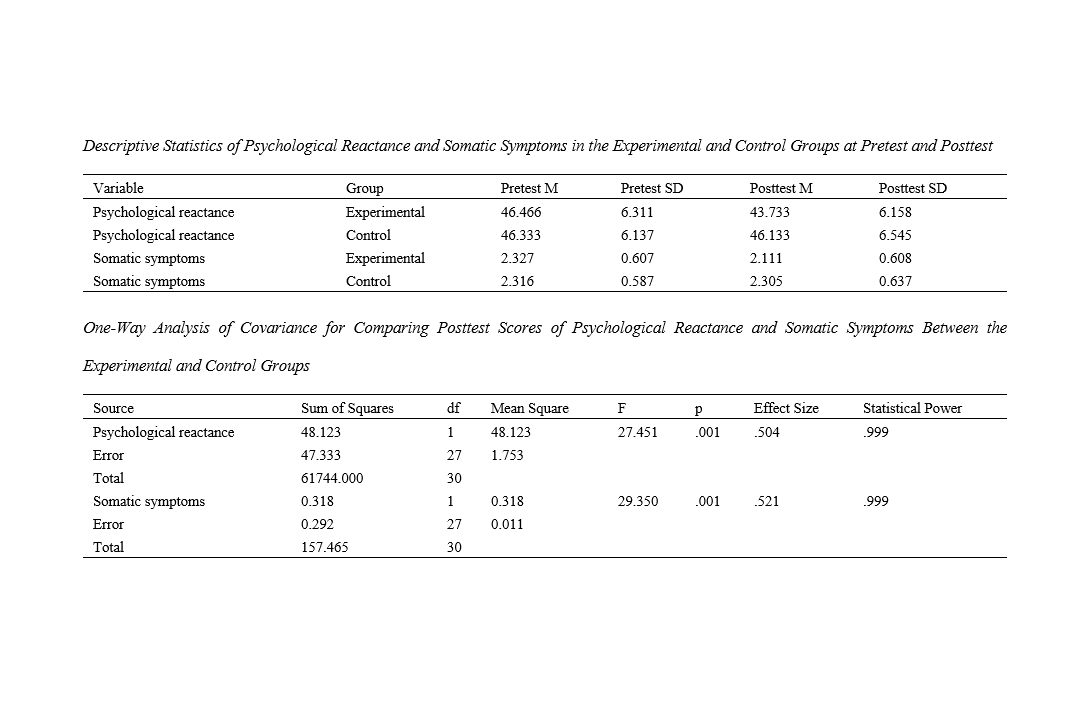
Multiple sclerosis (MS), in addition to somatic symptoms, is associated with various psychological reactions that affect patients’ quality of life. The present study aimed to determine the effectiveness of an integrated intervention of yoga exercises and reality therapy on psychological reactance and somatic symptoms in patients with MS. This quasi-experimental study employed a pretest–posttest design with a control group. The statistical population included all patients with MS in Tehran in 2026–2027. Using purposive sampling, 30 participants were selected and randomly assigned to an experimental group (n = 15) and a control group (n = 15). The experimental group received the integrated intervention of yoga exercises and group reality therapy in ten 60-minute sessions, while the control group was placed on a waiting list. The research instruments included the SCL-90 Psychological Symptom Checklist, specifically the somatic complaints component, and the Psychological Reactance Scale (Hong & Faedda, 1996), which were completed at the pretest and posttest stages. The data were analyzed using analysis of covariance (ANCOVA) in SPSS version 26. The results showed that the integrated intervention had a significant effect on both psychological reactance (F = 451.27, p < .01) and somatic symptoms (F = 350.29, p < .01). The integrated intervention of yoga exercises and reality therapy can be used as an effective non-pharmacological approach to reducing psychological reactance and somatic symptoms in patients with MS. It is recommended that this intervention be incorporated into rehabilitation programs and psychophysiological care services for these patients.
Downloads
References
Babaei Khorzooghi, M., Maleki Vasegh, M., & Rasekh, S. A. (2021). The effect of a period of yoga exercises with the ultimate readiness approach and hatha yoga on static balance in middle-aged women. Rehabilitation Research in Nursing, 7(4), 9-17.
Besharatian, S., Khademi, A., & Jalili, A. (2025). Comparing the effectiveness of reality therapy and meaning therapy on inner self-talk and health-promoting lifestyle in patients with diabetes. Journal of Mashhad University of Medical Sciences Faculty of Medicine, 68(4), 1129-1145. https://doi.org/10.22038/mjms.2025.85249.4892
Delavar, A. (2022). Research Methods in Psychology and Educational Sciences (56th ed.). Virayesh.
Farahbakhsh, N., Farhadfar, E., Bagheri, A., & Mahmoudi Rad, E. (2025). The effect of 8 weeks of yoga exercises and vitamin D supplementation on insulin resistance, balance, coordination, and power in women with multiple sclerosis. journal of motor and behavioral sciences, 8(3), 22-31. https://doi.org/10.22034/jmbs.2025.548364.1272
Farsi, M., Rezaei, A. M., & Poursadegh Fard, M. (2023). The effectiveness of reality therapy on rumination and emotional expressiveness in patients with multiple sclerosis in Shiraz. Islamic Lifestyle with a Health Orientation, 7(Special issue), 196-204.
Feola, M., Garnero, S., Vallauri, P., Salvatico, L., Vado, A., & Leto, L. (2013). Relationship between cognitive function, depression/anxiety and functional parameters in patients admitted for congestive heart failure. Open Cardiovascular Medicine Journal, 7, 54-60.
Glasser, W. (1999). Choice Theory: A New Psychology of Personal Freedom (5th ed.). Harper Collins Publisher.
Il Beigi, S., Haghighi, M., Niksarasht, A., & Mahjour, M. (2020). The effect of a yoga training program on muscular fatigue indices and balance in people with multiple sclerosis. Sport Medicine Studies, 12(28), 165-182.
Jahangiri, F., Karimi, J., Roozbehani, M., & Razani, M. (2023). Comparing the effectiveness of acceptance and commitment therapy with compassion-focused therapy and yoga exercises on self-management in people with multiple sclerosis. Rooyesh-e-Ravanshenasi, 12(8), 107-116.
Jusoh, A. J. B. (2018). Choice theory and reality therapy in individual and group counseling in a Malaysian context. International Journal of Choice Theory and Reality Therapy, 37(2), 75-85. https://m.motterninstitute.com/upload/IJCTRT_Spring2018%20(1)%20(1).pdf#page=75
Ketterer, M. W., Draus, C., McCord, J., Mossallam, U., & Hudson, M. (2013). Behavioral factors and hospital admissions/readmissions in patients with CHF. Psychosomatics.
Khajeh Goldloo, G., & Farshbaf Manisefat, F. (2025). Investigating the effectiveness of mother training based on attachment-based intervention on the multidimensional dimensions of anxiety in children with separation anxiety disorder. Journal of Psychological Science, 24, 117-134.
Mahmoudi Rad, E., Farhadfar, E., Bagheri, A., & Farahbakhsh, N. (2025). The effect of 8 weeks of yoga exercises and vitamin D supplementation on lipid profile, muscular strength, muscular endurance, flexibility, and body composition in women with multiple sclerosis. journal of motor and behavioral sciences, 8(3), e233115. https://doi.org/10.22034/jmbs.2025.544538.1271
Morris, G., Reiche, E. M. V., Murru, A., Carvalho, A. F., Maes, M., Berk, M., & Puri, B. K. (2018). Multiple immune-inflammatory and oxidative and nitrosative stress pathways explain the frequent presence of depression in multiple sclerosis. Molecular Neurobiology, 55(8), 6282-6306.
Olfati, M. (2024). The effect of combined yoga and exercise training on the prevention and improvement of injuries, musculoskeletal disorders, and psychological disorders in athletes. journal of motor and behavioral sciences, 7(1), e197796. https://doi.org/10.22034/jmbs.2024.462452.1210
Ramezani, M., Javadpour, M., & Jafari, A. (2015). Comparing psychological well-being of athlete and non-athlete students of Esfarayen universities. First National Conference on Modern Sport Sciences, Professional Sport, and Health Promotion,
Rezaei, M., & Akbari Amraghan, H. (2025). The effectiveness of yoga exercises on psychological indicators, emotion regulation, and quality of life in housewives. New Explorations in Computational Sciences and Behavioral Management, 3(2), 91-105.
Saffarinia, M., Bayat, S., & Neromohammadi, A. (2017). Comparing prosocial personality, psychological reactance, perceived social support, and defense styles in parents of children with physical-motor disabilities and parents of healthy children in Isfahan. Exceptional Children Quarterly, 17(4), 15-26.
Seehusen, C., & Tlmhc, N. (2018). Using Reality Therapy with clients experiencing chronic pain. International Journal of Choice Theory and Reality Therapy, 38(1), 6-12. https://www.wglasserinternational.org/wp-content/uploads/bsk-pdfmanager/IJCTRT_XXXVIII_no1_250.pdf#page=6
Soltanian, T., Rezvani, M., Naderi, A., & Cheroumzadeh, H. (2024). The effect of eight weeks of cyclic yoga exercises on upper crossed syndrome, increased lordosis, and mental health in elderly women. 12(4), 48-259.
Tanhaye Roshanloo, F., & Saadati Shamir, A. (2015). Validity and construct validity of the 25-item Symptom Checklist of Psychological Symptoms (SCL-25). Journal of Fundamentals of Mental Health, 18(1), 48-56. https://jfhm.mums.ac.ir/article_6255.html
Velikonja, O., Curic, K., Ozura, A., & Jazbec, S. S. (2010). Influence of sports climbing and yoga on spasticity, cognitive function, mood and fatigue in patients with multiple sclerosis. Clinical Neurology and Neurosurgery, 112(7), 597-601. https://doi.org/10.1016/j.clineuro.2010.03.006
Wubbolding, R. E., Casstevens, W. J., & Fulkerson, M. H. (2017). Using the WDEP system of Reality Therapy to support person-centered treatment planning. Journal of Counseling & Development, 95(4), 472-477. https://doi.org/10.1002/jcad.12162
Zarghami, S., Nasermelli, M. H., & Ganji Namin, B. (2025). Comparing the effects of combined massage-yoga exercises with tai chi on pain, function, range of motion, and quality of life in women with knee osteoarthritis. Scientific-Research Bimonthly Journal of Rehabilitation Medicine, 14(6), 940-955. https://doi.org/10.32598/SJRM.14.6.3401
Downloads
Additional Files
Publication Timeline
- Submitted
- Revised
- Accepted