
The Effectiveness of Yoga on Fatigue, Chronic Pain, Sleep Quality, and Psychological Well-Being in Patients with Type 2 Diabetes
Keywords:
Type 2 diabetes, yoga, fatigue, sleep quality, psychological well-beingAbstract
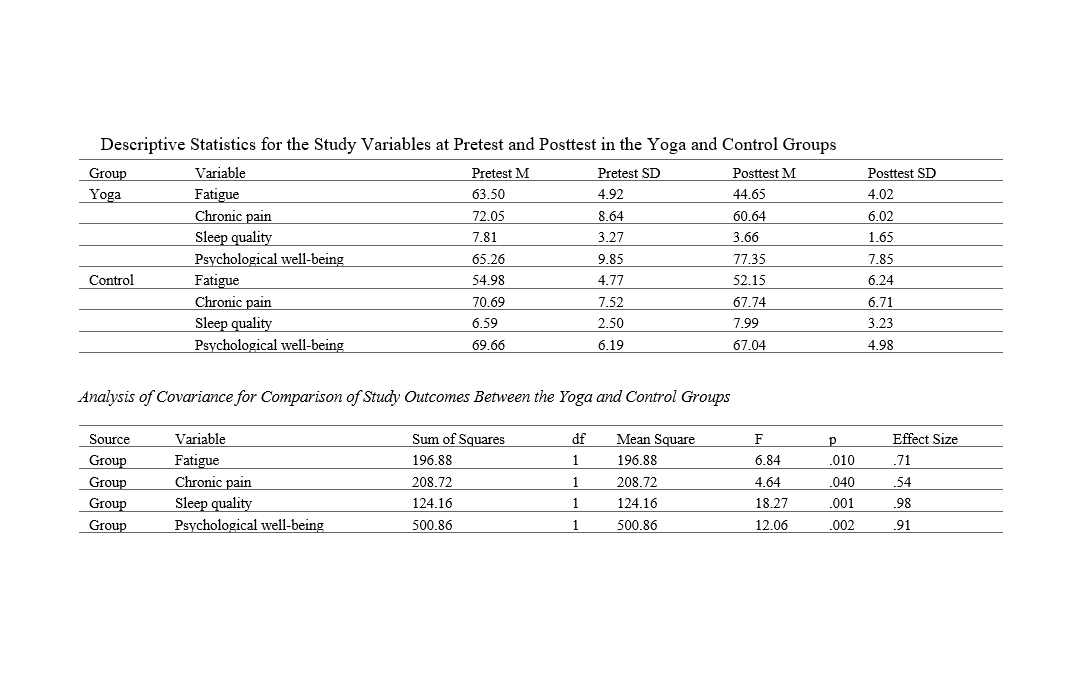
Type 2 diabetes is one of the most prevalent chronic metabolic diseases and, in addition to its physical complications, has profound effects on patients’ mental health and quality of life. The present study aimed to investigate the effectiveness of yoga exercises in improving fatigue, sleep quality, and psychological well-being among patients with type 2 diabetes. This study employed a quasi-experimental pretest–posttest design with a control group. The statistical population consisted of patients with type 2 diabetes who attended the Tehran Diabetes Association and comprehensive health service centers affiliated with Tehran University of Medical Sciences during 2025–2026. Participants were selected through random sampling and assigned to a yoga group (n = 16) and a control group (n = 16). Participants in the yoga group attended 16 sessions of yoga training, each lasting 60 minutes. Data were collected using standardized measures of fatigue, sleep quality, the McGill Pain Questionnaire, and Ryff’s Psychological Well-Being Scales and were analyzed using analysis of covariance (ANCOVA). The results indicated that the yoga intervention significantly reduced fatigue and chronic pain and improved sleep quality and psychological well-being among patients with type 2 diabetes. The greatest improvements were observed in the reduction of chronic pain and enhancement of sleep quality. The findings demonstrate the effectiveness of yoga exercises in managing symptoms associated with type 2 diabetes. Given the specific benefits of this approach, it is recommended that pharmacological treatment programs be complemented by yoga exercises tailored to patients’ individual needs.
Downloads
References
Alwhaibi, M. (2024). Depression, Anxiety, and Health-Related Quality of Life in Adults with Type 2 Diabetes. Stomatology, 13(20), 6028. https://doi.org/10.3390/jcm13206028
Bielka, W., Przezak, A., Molęda, P., Pius-Sadowska, E., & Machaliński, B. (2024). Double diabetes-when type 1 diabetes meets type 2 diabetes: definition, pathogenesis and recognition. Cardiovascular diabetology, 23(1), 62. https://doi.org/10.1186/s12933-024-02145-x
Blockhuys, S., & Wittung-Stafshede, P. (2024). Yoga as a complementary therapy for cancer patients: from clinical observations to biochemical mechanisms. Complementary Medicine Research, 31(5), 403-415. https://doi.org/10.1159/000540213
Brahmbhatt, A., & Kumavat, P. P. (2024). Yoga and Mindfulness Practices: Their Role in Modern Mental Health and Wellness Programs. Research Review Journal of Indian Knowledge Systems, 1(2), 9-17. https://doi.org/10.31305/rrjiks.2024.v1.n2.002
Busili, A., Kumar, K., Kudrna, L., & Busaily, I. (2024). The risk factors for mental health disorders in patients with type 2 diabetes: An umbrella review of systematic reviews with and without meta-analysis. Heliyon. https://doi.org/10.1016/j.heliyon.2024.e28782
Cramer, H. (2019). Yoga for improving health-related quality of life. Cochrane Database of Systematic Reviews.
Datti, R. S. (2025). Yoga for the Management of Diabetes. In Yoga and Meditation (pp. 315-327). Apple Academic Press. https://doi.org/10.1201/9781003568308-13
Dong, N., & Yang, L. (2023). The short- and long-term effects of cognitive behavioral therapy on the glycemic control of diabetic patients: a systematic review and meta-analysis. BioPsychoSocial Medicine, 17(1). https://doi.org/10.1186/s13030-023-00274-5
Ee, C. C., Armour, M., Piya, M. K., McMorrow, R., Al-Kanini, I., & Sabag, A. (2021). Mindfulness-based interventions for adults with type 2 diabetes mellitus. The Cochrane Database of Systematic Reviews, 2021(12). https://doi.org/10.1002/14651858.CD014881
Elahi, M. F. E., Islam, M. A., Khan, M. R. U., & Nosib, M. N. U. (2024). Hyperglycemic Impact On Sleep Quality In Patients With Type 2 Diabetes Mellitus-A Cross Sectional Study. https://doi.org/10.3329/bafmj.v56i1.72736
Fan, J., Li, W., Lin, M., Li, X., & Deng, X. (2023). Effects of mindfulness and fatigue on emotional processing: An event-related potentials study. Frontiers in Behavioral Neuroscience, 17, 1175067. https://doi.org/10.3389/fnbeh.2023.1175067
Fouladi Dehaghi, B., Mohammadi, A., & Nematpour, L. (2019). Mental Fatigue Assessment using recording Brain Signals: Electroencephalography. Iranian Journal of Ergonomics, 7(2), 45-53.
Fritschi, C., Park, C., Quinn, L., & Collins, E. G. (2020). Real-time associations between glucose levels and fatigue in type 2 diabetes: Sex and time effects. Biological Research For Nursing, 22(2), 197-204. https://doi.org/10.1177/1099800419898002
Galindo, R. J., Trujillo, J. M., Low Wang, C. C., & McCoy, R. G. (2023). Advances in the management of type 2 diabetes in adults. BMJ Medicine, 2(1), e000372. https://doi.org/10.1136/bmjmed-2022-000372
International Diabetes, F. (2021). IDF Diabetes Atlas (10th ed.). IDF. https://diabetesatlas.org/en/
Kulzer, B., Albus, C., Herpertz, S., Kruse, J., Lange, K., Lederbogen, F., & Petrak, F. (2021). Psychosocial factors and diabetes. Experimental and Clinical Endocrinology & Diabetes, 129(S 01), S91-S105. https://doi.org/10.1055/a-1284-6524
Lindekilde, N., Rutters, F., Henriksen, J. E., Lasgaard, M., Schram, M. T., Rubin, K. H., & Pouwer, F. (2021). Psychiatric disorders as risk factors for type 2 diabetes: an umbrella review of systematic reviews with and without meta-analyses. Diabetes Research and Clinical Practice, 176, 108855. https://doi.org/10.1016/j.diabres.2021.108855
Lu, X., Xie, Q., Pan, X., Zhang, R., Zhang, X., Peng, G., & Tong, N. (2024). Type 2 diabetes mellitus in adults: pathogenesis, prevention and therapy. Signal Transduction and Targeted Therapy, 9(1), 262. https://doi.org/10.1038/s41392-024-01951-9
Marcuzzi, A., Caceres-Matos, R., Åsvold, B. O., Gil-Garcia, E., L Nilsen, T. I., & Mork, P. J. (2023). Interplay between chronic widespread pain and lifestyle factors on the risk of type 2 diabetes: Longitudinal data from the Norwegian HUNT Study. BMJ Open Diabetes Research & Care, 11(5), e003249. https://doi.org/10.1136/bmjdrc-2022-003249
Nilakantham, S., Singh, A., Metri, K. G., & Nagaratna, R. (2024). Effects of residential Yoga therapy on blood pressure and body mass index in women with hypothyroidism and obesity: A retrospective study. Ayu (An International Quarterly Journal of Research in Ayurveda), 45(1), 12-16. https://doi.org/10.4103/ayu.ayu_263_22
Rahimi, R., Ahadi, H., Tajeri, B., & Khoshlahjeh, S. A. (2023). Effectiveness of Acceptance and Commitment Therapy on Perceived Stress, Chronic Pain, and Treatment Adherence in Older Adults with Diabetes. Islamic Lifestyle Centered on Health, 7, 76-85.
Romadlon, D. S., Hasan, F., Wiratama, B. S., & Chiu, H. Y. (2022). Prevalence and risk factors of fatigue in type 1 and type 2 diabetes: A systematic review and meta-analysis. Journal of Nursing Scholarship, 54(5), 546-553. https://doi.org/10.1111/jnu.12763
Saini, M., & Das, P. K. (2024). Efficacy of Different Yogic Practices on Blood Sugar Random Among the Working Men of North Tripura. Journal of Environmental, Pharmaceutical and Sustainability Science, 1(01), 37-44. https://doi.org/10.52756/jepss.2024.v01.i01.005
Schipper, S. B., Van Veen, M. M., Elders, P. J., van Straten, A., Van Der Werf, Y. D., Knutson, K. L., & Rutters, F. (2021). Sleep disorders in people with type 2 diabetes and associated health outcomes: a review of the literature. Diabetologia, 64(11), 2367-2377. https://doi.org/10.1007/s00125-021-05541-0
Sharma, V., Bhambu, S. K., & Rao, A. (2025). Diabetes Mellitus prevention and management with Yoga. Journal of Ayurveda and Integrated Medical Sciences, 10(2), 249-255. https://doi.org/10.21760/jaims.10.2.35
Shelke, A., Kawade, R., Bhattacharya, S., Sarkar, V., & Selvaraj, N. (2024). Impact of yoga practice on lipid profile and insulin resistance in overweight and obese individuals-A Pilot Study. Journal of the Scientific Society, 51(4), 566-570. https://doi.org/10.4103/jss.jss_346_23
Singh, V., & Shah, S. R. (2025). Holistic benefits of yoga: A dual approach to cardiovascular health and obesity control. International Journal of Yoga and Allied Sciences, 14(1), 118-130.
Tripathi, P., Sharma, B., Kadam, N., Tiwari, D., Kathrikolly, T., Vyawahare, A., Das Biswas, M., Vijayakumar, V., Kuppusamy, M., Ganla, M., & Saboo, B. (2024). Improvement in symptoms of anxiety and depression in individuals with type 2 diabetes: retrospective analysis of an intensive lifestyle modification program. BMC psychiatry, 24(1). https://doi.org/10.1186/s12888-024-06130-2
Wu, R., Liu, L., Zhu, H., Su, W., Cao, Z., Zhong, S., Liu, X., & Jiang, C. (2019). Brief Mindfulness Meditation Improves Emotion Processing. Frontiers in Neuroscience, 13, 482990. https://doi.org/10.3389/fnins.2019.01074
Downloads
Additional Files
Publication Timeline
- Submitted
- Revised
- Accepted