The Effectiveness of Cognitive Behavioral Therapy on Rumination and Psychological Distress Among Individuals Attending Counseling Centers
Keywords:
cognitive behavioral therapy, rumination, psychological distressAbstract
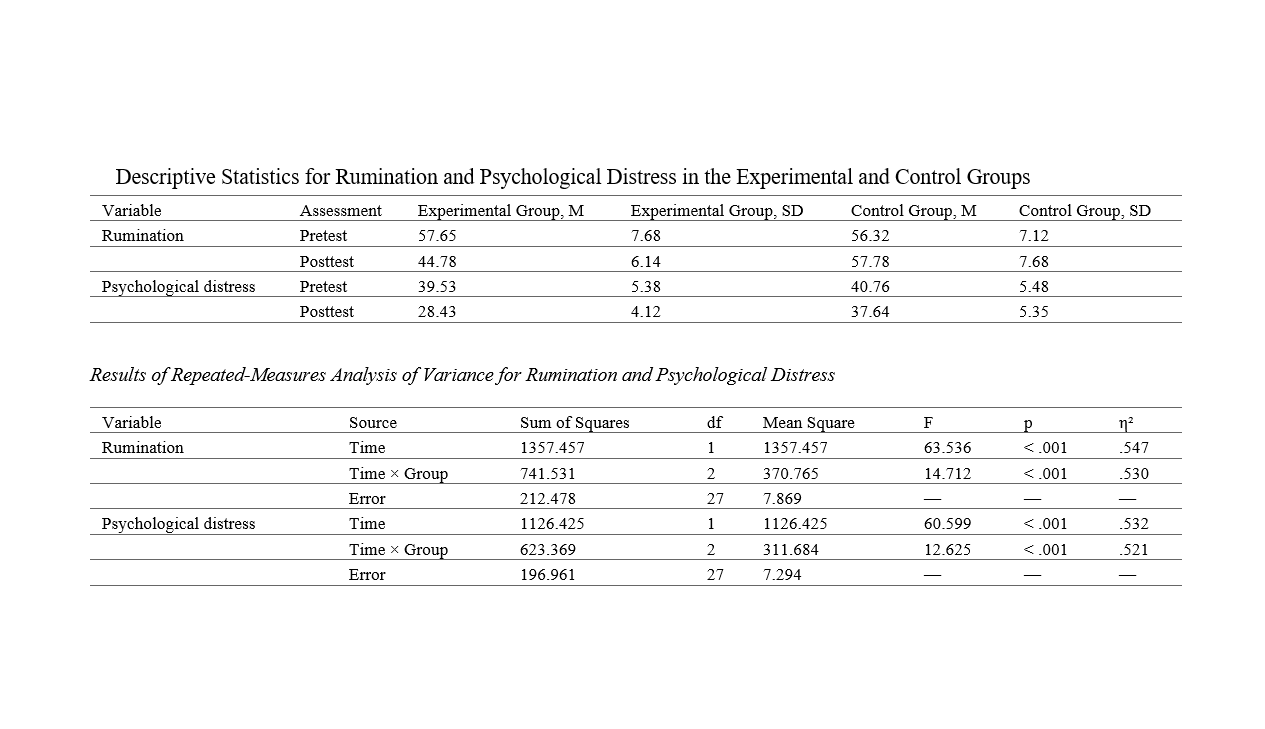
The present study aimed to determine the effectiveness of cognitive behavioral therapy (CBT) in reducing rumination and psychological distress among individuals attending counseling centers. This study employed a quasi-experimental method with a pretest–posttest design involving an experimental group and a control group. The statistical population consisted of individuals attending counseling centers in Tehran during 2025–2026. Using convenience sampling, 30 participants were selected and subsequently assigned randomly to the experimental group (n = 15) and the control group (n = 15). Data were collected using the Rumination Questionnaire and the Psychological Distress Questionnaire. The experimental group then received eight 120-minute sessions of cognitive behavioral therapy. Following completion of the CBT sessions, posttests were administered to both the experimental and control groups. The findings indicated that the mean scores of rumination and psychological distress in the experimental group differed significantly at posttest compared with pretest. Therefore, cognitive behavioral therapy was effective in reducing rumination and psychological distress among individuals attending counseling centers.
Downloads
References
Allahmoradi, M., Yaghoubi, M., Ebrahimi, F., Pourmohammadghouchani, K., & Norouziani, Z. (2026). Comparison of the Effectiveness of Cognitive Behavioral Therapy and Acceptance and Commitment Therapy on Referential Thoughts, Cognitive Flexibility, and Distress Tolerance in Patients with Major Depression. Psychological Dynamics in Mood Disorders, 1-18. https://maherpub.com/pdmd/article/view/628
Chiang, Y. H., Wang, C. Y., Liu, C. Y., & Yang, C. Y. (2025). Effect of Group Rumination-Focused Cognitive Behavior Therapy on Depressive Symptoms in People With Schizophrenia: A Randomized Controlled Trial. Journal of Nursing Research, 33(2), e383. https://doi.org/10.1097/jnr.0000000000000665
Esmaeilzadeh Torshaye, S. (2025). Effectiveness of Mindfulness-Based Cognitive Therapy on Positive and Negative Emotions, Sleep Quality and Rumination in Women with Irritable Bowel Syndrome. Journal of Cognition, Behavior and Psychology, 12(1), 55-70. https://doi.org/10.61838/jcbl.283
Gholipour, F., Bigdeli, F., Katal, H., Rezaei, F., & Najafi Moghadam, H. (2025). The Effectiveness of Cognitive-Behavioral Therapy on Self-Compassion and Distress Tolerance in Women with Anxiety Disorder. Iranian Journal of Behavioral Medicine and Counseling, 12(2), 235-241. https://doi.org/10.61838/ijbmc.v12i2.977
Graboyes, E. M., Kistner-Griffin, E., Hill, E. G., Maurer, S., Balliet, W., Williams, A. M., & Sterba, K. R. (2025). Efficacy of a brief cognitive behavioral therapy for head and neck cancer survivors with body image distress: Secondary outcomes from the BRIGHT pilot randomized clinical trial. Journal of Cancer Survivorship, 19(1), 140-148. https://doi.org/10.1007/s11764-023-01454-6
Hasani, M., Zinouzian, S., & Ahmadi, R. (2025). Effectiveness of Rumination-Focused Cognitive-Behavioral Therapy in Reducing Depression, Negative Emotion, and Rumination in Patients with Recurrent Major Depressive Disorder: A Multicenter Randomized Clinical Trial. BMC psychiatry, 25(1), 589-626.
Hashemi Fesharaki, S. S., & Salehi, M. (2026). Comparing Schema Therapy and Cognitive-Behavioral Therapy on Psychological Distress and Forgiveness in Divorced Women Affected by Marital Infidelity. Quarterly Journal of New Psychological Research, 21(81), 148-165.
Mala, J., Sukpattanasrikul, S., & Wirojratana, V. (2026). Effectiveness of cognitive behavioral therapy on psychological distress among myocardial infarction survivors: A systematic review. Srinagarind Medical Journal, 41(1), 121-139. https://doi.org/10.64960/srimedj.v41i1.270266
Nasehi, H., Mireei, H., & Nasehi, H. (2025). The Effectiveness of Cognitive Behavioral Therapy on Rumination and Anxiety Sensitivity in Adolescents with Social Anxiety. Eleventh Scientific Research Conference on Educational Sciences, Psychology, and Social and Cultural Harms of Iran,
Nashtban, N. S., Aghajani, R., & Salehi, S. (2025). Effectiveness of a Group Intervention Based on Cognitive-Behavioral Approach on the Levels of Ambiguity Tolerance, Distress Tolerance, and Academic Achievement among Students. Journal of education and health promotion, 14(1), 45-60. https://doi.org/10.4103/jehp.jehp_1794_23
Noursideh, S., & Zarei, A. (2024). Effectiveness of Cognitive-Behavioral Therapy on Rumination and Cognitive Emotion Regulation in Adolescents from Divorced Families in Bandar Abbas Islamic Azad University, Bandar Abbas Branch, Faculty of Humanities].
Querstret, D., & Cropley, M. (2025). Rumination-Focused Cognitive Behavioral Therapy: A Meta-Analysis of Randomized Controlled Trials. Psychological medicine, 55(3), 456-470.
Shapiro, M. O., Threeton, E. M., Morris, P. E., & Raines, A. M. (2026). Examining Reductions in Thwarted Belongingness, Perceived Burdensomeness, and Rumination within Group-Based Behavioral Activation Treatment for Depression. Journal of Behavioral and Cognitive Therapy, 36(2), 100553. https://doi.org/10.1016/j.jbct.2025.100553
Stenzel, K. L., Keller, J., Kirchner, L., Rief, W., & Berg, M. (2025). Efficacy of cognitive behavioral therapy in treating repetitive negative thinking, rumination, and worry: A transdiagnostic meta-analysis. Psychological medicine. https://doi.org/10.1017/S0033291725000017
Tamuno-Opubo, A. T., Tsabedze, W. F., Curwyn, M., Idehen, E. E., & Uthman, J. T. (2025). Effectiveness of cognitive behavioral therapy for hypertension-related psychological distress: A two-phase randomized controlled trial in a Nigerian tertiary hospital. Frontiers in psychology, 16, 1684461. https://doi.org/10.3389/fpsyg.2025.1684461
Yaghoubi, M., Ebrahimi, F., Pourmohammad Ghouchani, K., & Norouziani, Z. (2026). Comparison of the Effectiveness of Cognitive Behavioral Therapy and Acceptance and Commitment Therapy on Referential Thinking, Cognitive Flexibility, and Distress Tolerance in Patients with Major Depressive Disorder. Psychological Dynamics in Mood Disorders, 1-18. https://maherpub.com/pdmd/article/view/628
Downloads
Additional Files
Publication Timeline
- Submitted
- Revised
- Accepted