The Effectiveness of Mindfulness-Based Cognitive Therapy on Psychological Distress and Sleep Quality in Women with Irritable Bowel Syndrome
DOI:
https://doi.org/10.61838/kman.pwj.4586Keywords:
Mindfulness-Based Cognitive Therapy, Psychological Distress, Sleep Quality, Irritable Bowel SyndromeAbstract
Objective: The present study aimed to determine the effectiveness of mindfulness-based cognitive therapy on psychological distress and sleep quality in individuals with irritable bowel syndrome.
Methods and Materials: This study employed a quasi-experimental and applied research design using a pretest–posttest control group format. The statistical population consisted of all women diagnosed with irritable bowel syndrome who attended hospitals and medical centers in Tonekabon in 2024. The research sample comprised 30 participants selected through purposive sampling and randomly assigned to experimental (n = 15) and control (n = 15) groups. The research instruments included the Kessler Psychological Distress Scale (Kessler, 2002) and the Pittsburgh Sleep Quality Index (Buysse et al., 1989). Data were analyzed using multivariate analysis of covariance (MANCOVA) and univariate analysis of covariance (ANCOVA). All statistical analyses were conducted using SPSS version 27.
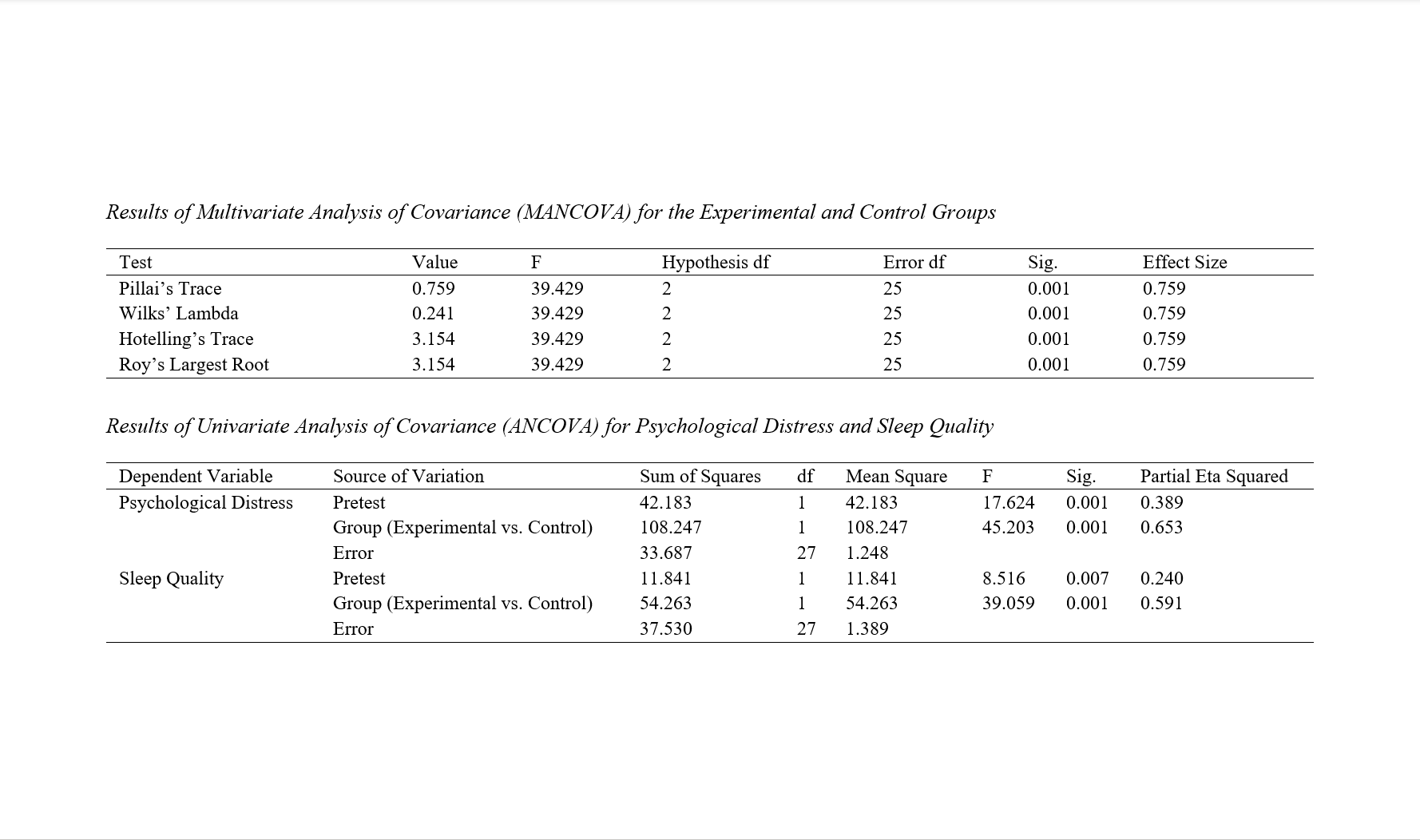
Findings: The results indicated a significant difference between the intervention and control groups in the mean scores of psychological distress and sleep quality (P < .001).
Conclusion: The findings favored the experimental group. Overall, the results demonstrated that mindfulness-based cognitive therapy effectively reduced psychological distress and improved sleep quality among women with irritable bowel syndrome.
Downloads
References
Abedini Chamgerdani, S., Bagheri Dasgardi, M., Heidari, F., & Namjou, S. (2023). The Effectiveness of Mindfulness-Based Cognitive Therapy Training on Suicidal Thoughts, Psychological Distress, and Depression in Women with Hypothyroidism. Ravanshenasi Research, 12(7), 175-184. https://frooyesh.ir/article-1-4484-fa.html
Ajami, S. (2023). The Effectiveness of Mindfulness-Based Cognitive Behavioral Therapy on Sleep Quality and Severity in Patients with Insomnia. Eighth National Conference on Modern Research in Educational Sciences and Psychology of Iran, Tehran.
Ballou, S., & Keefer, L. (2017). Psychological Interventions for Irritable Bowel Syndrome and Inflammatory Bowel Diseases. Clinical and Translational Gastroenterology, 8(1), e214. https://doi.org/10.1038/ctg.2016.69
Bredero, Q. M., Fleer, J., Smink, A., & et al. (2023). Mindfulness-Based Cognitive Therapy for Fatigue in Patients with Inflammatory Bowel Disease: Results of a Randomized Controlled Trial. Mindfulness, 14, 19-32. https://doi.org/10.1007/s12671-022-02057-5
Brown, M. M., Arigo, D., Wolever, R. Q., Smoski, M. J., Hall, M. H., Brantley, J. G., & Greeson, J. M. (2021). Do gender, anxiety, or sleep quality predict mindfulness-based stress reduction outcomes? Journal of Health Psychology, 26(13), 2656-2662. https://doi.org/10.1177/1359105320931186
Burrowes, S. A., Goloubeva, O., Stafford, K., & et al. (2022). Enhanced mindfulness-based stress reduction in episodic migraine-effects on sleep quality, anxiety, stress, and depression: a secondary analysis of a randomized clinical trial. Pain, 163(3), 436-444. https://doi.org/10.1097/j.pain.0000000000002372
Buysse, D. J., Reynolds Iii, C. F., Monk, T. H., Berman, S. R., & Kupfer, D. J. (1989). The Pittsburgh Sleep Quality Index: A New Instrument for Psychiatric Practice and Research. Psychiatry research, 28(2), 193-213. https://doi.org/10.1016/0165-1781(89)90047-4
Camino, M., Satorres, E., Delhom, I., Real, E., Abella, M., & Meléndez, J. C. (2022). Mindfulness-Based Cognitive Therapy to Improve Sleep Quality in Older Adults with Insomnia. Psychosocial Intervention, 31(3), 159-167. https://doi.org/10.5093/pi2022a12
Crane, R. (2009). Mindfulness-Based Cognitive Therapy: Distinctive Features. Routledge. https://doi.org/10.4324/9780203882344
Császár-Nagy, N., & Bókkon, I. (2022). Hypnotherapy and IBS: Implicit, long-term stress memory in the ENS? Heliyon, 9(1), e12751. https://doi.org/10.1016/j.heliyon.2022.e12751
Dana, M., Keshavarzi Arshadi, F., Hasani, F., & Mohammadi Khani, P. (2022). The Effectiveness of Mindfulness-Based Cognitive Therapy on Sleep Disorders, Rumination, and Emotional Dysregulation in Patients with Irritable Bowel Syndrome. Journal of the Faculty of Medicine, Mashhad University of Medical Sciences, 65(5). https://mjms.mums.ac.ir/article_22260.html
Dokani, M., Fakhr, M. K., & Hassan Zadeh, R. (2021). The Effectiveness of Mindfulness-Based Cognitive Therapy on Distress Tolerance and Cognitive Flexibility in Patients with Type 2 Diabetes. Iranian Journal of Diabetes and Metabolism, 21(3), 197-186. https://ijdld.tums.ac.ir/article-1-6064-fa.html
Enck, P., Aziz, Q., Barbara, G., Farmer, A. D., Fukudo, S., Mayer, E. A., Niesler, B., Quigley, E. M., Rajilić-Stojanović, M., Schemann, M., Schwille-Kiuntke, J., Simren, M., Zipfel, S., & Spiller, R. C. (2016). Irritable Bowel Syndrome. Nat Rev Dis Primers, 2, 16014. https://doi.org/10.1038/nrdp.2016.14
Ford, A. C., Sperber, A. D., Corsetti, M., & Camilleri, M. (2020). Irritable Bowel Syndrome. The lancet. https://doi.org/10.1016/S0140-6736(20)31548-8
Geller, S., Levy, S., & Avitsur, R. (2024). Psychological Distress in Individuals with Irritable Bowel Syndrome: The Roles of Body Image and Self-Criticism. Health Psychology and Behavioral Medicine, 12(1), 2334466. https://doi.org/10.1080/21642850.2024.2334466
Gkintoni, E., Vassilopoulos, S. P., & Nikolaou, G. (2025). Mindfulness-Based Cognitive Therapy in Clinical Practice: A Systematic Review of Neurocognitive Outcomes and Applications for Mental Health and Well-Being. Journal of clinical medicine, 14(5), 1703. https://doi.org/10.3390/jcm14051703
González-Martín, A. M., Aibar-Almazán, A., Rivas-Campo, Y., Marín-Gutiérrez, A., & Castellote-Caballero, Y. (2023). Effects of Mindfulness-Based Cognitive Therapy on Older Adults with Sleep Disorders: A Systematic Review and Meta-Analysis. Frontiers in Public Health, 11, 1242868. https://doi.org/10.3389/fpubh.2023.1242868
Heidari, A., Ehteshamzadeh, P., & Marashi, M. (2010). The Relationship Between Insomnia Severity, Sleep Quality, Sleepiness, and Mental Health Disorders with Academic Performance in Girls. Scientific Research Quarterly of Women and Culture, 1(4), 76-65. https://sid.ir/paper/189639/fa
Henrich, J. F., Gjelsvik, B., Surawy, C., Evans, E., & Martin, M. (2020). A Randomized Clinical Trial of Mindfulness-Based Cognitive Therapy for Women with Irritable Bowel Syndrome - Effects and Mechanisms. Journal of consulting and clinical psychology, 88(4), 295-310. https://doi.org/10.1037/ccp0000483
Javadi, Z., & Ghorbani, M. (2019). The Effectiveness of Mindfulness-Based Cognitive Therapy on Sleep Quality in Women with Generalized Anxiety Disorder. Internal Medicine Today, 25(2), 117-126. http://imtj.gmu.ac.ir/article-1-2945-fa.html
Joodaki, H., Sabet, M., & Ahadi, H. (2021). The Effectiveness of Mindfulness-Based Cognitive Therapy on Rumination and Fatigue in Patients with Uterine Cancer. Journal of Rehabilitation Research in Nursing, 8(2), 1-11. https://ijrn.ir/article-1-679-fa.html
Karami, B., Khodabakhshi Koulai, A., Heidari, H., & Davoodi, H. (2023). Comparing the Effectiveness of Narrative Solution-Focused Therapy and Mindfulness-Based Therapy on Reducing Stress and Improving Sleep Quality in Mothers with Sons with Severe Motor Disabilities. [Journal Name Not Provided]. https://jpen.ir/article-1-716-fa.html
Kessler, R. C., Andrews, G., Colpe, L. J., Hiripi, E., Mroczek, D. K., Normand, S. L., Walters, E. E., & Zaslavsky, A. M. (2002). Short Screening Scales to Monitor Population Prevalences and Trends in Non-Specific Psychological Distress. Psychological medicine, 32(6), 959-976. https://doi.org/10.1017/S0033291702006074
MacKinnon, A. L., Madsen, J. W., Giesbrecht, G. F., Campbell, T., Carlson, L. E., Dimidjian, S., Letourneau, N., Tough, S., & Tomfohr-Madsen, L. (2021). Effects of Mindfulness-Based Cognitive Therapy in Pregnancy on Psychological Distress and Gestational Age: Outcomes of a Randomized Controlled Trial. Mindfulness, 12(5), 1173-1184. https://doi.org/10.1007/s12671-020-01585-2
Mahdavi, M., & Bagholi, H. (2019). A Comparison of the Effectiveness of Cognitive Behavioral Group Therapy and Mindfulness-Based Therapy on Sleep Quality in Patients with Multiple Sclerosis. [Journal Name Not Provided]. https://ensani.ir/fa/article/425474/
Marano, G., Traversi, G., Pola, R., Gasbarrini, A., Gaetani, E., & Mazza, M. (2025). Irritable Bowel Syndrome: A Hallmark of Psychological Distress in Women? Life, 15(2), 277. https://doi.org/10.3390/life15020277
Mayer, E. A., Ryu, H. J., & Bhatt, R. R. (2023). The Neurobiology of Irritable Bowel Syndrome. Molecular Psychiatry, 28(4), 1451-1465. https://doi.org/10.1038/s41380-023-01972-w
Naliboff, B. D., Smith, S. R., Serpa, J. G., Laird, K. T., Stains, J., Connolly, L. S., Labus, J. S., & Tillisch, K. (2020). Mindfulness-Based Stress Reduction Improves Irritable Bowel Syndrome (IBS) Symptoms via Specific Aspects of Mindfulness. Neurogastroenterology and Motility, 32(9), e13828. https://doi.org/10.1111/nmo.13828
Nikkhah, B., Haqqani, R., & Aghaei Tari, S. (2019). The Effectiveness of Mindfulness-Based Cognitive Therapy on Negative Automatic Thoughts and Sleep Problems in Female Students with Depression Disorder. Empowerment of Exceptional Children, 10(4), 1-12. https://www.ceciranj.ir/article_106404.html
Outadi, S. (2023). The Effectiveness of Mindfulness-Based Cognitive Therapy on Depression, Sleep Quality, and Self-Efficacy in Pregnant Women During the COVID-19 Pandemic.
Park, S., Sato, Y., Takita, Y., Tamura, N., Ninomiya, A., Kosugi, T., Sado, M., Nakagawa, A., Takahashi, M., Hayashida, T., & Fujisawa, D. (2020). Mindfulness-Based Cognitive Therapy for Psychological Distress, Fear of Cancer Recurrence, Fatigue, Spiritual Well-Being, and Quality of Life in Patients with Breast Cancer - A Randomized Controlled Trial. Journal of Pain and Symptom Management, 60(2), 381-389. https://doi.org/10.1016/j.jpainsymman.2020.02.017
Qin, H. Y., Cheng, C. W., Tang, X. D., & Bian, Z. X. (2014). Impact of Psychological Stress on Irritable Bowel Syndrome. World Journal of Gastroenterology, 20(39), 14126-14131. https://doi.org/10.3748/wjg.v20.i39.14126
Sargali Shah Khasah, M., Hasani, J., & Shakouri, M. (2022). A Comparative Study of the Effectiveness of Mindfulness-Based Cognitive Behavioral Therapy and Cognitive Behavioral Therapy on Psychological Distress in Patients with Migraine Headaches. Journal of Psychological Sciences, 21(120), 2519-2533. https://doi.org/10.52547/JPS.21.120.2519
Staudacher, H. M., Black, C. J., Teasdale, S. B., Mikocka-Walus, A., & Keefer, L. (2023). Irritable Bowel Syndrome and Mental Health Comorbidity - Approach to Multidisciplinary Management. Nature Reviews. Gastroenterology & Hepatology, 20(9), 582-596. https://doi.org/10.1038/s41575-023-00794-z
Ter Avest, M. M., van Velthoven, A. S. M., Speckens, A. E. M., Dijkstra, G., Dresler, M., Horjus, C. S., Römkens, T. E. H., Witteman, E. M., van Dop, W. A., Bredero, Q. M., Nissen, L. H. C., & Huijbers, M. J. (2023). Effectiveness of Mindfulness-Based Cognitive Therapy in Reducing Psychological Distress and Improving Sleep in Patients with Inflammatory Bowel Disease: Study Protocol for a Multicentre Randomised Controlled Trial (MindIBD). BMC psychology, 11(1), 183. https://doi.org/10.1186/s40359-023-01127-0
Topan, R., Vork, L., Fitzke, H., Pandya, S., Keszthelyi, D., Cornelis, J., Ellis, J., Van Oudenhove, L., Van Den Houte, M., & Aziz, Q. (2024). Poor Subjective Sleep Quality Predicts Symptoms in Irritable Bowel Syndrome Using the Experience Sampling Method. The American Journal of Gastroenterology, 119(1), 155-164. https://doi.org/10.14309/ajg.0000000000002510
Viertiö, S., Kiviruusu, O., Piirtola, M., Kaprio, J., Korhonen, T., Marttunen, M., & Suvisaari, J. (2021). Factors Contributing to Psychological Distress in the Working Population, with a Special Reference to Gender Difference. BMC public health, 21, 611. https://doi.org/10.1186/s12889-021-10560-y
Xu, L., Shi, J., & Li, C. (2024). Addressing Psychosomatic Symptom Distress with Mindfulness-Based Cognitive Therapy in Somatic Symptom Disorder: Mediating Effects of Self-Compassion and Alexithymia. Frontiers in Psychiatry, 15, 1289872. https://doi.org/10.3389/fpsyt.2024.1289872
Yaqoubi, H. (2015). Psychometric Properties of the 10-Item Kessler Psychological Distress Questionnaire. Quarterly Journal of Applied Psychological Research, 4(6), 45-57. https://japr.ut.ac.ir/article_57963.html
Zhu, P., Liu, X., Shang, X., Chen, Y., Chen, C., & Wu, Q. (2023). Mindfulness-Based Stress Reduction for Quality of Life, Psychological Distress, and Cognitive Emotion Regulation Strategies in Patients With Breast Cancer Under Early Chemotherapy - A Randomized Controlled Trial. Holistic Nursing Practice, 37(3), 131-142. https://doi.org/10.1097/HNP.0000000000000580
Downloads
Additional Files
Publication Timeline
- Submitted
- Revised
- Accepted