Machine Learning Prediction of Anxiety Symptoms in Pregnant Women Based on Pregnancy-Specific Stress, Social Support, and Health Literacy
DOI:
https://doi.org/10.61838/Keywords:
Pregnancy Anxiety, Pregnancy-Specific Stress, Social Support, Health Literacy, WomenAbstract
Objective: The present study aimed to develop and evaluate machine learning models for predicting anxiety symptoms among pregnant women based on pregnancy-specific stress, social support, and health literacy and to determine the relative importance of these predictors in identifying women at risk for elevated anxiety during pregnancy.
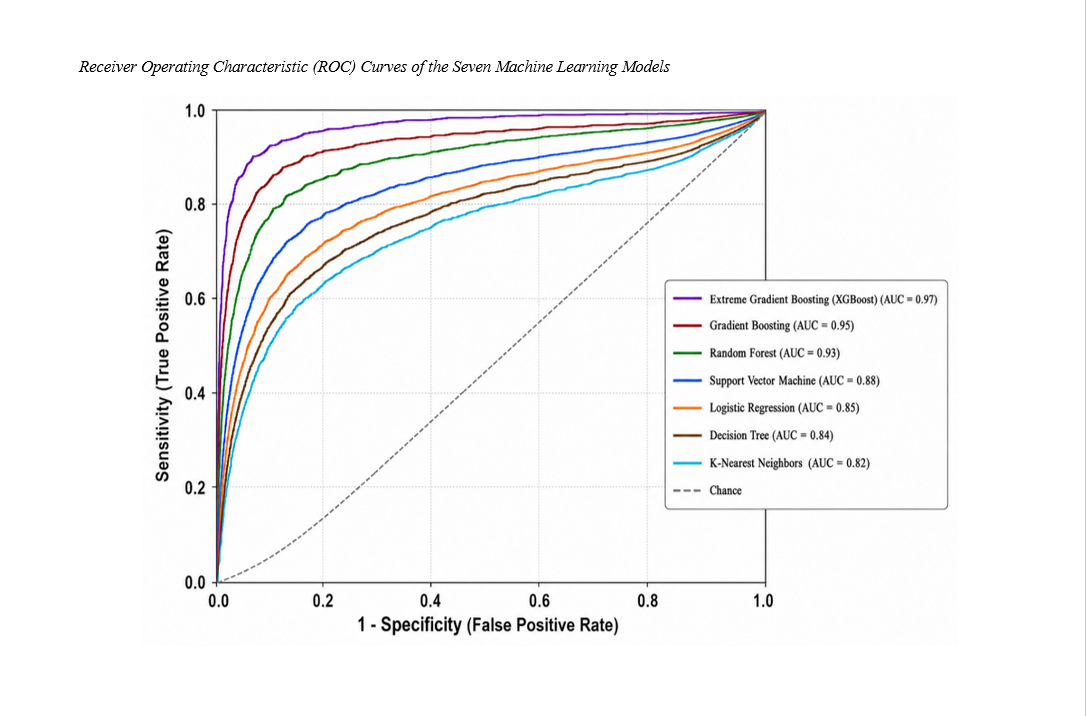
Methods and Materials: This applied cross-sectional predictive study was conducted among 384 pregnant women attending prenatal care centers and obstetric clinics in Tehran. Participants were selected through multistage convenience sampling and completed a demographic questionnaire, the Beck Anxiety Inventory, a Pregnancy-Specific Stress Questionnaire, the Multidimensional Scale of Perceived Social Support, and the Health Literacy for Iranian Adults Questionnaire. Following data preprocessing and descriptive analyses, machine learning techniques were employed to predict anxiety symptoms. The dataset was divided into training and testing subsets, and several supervised learning algorithms, including Logistic Regression, Support Vector Machine, K-Nearest Neighbors, Decision Tree, Random Forest, Gradient Boosting, and Extreme Gradient Boosting (XGBoost), were developed and evaluated using cross-validation procedures. Model performance was assessed using accuracy, precision, recall, F1-score, and area under the receiver operating characteristic curve (AUC). Feature importance analyses were conducted to identify the relative contribution of predictor variables.
Findings: Correlation analyses revealed a significant positive relationship between pregnancy-specific stress and anxiety symptoms and significant negative relationships between anxiety symptoms, social support, and health literacy. All machine learning algorithms demonstrated acceptable predictive performance; however, ensemble learning methods substantially outperformed traditional models. The XGBoost algorithm achieved the highest predictive accuracy (93%), precision (91%), recall (90%), F1-score (90%), and AUC (0.97), indicating excellent classification performance. Feature importance analysis showed that pregnancy-specific stress was the strongest predictor of anxiety symptoms, followed by social support and health literacy. Together, these findings demonstrated that psychosocial and informational factors could accurately predict anxiety risk among pregnant women and that advanced machine learning techniques effectively captured the complex relationships among these variables.
Conclusion: Pregnancy-specific stress, social support, and health literacy are significant predictors of anxiety symptoms during pregnancy, with pregnancy-specific stress representing the most influential factor. Machine learning models, particularly XGBoost, provide highly accurate prediction of maternal anxiety risk and may serve as valuable tools for early screening, prevention, and targeted intervention within prenatal healthcare settings. Strengthening social support systems and improving maternal health literacy may help reduce anxiety symptoms and enhance psychological well-being during pregnancy.
Downloads
References
Ahmed, M., Amin, F., Taj, A., & Durrani, N. (2022). Antenatal Anxiety and Depression: Frequency and Correlates During the COVID-19 Pandemic in Pakistan. Journal of Family Medicine and Primary Care, 11(10), 6407-6415. https://doi.org/10.4103/jfmpc.jfmpc_911_22
Amiri, M., Kohan, S., & Heidari, Z. (2024). Investigating the Depression, Anxiety, and Stress-Related Factors in Near-Miss Mothers. Journal of education and health promotion, 13(1). https://doi.org/10.4103/jehp.jehp_352_23
Ayande, R. E. A., Otoo, G. E., Pearlman, J., Gonzalez-Nahm, S., & Carbone, E. T. (2026). A Retrospective Mixed Methods Analysis of COVID-19’s Impact on Maternal Psychosocial Health in Ghana: Lessons for Future Public Health Crises. https://doi.org/10.64898/2026.02.05.26345660
Bäckström, C., Carlén, K., Larsson, V., Mårtensson, L., Thorstensson, S., Berglund, M., Larsson, T., Stjernetun, B. B., Wilhsson, M., & Larsson, M. (2022). Expecting Parents’ Use of Digital Sources in Preparation for Parenthood in a Digitalised Society – A Systematic Review. Digital Health, 8, 205520762210903. https://doi.org/10.1177/20552076221090335
Bahrami‐Samani, S., Omidvar, S., Ledari, F. M., Azizi, A., Ashrafpour, M., & Kordbagheri, M. (2023). The Relationship Between Perceived Stress and Pregnancy Distress With Self‐care of Pregnant Women: The Mediating Role of Social Support—A Cross‐sectional Study. Health Science Reports, 6(11). https://doi.org/10.1002/hsr2.1730
Chahyaya, I. H., Fauziah, E. N., & Malia, A. (2024). Effectiveness of Sequmil (School of Quran for Pregnant Women) Education Program as a Coping Strategy for Mental Health Disorders of Pregnant Women. 66-88. https://doi.org/10.2991/978-94-6463-461-7_8
Daehn, D., Rudolf, S., Pawils, S., & Renneberg, B. (2022). Perinatal Mental Health Literacy: Knowledge, Attitudes, and Help-Seeking Among Perinatal Women and the Public – A Systematic Review. BMC Pregnancy and Childbirth, 22(1). https://doi.org/10.1186/s12884-022-04865-y
Donelle, L., Hiebert, B., & Hall, J. (2024). An Investigation of mHealth and Digital Health Literacy Among New Parents During COVID-19. Frontiers in Digital Health, 5. https://doi.org/10.3389/fdgth.2023.1212694
Dubois, N., & Giroux, I. (2025). Gestational Diabetes Mellitus: Efficacy of Non-Pharmacological Interventions for Management and Prevention. Healthcare, 13(18), 2261. https://doi.org/10.3390/healthcare13182261
Elbarazi, I., Alam, Z., Ali, N., Loney, T., Al‐Rifai, R. H., Al‐Maskari, F., & Ahmed, L. A. (2024). Health Literacy Among Pregnant Women in the United Arab Emirates: The Mutaba’ah Study. Women S Health, 20. https://doi.org/10.1177/17455057231224179
Firouzbakht, M., Rahmani, N., Nia, H. S., & Omidvar, S. (2022). Coping Strategies and Depression During the COVID-19 Pandemic in Pregnant Women: A Cross Sectional Study. BMC psychiatry, 22(1). https://doi.org/10.1186/s12888-022-03792-8
Gaffey, A. E., Kozai, A., Nuckols, V., Wu, J., Grobman, W. A., & Gibbs, B. B. (2026). Area Deprivation, Social Vulnerability, and Post-Pregnancy Blood Pressure. https://doi.org/10.64898/2026.02.10.26346041
Hanks, A. J., Hume, C., Lim, S., & Grieger, J. A. (2022). The Perspectives of Diabetes Educators and Dietitians on Diet and Lifestyle Management for Gestational Diabetes Mellitus: A Qualitative Study. Journal of Diabetes Research, 2022, 1-11. https://doi.org/10.1155/2022/3542375
Huang, W., Li, G., Wang, D., Qu, H., Maozhou, T., & Wang, Y. (2023). Postpartum Depression Literacy in Chinese Perinatal Women: A Cross-Sectional Study. Frontiers in Psychiatry, 14. https://doi.org/10.3389/fpsyt.2023.1117332
Irianjani, N. D., Hayati, E. N., & Guzman, M. T. D. (2022). Social Support, Religiosity, and Health Literacy as Predictors of Resilience in Pregnant Women During COVID-19 Pandemic. Journal of Educational Health and Community Psychology, 11(1), 172. https://doi.org/10.12928/jehcp.v11i1.22306
Kacanek, D., Yee, L. M., Yao, T. J., Lee, J., Chadwick, E. G., Williams, P. L., Barr, E., Berman, C., Davtyan, M., DiPerna, A., Flores, A., Green, J. K., Haddad, L. B., Hyzy, L., Jacobson, D. L., James‐Todd, T., Jao, J., Khadraoui, A., Malee, K., . . . Powis, K. M. (2024). Health Outcomes Around Pregnancy and Exposure to HIV/Antiretrovirals (HOPE) Study Protocol: A Prospective Observational Cohort Study of Reproductive-Aged Women Living With HIV. BMJ open, 14(7), e084835. https://doi.org/10.1136/bmjopen-2024-084835
Komine‐Aizawa, S., Yamada, N., Haruyama, Y., Deguchi, M., Fukuda, M., Kawana, K., Kobashi, G., Miyagi, E., Yamada, H., Sugiyama, T., & Hayakawa, S. (2023). The Factors Influencing Pregnant Women’s Selection of Media Sources to Obtain Information on COVID-19 in Japan in 2021. Vaccines, 11(4), 805. https://doi.org/10.3390/vaccines11040805
Lai, M. K., Chen, J., Fong, P., & Meng, L. (2025). Association Between Maternal–infant Health Literacy, Social Support, and Psychological Stress During the Perinatal Period Among Women in Macao, China. Women S Health, 21. https://doi.org/10.1177/17455057251347086
Liu, Y., Peng, L.-l., Zhang, Y., Tang, M.-y., Tang, M.-q., Xu, Y.-y., Ma, Z.-y., Tang, Y., & Gao, L. (2023). The Post-Discharge Coping Difficulty of Puerperal Women in a Middle and Low-Income Tourist City During the COVID-19 Pandemic. BMC Pregnancy and Childbirth, 23(1). https://doi.org/10.1186/s12884-023-05554-0
Melwani, S., Cleland, V., Patterson, K., & Nash, R. (2022). Health Literacy Status of Pregnant Women and Women With Young Children in Tasmania. Health Promotion Journal of Australia, 34(1), 138-148. https://doi.org/10.1002/hpja.675
Moshki, M., Tavakolizadeh, J., Paykani, T., Sebghati-Oghaz, A., & Dehnoalian, A. (2025). The Effect of Social Support Based Intervention on COVID-19 Anxiety in Pregnant Women: A Randomized Pretest-Posttest Control Group Design. https://doi.org/10.21203/rs.3.rs-6653049/v1
Nuampa, S., Payakkaraung, S., Srimoragot, M., Silavong, L., Sudphet, M., & Souksavath, S. (2025). Unlocking the Adoption of a Smartphone Application for High‐Risk Pregnant Women in the Lao People's Democratic Republic: A Mixed‐Methods Study. Journal of Advanced Nursing. https://doi.org/10.1111/jan.70010
Pancharern, S., Kontha, J., & Suparee, N. (2023). Factors Predicting the Healthcare Behavior of Adolescence Pregnancy. Health Science Journal of Thailand, 5(4), 1-8. https://doi.org/10.55164/hsjt.v5i4.260836
Parimi, F., Tehrani, F. J., Shariatpanahi, S., & Matbouei, M. (2025). Investigation the Effectiveness of Self-Care Education Based on the Seven-Step Learning Cycle (7E) on Health Literacy, Distress, and Self-Concept of Pregnant Women Referring to Health Care Centers. https://doi.org/10.21203/rs.3.rs-6230605/v1
Pascuzzi, L. (2025). Exploring Emotional Wellbeing in the Perinatal Period: A Qualitative Study in Australia. Journal of Public Health Research, 14(4). https://doi.org/10.1177/22799036251395270
Patra, B. G., Sun, Z., Cheng, Z., Praneet Kasi Reddy Jagadeesh, K., Altammami, A., Liu, Y., Joly, R., Jedlicka, C., Delgado, D., Pathak, J., Peng, Y., & Zhang, Y. (2023). Automated Classification of Lay Health Articles Using Natural Language Processing: A Case Study on Pregnancy Health and Postpartum Depression. Frontiers in Psychiatry, 14. https://doi.org/10.3389/fpsyt.2023.1258887
Phutong, P., & Thaithae, S. (2023). Social Support, Health Literacy and Anxiety Among Pregnant Women During Coronavirus 2019 Pandemic in Thailand. Frontiers in psychology, 14. https://doi.org/10.3389/fpsyg.2023.1246996
Rohr, J., Vahidy, F., Bartek, N., Bourassa, K. A., Nanavaty, N. R., Antosh, D. D., Harms, K., Stanley, J. L., & Madan, A. (2023). Reducing Psychiatric Illness in the Perinatal Period: A Review and Commentary. World journal of psychiatry, 13(4), 149-160. https://doi.org/10.5498/wjp.v13.i4.149
Sakamoto, J. L., Carandang, R. R., Kharel, M., Shibanuma, A., Yarotskaya, E. L., Basargina, M. A., & Jimba, M. (2022). Effects of mHealth on the Psychosocial Health of Pregnant Women and Mothers: A Systematic Review. BMJ open, 12(2), e056807. https://doi.org/10.1136/bmjopen-2021-056807
Soni, B., Jayaseelan, V., Kattimani, S., Rengaraj, S., Arikrishnan, K., & Veerasetty, N. (2023). Association Between Common Mental Disorder and Glycemic Control in Women With Gestational Diabetes: A Mixed-Method Study. Indian Journal of Psychiatry, 65(9), 941-948. https://doi.org/10.4103/indianjpsychiatry.indianjpsychiatry_402_23
Tang, F., Zhong, X., Liu, S., Guo, X., & Li, D. (2023). Pathway Analysis of the Impact of Health Literacy, Social Support and Self-Efficacy on Self-Management Behaviors in Pregnant Women With Gestational Diabetes Mellitus. Frontiers in Public Health, 11. https://doi.org/10.3389/fpubh.2023.1188072
Weeramuni, N. P., Athapattu Dona Shashika Shayanthi, K., & Perera, B. (2023). Information Needed, Sources of Information, and Barriers of Acquiring Required Information by Pregnant Women in Southern Sri Lanka. Nursing & Midwifery Research Journal, 19(4), 236-248. https://doi.org/10.1177/0974150x231219068
Yeh, P. T., Rhee, D. K., Kennedy, C. E., Zera, C., Lucido, B., Tunçalp, Ö., Rodolfo Gómez Ponce de, L., & Narasimhan, M. (2022). Self-Monitoring of Blood Pressure Among Women With Hypertensive Disorders of Pregnancy: A Systematic Review. BMC Pregnancy and Childbirth, 22(1). https://doi.org/10.1186/s12884-022-04751-7
Zeb, L., Shafqat, T., & Fatima, S. S. (2022). The Psychological Impact and Perception of COVID -19 Pandemic on Pregnant Women Presenting to a Tertiary Care Hospital, KPK, Pakistan. American Journal of Psychology, 4(1), 1-9. https://doi.org/10.47672/ajp.991
Zhang, L., Wu, F., Li, F., Feng, X., Hong, Y., Rong, H., Zheng, C., Luo, T., Lu, L., Lei, E., Ren, L., & Chen, J. (2025). The Relationship Between Pregnancy Stress and Antepartum Depression in Chinese Pregnant Women: The Mediating Effect of Social Support and Maternal Health Literacy. Frontiers in Psychiatry, 16. https://doi.org/10.3389/fpsyt.2025.1600448
Downloads
Additional Files
Publication Timeline
- Submitted
- Revised
- Accepted