Comparison of Executive Functions and Resilience in Two Groups of Cannabis Users and Non-Users
DOI:
https://doi.org/10.61838/kman.hn.2.3.12Keywords:
Executive Functions, Resilience, Problem Solving, Behavioral Inhibition-ActivationAbstract
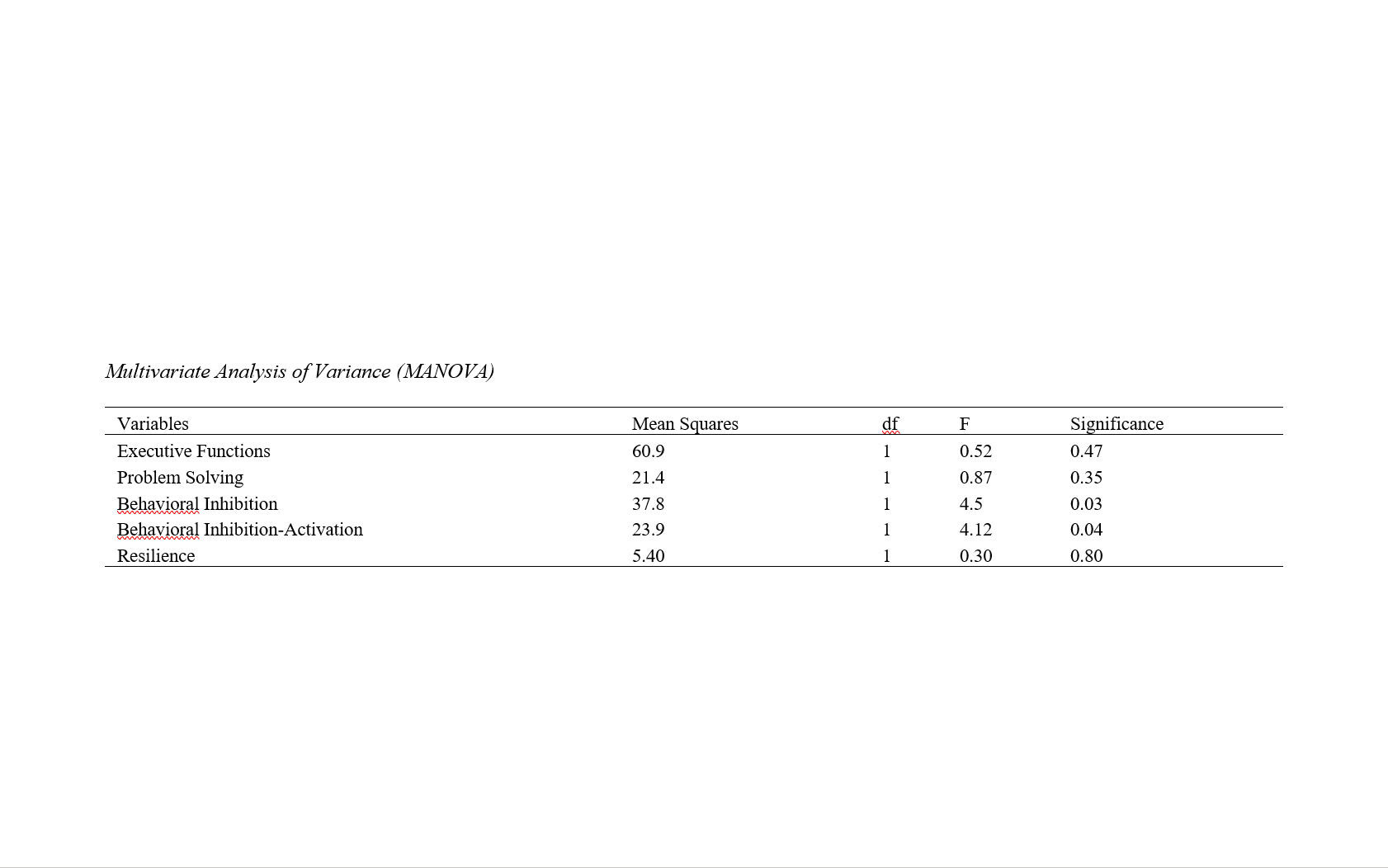
The present study aims to compare executive functions and resilience between two groups of cannabis users and non-users. Given the prevalence of cannabis use among young people and its impact on various psychological and social aspects, examining these factors seems essential. This descriptive study is ex-post facto in nature. The statistical population included men and women over 18 years old, from which 60 individuals were selected through convenience sampling. To assess executive functions, the Heppner Problem Solving Inventory and the Carver and White Behavioral Inhibition-Activation Questionnaire were used, and for assessing resilience, the Connor-Davidson Resilience Scale was employed. Data were analyzed using Multivariate Analysis of Variance (MANOVA). The results indicated a significant difference in the behavioral inhibition-activation system between cannabis users and non-users (P<0.05). However, no significant difference was observed in problem-solving and resilience between the two groups. These findings suggest that cannabis use may alter the behavioral inhibition system and the behavioral activation system, while having minimal effect on problem-solving and resilience. Therefore, this research can serve as a basis for further studies on the psychological effects of cannabis use and appropriate intervention strategies to improve the condition of users.
Downloads
References
1. Abella M, Vila-Badia R, Serra-Arumí C, Vallejo-Rius G, Colomer-Salvans A, Rolduà-Ros J, et al. The relevance of processing speed in the functioning of people with first-episode psychosis. Journal of Psychiatric Research. 2023;160:171-6. [PMID: 36804112] [DOI]
2. Meier MH, Caspi A, Ambler A, Harrington H, Houts R, Keefe RSE, et al. Persistent cannabis users show neuropsychological decline from childhood to midlife. Proceedings of the National Academy of Sciences. 2012;109(40):E2657-E64. [PMID: 22927402] [PMCID: PMC3479587] [DOI]
3. Patrick ME, Yeomans-Maldonado G, Griffin J. Daily Reports of Positive and Negative Affect and Alcohol and Marijuana Use Among College Student and Nonstudent Young Adults. Substance Use & Misuse. 2015;51(1):54-61. [PMID: 26683453] [PMCID: PMC4830136] [DOI]
4. Ammerman S, Ryan S, Adelman WP, Committee on Substance Abuse tCoA, Levy S, Ammerman SD, et al. The impact of marijuana policies on youth: clinical, research, and legal update. Pediatrics. 2015;135(3):e769-e85. [PMID: 25624385] [DOI]
5. Dorius C, Bahr SJ, Hoffmann JP, Harmon EL. Parenting Practices as Moderators of the Relationship Between Peers and Adolescent Marijuana Use. Journal of Marriage and Family. 2004;66(1):163-78. [DOI]
6. Mandelbaum DE, de la Monte SM. Adverse Structural and Functional Effects of Marijuana on the Brain: Evidence Reviewed. Pediatric Neurology. 2017;66:12-20. [PMID: 27789118] [PMCID: PMC9954727] [DOI]
7. Pontes NMH, Strohacker ER, Pontes MCF. Bullying Victimization is Associated with a Significantly Greater Risk of Illicit Substance Use among US Female Adolescents: YRBS 2011 to 2017. Crime & Delinquency. 2021;68(13-14):2452-75. [DOI]
8. Simons JS, Dvorak RD, Batien BD. Methamphetamine use in a rural college population: Associations with marijuana use, sensitivity to punishment, and sensitivity to reward. Psychology of Addictive Behaviors. 2008;22(3):444-9. [PMID: 18778139] [DOI]
9. Calhoun PS, Sampson WS, Bosworth HB, Feldman ME, Kirby AC, Hertzberg MA, et al. Drug use and validity of substance use self-reports in veterans seeking help for posttraumatic stress disorder. Journal of Consulting and Clinical Psychology. 2000;68(5):923-7. [PMID: 11068979] [DOI]
10. Karimi Dastaki A, Mahmudi M. The Effectiveness of Life Meaning Workshops on Resilience, Negative Affect, and Perceived Social Support in Students. Journal of Psychological Dynamics in Mood Disorders (PDMD). 2024;3(1):187-97. [DOI]
11. Walsh K, Resnick HS, Danielson CK, McCauley JL, Saunders BE, Kilpatrick DG. Patterns of drug and alcohol use associated with lifetime sexual revictimization and current posttraumatic stress disorder among three national samples of adolescent, college, and household-residing women. Addictive Behaviors. 2014;39(3):684-9. [PMID: 24370205] [PMCID: PMC4018814] [DOI]
12. Asiaban NM, Imani S, Shokri O. Structural relations of brain-behavioral systems and emotion regulation difficulties with craving of marijuana in students. 2018.
13. Kassel JD, Wardle M, Roberts JE. Adult attachment security and college student substance use. Addictive Behaviors. 2007;32(6):1164-76. [PMID: 16996225] [DOI]
14. Cadet JL, Bisagno V. Neuropsychological Consequences of Chronic Drug Use: Relevance to Treatment Approaches. Frontiers in Psychiatry. 2016;6. [PMID: 26834649] [PMCID: PMC4713863] [DOI]
15. Cadet JL. Epigenetics of Stress, Addiction, and Resilience: Therapeutic Implications. Molecular Neurobiology. 2016;53(1):545-60. [PMID: 25502297] [PMCID: PMC4703633] [DOI]
16. Heidari N, Pourebrahim T, Khodabakhshi Koolaei A, Mosalanejad L. Relationship between Emotional Control Expressiveness Style and Resilience Against Narcotics Substance Use in High School Male Students. RUMS_JOURNAL. 2013;12(8):599-610.
17. Sadeghi M, Karimi F. Effect of Psychological Capital Intervention on the Cognitive Flexibility and Resilience in Addicted People. Research on Addiction. 2019;12(48):83-102.
18. Ashrafzadeh S, Khezrimoghadam N, Manzari Tavakoli V. Effectiveness of motivational interviewing on the academic self-efficacy and problem solving of female students. Journal of Psychological Science. 2017;16(63):413-28.
19. Heppner PP, Witty TE, Dixon WA. Problem-solving appraisal and human adjustment: A review of 20 years of research using the Problem Solving Inventory. The Counseling Psychologist. 2004;32(3):344-428. [DOI]
20. AghaDavoud Marnani S, Mirahmadi L, Izady R. Predicting resilience based on emotional intelligence, cognitive flexibility and compassion in the medical staff of Dr. Ali Shariati Hospital during the outbreak of Covid virus 19. Journal of New Strategies in Psychology and Educational Sciences. 2022;5(13):127-38.
21. Connor KM, Davidson, Jonathan R.T. Development of a new resilience scale: The Connor-Davidson Resilience Scale (CD-RISC). Depression and Anxiety. 2003;18(2):76-82. [PMID: 12964174] [DOI]
22. Bayat L, Bayat F. Structural Relations of the Tendency to Drug Abuse and Behavioral Inhibition/Activation Systems: Mediating Role of Personality Traits, Alexithymia and Attachment Styles. Journal title. 2016;9(4):47-61. [DOI]
23. Khosravani V, Seidisarouei M, Alvani A. Early maladaptive schemas, behavioral inhibition system, behavioral approach system, and defense styles in natural drug abusers. Polish Annals of Medicine. 2016;23(1):6-14. [DOI]
24. Kozak AT, Fought A. Beyond alcohol and drug addiction. Does the negative trait of low distress tolerance have an association with overeating? Appetite. 2011;57(3):578-81. [PMID: 21801773] [DOI]
25. Shabtari F, Hajializadeh K, Hajmohammadi Z. Investigating the Relationship between Behavioral Activation and Inhibition Systems (BIS/BAS) and Effortful Control (EC) with Clinical Symptoms and Personality Disorders in Patients with Substance Abuse Disorders. Journal of Assessment and Research in Applied Counseling (JARAC). 2023;5(1):96-103. [DOI]
26. Yarmohammadi Vasel M, Alipour F, Bastami M, Zolfagharinia M, Bazazzade N. The Mediating Role of Cognitive Emotion Regulation in the Relationship between Brain-Behavioral Systems and Impulsivity with Craving in Stimulant Addiction. Neuropsychology. 2015;1(2):51-67.
27. Pacula RL, Jacobson M, Maksabedian EJ. In the weeds: a baseline view of cannabis use among legalizing states and their neighbours. Addiction. 2016;111(6):973-80. [PMID: 26687431] [PMCID: PMC5216038] [DOI]
Downloads
Additional Files
Publication Timeline
License
Copyright (c) 2024 Ezzatollah Ahmadi (Corresponding Author); Mahdi Chitsaz (Author)

This work is licensed under a Creative Commons Attribution-NonCommercial 4.0 International License.