





























Structural Relationships among Executive Functions and Behavioral Brain Activities with Social Skills of Children with Autism: The Mediating Role of Cognitive Emotion Regulation Strategies
The purpose of this applied study was to determine the extent of the relationship between executive functions and behavioral brain activities with the social skills of children with autism, mediated by cognitive emotion regulation strategies. In terms of purpose, the study was applied, and in terms of method and nature, it was a descriptive–correlational study using structural equation modeling. The statistical population consisted of children diagnosed with autism at the Tehran Autism Center. Based on Green’s formula, 235 questionnaires were distributed among the sample using non-random purposive sampling. Data were collected using the Coolidge Executive Function Inventory (2002), the Autism Social Skills Profile by Bellini and Hopf (2007), the Cognitive Emotion Regulation Questionnaire by Garnefski et al. (2001), and the Behavioral Inhibition/Behavioral Activation Systems Scale by Carver and White (1994). Structural equation modeling and SmartPLS software (version 3) were used to test the research hypotheses. The findings indicated that executive functions and behavioral brain activities were related both directly to the social skills of children with autism and indirectly through the mediating role of cognitive emotion regulation strategies (p < .05). The results can be utilized by centers working with children with autism and by their families to improve these children’s communication skills.
The Effect of Aerobic and Resistance Training on Gut Microbiome Composition and Its Association with Irisin Protein Levels in Aged Mice: The Role of Faecalibacterium prausnitzii, Clostridium difficile, and Enterococcus faecalis
In the aging period, alterations in gut microbiome composition and the decline of myokine proteins—such as irisin—are considered major contributors to metabolic disorders, inflammatory conditions, and muscle weakness. In this context, the role of exercise interventions in simultaneously modulating these two biological indicators has gained increasing attention. The present study aimed to examine the effects of aerobic and resistance training on gut microbiome composition and plasma irisin levels in aged mice, with a focus on three key species: Faecalibacterium prausnitzii, Clostridium difficile, and Enterococcus faecalis. This experimental study was conducted over eight weeks on 40 male Wistar rats assigned to five groups: young control, aged without training, sham, aerobic training, and resistance training. Plasma irisin levels were measured using the ELISA method, and the relative abundance of bacteria was assessed using real-time polymerase chain reaction (qPCR). Data were analyzed using multifactorial ANOVA and Tukey’s post hoc test. The results indicated that aerobic and resistance training led to a significant increase in plasma irisin levels in aged mice compared with the inactive group. Resistance training showed the greatest increase. Additionally, the abundance of F. prausnitzii increased in the trained groups, while the abundance of C. difficile and E. faecalis decreased. Composite microbial health indices (F/BAD, F/Cd, F/Ef) also improved significantly. A positive association between irisin levels and microbial ratios was confirmed. The findings suggest that physical exercise—particularly resistance training—can simultaneously enhance gut microbiome composition and myokine status in the elderly. These results support the central role of the “gut–muscle axis” in the physiological response to exercise and provide a basis for designing personalized training interventions in geriatric medicine.
Evaluation of the Effect of Continuous and Interval Aerobic Training on Survivin Gene Expression and Cytochrome C in Myocardial Tissue of Rats Modeled with Myocardial Infarction
This study aimed to investigate the effects of moderate-intensity continuous training (MICT) and high-intensity interval training (MIHIIT) on Survivin gene expression and Cytochrome C levels in myocardial tissue of rats modeled with myocardial infarction. In this experimental study, 30 adult male Wistar rats (10–12 weeks, 275 ± 25 g) were assigned to five groups: healthy control, sham, myocardial infarction (MI), MICT, and MIHIIT. The MI model was induced through left anterior descending coronary artery occlusion and confirmed by echocardiography. Training protocols were performed for 8 weeks, five sessions per week. The MICT group performed continuous running at moderate intensity (15–23 m/min, 50 minutes), while the MIHIIT group completed interval running consisting of 7 sets of high-intensity bouts (20–28 m/min, 4 minutes) with active recovery periods (11–17 m/min, 3 minutes). Survivin gene expression was measured using RT-qPCR, and Cytochrome C levels were quantified using ELISA. Data were analyzed using MANOVA, ANOVA, and Tukey post-hoc tests. Myocardial infarction caused a significant increase in Cytochrome C levels and a reduction in Survivin expression compared to the healthy and sham groups (p < .001). Both types of aerobic training significantly reversed the infarction-induced alterations; Cytochrome C levels were reduced, and Survivin expression returned to levels comparable to the control group. When comparing the two protocols, interval training (MIHIIT) produced a greater increase in Survivin expression (p ≈ .046), while both exercise types demonstrated similar effects on reducing Cytochrome C. Both continuous and interval aerobic training restore the survival/death balance in myocardial tissue following infarction by reducing oxidative stress and enhancing Survivin expression. These findings reinforce the role of aerobic exercise as an effective non-pharmacological intervention in cardiac rehabilitation.
The Role of Biotechnology in the Development of Recombinant Drugs
Biotechnology has emerged as a cornerstone of modern pharmaceutical science, providing the foundation for the discovery, design, and production of recombinant drugs that have transformed global healthcare. This narrative review, using a descriptive analytical approach, explores the conceptual, industrial, and clinical dimensions of recombinant drug development. It begins by outlining the molecular foundations of biotechnology, emphasizing recombinant DNA technology, genetic manipulation, and expression systems that enable large-scale synthesis of therapeutic proteins. Industrial advancements in upstream and downstream processing, including cell line optimization, bioreactor engineering, purification, and formulation, are analyzed to illustrate how biotechnology has evolved into a highly controlled and efficient production platform. The study further examines the integration of automation, digitalization, and Good Manufacturing Practice (GMP) standards that ensure product safety, consistency, and regulatory compliance. Clinically, recombinant drugs have achieved remarkable success across multiple disciplines, including endocrinology, oncology, hematology, and immunology. Recombinant insulin, monoclonal antibodies, cytokines, and gene therapy products exemplify the therapeutic versatility of these biopharmaceuticals in managing both chronic and rare diseases. The review also highlights emerging applications in neurodegenerative and genetic disorders, where recombinant enzymes and CRISPR-mediated platforms are redefining the boundaries of precision medicine. Despite challenges related to production cost, ethical considerations, and equitable access, recombinant biotechnology continues to expand its impact through innovation and interdisciplinary collaboration. The findings underscore the role of biotechnology as a transformative force that bridges molecular biology and clinical application, offering solutions that enhance safety, specificity, and therapeutic efficacy. Ultimately, this study concludes that recombinant biotechnology represents not only a scientific revolution but also a paradigm of sustainable innovation, shaping the future of personalized and regenerative medicine.
Structural Equation Modeling of the Effect of Sport Mental Energy on Athletic Success: The Mediating Role of Cognitive Flexibility in Iraqi Volleyball Players
The present study aimed to examine the structural relationships between sport mental energy, cognitive flexibility, and athletic success among volleyball players. This research employed a descriptive–correlational design of the cross-sectional type. The statistical population consisted of all male volleyball players in Diwaniyah City, Iraq. A sample of 230 participants was selected through convenience sampling. Data were collected using standardized questionnaires measuring sport mental energy, cognitive flexibility, and athletic success. Data analysis was conducted using SPSS version 26 and AMOS version 23 through the structural equation modeling (SEM) approach. The findings indicated that the proposed conceptual model demonstrated a good fit, and all main and sub-hypotheses were supported. The results showed that sport mental energy had a direct and positive effect on athletic success (path coefficient = 0.352, p < 0.001). Cognitive flexibility also exerted a significant direct effect on athletic success (path coefficient = 0.625, p < 0.001). Furthermore, the mediating role of cognitive flexibility in the relationship between mental energy and athletic success was confirmed. Path analysis revealed that the indirect effect of sport mental energy on success through cognitive flexibility was statistically significant (indirect coefficient = 0.364, p = 0.001). Overall, the results of this study highlight the simultaneous importance of psychological resources (mental energy) and cognitive abilities (flexibility) in enhancing athletes’ performance and success. These findings provide useful guidance for coaches and sport psychologists in designing effective educational and psychological interventions.
Investigating the User Experience of AI Chatbots in Delivering Mental Health Support to Athletes
This study aimed to explore how athletes experience and perceive the use of artificial intelligence (AI) chatbots as a source of mental health support, focusing on effectiveness, usability, emotional connection, and limitations. A qualitative exploratory design was employed. Twenty-two athletes from diverse sports disciplines in Malaysia were recruited using purposive sampling. Data were collected through semi-structured, in-depth interviews conducted online to allow flexible participation and confidentiality. The sample size was guided by theoretical saturation, reached when no new themes emerged. All interviews were audio-recorded, transcribed verbatim, and analyzed using thematic analysis. NVivo 14 software supported systematic coding, with open, axial, and selective coding applied iteratively to generate categories and subthemes. Rigor and trustworthiness were ensured through member checking, peer debriefing, and an audit trail. Four main themes emerged: perceived effectiveness of AI chatbots, usability and interaction experience, emotional and relational dynamics, and barriers and limitations. Athletes reported improved mental well-being, reduced competition-related anxiety, and personalized coping strategies. They valued intuitive interfaces, empathetic conversational style, and privacy features, which encouraged engagement and disclosure. Chatbots fostered a sense of trust and emotional validation but sometimes lacked depth and produced repetitive responses. Barriers included occasional technical instability, insufficient long-term personalization, cultural mismatches, and data security concerns. Despite these limitations, participants viewed chatbots as valuable early support tools and stigma-free entry points to mental health care. AI chatbots show promise in enhancing access to psychological support for athletes, offering discreet, immediate, and personalized assistance. However, improving cultural sensitivity, personalization, technical reliability, and data transparency is crucial for sustained engagement and safety in sports mental health contexts.
Assessment of Dietary Intake, Nutritional Status, and Cardiovascular Risk in University Students
This study assessed the eating habits, nutritional status, and cardiovascular risk in university students. The sample consisted of 295 new students (188 female, 107 male) who attended the induction week at the Autonomous University of Occident and met the inclusion criteria: being adults, enrolled in any undergraduate degree offered by the university, and agreeing to participate through informed consent. The data collection consisted of two parts: an initial survey to collect general characteristics and self-reported height and weight, and the measurement of waist and hip circumferences according to the ISAK protocol. Then, a short version of the FFQ was applied to collect dietary information. Data was captured on MS Excel, and mean, standard deviation, frequencies, and 95 % confidence intervals were reported. Statistical tests were analyzed using SPSS version 26. Results: 38 % of the students are overweight or obese, being higher in men (42 % vs 35.6 % in women). 7.35 % of women and 10.96 % of men presented high WHR, and 33.09 % of women and 35.62 % of men presented high WHRt. Low weekly consumption was found in dairy products (7.13 CI 95 % 6.71 - 7.56), vegetables (5.83 CI 95 % 5.33 - 6.34), and fruits (6.92 CI 95 % 6.43 – 7.42). Processed foods and junk food are highly consumed (8.77 CI 95 % 8.10 - 9.45, and 14.20 CI 95 % 13.20 – 15.20, respectively). Significant correlations were found on weekly consumption of processed foods and junk food (R = 0.765, p < 0.001), processed foods and dairy products (R = 0.436, p<0.001). The findings indicate a high rate of malnutrition among university students, poor intake of healthy foods, and a high consumption of processed and junk food. These inadequate lifestyle habits could be a risk factor for the development of both cardiovascular diseases and NCDs in the long term. Therefore, it is important to emphasize the need for university-level nutritional interventions.
Comparison of the Effectiveness of Cognitive-Behavioral Therapy and Short-Term Solution-Focused Therapy on Distress Tolerance in Pregnant Women
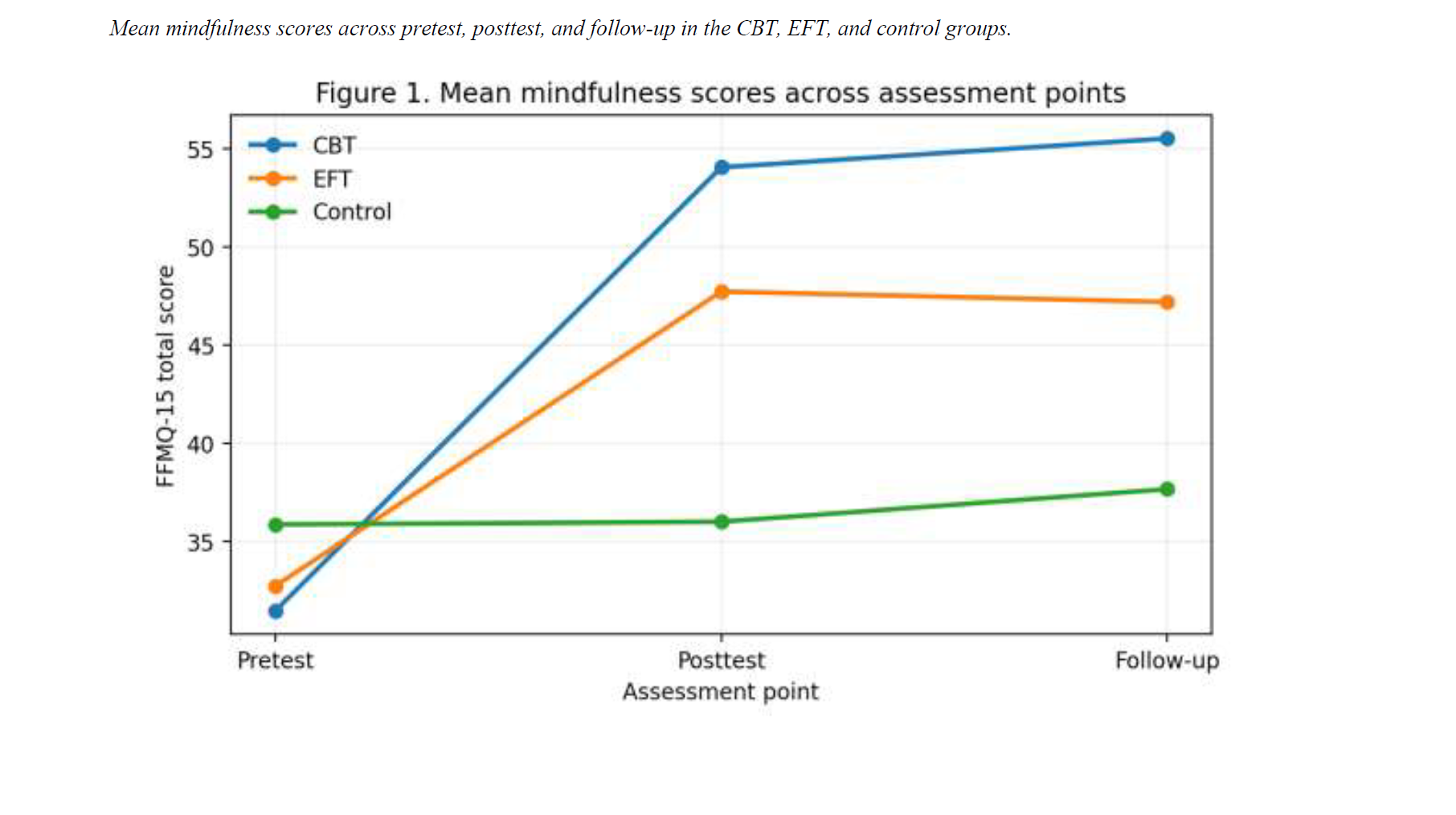
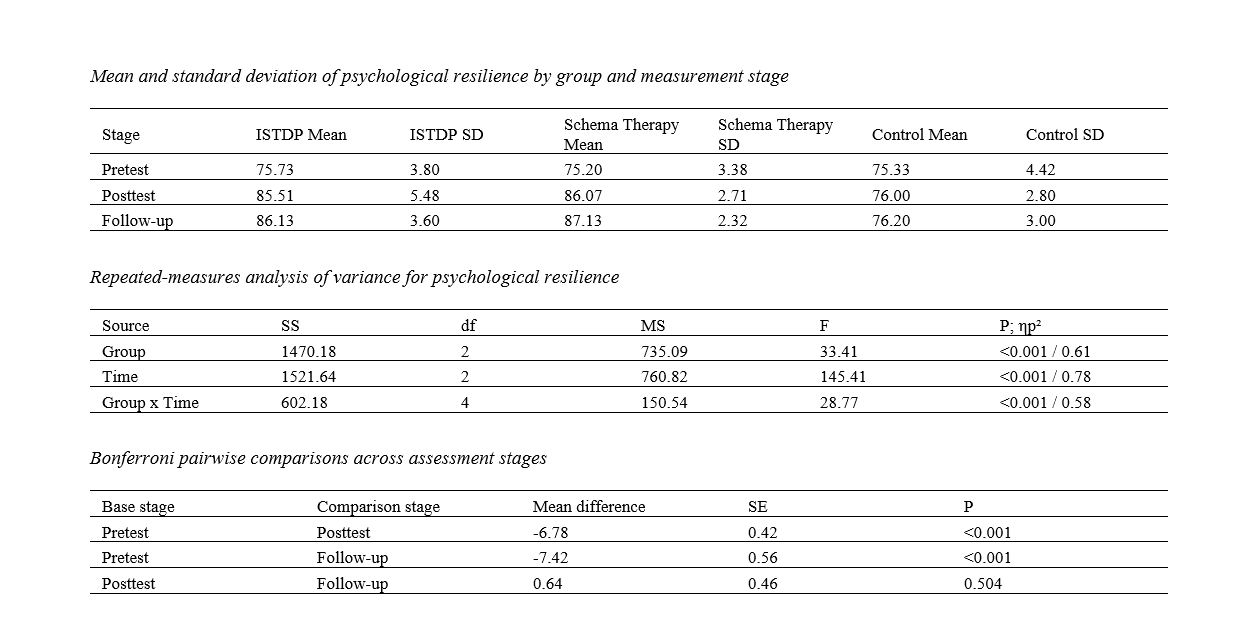
The present study aimed to compare the effectiveness of cognitive-behavioral therapy (CBT) and short-term solution-focused therapy (SFBT) on distress tolerance in pregnant women in 2024. This applied research employed an experimental design with pretest–posttest and follow-up assessments, including a control group. The study population comprised all pregnant women who visited the Comprehensive Health Service Center and obstetrics specialists in Semnan and who became pregnant either naturally or through assisted reproductive methods in 2021 and 2022. Using a convenience sampling method, 66 pregnant women were selected. Data were collected using the standardized Distress Tolerance Scale (DTS) by Simons and Gaher (2005) and analyzed with SPSS version 27. The CBT intervention group participated in eight weekly sessions of 90 minutes each, while the SFBT intervention group attended six weekly sessions of 90 minutes each. The control group was placed on a waiting list. The results showed that both CBT and short-term SFBT significantly improved distress tolerance in pregnant women, indicating the effectiveness of both therapeutic approaches. Additionally, no statistically significant difference was found between the two intervention groups regarding their impact on increasing distress tolerance. Based on the findings, both CBT and short-term SFBT were effective in enhancing distress tolerance and demonstrated stable effectiveness over time. Therefore, it is recommended that behavioral therapy practitioners incorporate the results of this study into their therapeutic programs
About the Journal
- E-ISSN: 2981-2569
- Editor-in-Chief: Dr. Hadi Nobari
- Owner: KMAN Research Institute
- Publisher: KMAN Publication Inc. (KMANPUB)
- Contact emails: healthnexus@kmanpub.com / healthnexusjournal@gmail.com
- Open access: YES
- Peer-review: Yes (Open Peer-review)
Health Nexus is a multidisciplinary journal dedicated to publishing and disseminating groundbreaking research in human health. This journal uniquely focuses on the synergistic relationship among four key areas: sports sciences, psychology, public health, and emerging technologies in health. By embracing this diverse yet interconnected scope, Health Nexus serves as a dynamic platform for researchers to present their latest findings and contribute significantly to the enhancement of human health and well-being.
The journal invites a wide array of submissions, including original research articles, comprehensive reviews, insightful meta-analyses, theoretical explorations, and practical applications. These contributions are expected to advance knowledge and understanding in each of the journal's core areas: sports sciences' role in physical and mental health, psychological perspectives on wellness, public health strategies for community and global health improvement, and the transformative impact of emerging technologies in healthcare.
Health Nexus is committed to fostering the development of evidence-based practices and interventions. By integrating research from sports sciences, psychology, public health, and emerging technologies in health, the journal aims to offer a holistic view of human health. This approach ensures the promotion of well-being in all aspects of life, encouraging innovative solutions to health challenges in today's rapidly evolving world.
About the Publisher
Publisher: KMAN Publication Inc.
Publisher Office: Unit 5‑10825 Yonge St, Richmond Hill, Ontario, Canada, L4C 3E3
https://journals.kmanpub.com
Email: kmanpu@kmanpub.com
Telegram: +1 (647) 656‑4401 | WhatsApp: +1 (437) 429‑3507
Germany Office: Dratelnstrasse, Wohnung A60, 21119 Hamburg, Germany (+4915207720487)
Current Issue