
Perceived Effects of Technology-Based Goal Setting on Lifestyle Behavior Change in Athletes
DOI:
https://doi.org/10.61838/kman.hn.3.3.11Keywords:
Technology-based goal setting, lifestyle behavior, athletes, qualitative research, digital health, motivation, behavior changeAbstract
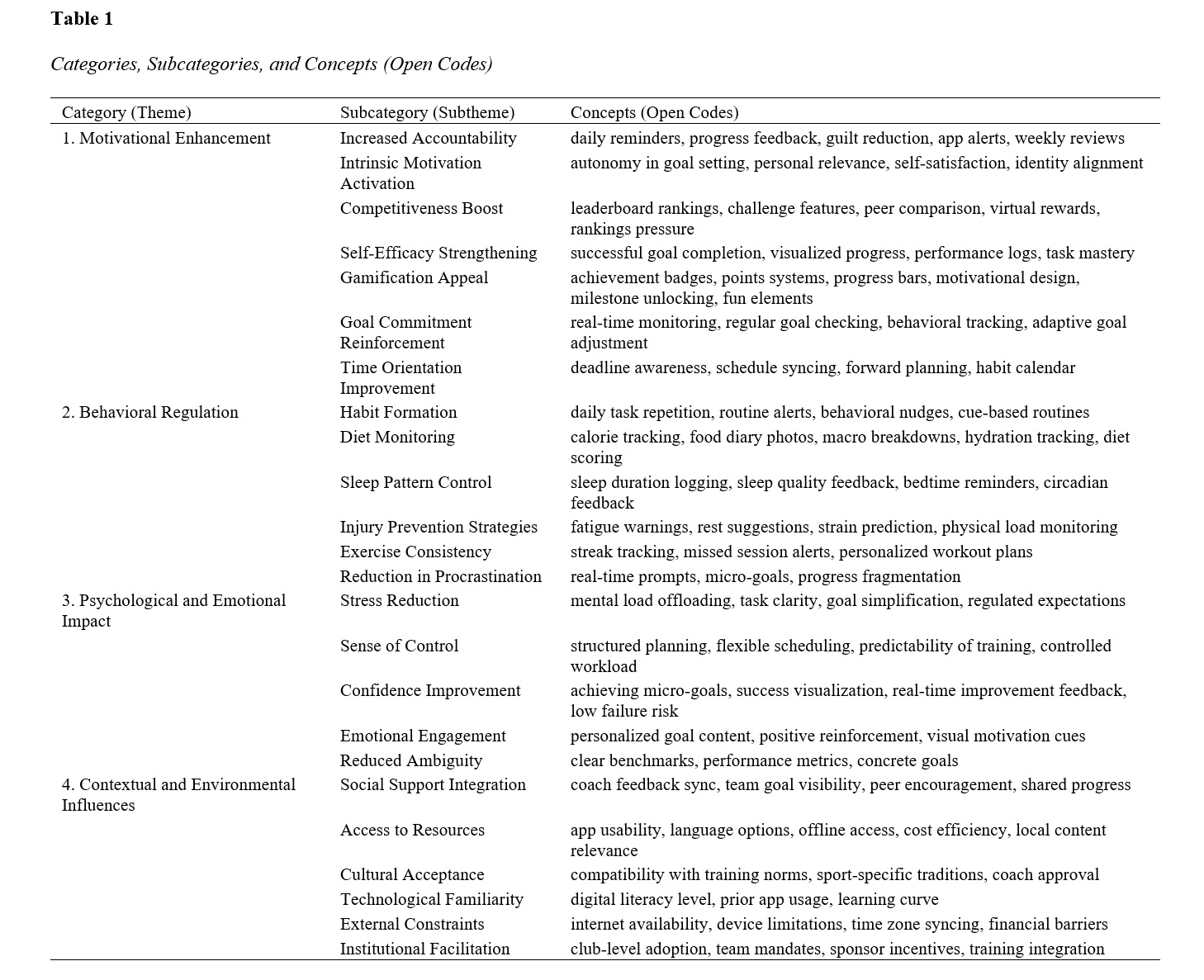
This study aimed to explore athletes' perceptions of how technology-based goal-setting tools influence their lifestyle behavior change. A qualitative exploratory design was employed using semi-structured interviews with 27 athletes from various sports disciplines in Peru. Participants were selected through purposeful sampling based on their experience with technology-assisted goal-setting tools such as fitness apps, wearables, and performance dashboards. Data collection continued until theoretical saturation was reached. All interviews were transcribed, translated into English, and analyzed thematically using NVivo 12 software, following Braun and Clarke’s six-phase framework. Rigor was ensured through independent coding, member checking, and peer debriefing. Analysis revealed four main themes: (1) Motivational Enhancement (e.g., increased accountability, gamification appeal, goal commitment), (2) Behavioral Regulation (e.g., habit formation, sleep pattern control, diet monitoring), (3) Psychological and Emotional Impact (e.g., reduced stress, confidence improvement, emotional engagement), and (4) Contextual and Environmental Influences (e.g., technological accessibility, coach endorsement, institutional support). Athletes reported that digital tools not only improved their commitment and consistency but also positively affected emotional regulation and lifestyle structure. However, some participants noted barriers such as limited digital literacy and overdependence on metrics. Technology-based goal-setting tools are perceived by athletes as effective instruments for promoting healthy lifestyle behaviors by enhancing motivation, structure, and emotional resilience. However, their effectiveness depends on individual readiness, environmental support, and mindful integration into training culture. These tools can be leveraged in athlete development programs but require culturally sensitive, user-centered implementation to avoid unintended psychological pressures.
Downloads
References
1. Atomi K, Kawanaka H, Bhuiyan MS, Oguri K. Cuffless Blood Pressure Estimation Based on Data-Oriented Continuous Health Monitoring System. Computational and Mathematical Methods in Medicine. 2017;2017:1-10.
2. Chaparadza D. An Analysis of Patient-Generated Health Data in Assisting Nurses and Physicians to Better Treat Patients With Hypertension. 2020.
3. Marcus Alexandre GDS, Victor Hugo CdA. Dyheartmon – Monitoramento Ambulatorial E Residencial Remoto Da Pressão Arterial Baseado Em Internet Das Coisas. 2019.
4. Philbert SC, Lawrence-Williams P, Gebre Y, Hutchinson ML, Belmar-George S. Improving Cardiovascular Health in Primary Care in Saint Lucia Through the HEARTS Initiative. Revista Panamericana De Salud Pública. 2022;46:1.
5. Carlsson M, Darwiche G. Abstract P2058: Using Mobile Health Technology to Increase Knowledge About Hypertensive Patients Requests and Health Behaviors. Hypertension. 2019;74(Suppl_1).
6. Bhattarai S, Shrestha A, Skovlund E, Åsvold BO, Mjølstad BP, Sen A. Cluster Randomised Trial to Evaluate Comprehensive Approach to Hypertension Management in Nepal: A Study Protocol. BMJ Open. 2023;13(5):e069898.
7. Fathurrizki AI, Lestari A, Azizah WN, Sari EA. Telehealth Blood Pressure Monitoring Models in Hypertensive Patients: A Scoping Review. Journal of Nursing Care. 2022;5(1).
8. Gefeke LM, Brust M, Hattum NEV, Jong JCK. Cardiac Risk Confrontation in Primary Care as a Teachable Moment Towards Improved Health Outcomes. European Journal of Public Health. 2024;34(Supplement_3).
9. Du Y, Dennis B, Rhodes S, Sia M, Ko J, Jiwani R, et al. Technology-Assisted Self-Monitoring of Lifestyle Behaviors and Health Indicators in Diabetes: Qualitative Study. Jmir Diabetes. 2020;5(3):e21183.
10. Natale P, Ni JY, Martinez‐Martin D, Kelly A, Chow CK, Thiagalingam A, et al. Perspectives and Experiences of Self-Monitoring of Blood Pressure Among Patients With Hypertension: A Systematic Review of Qualitative Studies. American Journal of Hypertension. 2023;36(7):372-84.
11. Yang X. Chronic Disease Prevention and Control: The Effectiveness of Community Intervention Strategies in Managing Hypertension. Meds Public Health and Preventive Medicine. 2023;3(6).
12. Rafaela Cavalheiro do Espírito S, Melo GLR, Dubey VP, Jankauskienė R, Bacevičienė M, Agostinis‐Sobrinho C. 24-Hour Movement Behaviour Study—Lithuanian Protocol: A Comprehensive Overview of Behaviours and Health Outcomes in Adolescents. BMJ Open Sport & Exercise Medicine. 2024;10(4):e002191.
13. Maxmudjanovna XZ, Soliyevich MN, Rustambekovna KR. Blood Pressure Levels, Prevalence, and Innovative Approaches to Prevent Arterial Hypertension in Adolescent and Young Adult Populations. Ijhsms. 2024;4(1):348-53.
14. Ngadiarti I, Muntikah M, Noviani A, Nixon AS. Optimalisasi Kesehatan Dan Gizi Lansia Melalui Penyuluhan Dan Pendampingan Gizi Di Kelurahan Cipadu Jaya. Pengabdianmu Jurnal Ilmiah Pengabdian Kepada Masyarakat. 2024;9(3):400-8.
15. Somantri UW, Purwanto I, Febriyanti D, Aziza N, Kholisyah N, Ramdian SM. Pemeriksaan Kesehatan Glukosa Darah Sewaktu Dan Tekanan Darah Serta Pemasangan Media Edukasi Di Samsat Kabupaten Pandeglang. Cakrawala Jurnal Pengabdian Masyarakat Global. 2025;4(1):56-63.
16. Shamsuddin SMS, Ahmad N, Idris IB, Aizuddin AN, Ibrahim R, Din WM, et al. Natural Health Product Knowledge as a Significant Factor Associated With Health-Promoting Lifestyle in a Low-Income Urban Community in Kuala Lumpur. BMC Public Health. 2024;24(1).
17. Sidarta E, Wijaya BA, Setiawan FV, Destra E, Kurniawan J. Kegiatan Pengukuran Tekanan Darah Dan Penyakit Darah Tinggi Pada Populasi Usia Produktif. Jurnal Pengabdian Masyarakat Nusantara. 2024;6(2):70-5.
18. Park KH, Park JH, Won KA, Yang MA, Lim S. Analysis of Users' Needs for Developing a Mobile Health–based Lifestyle Care Application for Health Promotion in Elderly. Alzheimer S & Dementia. 2020;16(S10).
19. Aydın M, Aydin-Avci I. The Frequency of Chronic Diseases and a Health-Promoting Lifestyle in a Group of Elderly Romani People Living in Northern Turkey. Progress in Health Sciences. 2018;8(2):75-84.
20. Khan A, McAuliff K, Govindarajan G. Abstract P316: Beyond the Cuff: Revolutionizing Hypertension Care Through Human-Centered Design and Tech-Driven Solutions in an Urban Community Health Center. Hypertension. 2024;81(Suppl_1):AP316-AP.
21. Geerse C, Slobbe Cv, Triet Ev, Simonse L. Design of a Care Pathway for Preventive Blood Pressure Monitoring: Qualitative Study. Jmir Cardio. 2019;3(1):e13048.
22. Tseng HW, Lee Y-H, Huang C-D, Chen Y-L, Liu Y. Estimation of Real-Time Blood Pressure During Motion Using Electrocardiography Waveform. Sensors and Materials. 2018:621.
23. Niu M, Zhang L, Wang Y, Tu R, Liu X, Wang C, et al. Lifestyle Score and Genetic Factors With Hypertension and Blood Pressure Among Adults in Rural China. Frontiers in Public Health. 2021;9.
24. Thapa YO, Poudel J, Acharya P, Kimura K, Kawata R, Kanzaki M, et al. Effect of a Pilot Programme by Capability Approach to Prevent Lifestyle-Related Diseases in Kaski, Nepal. Journal of Health Promotion. 2020;8:141-50.
25. Kudari SM, Annapurna RA. Effectiveness of Ayurveda and Lifestyle Modifications in Managing Pregnancy-Induced Hypertension: A Case Study. Journal of Neonatal Surgery. 2025;14(6S):698-706.
Downloads
Publication Timeline
- Submitted
- Revised
- Accepted
License
Copyright (c) 2025 Bridget Abalorio (Author); Nayelli Muñoz (Corresponding Author)

This work is licensed under a Creative Commons Attribution-NonCommercial 4.0 International License.