Examining the Relationship Between Mental Toughness and Anxiety Levels of Professional Volleyball Players
DOI:
https://doi.org/10.61838/kman.hn.3.4.5Keywords:
Professional, Volleyball, Anxiety, Mental ToughnessAbstract
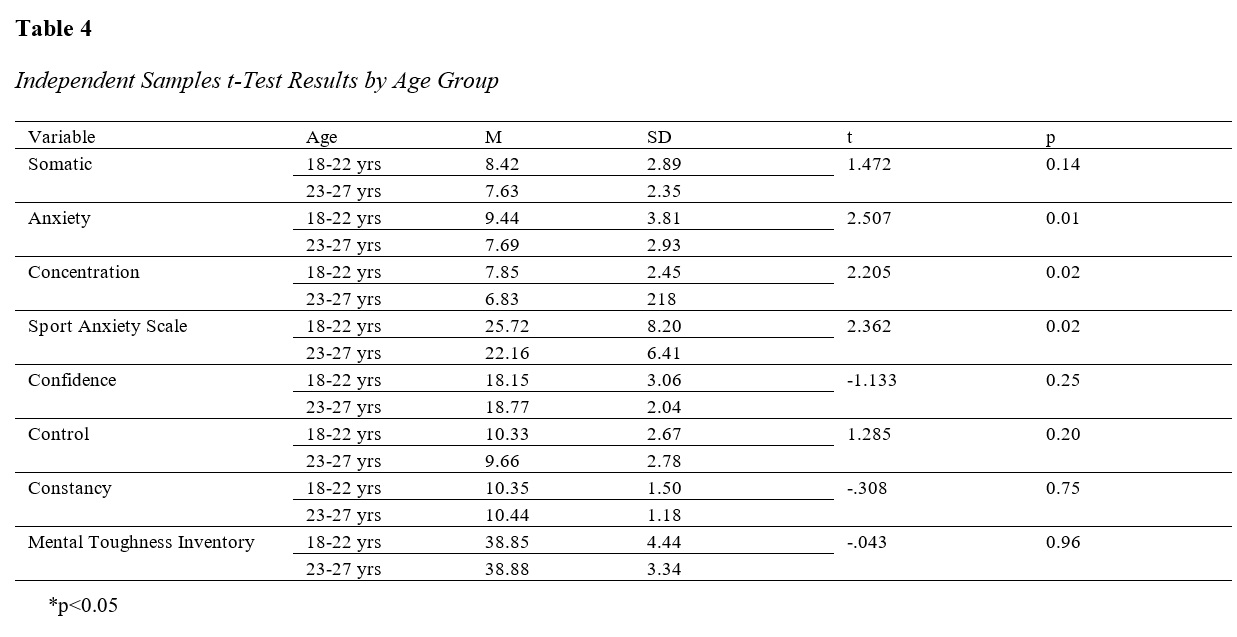
The main objective of this research is to reveal the relationship between anxiety levels and mental toughness among professional volleyball players and to determine how these constructs differ according to demographic variables. The study group consisted of 139 voluntary athletes (86 female. 53 male) who are licensed and actively competing in volleyball in the Eastern Anatolia Region. The data collection tool used in the study consisted of two parts: the first part was the “Personal Information Form” used to identify the demographic characteristics of the athletes; the second part included the “Sport Anxiety Scale” to measure the anxiety levels of the athletes and the “Sports Mental Toughness Questionnaire” to assess their mental toughness levels. The data were analyzed using the SPSS statistical software. and the level of significance was set at p<0.05. According to the results of the study. significant differences were found in the Sport Anxiety Scale scores based on gender. age. education level. province of residence. years of sports experience. and number of weekly training sessions (p<0.05). while no significant difference was found based on income level and league level (p>0.05). Regarding mental toughness. significant differences were observed based on gender. education level. province of residence. and number of weekly training sessions (p<0.05). whereas no significant differences were found in relation to age. income level. league level. and years of sports experience (p>0.05). It was observed that female athletes had higher levels of anxiety compared to male athletes. while male athletes exhibited higher levels of mental toughness than female athletes. Additionally. athletes with lower income levels and those with high school education had higher levels of anxiety and mental toughness compared to those with middle income and university education. In terms of league participation. athletes playing in the regional league exhibited higher anxiety levels than those in the 2nd league. whereas athletes in the 2nd league demonstrated greater mental toughness than those in the regional league. In conclusion. it was found that the athletes included in the study had moderate levels of anxiety and mental toughness. and that education level and league participation significantly affected both constructs. In this context. it is believed that implementing activities aimed at developing both anxiety management and mental toughness. especially from an early age. may positively impact athletic performance.
Downloads
References
1. Gould D, Dieffenbach K, Moffett A. Psychological characteristics and their development in Olympic champions. Journal of Applied Sport Psychology. 2002;14(3):172-204[DOI]
2. Martens R, Vealey RS, Burton D. Competitive anxiety in sport. Champaign, IL: Human Kinetics; 1990.
3. Jones G, Hanton S, Connaughton D. A framework of mental toughness in the world's best performers. The Sport Psychologist. 2007;21(2):243-64[DOI]
4. Clough P, Earle K, Sewell D. Mental toughness: The concept and its measurement. In: Cockerill I, editor. Solutions in sport psychology. London: Thomson Learning; 2002. p. 32-45
5. Akyol G, Gürbüz B, Göksu Ö. Türkçe'ye uyarlanan Sporcunun Kaygı Envanteri'nin geçerlik ve güvenirlik çalışması. Spor Bilimleri Dergisi. 2016;27(2):89-100
6. Smith RE, Smoll FL, Schutz RW. Measurement and correlates of sport-specific cognitive and somatic trait anxiety: The Sport Anxiety Scale. Anxiety Research. 1986;1(4):263-80[DOI]
7. Altıntaş A. Sporda zihinsel dayanıklılık: Geçerlik ve güvenirlik çalışması. Ankara: Hacettepe Üniversitesi, Sağlık Bilimleri Enstitüsü; 2015.
8. George D, Mallery P. SPSS for Windows step by step: A simple guide and reference. Boston: Pearson; 2010.
9. Weinberg RS, Gould D. Foundations of sport and exercise psychology. Champaign, IL: Human Kinetics; 2015.
10. Toy AB, Şimşek A, Önal Y. Anadolu yıldızlar ligi (Analig) voleybol sporcularının yarışma kaygısı ile akıldışı performans inançları arasındaki ilişkinin incelenmesi. Yalova Üniversitesi Spor Bilimleri Dergisi. 2023;2(3):258-68
11. Vealey RS, Chase MA. Best practice for youth sport: Psychosocial strategies for coaches. Champaign, IL: Human Kinetics; 2016. [DOI]
12. Hardy L, Jones G, Gould D. Understanding psychological preparation for sport: Theory and practice of elite performers: Wiley; 1996.
13. Hanton S, Fletcher D, Coughlan G. Stress in elite sport performers: A comparative study of competitive and organizational stressors. Journal of Sports Sciences. 2005;23(10):1129-41.[PMID: 16194989] [DOI]
14. Sivri S, Kıratlı E, Karaca AA. Tenis hakemlerinin psikolojik sağlamlık ve sürekli kaygı düzeyleri arasındaki ilişkinin incelenmesi. Mediterranean Journal of Sport Science. 2023;6(1):78-90[DOI]
15. Sheard M, Golby J, Van Wersch A. Progress toward construct validation of the Sports Mental Toughness Questionnaire (SMTQ). European Journal of Psychological Assessment. 2009;25(3):186-93[DOI]
16. Konter E, Ng JYY, Hagger MS. Perceived autonomy support. self-determined motivation and psychological well-being in youth sport: Testing a structural equation model. International Journal of Sport and Exercise Psychology. 2019;17(5):509-25[DOI]
Downloads
Additional Files
Publication Timeline
- Submitted
- Revised
- Accepted
License
Copyright (c) 2025 Ramazan Erdoğan, Korhan Kavuran, Ayşegül Şimşek (Author)

This work is licensed under a Creative Commons Attribution-NonCommercial 4.0 International License.