Determinants of Abortion in the Tehran Metropolis Based on the Lived Experiences of Tehranian Women
DOI:
https://doi.org/10.61838/kman.hn.5112Keywords:
Unintended pregnancy, Induced abortion in Tehran (Iran), Second demographic transition in Tehran (Iran), Extramarital relationships, Family transformationsAbstract
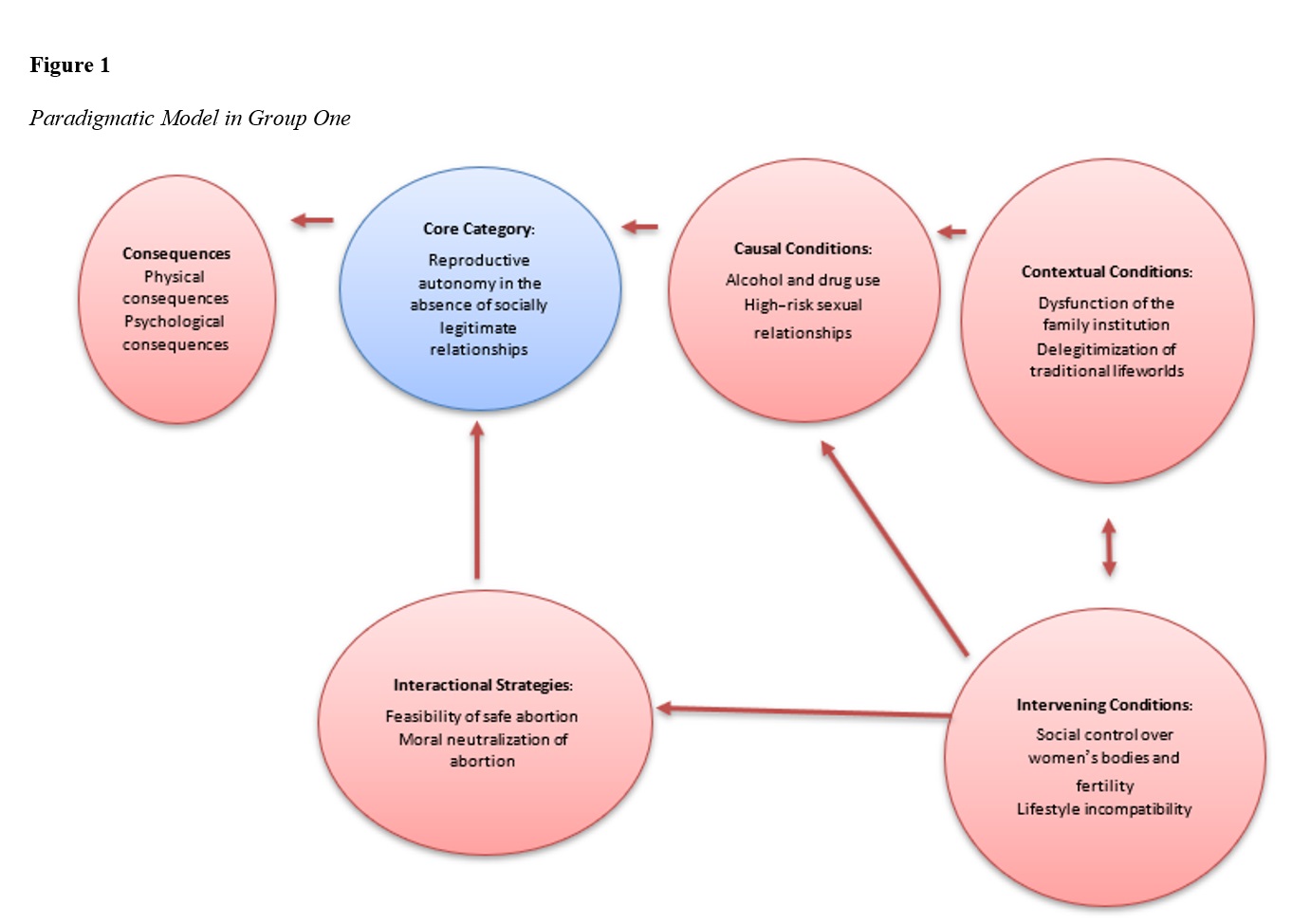
This study was conducted with the aim of examining abortion in the Tehran metropolitan area using a grounded theory methodology. Purposeful and snowball sampling methods were employed, and semi-structured interviews were conducted with 33 women residing in Tehran who had undergone at least one induced abortion in a medical office under the supervision of a specialist physician between 2021 and 2025. Data analysis based on Strauss and Corbin’s interpretive analytical approach revealed three distinct pregnancy patterns among participants. In the first group, the main categories included alcohol and drug use and engagement in high-risk sexual relationships (causal conditions); dysfunction of the family institution and delegitimization of traditional lifeworld norms (contextual conditions); social control over women’s bodies and fertility and incompatibility of lifestyles (intervening conditions); the feasibility of safe abortion and the normalization or moral neutralization of abortion (interactional strategies); and physical and psychological consequences (outcomes). The core category was identified as “reproductive autonomy in the absence of socially legitimate relationships.” In the second group, the principal categories included the existence of extramarital relationships (causal condition); marital dysfunction, long-term suppression of sexual and emotional needs, husbands’ extramarital relationships, and perceived positive functions of extramarital relationships (contextual conditions); barriers to divorce (intervening condition); interaction with peer social networks, transformation of women’s attitudinal and behavioral systems, and resistance to traditional and religious socialization (interactional strategies); and physical and psychological consequences (outcomes). The core category was “redefinition of feminine roles in response to marital and social constraints.” In the third group, the main categories consisted of convergence toward discourses of voluntary childlessness or low fertility (causal condition); hardships of childbearing, economic difficulties, women’s employment, and respondents’ idealistic expectations regarding childrearing (contextual conditions); non-supportive social environments, marital life circumstances, and women’s social networks (intervening conditions); changes in fertility behavior and transformations in women’s attitudes toward childbearing (interactional strategies); and physical and psychological consequences (outcomes). The core category was “rationalization of fertility within the framework of modern life.”
Downloads
References
1. Parvizi S, editor Factors Related to Intentional Abortion in Iran: A Review Study. 11th International Conference on New Findings in Midwifery, Gynecology, Obstetrics and Infertility; 2023.
2. Azadvari E, Habibpour Gatabi K. The Action of Abortion: The Contrast Between Fear and Choice. Journal of Iranian Social Issues. 2023;14(1):151-83.
3. Adhikari R, Sohnthorndhada K, Prasartkul P. Correlates of unintended pregnancy among currently pregnant married women in Nepal. BMC International Health and Human Rights. 2009;9(17):1-10. [PMID: 19671161] [PMCID: PMC2731722] [DOI]
4. Daniels K, Daugherty J, Jones J, Mosher W. Current Contraceptive Use and Variation by Selected Characteristics Among Women Aged 15-44: United States, 2011-2013. Natl Health Stat Report. 2015(86):1-14.
5. Koren A, Mawn B. The context of unintended pregnancy among married women in the USA. Journal of Family Planning and Reproductive Health Care. 2010;36(3):150-8. [PMID: 20659369] [DOI]
6. Say L, Chou D, Gemmill A, Tunçalp Ö, Moller AB, Daniels J, et al. Global causes of maternal death: a WHO systematic analysis. Lancet Glob Health. 2014;2(6):e323-33. [DOI]
7. Ganatra B, Gerdts C, Rossier C, Johnson BR, Jr., Tunçalp Ö. Global, regional, and subregional classification of abortions by safety, 2010-14: estimates from a Bayesian hierarchical model. Lancet. 2017;390(10110):2372-81. [PMID: 28964589] [PMCID: PMC5711001] [DOI]
8. Erfani A, McQuillan K. Rates of induced abortion in Iran: The roles of contraceptive use and religiosity. Studies in Family Planning. 2008;39(2):111-22. [PMID: 18678175] [DOI]
9. Erfani A, Shojaei J. New Evidence of Intentional Abortion in Tehran: Rates, Reasons, and Changes. The Iranian Journal of Obstetrics, Gynecology and Infertility. 2018;21(3):64-77. [DOI]
10. Razeghi-Nasrabad HB, Sanjari E. Factors Affecting Women's Decision for Intentional Abortion: Women's Lived Experience of Abortion in Tehran. Journal of Woman in Culture and Arts (Women's Psychological Social Studies). 2017;15(2):105-36. [DOI]
11. Nejati Hatamian S. The Experience of Voluntary Abortion in Married Women in Tehran. Journal of Iranian Social Studies. 2014;8(1):164-84.
12. Haseli A, Rahnejat N, Rasoal D. Reasons for unsafe abortion in Iran after pronatalist policy changes: a qualitative study. Reprod Health. 2024;21(1):182. [PMID: 39681881] [PMCID: PMC11650834] [DOI]
13. Motaghi Z, Keramat A, Shariati M, Yunesian M. Triangular assessment of the etiology of induced abortion in iran: a qualitative study. Iran Red Crescent Med J. 2013;15(11):e9442. [PMID: 24719694] [PMCID: PMC3971786] [DOI]
14. van de Kaa DJ. Europe's Second Demographic Transition. Population Bulletin. 1987;42(1):1-59.
15. Lesthaeghe R. The Second Demographic Transition in Western Countries: An Interpretation. Vrije Universiteit Brussel; 1991.
16. van de Kaa DJ. The Idea of a Second Demographic Transition in Industrialized Countries. Japanese Journal of Population. 2002;1(1):1-34.
17. Lesthaeghe R. The Unfolding Story of the Second Demographic Transition. Population and Development Review. 2010;36(2):211-51. [PMID: 20734551] [DOI]
18. Lesthaeghe R. The Second Demographic Transition: A Concise Overview of Its Development. PNAS. 2014;111(51):18112-5. [PMID: 25453112] [PMCID: PMC4280616] [DOI]
19. Inglehart R. Modernization and Postmodernization: Cultural, Economic, and Political Change in 43 Societies: Princeton University Press; 1997. [DOI]
20. Hosseini-Chavoshi M, Abbasi-Shavazi MJ. Unintended pregnancy among Iranian young women: Incidence, correlates and outcomes. Asia-Pacific Population Journal. 2015;30(1):95-118. [DOI]
21. Sarayi H, Roshan Shomal P. Measuring Social Factors Affecting the Attitude of Pregnant Women Toward Intentional Abortion. Women in Development and Politics (Women's Research). 2012;10(2):5-23. [DOI]
22. Grigoropoulos I. Addressing Opposition Toward Abortion: Adherence to Internalized Misogyny and Personal Belief in a Just World Moderate Religious Opposition to Abortion. 2024. [DOI]
23. Lively CLP, Zimmerman A. EMTALA and State Abortion Bans. Voices in Bioethics. 2025;11. [DOI]
24. Shamshiri Milani H. Intentional Abortion. Research in Medicine. 2006;30(4):263-5.
25. Shad GA. PLT Antigen Discrepancy Pattern Among Couples With Recurrent Abortion. Frontiers in Medicine. 2024;11. [PMID: 38651057] [PMCID: PMC11033322] [DOI]
Downloads
Additional Files
Publication Timeline
- Submitted
- Revised
- Accepted