Trait Emotional Stability as a Protective Factor Against Psychosomatic Symptom Amplification: A Multilevel Mediation Analysis
DOI:
https://doi.org/10.61838/kman.jppr.5106Keywords:
emotional stability, psychosomatic symptoms, somatosensory amplification, perceived stress, multilevel mediationAbstract
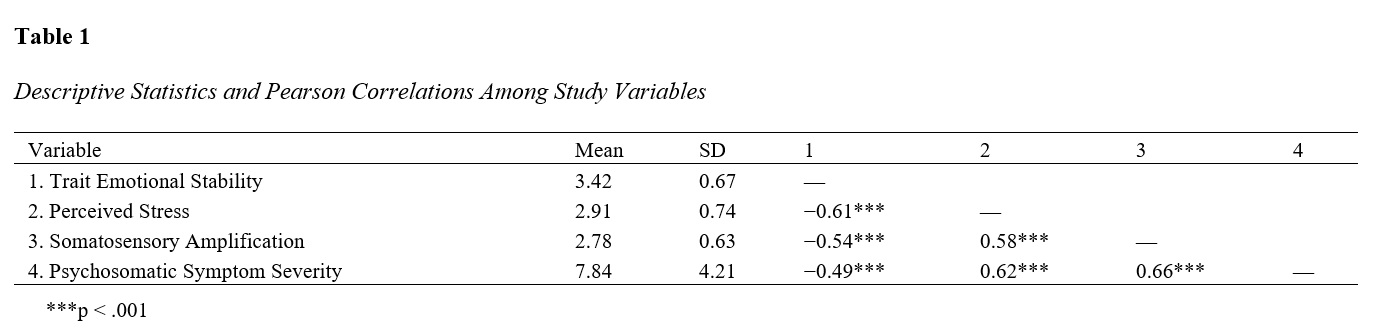
The objective of this study was to examine whether trait emotional stability functions as a protective factor against psychosomatic symptom amplification and psychosomatic symptom severity through the mediating role of perceived stress. This study employed a quantitative cross-sectional design using data collected from an adult community sample in the United Kingdom. Participants completed standardized self-report measures assessing trait emotional stability, perceived stress, somatosensory amplification, and psychosomatic symptom severity. Validated instruments with established psychometric properties were used to ensure reliability and construct validity. Data were analyzed using multilevel modeling techniques to account for potential clustering effects. A multilevel mediation framework was specified in which trait emotional stability served as the predictor, perceived stress as the mediator, and psychosomatic symptom amplification and symptom severity as outcome variables. Indirect effects were tested using bootstrapping procedures with bias-corrected confidence intervals. Multilevel regression analyses indicated that trait emotional stability was significantly and negatively associated with perceived stress, somatosensory amplification, and psychosomatic symptom severity. Perceived stress was positively associated with both somatosensory amplification and psychosomatic symptom severity. Somatosensory amplification emerged as a strong positive predictor of psychosomatic symptom severity when included alongside emotional stability and perceived stress. Mediation analyses demonstrated significant indirect effects of emotional stability on both psychosomatic symptom amplification and symptom severity via perceived stress, while direct effects remained significant, indicating partial mediation. The findings suggest that trait emotional stability protects against psychosomatic symptom amplification and somatic symptom burden through both direct pathways and indirect stress-related mechanisms, highlighting the importance of personality-informed and stress-focused approaches in psychosomatic research and practice.
Downloads
Downloads
Additional Files
Publication Timeline
- Submitted
- Revised
- Accepted