The Mediating Role of Self-Regulated Learning Strategies in the Relationship Between Academic Dishonesty and Critical Thinking Among High School Students in Hamadan
Keywords:
Critical Thinking, Self-Regulated Learning Strategies, Academic DishonestyAbstract
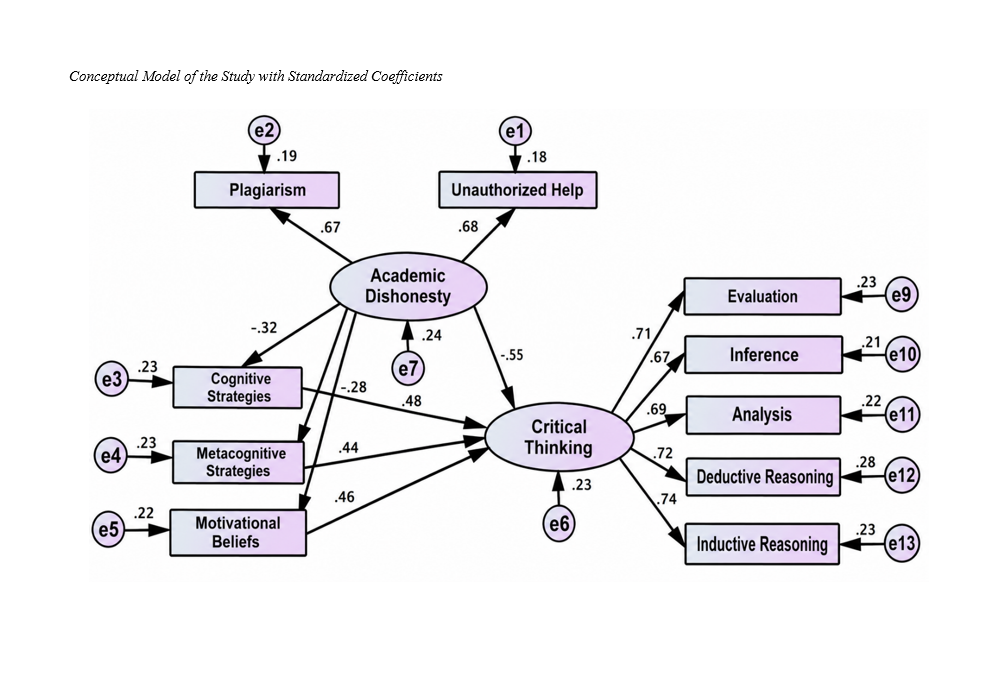
The present study aimed to examine the mediating role of self-regulated learning strategies in the relationship between academic dishonesty and critical thinking among high school students in Hamadan. The research employed a descriptive-correlational design using structural equation modeling (SEM). The statistical population consisted of high school students in Hamadan during the 2026–2027 academic year. A final sample of 324 students was selected through a multistage cluster random sampling method. Data were collected using the California Critical Thinking Skills Questionnaire (Facione & Facione, 1994), the Academic Dishonesty Questionnaire (Farnese et al., 2011), and the Self-Regulated Learning Strategies Questionnaire (Pintrich & De Groot, 1990). Data analysis was conducted using structural equation modeling. The proposed model demonstrated a satisfactory fit to the data. Furthermore, the findings indicated that academic dishonesty had a significant negative direct effect on critical thinking, whereas cognitive strategies, metacognitive strategies, and motivational beliefs had significant positive direct effects on critical thinking (p < .01). The results of the bootstrap test revealed that self-regulated learning strategies played a mediating role in the relationship between academic dishonesty and critical thinking (p < .01). Overall, the findings showed that academic dishonesty affected critical thinking among high school students in Hamadan both directly and indirectly through the mediating role of self-regulated learning strategies.
Downloads
Downloads
Additional Files
Publication Timeline
- Submitted
- Revised
- Accepted