Modeling the Design of Therapeutic Environments for Patients with Schizophrenia Based on Environmental Cognitive Patterns and Its Effect on Anxiety Reduction
DOI:
https://doi.org/10.61838/kman.hn.5251Keywords:
therapeutic design, schizophrenia, anxiety, environmental psychology, healing architecture, cognitive patternsAbstract
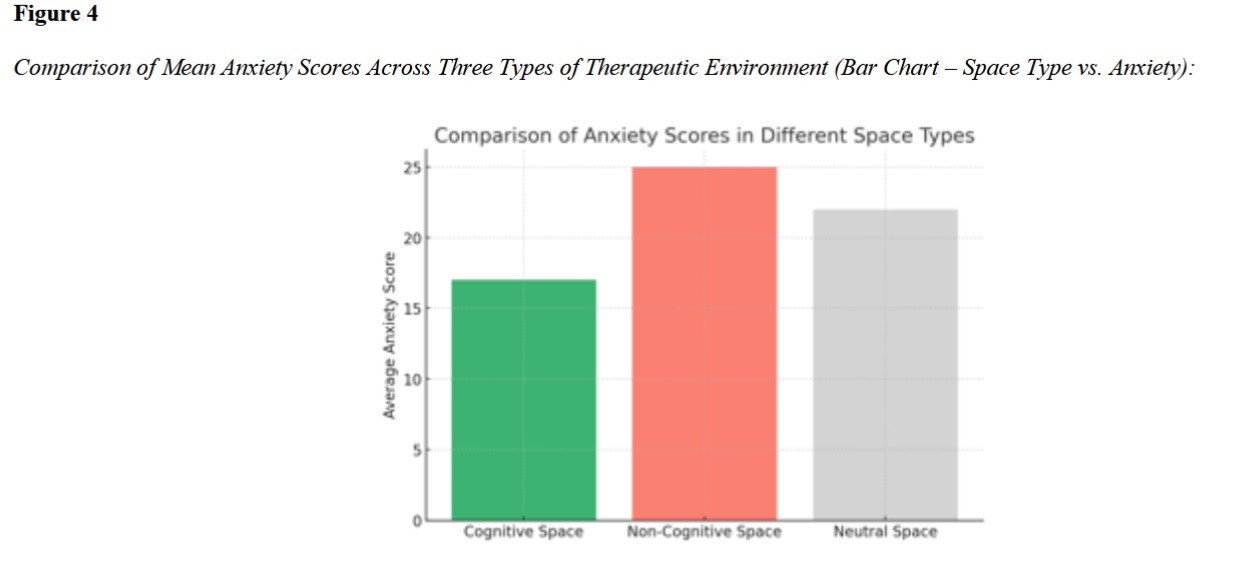
The aim of this study was to develop a model for designing therapeutic environments for patients with schizophrenia based on familiar cognitive patterns and to examine its effect on reducing patient anxiety. This study was conducted using a mixed-methods approach (quantitative–qualitative). In the quantitative phase, 30 hospitalized patients with schizophrenia at Omid Farda Center were interviewed and were asked to report their level of anxiety, based on the Hamilton Anxiety Rating Scale, after viewing images of designed environments. In the qualitative phase, in-depth interviews were conducted with 20 architecture experts. The results of statistical analysis indicated that environmental design incorporating familiar cognitive elements such as lighting, color, furniture, and surface materials had a significant effect on reducing patients’ anxiety. The findings suggest that an environmental psychology-based approach can contribute to the development of effective and human-centered therapeutic environments for psychiatric patients.
Downloads
References
1. World Health O. Mental Health Atlas 2020: WHO; 2021.
2. Ding Y, Chen S. A Comprehensive Bibliographic Study on Mental Illness. Acta Neuropsychiatrica. 2025;37. [PMID: 39881583] [DOI]
3. Khadempir M, Rahimi R, Hamidi P, Ghaderi E, Hoghooghi M. Diagnosing Death Anxiety with AI in Diabetics and Phobias and Distraught Dreams. Transactions on Data Analysis in Social Science. 2024;6(1):1-10. [DOI]
4. Mehrabifar F. Relationship between Anxiety and Creativity in High School Teachers in Kerman. Transactions on Data Analysis in Social Science. 2022;4(1):26-32. [DOI]
5. Lin B, Pries L-K, Arias-Magnasco A, Klingenberg B, Linden DE, Blokland GA, et al. Exposome-Wide Gene-by-Environment Interaction Study of Psychotic Experiences in the UK Biobank. Biological Psychiatry Global Open Science. 2025;5(3):100460. [PMID: 40206033] [PMCID: PMC11981733] [DOI]
6. Aram M, Bazrafkan K. Investigating the effect of the physical environment on human behavior. Journal of Iranian Architecture and Urbanism. 2018;9(1):75-88.
7. Frumkin H. Environmental Health: From Global to Local: Jossey-Bass; 2018.
8. Ulrich RS. View through a window may influence recovery from surgery. Science. 1984;224(4647):420-1. [PMID: 6143402] [DOI]
9. Ulrich RS, Parsons R. Influences of passive experiences with plants on individual well-being and health. The Role of Horticulture in Human Well-Being and Social Development. 2019;93:156-68.
10. Devlin AS, Arneill AB. Health care environments and patient outcomes: A review of the literature. Environment and Behavior. 2003;35(5):665-94. [DOI]
11. Zeisel J. Inquiry by Design: Environment/Behavior/Neuroscience in Architecture, Interiors, Landscape, and Planning: W.W. Norton & Company; 2020.
12. Beck AT, Alford BA. Depression: Causes and Treatment: University of Pennsylvania Press; 2009.
13. Aminzadeh B, Afshar N. Designing therapeutic environments for psychiatric patients. Journal of Fine Arts. 2003;15:43-52.
14. Verderber S, Refuerzo BJ. Innovations in Hospital Architecture: Routledge; 2003. [DOI]
15. Bandura A. Social Foundations of Thought and Action: A Social Cognitive Theory. Englewood Cliffs, NJ: Prentice-Hall; 1986.
16. Kaplan S. The restorative benefits of nature: Toward an integrative framework. Journal of Environmental Psychology. 1995;15(3):169-82. [DOI]
17. Lang J. Creating architectural theory: The role of the behavioral sciences in environmental design (A. Einifar, Trans.). Tehran: University of Tehran Press; 2001.
18. Pati D, Nanda U. The influence of positive distractions on healing environments. HERD: Health Environments Research & Design Journal. 2021;14(2):124-44.
19. Steinberg L. The influence of spatial systems on behavioral patterns in healthcare settings. Environment and Behavior. 2022;54(1):89-98.
20. Tailaiti A, Luopa N, Tuo Y, Ma G, Kudelati Z, Wang H-C. Influencing Factors for Psychological Resilience of Family Caregivers of Schizophrenia Patients: A Qualitative Study. Medicine. 2025;104(31):e43690. [PMID: 40760502] [PMCID: PMC12323992] [DOI]
21. Creswell JW. Research Design: Qualitative, Quantitative, and Mixed Methods Approaches (5th ed.): SAGE Publications; 2020.
22. Cohen J. Statistical Analysis in Behavioral Research: Academic Press; 2021.
23. Hamilton M. The assessment of anxiety states by rating. British Journal of Medical Psychology. 1959;32(1):50-5. [PMID: 13638508] [DOI]
24. Weber C, Flores VM, Wheele T, Miedema E, White E. Patients' Health & Well-Being in Inpatient Mental Health-Care Facilities: A Systematic Review. Frontiers in Psychiatry. 2022;12. [PMID: 35046849] [PMCID: PMC8761847] [DOI]
Downloads
Additional Files
Publication Timeline
- Submitted
- Revised
- Accepted