The Effectiveness of Acceptance and Commitment Therapy on Non-Suicidal Self-Injury and Executive Functions in Patients with Borderline Personality Disorder
DOI:
https://doi.org/10.61838/kman.hn.5529Keywords:
borderline personality disorder, acceptance and commitment therapy, non-suicidal self-injury, executive functions, psychological flexibilityAbstract
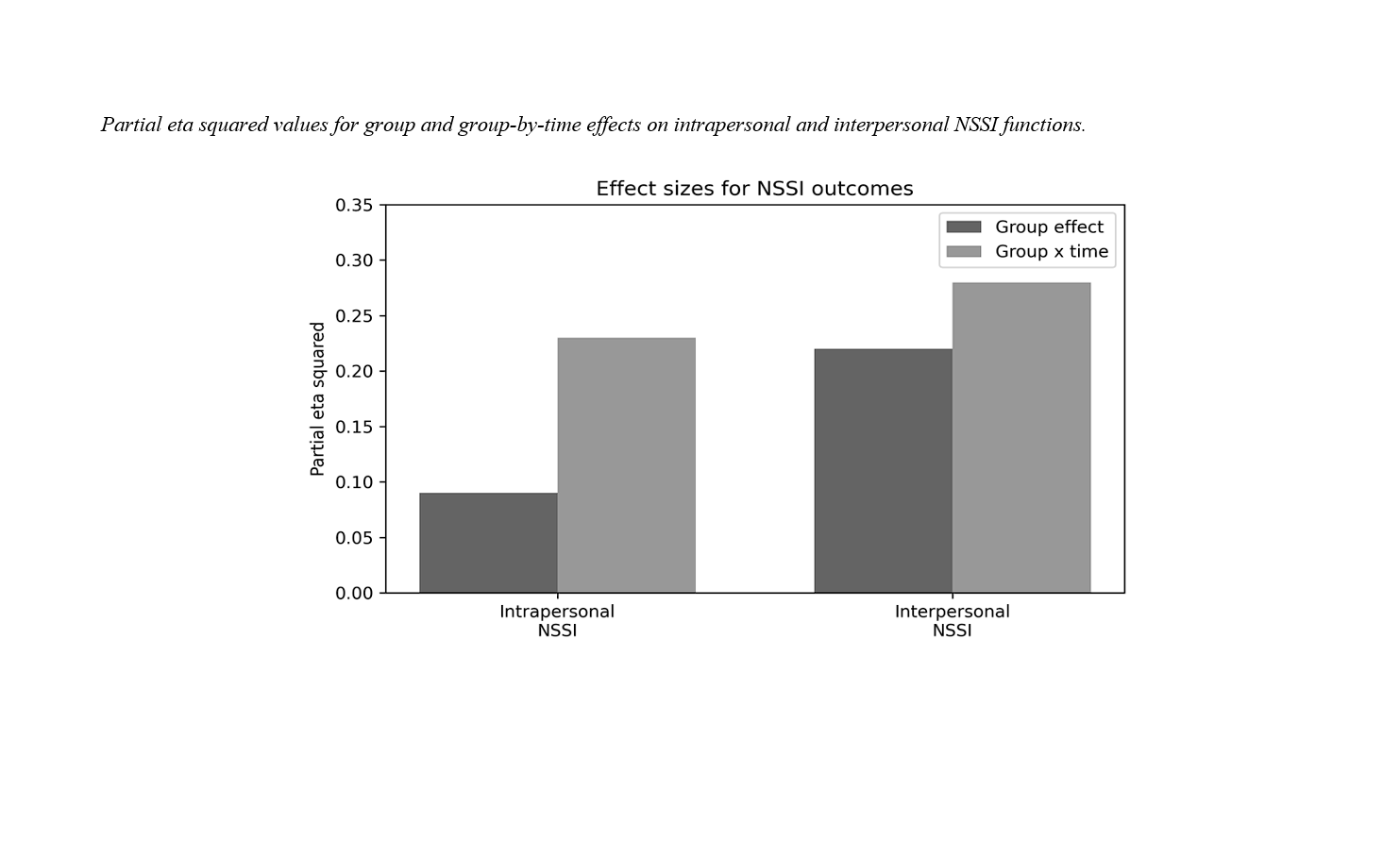
Borderline personality disorder (BPD) is a complex clinical condition characterized by affective instability, impulsivity, interpersonal dysregulation, identity disturbance, and recurrent self-harming behaviors. Non-suicidal self-injury (NSSI) is particularly important in BPD because it is often used as a short-term strategy for regulating painful emotions, yet it is associated with considerable clinical risk and functional impairment. Executive functions, including inhibition, planning, self-organization, emotional self-regulation, and self-motivation, are also frequently impaired in this population. Acceptance and Commitment Therapy (ACT) may be clinically useful because it targets experiential avoidance and promotes psychological flexibility, values-based action, and acceptance of difficult internal experiences. This quasi-experimental study used a pretest-posttest-follow-up design with a control group. The statistical population included patients diagnosed with BPD who attended psychological and psychiatric treatment centers in Shahrood, Iran, in 2022. Forty participants were selected by convenience sampling and were then randomly assigned to an ACT group (n = 20) or a waiting-list control group (n = 20). The ACT group received eight intervention sessions, while the control group received no psychological intervention during the study period. Outcomes were assessed using the Barkley Deficits in Executive Functioning Scale and the Inventory of Statements About Self-Injury. Assessments were conducted at pretest, posttest, and two-month follow-up. Repeated-measures analysis was used to examine group, time, and group-by-time effects. ACT significantly reduced both intrapersonal and interpersonal NSSI functions. Significant group-by-time effects were found for intrapersonal NSSI (F = 11.55, p < .001, partial η² = .23) and interpersonal NSSI (F = 15.02, p < .001, partial η² = .28). ACT also significantly improved executive-function domains, including time self-management, self-organization/problem-solving, self-restraint/inhibition, self-motivation, and emotional self-regulation. Pairwise comparisons showed significant improvements from pretest to posttest and from pretest to follow-up, whereas posttest-to-follow-up differences were not significant, suggesting maintenance of treatment gains. The findings suggest that ACT may be an effective psychological intervention for reducing NSSI behaviors and improving executive-function difficulties in patients with BPD. The results support the use of ACT as an adjunctive clinical approach for targeting emotional dysregulation, maladaptive self-injury functions, and executive dysfunction in this population. Further randomized clinical trials with larger samples and longer follow-up periods are recommended.
Downloads
References
1. Bozzatello P, Blua C, Brandellero D, Baldassarri L, Brasso C, Rocca P, et al. Gender differences in borderline personality disorder: a narrative review. Frontiers in Psychiatry. 2024;15(1320546). [PMID: 38283847] [PMCID: PMC10811047]
2. Hastrup L, Jennum P, Ibsen R, Kjellberg J, Simonsen E. Borderline personality disorder and diagnostic co-occurrence of mental health disorders and somatic diseases: a controlled prospective national register-based study. Acta Psychiatrica Scandinavica. 2024;149(2):124-32. [PMID: 38072006]
3. Jørgensen MS, Møller L, Bo S, Kongerslev M, Hastrup LH, Chanen A, et al. The course of borderline personality disorder from adolescence to early adulthood: a 5-year follow-up study. Comprehensive Psychiatry. 2024;132(152478). [PMID: 38522259]
4. Leichsenring F, Fonagy P, Heim N, Kernberg OF, Leweke F, Luyten P, et al. Borderline personality disorder: a comprehensive review of diagnosis and clinical presentation, etiology, treatment, and current controversies. World Psychiatry. 2024;23(1):4-25. [PMID: 38214629] [PMCID: PMC10786009]
5. Arqueros M, Ibáñez-Beroiz B, Goñi-Sarriés A, Jiménez AG. Efficacy of psychotherapeutic interventions for non-suicidal self-injury in adolescent population: systematic review and meta-analysis. Spanish Journal of Psychiatry and Mental Health. 2023;16(2):119-26. [PMID: 37689523]
6. Chen Y, Fu W, Ji S, Zhang W, Sun L, Yang T, et al. Relationship between borderline personality features, emotion regulation, and non-suicidal self-injury in depressed adolescents: a cross-sectional study. BMC Psychiatry. 2023;23(293). [PMID: 37118709] [PMCID: PMC10148398]
7. Klonsky ED, Glenn CR. Assessing the functions of non-suicidal self-injury: psychometric properties of the Inventory of Statements About Self-Injury (ISAS). Journal of Psychopathology and Behavioral Assessment. 2009;31:215-9. [PMID: 29269992] [PMCID: PMC5736316]
8. Diamond A. Executive functions. Annual Review of Psychology. 2013;64:135-68. [PMID: 23020641] [PMCID: PMC4084861]
9. Friedman NP, Miyake A. Unity and diversity of executive functions: Individual differences as a window on cognitive structure. Cortex. 2017;86:186-204. [PMID: 27251123] [PMCID: PMC5104682]
10. Aslan IH, Grant JE, Chamberlain SR. Cognition in adults with borderline personality disorder. CNS Spectrums. 2023;28(6):674-9. [PMID: 36924168]
11. Lopez-Villatoro JM, Diaz-Marsá M, Rico-Perez A, Fernandez-Rodrigues V, Ayad-Ahmed W, Galvez-Merlin A, et al. Neurocognitive profile associated with borderline personality disorder: building specific indices of executive function. Actas Espanolas de Psiquiatria. 2023;51(5):220-9.
12. Hayes SC, Luoma JB, Bond FW, Masuda A, Lillis J. Acceptance and Commitment Therapy: model, processes and outcomes. Behaviour Research and Therapy. 2006;44(1):1-25. [PMID: 16300724]
13. Hayes SC, Strosahl KD, Wilson KG. Acceptance and Commitment Therapy: The Process and Practice of Mindful Change. New York: Guilford Press; 2012.
14. Crotty K, Viswanathan M, Kennedy S, Edlund MJ, Ali R, Siddiqui M, et al. Psychotherapies for the treatment of borderline personality disorder: a systematic review. Journal of Consulting and Clinical Psychology. 2024;92(5):275-92. [PMID: 37902689]
15. Liu H, Liu N, Chong ST, Yau EKB, Badayai ARA. Effects of acceptance and commitment therapy on cognitive function: a systematic review. Heliyon. 2023;9(3):e14181. [PMID: 36950645] [PMCID: PMC10025094]
16. Tighe J, Nicholas J, Shand F, Christensen H. Efficacy of Acceptance and Commitment Therapy in reducing suicidal ideation and deliberate self-harm: systematic review. JMIR Mental Health. 2018;5(2):e10732. [PMID: 29941419] [PMCID: PMC6037942]
17. Barkley RA. Barkley deficits in executive functioning scale (BDEFS): Guilford Press; 2011.
18. McCracken LM, Gutiérrez-Martínez O. Processes of change in psychological flexibility in an interdisciplinary group-based treatment for chronic pain based on Acceptance and Commitment Therapy. Behaviour Research and Therapy. 2011;49(4):267-74. [PMID: 21377652]
19. Rahal GM, Gon MCC. A systematic review of values interventions in Acceptance and Commitment Therapy. International Journal of Psychology and Psychological Therapy. 2020;20(3):355-72.
20. Tang YY, Hölzel BK, Posner MI. The neuroscience of mindfulness meditation. Nature Reviews Neuroscience. 2015;16(4):213-25. [PMID: 25783612] [PMCID: PMC10403447]
Downloads
Additional Files
Publication Timeline
- Submitted
- Revised
- Accepted