
Effect of Telerehabilitation-Based Dynamic Neuromuscular Stabilization Exercises on Cardiorespiratory Fitness and Strength in Overweight and Obese Older Women
DOI:
https://doi.org/10.61838/Keywords:
Dynamic Neuromuscular Stabilization, Telerehabilitation, Cardiorespiratory Fitness, Strength, Obese Older WomenAbstract
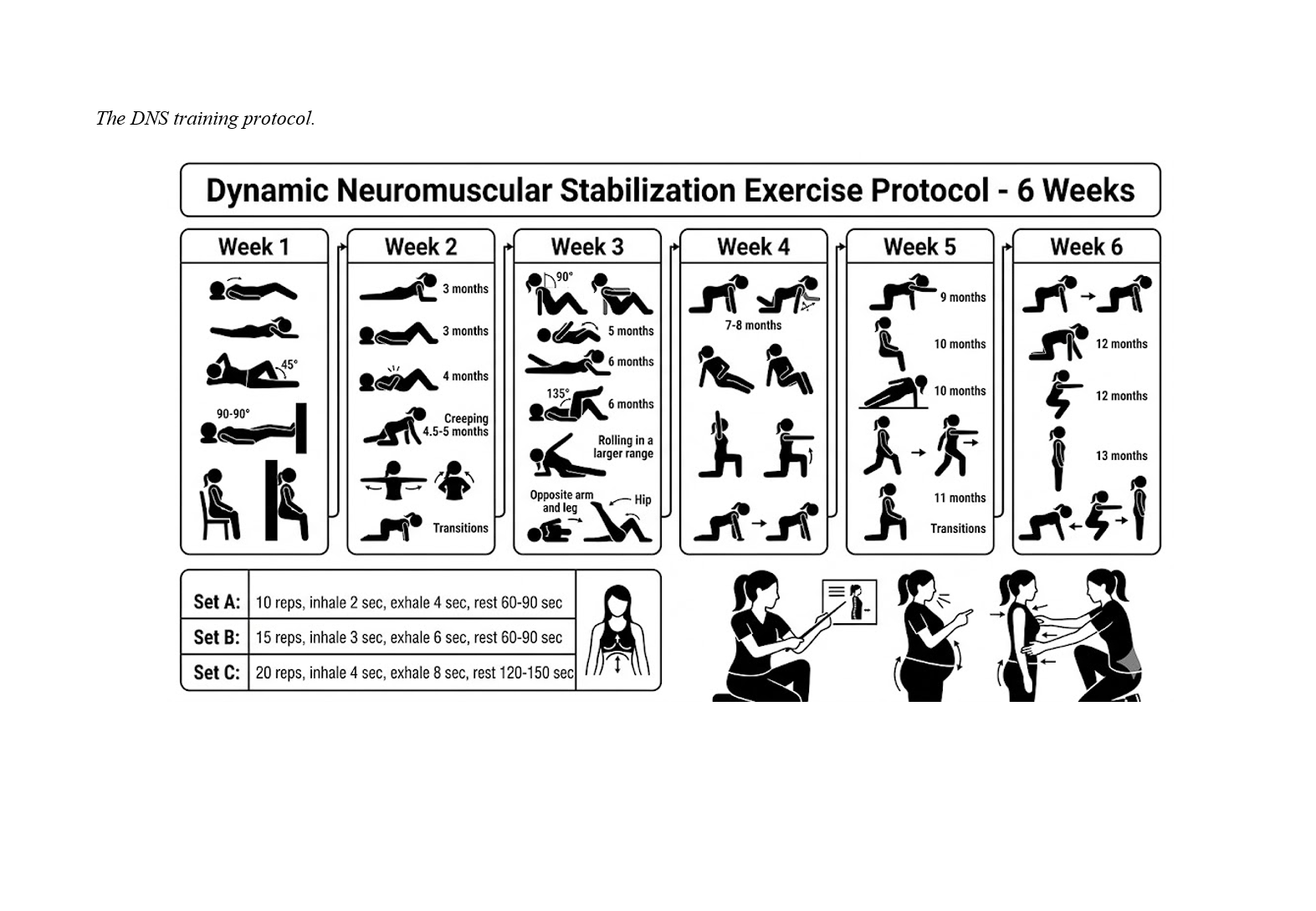
The present study aimed to investigate the effect of a six-week telerehabilitation-based Dynamic Neuromuscular Stabilization (DNS) exercise program on cardiorespiratory fitness and upper and lower extremity strength in overweight and obese older women. This research was a quasi-experimental study with a pretest-posttest design including a control group. The statistical population consisted of overweight and obese older women living in Mashhad, Iran. The research sample included 30 participants aged 60 to 75 years with a body mass index above 25 kg/m², who were selected using convenience sampling and randomly assigned to two groups: experimental (n = 15) and control (n = 15). The experimental group received a six-week DNS exercise protocol (six sessions per week, including three supervised remote sessions and three home sessions) via telerehabilitation. Cardiorespiratory fitness was assessed using the 2-Minute Step Test. Upper extremity strength was measured separately for the left and right arms using the 30-Second Arm Curl Test. Lower extremity strength was assessed using the 30-Second Chair Stand Test. All measurements were conducted at pretest and posttest stages. Analysis of covariance was used for data analysis at a significance level of p < 0.05. The results showed a significant difference between the experimental and control groups for cardiorespiratory fitness (F = 586.88, p = 0.001, η² = 0.95). A significant difference was also observed for lower extremity strength (F = 267.00, p = 0.001, η² = 0.90). However, no significant differences were found between the two groups for left upper extremity strength (F = 0.350, p = 0.550, η² = 0.002) or right upper extremity strength (F = 0.12, p = 0.770, η² = 0.005). A six-week telerehabilitation-based Dynamic Neuromuscular Stabilization exercise program may be an effective and practical intervention for improving cardiorespiratory fitness and lower extremity strength in overweight and obese older women. However, this protocol did not significantly improve upper extremity strength, highlighting the principle of training specificity. Telerehabilitation-based DNS may provide an accessible home-based exercise option for enhancing selected physical fitness outcomes in this population.
Downloads
References
1. Karartı C, Özsoy İ, Özyurt F, Basat HÇ, Özsoy G, Özüdoğru A. The effects of dynamic neuromuscular stabilization approach on clinical outcomes in older patients with chronic nonspecific low back pain: a randomized, controlled clinical trial. Somatosensory & Motor Research. 2023;40(3):116-25. doi: 10.1080/08990220.2023.2191705.
2. Kaushik M, Ahmad I. Bridging dynamic neuromuscular stabilization synergism with Movement Control Impairment Related Non-specific low back Pain: scoping review. Journal of Musculoskeletal & Neuronal Interactions. 2024;24(4):420.
3. Akbar S, Soh KG, Jazaily Mohd Nasiruddin N, Bashir M, Cao S, Soh KL. Effects of neuromuscular training on athletes physical fitness in sports: A systematic review. Frontiers in Physiology. 2022;13:939042. doi: 10.3389/fphys.2022.939042.
4. Shariatzadeh O, Mohammad Rahimi N, Sardar M. The Effect of Movement Control Training on Body Mass Index and Cardiorespiratory Fitness in Obese Children. Journal of Paramedical Sciences & Rehabilitation. 2023;12(2):64-73.
5. Binabaji S, Mohammad Rahimi N, Esfahani M. The Effect of 6 Weeks of Dynamic Neuromuscular Stabilization Exercises on Motor Control, Cardiovascular Fitness, and Respiratory Performance in Overweight and Obese Women. Biological Research For Nursing. 2025;27(4):581-91. doi: 10.1177/10998004251337451.
6. Widjaja W, Wongwattanapong T, Laskin JJ, Ajjimaporn A. Benefits of Thai Yoga on physical mobility and lower limb muscle strength in overweight/obese older women: A randomized controlled pilot trial. Complementary Therapies in Clinical Practice. 2021;43:101345. doi: 10.1016/j.ctcp.2021.101345.
7. Zemková E, Kyselovičová O, Jeleň M, Kováčiková Z, Ollé G, Štefániková G. Three months of resistance training in overweight and obese individuals improves reactive balance control under unstable conditions. Journal of Back and Musculoskeletal Rehabilitation. 2017;30(2):353-62. doi: 10.3233/BMR-160585.
8. Babagoltabar-Samakoush H, Aminikhah B, Bahiraei S. Effectiveness of dynamic neuromuscular stabilization training on strength, endurance, and flexibility in adults with intellectual disabilities, a randomized controlled trial. Scientific Reports. 2025;15(1):768. doi: 10.1038/s41598-024-85046-z.
9. Huang H, Xie H, Zhang G, Xiao W, Ge L, Chen S. Effects of dynamic neuromuscular stabilization training on the core muscle contractility and standing postural control in patients with chronic low back pain: a randomized controlled trial. BMC Musculoskeletal Disorders. 2025;26(1):213. doi: 10.1186/s12891-025-08417-1.
10. Mahdieh L, Zolaktaf V, Karimi MT. Effects of dynamic neuromuscular stabilization (DNS) training on functional movements. Human Movement Science. 2020;70:102568. doi: https://doi.org/10.1016/j.humov.2019.102568.
11. Ziya M, Saki F. The Impact of Stabilization Exercises on Pain, Quality of Life, and Lower Extremity Strength in Older Women with Low Back Pain: A Randomized Clinical Trial. Women's Health Bulletin. 2025;12(3):152-9.
12. Hammami N, Jdidi H, Khezami MA, Ghidaoui L, Talbi A, Hannachi C. Isokinetic strengthening and neuromuscular electrical stimulation protocol impact on physical performances, functional status and quality of life in knee osteoarthritis overweight/obese women. The Knee. 2022;39:106-15. doi: 10.1016/j.knee.2022.09.004.
13. Madle K, Svoboda P, Stribrny M, Novak J, Kolar P, Busch A. Abdominal wall tension increases using Dynamic Neuromuscular Stabilization principles in different postural positions. Musculoskeletal Science and Practice. 2022;62:102655. doi: 10.1016/j.msksp.2022.102655.
14. Kim HJ, Park IB, Kim HJ, Lee CK. Dynamic Neuromuscular Stabilization for Midlife Women with Frozen Shoulder: Clinical Effects on COP and Pain. Journal of Functional Morphology and Kinesiology. 2026;11(1):45. doi: 10.3390/jfmk11010045.
15. Frank C, Kobesova A, Kolar P. Dynamic neuromuscular stabilization & sports rehabilitation. International Journal of Sports Physical Therapy. 2013;8(1):62.
16. Afsari Z, Rahimi NM, Azimkhani A. Investigating the effects of dynamic neuromuscular stabilization exercises on chest Mobility, upright sitting Height, and quality of life in obese women. 2024. doi: 10.32598/ptj.14.2.581.2.
17. Ghavipanje V, Mohammad Rahimi N, Akhlaghi F. The effect of 6 weeks dynamic neuromuscular stabilization (DNS) breathing exercises on postpartum balance and quality of life in primiparous women with low back pain. The Iranian Journal of Obstetrics, Gynecology and Infertility. 2022;25(5):78-86.
18. Gulrandhe P, Kovela RK. The Effect of Dynamic Neuromuscular Stabilisation on Core Strength: A Literature Review. Journal of Clinical & Diagnostic Research. 2023;17(7). doi: 10.7860/JCDR/2023/60876.18125.
19. Gulrandhe P, Kovela RK, Samal S, Kovela RK. Effect of the Dynamic Neuromuscular Stabilization Technique on Functional Capacity in Overweight and Obese Individuals: A Randomized Controlled Trial. Cureus. 2023;15(7). doi: 10.7759/cureus.42076.
20. Batrakoulis A, Fatouros IG, Chatzinikolaou A, Draganidis D, Georgakouli K, Papanikolaou K. Dose-response effects of high-intensity interval neuromuscular exercise training on weight loss, performance, health and quality of life in inactive obese adults: Study rationale, design and methods of the DoIT trial. Contemporary Clinical Trials Communications. 2019;15:100386. doi: 10.1016/j.conctc.2019.100386.
21. Mansori MH, Moghadas Tabrizi Y. Effect of a six-week dynamic neuromuscular stability training on performance factors and quality of life in the elderly. Sport Sciences and Health Research. 2020;12(1):83-92. doi: 10.32598/JESM.12.1.9.
22. Ghavipanje V, Rahimi NM, Akhlaghi F. Six weeks effects of dynamic neuromuscular stabilization (DNS) training in obese postpartum women with low back pain: A randomized controlled trial. Biological Research for Nursing. 2022;24(1):106-14. doi: 10.1177/10998004211044828.
23. Bhattacharya PK, Deka K, Roy A. A community-based study to assess test-retest reliability of senior fitness test in the geriatric population in a Northeastern Indian city. International Journal of Medical Science and Public Health. 2016;5:1606-12. doi: 10.5455/ijmsph.2016.21112015262.
24. Ziya M, Saki F, Arjipour M. Comparison of dynamic neuromuscular stabilization exercises with and without the feldenkrais method on pain, balance, and hip muscle strength in elderly women with chronic non-specific low back pain. Geriatric Nursing. 2026;69:103804. doi: 10.1016/j.gerinurse.2026.103804.
25. Jurišić MV, Roklicer R, Obradović A, Stefan S, Bianco A, Drid P. Effect of multicomponent and stability exercises on body composition, physical fitness, and functional movement capability in active older women: a non-randomized study. Experimental Gerontology. 2026:113016. doi: 10.1016/j.exger.2025.113016.
26. Rahimi NM. Efficacy of dynamic neuromuscular stabilization breathing exercises on chest mobility, trunk muscles, and thoracic kyphosis: a randomized controlled 6-Week trial. Iranian Rehabilitation Journal. 2020.
27. Batrakoulis A, Tsimeas P, Deli CK, Vlachopoulos D, Ubago-Guisado E, Poulios A. Hybrid neuromuscular training promotes musculoskeletal adaptations in inactive overweight and obese women: a training-detraining randomized controlled trial. Journal of Sports Sciences. 2021;39(5):503-12. doi: 10.1080/02640414.2020.1830543.
28. Cavaggioni L, Gilardini L, Croci M, Formenti D, Merati G, Bertoli S. The usefulness of Integrative Neuromuscular Training to counteract obesity: a narrative review. International Journal of Obesity. 2023;48(1):22. doi: 10.1038/s41366-023-01392-4.
29. Mansori MH, Moghadas Tabrizi Y, Mohammadkhani K. Evaluation of the effectiveness of dynamic neuromuscular stability exercises on balance and walking function in the elderly. Iranian Rehabilitation Journal. 2021;19(3):279-88. doi: 10.32598/irj.19.3.1406.3.
30. Babagoltabar-Samakoush H, Aminikhah B, Bahiraei S. Effectiveness and Durability of Training Program Dynamic Neuromuscular Stabilization on Strength, Endurance, and Flexibility of Adults with intellectual disabilities. 2024. doi: 10.21203/rs.3.rs-4963722/v1.
31. Örgün E, Kurt C, Özsu İ. The effect of static and dynamic core exercises on dynamic balance, spinal stability, and hip mobility in female office workers. Turkish Journal of Physical Medicine and Rehabilitation. 2019;66(3):271. doi: 10.5606/tftrd.2020.4317.
32. Özalp RE, Yılmaz E, Çalık İ. Effects of stabilization and yoga training on neuromuscular performance in sedentary women. European Journal of Applied Physiology. 2026;126(4):1997-2009. doi: 10.1007/s00421-025-06058-9.
Downloads
Additional Files
Publication Timeline
- Submitted
- Revised
- Accepted