Predicting Stress-Induced Somatic Symptoms from Personality and Behavioral Indicators Using Machine Learning
DOI:
https://doi.org/10.61838/kman.jppr.5157Keywords:
Somatic Symptoms, Machine Learning, Personality, Neuroticism, Stress, XGBoost, Predictive ModelingAbstract
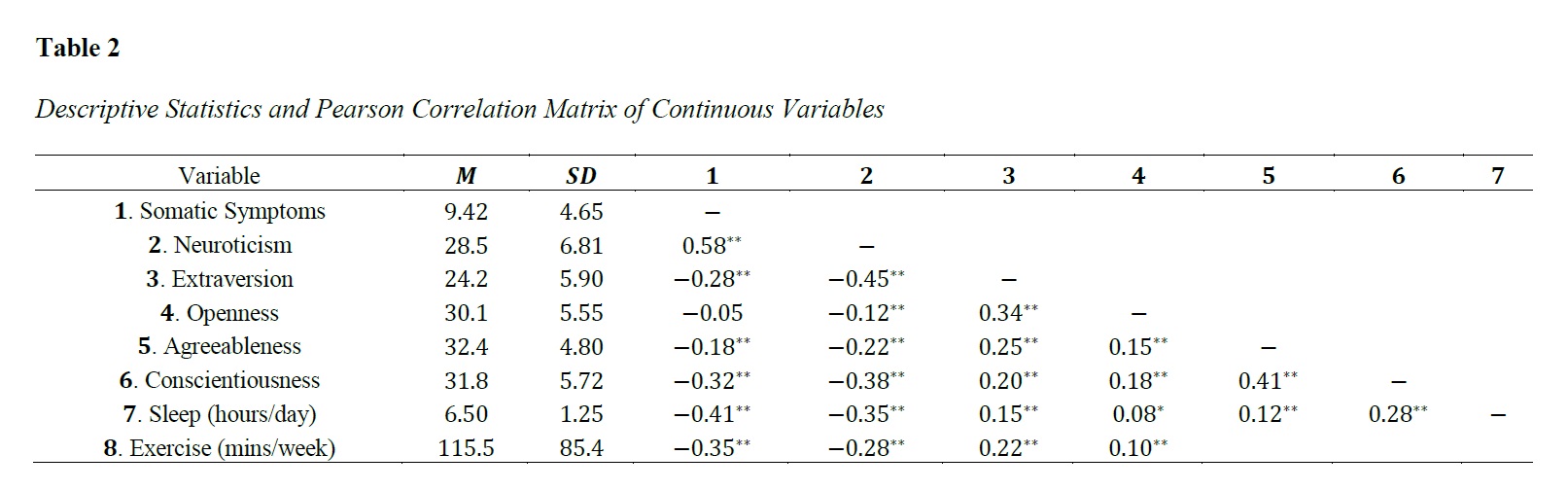
This study aimed to predict the severity of stress-induced somatic symptoms using machine learning models applied to personality traits and behavioral data. A cross-sectional study was conducted with 1248 Brazilian adults using digital surveys that included the Patient Health Questionnaire for Somatic Symptoms (PHQ-15), the Big Five Inventory, and a behavioral assessment. Predictive modeling involved training and comparing Multiple Linear Regression, Support Vector Regression (SVR), Random Forest, and eXtreme Gradient Boosting (XGBoost) algorithms on an 80/20 train-test split (test set n=250), evaluating performance via R^2, MAE, and RMSE. The XGBoost model demonstrated superior predictive performance (R^2=0.684, MAE=2.15, RMSE=2.61) for somatic symptom severity (M=9.42, SD=4.65). Feature importance analysis ranked Neuroticism (34.5%) as the strongest predictor, followed by Sleep Duration (18.2%), Conscientiousness (14.6%), and Physical Exercise (11.3%), aligning with significant bivariate correlations for Neuroticism (r=0.58), sleep duration (r=-0.41), and physical activity (r=-0.35). Machine learning algorithms effectively predict somatic symptom severity, highlighting the paramount influence of neuroticism and the protective role of modifiable health behaviors.
Downloads
Downloads
Additional Files
Publication Timeline
- Submitted
- Revised
- Accepted