








Ranking Spiritual and Religious Practices Strengthening Family Bonds
|
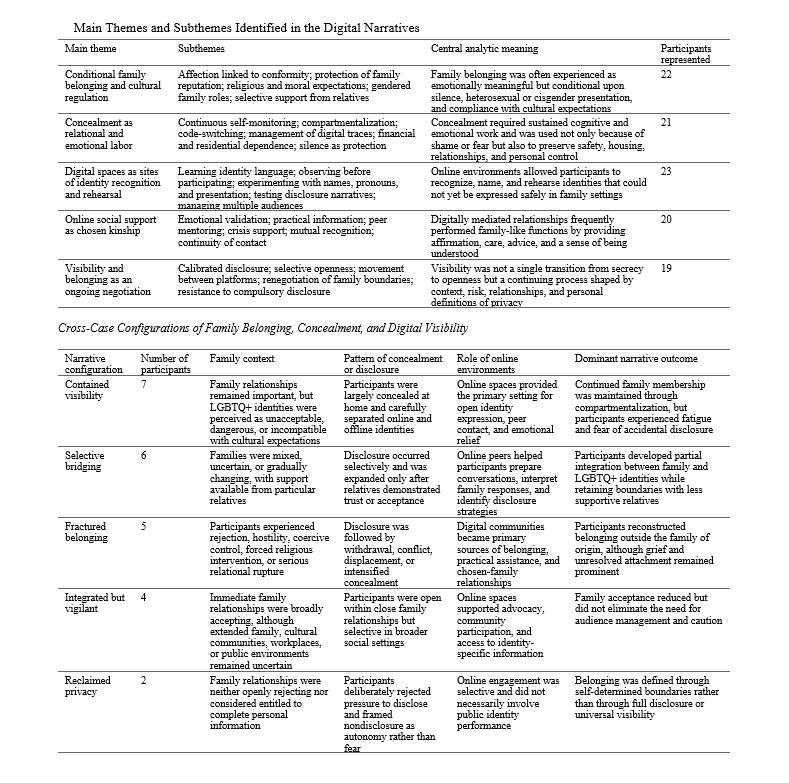
Objective: This study aimed to identify, categorize, and rank the most significant spiritual and religious practices that strengthen family bonds, integrating qualitative content analysis and quantitative prioritization to develop a multidimensional framework of family spirituality. Methods and Materials: The study adopted a sequential exploratory mixed-methods design. In the first phase, a qualitative content analysis was conducted through an extensive literature review until theoretical saturation was reached. Extracted data were coded and analyzed using NVivo 14, producing six overarching themes of family spirituality. In the second phase, these categories were incorporated into a structured questionnaire and administered to 200 adult participants from Italy. Respondents rated the perceived importance of each spiritual and religious practice on a five-point Likert scale. The quantitative data were analyzed using SPSS version 26, applying descriptive statistics and Friedman’s test to rank the practices by mean scores and determine relative importance. Findings: The results revealed six primary categories of family spirituality ranked as follows: shared religious rituals (M = 4.68), moral and ethical alignment (M = 4.51), emotional and relational spirituality (M = 4.32), community and social belonging (M = 4.09), meaning and purpose orientation (M = 3.88), and interfaith respect and inclusivity (M = 3.47). The Friedman test confirmed significant differences in perceived importance across categories (p < 0.001). The highest-ranked themes emphasized ritual participation and moral coherence as foundational mechanisms of family unity, while emotional, communal, and inclusive practices played complementary but secondary roles. Conclusion: Spirituality strengthens family bonds through an integrated system of shared rituals, moral alignment, emotional connection, and social belonging. Keywords: family spirituality; religious practices; family cohesion; moral alignment |
Identifying Generational Gaps in Emotional Expression among Youth and Parents
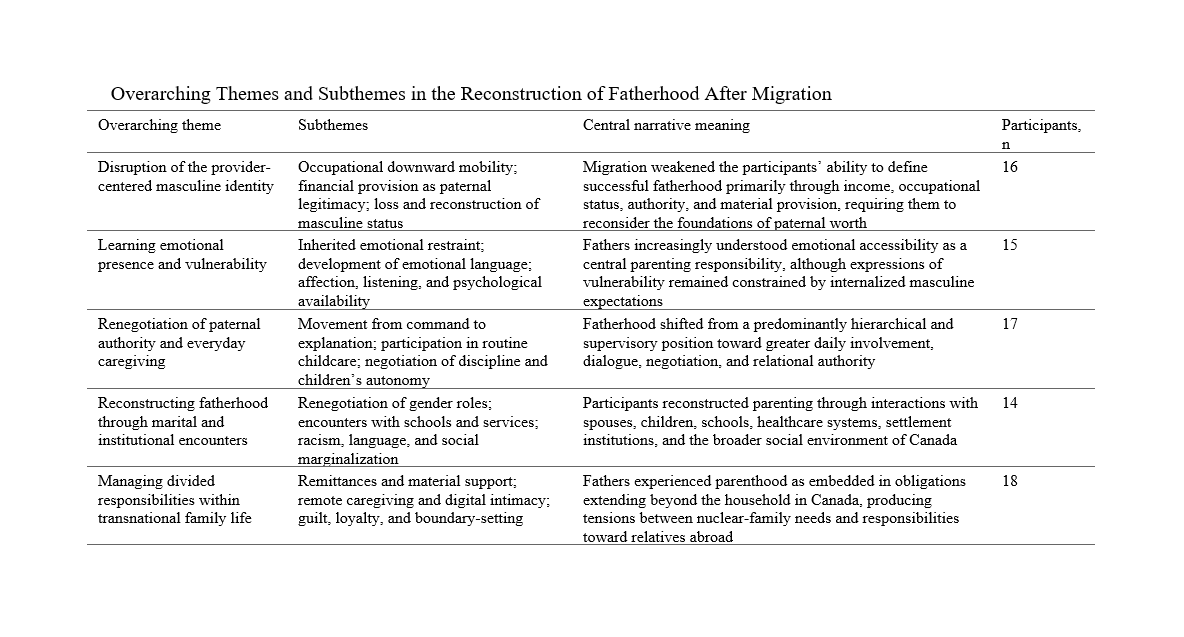
Objective: This study aimed to explore the generational gaps in emotional expression between youth and their parents, focusing on differences in communication styles, regulation strategies, and cultural influences within Canadian families.
Methods and Materials: A qualitative research design was employed using an interpretive phenomenological approach to capture participants’ lived experiences of emotional communication across generations. The study involved 20 participants from Canada, including 10 adolescents aged 15–20 years and 10 parents aged 40–55 years. Data were collected through semi-structured interviews and analyzed using thematic analysis in NVivo 14. Theoretical saturation guided the sampling process, and themes were identified through iterative coding and constant comparison.
Findings: Five major themes emerged from the analysis: (1) emotional communication styles, highlighting contrasts between direct and indirect expression; (2) cultural and social influences, emphasizing the interplay of traditional and contemporary emotional norms; (3) emotional awareness and vocabulary, revealing differences in emotional literacy between generations; (4) family dynamics and relationship quality, identifying emotional distance and mismatched support expectations; and (5) coping and adaptation across generations, showing gradual mutual adjustment through empathy and communication.
Conclusion: Generational differences in emotional expression reflect broader cultural, psychological, and developmental shifts within families. While these gaps may cause miscommunication and emotional tension, they also provide opportunities for intergenerational learning and resilience through dialogue, empathy, and shared emotional growth.
Identifying Cultural Pathways of Parent–Child Attachment Development
Objective: This study aimed to explore and identify the cultural pathways that shape the development of parent–child attachment among families from diverse cultural backgrounds living in Canada.
Methods and Materials: The research adopted a qualitative, phenomenological design to capture parents’ lived experiences of attachment formation within multicultural contexts. Data were collected through semi-structured, in-depth interviews with 23 participants (13 mothers and 10 fathers) representing South Asian, East Asian, Middle Eastern, European, and Indigenous cultural groups. Participants were selected using purposive sampling, and interviews continued until theoretical saturation was reached. Each interview lasted between 60 and 90 minutes and focused on parental beliefs, emotional expression, cultural transmission, and adaptation to Canadian norms. All interviews were audio-recorded, transcribed verbatim, and analyzed thematically using NVivo 14 software following Braun and Clarke’s six-phase framework.
Findings: Analysis revealed three main themes—Cultural Interpretations of Emotional Bonding, Migration and Cultural Adaptation in Parenting, and Pathways of Attachment Formation. These themes encompassed 17 subthemes that described how cultural values, intergenerational beliefs, and migration experiences influence emotional expression and attachment behaviors. The findings showed that while traditional collectivist cultures emphasized caregiving through protection, respect, and shared rituals, integration into Canadian society encouraged more open emotional communication and autonomy-promoting parenting.
Conclusion: The study concludes that parent–child attachment development among Canadian families is a culturally dynamic process influenced by enculturation, migration, and social adaptation. Recognizing multiple cultural pathways of attachment can enhance culturally sensitive family interventions, parenting education, and cross-cultural counseling practices.
Family Conflict and Adolescent Self-Injury: The Mediating Role of Alexithymia
Objective: This study aimed to examine the relationship between family conflict and adolescent self-injury, with a focus on the mediating role of alexithymia.
Methods and Materials: A descriptive correlational design was employed using a sample of 396 South African secondary school students selected based on the Morgan and Krejcie sampling table. Standardized instruments were used to assess family conflict, alexithymia, and self-injurious behavior. Data were analyzed using SPSS-27 for Pearson correlation and AMOS-21 for structural equation modeling (SEM). Assumptions for normality, linearity, and multicollinearity were confirmed prior to analysis. The structural model tested both direct and indirect effects to evaluate the mediating function of alexithymia in the relationship between family conflict and self-injury.
Findings: Pearson correlations showed significant positive relationships among all variables: family conflict and alexithymia (r = .42, p < .01), family conflict and self-injury (r = .34, p < .01), and alexithymia and self-injury (r = .49, p < .01). The structural model demonstrated excellent fit indices (χ²/df = 2.43, CFI = 0.96, RMSEA = 0.059). Path analysis revealed significant direct effects of family conflict on alexithymia (B = 0.43, β = .42, p < .001), alexithymia on self-injury (B = 0.38, β = .46, p < .001), and family conflict on self-injury (B = 0.19, β = .24, p = .004). The indirect effect of family conflict on self-injury through alexithymia was also significant (B = 0.16, β = .19, p < .001), confirming partial mediation.
Conclusion: Findings underscore alexithymia as a critical emotional mechanism linking family conflict to self-injurious behavior in adolescents. Interventions targeting emotional awareness and family communication may help mitigate the risks associated with adolescent self-harm, especially in culturally diverse contexts.
Cultural Orientation and Marital Quality: The Mediating Role of Gender Role Attitudes
Objective: This study aimed to investigate the relationship between cultural orientation and marital quality among Canadian married individuals, with a specific focus on the mediating role of gender role attitudes.
Methods and Materials: The study employed a descriptive correlational design involving 385 married participants residing in Canada, selected using stratified random sampling based on Krejcie and Morgan's sample size guidelines. Standardized instruments were used to assess marital quality (Dyadic Adjustment Scale), cultural orientation (Cultural Orientation Scale), and gender role attitudes (Gender Role Beliefs Scale). Data were analyzed using SPSS-27 for descriptive and correlational statistics, and AMOS-21 was used to perform structural equation modeling (SEM). Model fit was evaluated using χ²/df, GFI, AGFI, CFI, TLI, and RMSEA indices. Mediation analysis included both direct and indirect path coefficients.
Findings: Pearson correlation analysis showed that marital quality was significantly related to both cultural orientation (r = .42, p < .001) and gender role attitudes (r = .48, p < .001), with a significant correlation between cultural orientation and gender role attitudes as well (r = .45, p < .001). The SEM results indicated that the model had good fit (χ²/df = 2.11, GFI = 0.94, CFI = 0.96, RMSEA = 0.053). Cultural orientation significantly predicted marital quality directly (β = 0.28, p < .001) and indirectly through gender role attitudes (β = 0.22, p < .001), confirming a partial mediating effect. Gender role attitudes also had a strong direct effect on marital quality (β = 0.49, p < .001).
Conclusion: The findings underscore the critical role of cultural orientation and internalized gender role attitudes in shaping marital quality. Gender role attitudes serve as a psychological pathway through which cultural values influence relational satisfaction, emphasizing the need for culturally sensitive approaches in marital counseling and intervention.
Family Expressiveness and Adolescent Empathy: The Mediating Role of Emotional Awareness
Objective: This study aimed to examine the mediating role of emotional awareness in the relationship between family expressiveness and adolescent empathy.
Methods and Materials: A descriptive correlational research design was used, involving 400 Mexican adolescents selected based on the Morgan and Krejcie sampling table. Data were collected using three standardized self-report instruments: the Family Expressiveness Questionnaire (FEQ), the Emotional Awareness Questionnaire (EAQ), and the Interpersonal Reactivity Index (IRI) for empathy. Pearson correlation analysis was conducted using SPSS-27 to explore bivariate associations, and structural equation modeling (SEM) was performed using AMOS-21 to assess direct, indirect, and total effects among the variables and test the hypothesized mediation model.
Findings: The results showed significant positive correlations between family expressiveness and emotional awareness (r = .46, p < .001), family expressiveness and adolescent empathy (r = .38, p < .001), and emotional awareness and adolescent empathy (r = .53, p < .001). The structural model demonstrated a good fit to the data (χ²/df = 1.66, RMSEA = 0.041, CFI = 0.99). Direct effects from family expressiveness to emotional awareness (B = 0.51, β = 0.46, p < .001), from family expressiveness to empathy (B = 0.24, β = 0.28, p < .001), and from emotional awareness to empathy (B = 0.44, β = 0.39, p < .001) were statistically significant. The indirect effect of family expressiveness on empathy via emotional awareness was also significant (B = 0.22, β = 0.18, p < .001), supporting partial mediation.
Conclusion: These findings suggest that emotionally expressive family environments foster adolescents' empathy partly by enhancing their emotional awareness. Emotional awareness serves as a key developmental mechanism through which family dynamics shape prosocial emotional outcomes in adolescence.
Parental Overprotection and Young Adults’ Autonomy: The Mediating Role of Self-Efficacy
Objective: This study aimed to examine the mediating role of self-efficacy in the relationship between perceived parental overprotection and autonomy in Malaysian young adults.
Methods and Materials: A descriptive correlational research design was employed involving a sample of 423 university students in Malaysia, selected based on Krejcie and Morgan’s sampling table. Participants completed standardized measures including the Parental Bonding Instrument (Overprotection subscale), General Self-Efficacy Scale, and the Autonomous Functioning Scale. Data were analyzed using SPSS-27 for descriptive statistics and Pearson correlations, and AMOS-21 for structural equation modeling (SEM). Assumptions such as normality, multicollinearity, and linearity were checked and confirmed before inferential analysis.
Findings: The results indicated a significant negative correlation between parental overprotection and autonomy (r = –.47, p < .001), and between parental overprotection and self-efficacy (r = –.41, p < .001). Self-efficacy was positively correlated with autonomy (r = .53, p < .001). SEM results showed that parental overprotection significantly predicted lower self-efficacy (β = –0.41, p < .001) and autonomy both directly (β = –0.28, p < .001) and indirectly via self-efficacy (β = –0.22, p < .001). The total effect of parental overprotection on autonomy was substantial (β = –0.50, p < .001). Model fit indices supported the adequacy of the hypothesized model (χ²/df = 1.74; CFI = 0.96; RMSEA = 0.041).
Conclusion: These findings suggest that parental overprotection has a significant negative impact on young adults’ autonomy, both directly and through its detrimental effect on self-efficacy. Promoting self-efficacy may help mitigate the negative developmental consequences of overprotective parenting, especially in collectivist cultures where parental control is often normative.
Identifying Family Support Mechanisms in Postpartum Psychological Adjustment
Objective: This study aimed to explore the mechanisms through which family support contributes to the psychological adjustment of postpartum women.
Methods and Materials: A qualitative research design was employed using semi-structured interviews with 23 postpartum women residing in Bangladesh. Participants were recruited through purposive sampling and represented a range of ages, educational backgrounds, and parity statuses. Data collection continued until theoretical saturation was reached. All interviews were transcribed verbatim and analyzed using thematic analysis, following Braun and Clarke’s six-step framework. NVivo 14 software facilitated systematic coding and theme development. Ethical approval was obtained, and all participants gave informed consent.
Findings: Three main themes emerged: (1) Emotional Support from Family (including subthemes such as active emotional presence, verbal encouragement, and emotional understanding from the spouse), (2) Practical and Instrumental Support (including help with infant care, household tasks, and medical visits), and (3) Relational and Social Buffering (including protection from criticism, mediation of social relations, and promotion of couple intimacy). Across all themes, the perceived quality and timing of support were central to their psychological impact. Participants who experienced emotionally attuned, respectful, and reliable support reported greater psychological stability, reduced distress, and enhanced postpartum coping.
Conclusion: The findings underscore that family support in the postpartum period is not solely about the presence of assistance but is critically shaped by its relational quality, emotional sensitivity, and alignment with maternal needs. Emotional reassurance, practical help, and protection from social stressors—when delivered with empathy and respect—can significantly buffer against psychological distress and promote adjustment. These insights suggest a need for culturally sensitive, family-inclusive mental health interventions tailored to postpartum women.
About the Journal
JPRFC publishes four issues per year, with occasional special issues coming in addition.
- E-ISSN: 3041-8550
- Director in Charge: M.B. Jafari
- Editor-in-chief: Dr. Mehdi Rostami
- Owner: KMAN Research Institute
- Publisher: KMAN Publication Inc. (KMANPUB)
- Email: jprfc@kmanpub.com
- Open Access: YES
JPRFC covers a wide range of topics related to family and culture, such as psychology, sociology, anthropology, and more. The journal provides an advantageous resource for professionals and scholars in these fields, as it offers a platform for publishing cutting-edge research and innovative ideas. The journal is committed to publishing articles that make significant contributions to the fields of family and culture, and that have practical implications for professionals working in these areas. Overall, JPRCF and Culture is an excellent addition to the academic community. With its emphasis on quality research, meticulous peer-review process, and commitment to open access, the journal is well-positioned to serve as a leading resource for professionals and scholars in the fields of family and culture.
About the Publisher
Publisher: KMAN Publication Inc.
Publisher Office: Unit 5‑10825 Yonge St, Richmond Hill, Ontario, Canada, L4C 3E3
https://journals.kmanpub.com
Email: kmanpu@kmanpub.com
Telegram: +1 (647) 656‑4401 | WhatsApp: +1 (437) 429‑3507
Germany Office: Dratelnstrasse, Wohnung A60, 21119 Hamburg, Germany (+4915207720487)
Current Issue