Strength-Based Therapy: Empowering Athletes' Self-Efficacy and Life Satisfaction
DOI:
https://doi.org/10.61838/kman.hn.2.2.1Keywords:
Strength-based, Empowering, Athletes, Self-efficacy, Life SatisfactionAbstract
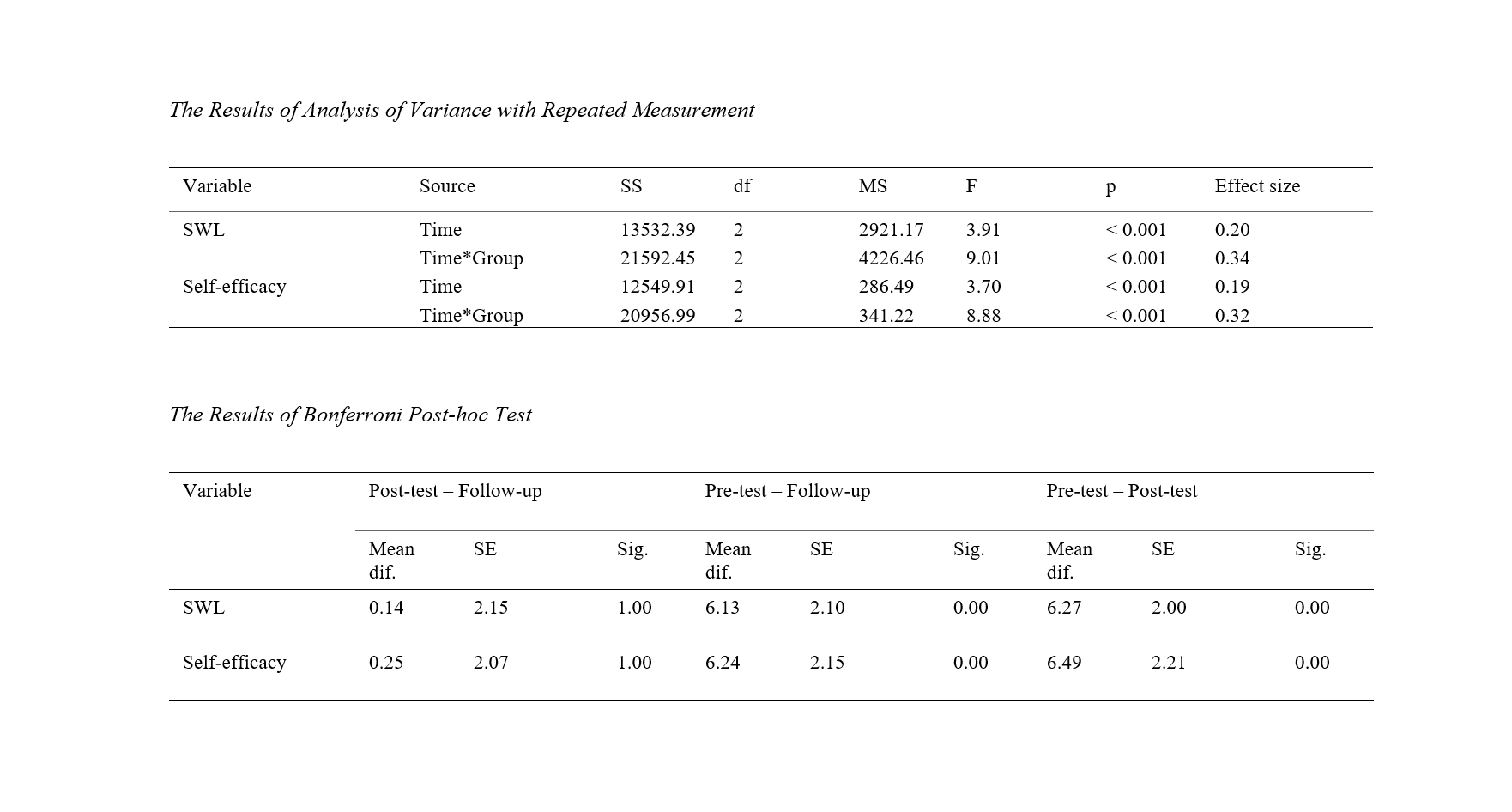
While it is known that focusing on positive attributes and capabilities can enhance psychological resilience, the specific effectiveness of strength-based therapy in improving self-efficacy and life satisfaction among athletes remains unexplored. By emphasizing positive attributes and capabilities, strength-based therapy aims to enhance athletes' psychological resilience and overall well-being, which are crucial in the highly competitive and physically demanding world of sports. Therefore, this study investigates the effectiveness of strength-based therapy in enhancing the self-efficacy and life satisfaction of athletes. The study used a quasi-experimental design with 50 competitive athletes aged 18-35. The methodology included an 8-week intervention focusing on leveraging individual strengths, goal setting, and resilience building. Outcomes were measured using the General Self-Efficacy Scale and the Satisfaction with Life Scale. To examine these differences, an analysis of variance with repeated measures, coupled with Bonferroni’s post-hoc test, was conducted using SPSS-26. Results indicated significant improvements in both self-efficacy and life satisfaction in the experimental group compared to the control group. The study concludes that strength-based therapy positively impacts athletes' psychological well-being, suggesting its potential for broader application in sports therapy.
Downloads
References
1. Smith EJ. The strength-based counseling model. The counseling psychologist. 2006;34(1):13-79. [DOI]
2. Parsakia K, Darbani SA. Effectiveness of strength-based counseling on self-worth of divorced women. Applied Family Therapy Journal (AFTJ). 2022;3(1):687-700. [PMID: 37020597] [PMCID: PMC10067930] [DOI]
3. Park-Perin G. Chapter 15-Positive psychology: Chapter taken from Routledge Handbook of Applied Sport Psychology. Routledge Online Studies on the Olympic and Paralympic Games. 2012;1(44):141-9. [DOI]
4. Raki S, Naderi F. Effectiveness Of Mind-Fullness Based Cognitive Therapy On Emotional Cognitive Regulation, Resiliency And Competitive Anxiety In Female Athletes. Journal of Nursing Education. 2019;6(6):18-26. [DOI]
5. Jowett S, Shanmugam V, Caccoulis S. Collective Efficacy as a Mediator of the Association Between Interpersonal Relationships and Athlete Satisfaction in Team Sports. International Journal of Sport and Exercise Psychology. 2012. [DOI]
6. Lee FWL, Choi J. Impacts of Adventure-Based Counseling Training on the Young Olds. The Hong Kong Journal of Social Work. 2010. [DOI]
7. Goraczko A, Żurek A, Lachowicz M, Kujawa K, Żurek G. Is Self-Efficacy Related to the Quality of Life in Elite Athletes After Spinal Cord Injury? International Journal of Environmental Research and Public Health. 2021. [PMID: 34682606] [PMCID: PMC8535663] [DOI]
8. Lee J, Kim EY, Wachholtz A. The Effect of Perceived Stress on Life Satisfaction. Korean Journal of Youth Studies. 2016. [PMID: 27996059] [PMCID: PMC5154683] [DOI]
9. Jerusalem M, Schwarzer R. General self-efficacy scale--revised--English version. 1995. [DOI]
10. Elliott-Sale KJ, Minahan CL, de Jonge X, Ackerman KE, Sipilä S, Constantini NW, et al. Methodological Considerations for Studies in Sport and Exercise Science with Women as Participants: A Working Guide for Standards of Practice for Research on Women. Sports Med. 2021;51(5):843-61. [PMID: 33725341] [PMCID: PMC8053180] [DOI]
11. Diener E, Emmons RA, Larsen RJ, Griffin S. The Satisfaction With Life Scale. Journal of Personality Assessment. 1985;49(1):71-5. [PMID: 16367493] [DOI]
12. Afra h, Eslami r, Ayar a. Successful Aging based on approaches economic and cultural capital (Case study: teachers retired 60-year high in Tabriz). Social Development & Welfare Planning. 2021;11(45):193-220.
13. Chung RJ, Burke PJ, Goodman E. Firm foundations: strength-based approaches to adolescent chronic disease. Current opinion in pediatrics. 2010;22(4):389-97. [PMID: 20489640] [DOI]
14. Tse S, Tsoi EW, Hamilton B, O’Hagan M, Shepherd G, Slade M, et al. Uses of strength-based interventions for people with serious mental illness: A critical review. International Journal of Social Psychiatry. 2016;62(3):281-91. [PMID: 26831826] [DOI]
15. Burger K, Samuel R. The Role of Perceived Stress and Self-Efficacy in Young People’s Life Satisfaction: A Longitudinal Study. Journal of Youth and Adolescence. 2016. [PMID: 27812840] [DOI]
16. O’Sullivan G. The Relationship Between Hope, Eustress, Self-Efficacy, and Life Satisfaction Among Undergraduates. Social Indicators Research. 2010. [DOI]
17. Wright SL, Perrone KM. An Examination of the Role of Attachment and Efficacy in Life Satisfaction. The Counseling Psychologist. 2010. [DOI]
18. Chao C-H, Kao S-F, Tsai C-Y. Coaching Efficacy and Coaching Effectiveness in Predicting Athlete Satisfaction: A Self-Other Agreement Framework. International Journal of Sports Science & Coaching. 2022. [DOI]
19. Tian H, Zhou W, Qiu Y, Zhang Z. The Role of Recreation Specialization and Self-Efficacy on Life Satisfaction: The Mediating Effect of Flow Experience. International Journal of Environmental Research and Public Health. 2022. [PMID: 35328931] [PMCID: PMC8950726] [DOI]
20. Sari HY, Gelbal S, Sarı Hİ. Factors Affecting Academic Self-Efficacy of Syrian Refugee Students: A Path Analysis Model. International Journal of Assessment Tools in Education. 2020.
Downloads
Additional Files
Publication Timeline
License
Copyright (c) 2024 Kamdin Parsakia, Beat Knechtle (Author); khadijeh irandoust (Corresponding Author); Morteza Taheri (Author)

This work is licensed under a Creative Commons Attribution-NonCommercial 4.0 International License.