Effects of Schema Therapy and ISTDP on Resilience, Emotion Regulation, and Self-Compassion in Women with a History of Trauma
DOI:
https://doi.org/10.61838/kman.hn.5287Keywords:
schema therapy, intensive short-term dynamic psychotherapy, resilience, emotion regulation, self-compassion, trauma, womenAbstract
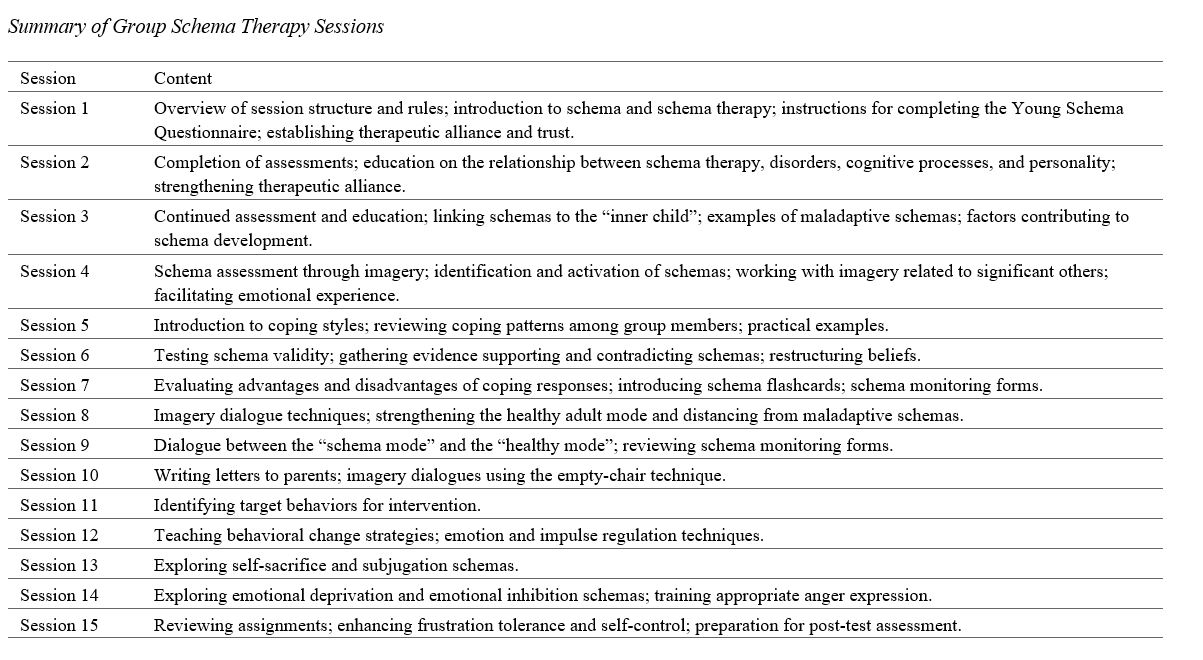
The present study aimed to compare the effectiveness of schema therapy and intensive short-term dynamic psychotherapy (ISTDP) on resilience, emotion regulation, and self-compassion in women with a history of trauma. The study employed a quasi-experimental design with pre-test, post-test, and three-month follow-up, including a control group. The statistical population consisted of women aged 20 to 45 years in Hamadan, Iran, in 2025. A total of 60 participants were initially selected using purposive sampling and assigned to three groups (schema therapy, ISTDP, and control), each consisting of 20 participants. Due to attrition, the final sample included 49 participants. The experimental groups received 15 sessions of intervention (90 minutes each), while the control group received no intervention. Data were collected using the Connor–Davidson Resilience Scale (CD-RISC; Connor & Davidson, 2003), the Difficulties in Emotion Regulation Scale (DERS; Gratz & Roemer, 2004), and the Self-Compassion Scale–Short Form (SCS-SF; Raes et al., 2011). Data were analyzed using mixed-design repeated-measures analysis of variance. The results indicated that both schema therapy and ISTDP significantly improved resilience, emotion regulation, and self-compassion compared to the control group (p < .001). Additionally, the interaction effect of time and group was significant for all variables, indicating different patterns of change across groups. The findings also showed that ISTDP was more effective than schema therapy in improving emotion regulation, while no significant difference was observed between the two treatments in resilience and self-compassion. Overall, the findings suggest that both schema therapy and ISTDP are effective interventions for improving psychological functioning in women with trauma. However, ISTDP may be particularly beneficial for enhancing emotion regulation.
Downloads
References
1. Vogt D, Mangan E. Research on women, trauma, and PTSD. National Center for PTSD, U.S. Department of Veterans Affairs; 2025.
2. El Founti Khsim I, Martínez Rodríguez M, Riquelme Gallego B, Caparros-Gonzalez RA, Amezcua-Prieto C. Risk factors for post-traumatic stress disorder after childbirth: a systematic review. Diagnostics. 2022;12(11):2598. [PMID: 36359442] [PMCID: PMC9689389]
3. Fonkoue IT, Michopoulos V, Park J. Sex differences in post-traumatic stress disorder risk: autonomic control and inflammation. Clinical Autonomic Research. 2020;30(5):409-21. [PMID: 33021709] [PMCID: PMC7598146]
4. Sun X, Fan X, Cong S, Wang R, Sha L, Xie H, et al. Psychological birth trauma: A concept analysis. Frontiers in Psychology. 2023;13:1065612. [PMID: 36710822] [PMCID: PMC9880163]
5. Kolaitis G, Olff M. Psychotraumatology in Greece. European journal of psychotraumatology. 2017;8(sup4):135175. [PMID: 29038692] [PMCID: PMC5632764]
6. Lee AT, Chin P, Nambiar A, Hill Haskins N. Addressing intergenerational trauma in Black families: Trauma‐informed socioculturally attuned family therapy. Journal of marital and family therapy. 2023;49(2):447-62. [PMID: 36682070]
7. Gradus JL, Galea S. Moving from traumatic events to traumatic experiences in the study of traumatic psychopathology. American journal of epidemiology. 2023;192(10):1609-12. [PMID: 37218615] [PMCID: PMC10558183]
8. Conti L, Fantasia S, Violi M, Dell'Oste V, Pedrinelli V, Carmassi C. Emotional Dysregulation and Post-Traumatic Stress Symptoms: Which Interaction in Adolescents and Young Adults? A Systematic Review. Brain Sciences. 2023;13(12):1730. [PMID: 38137178] [PMCID: PMC10741474]
9. Dong C, Xu R, Xu L. Relationship of childhood trauma, psychological resilience, and family resilience among undergraduate nursing students: A cross-sectional study. Perspectives in psychiatric care. 2021;57(2):852-9. [PMID: 32959906]
10. Su P, Yi J, Chen X, Xiao Y. Visual analysis of psychological resilience research based on Web of Science database. Psychology Research and Behavior Management. 2023;16:465-81. [PMID: 36846313] [PMCID: PMC9948642]
11. Ran L, Wang W, Ai M, Kong Y, Chen J, Kuang L. Psychological resilience, depression, anxiety, and somatization symptoms in response to COVID-19: A study of the general population in China at the peak of its epidemic. Social Science & Medicine. 2020;262:113261. [PMID: 32758794] [PMCID: PMC7388777]
12. Silvers JA. Adolescence as a pivotal period for emotion regulation development. Current Opinion in Psychology. 2022;44:258-63. [PMID: 34781238]
13. Paley B, Hajal NJ. Conceptualizing emotion regulation and coregulation as family-level phenomena. Clinical Child and Family Psychology Review. 2022;25(1):19-43. [PMID: 35098427] [PMCID: PMC8801237]
14. Shafiei F, Dehghani M, Lavasani FF, Manouchehri M, Mokhtare M. Intensive short-term dynamic psychotherapy for irritable bowel syndrome: A randomized controlled trial examining improvements in emotion regulation, defense mechanisms, quality of life, and IBS symptoms. Frontiers in Psychology. 2024;15:1293150. [PMID: 38605838] [PMCID: PMC11008577]
15. Winders SJ, Murphy O, Looney K, O'Reilly G. Self-compassion, trauma, and posttraumatic stress disorder: a systematic review. Clinical Psychology & Psychotherapy. 2020;27(3):300-29. [PMID: 31986553]
16. Garbutt K, Rennoldson M, Gregson M. Sexual offending: Adverse childhood experiences, shame, and self-compassion explain the variance in self-harm and harm towards others. Sexual Abuse. 2024;36(6):662-91. [PMID: 37695944] [PMCID: PMC11311929]
17. Etemadi M, Nabiei M, Rajaei Y, Naeiji MR, Rahmanian M, Chirani EA, et al. How the Paradoxical Timetable Cure (PTC) Fosters Post-Traumatic Growth and Self-Compassion Among Long-Term Grief Sufferers Following COVID-19 Bereavement. International Journal of Body, Mind & Culture (2345-5802). 2025;12(2).
18. Lian AEZ, Chooi WT, Bono SA. The development and the effectiveness of schema therapy on Malaysian female young adults who experienced continuous trauma and post-traumatic stress disorder. European Journal of Trauma & Dissociation. 2024;8(3):100427.
19. Lian AEZ, Bono SA. Refining the experiential component of schema therapy for traumatised populations: A new continuum of experiential techniques. European Journal of Trauma & Dissociation. 2023;7(4):100352.
20. Moeller SB, Arendt IMT, Meline JSJ, Øibakken R. Case report: Schema therapy for a case of treatment resistant schizotypal and paranoid personality disorder with a trauma history. European Journal of Trauma & Dissociation. 2024;8(3):100414.
21. Monteleone POK. Intensive short-term dynamic psychotherapy for the treatment of trauma. Experiential therapies for treating trauma: Routledge; 2024. p. 75-89.
22. Malda Castillo J, Beton E, Coman C, Howell B, Burness C, Martlew J, et al. Three sessions of intensive short-term dynamic psychotherapy (ISTDP) for patients with dissociative seizures: a pilot study. Psychoanalytic Psychotherapy. 2022;36(2):81-104.
23. Farahdel S, Mahdian H, Ghasemi Motlagh M. Comparing the Effectiveness of Intensive Short-Term Dynamic Psychotherapy (ISTDP) and Acceptance and Commitment Therapy Enriched with Compassion on the Components of Marital burnout in Women Seeking Divorce. Psychology of Woman Journal. 2023;4(2):62-72.
24. Heshmati R, Wienicke FJ, Driessen E. The effects of intensive short-term dynamic psychotherapy on depressive symptoms, negative affect, and emotional repression in single treatment-resistant depression: A randomized controlled trial. Psychotherapy. 2023;60(4):497-511. [PMID: 37843533] [PMCID: PMC12547156]
25. Abbass A, Haghiri B. Intensive short-term dynamic psychotherapy for functional somatic disorders: A scoping review. Clinical Neuropsychiatry. 2025;22(2):111.
26. Khatami M, Fard MS. The effect of short-term intensive dynamic psychotherapy (ISTDP) on reducing anxiety, increasing self-empathy, coping and social adaptation in women with the experience of sexual assault. Applied Family Therapy Journal (AFTJ). 2022;3(5):661-77.
27. Connor KM, Davidson JR. Development of a new resilience scale: The Connor‐Davidson resilience scale (CD‐RISC). Depression and anxiety. 2003;18(2):76-82. [PMID: 12964174]
28. Gratz KL, Roemer L. Multidimensional assessment of emotion regulation and dysregulation: Development, factor structure, and initial validation of the difficulties in emotion regulation scale. Journal of psychopathology and behavioral assessment. 2004;26(1):41-54. [PMCID: PMC8108410]
29. Raes F, Pommier E, Neff KD, Van Gucht D. Construction and factorial validation of a short form of the self‐compassion scale. Clinical psychology & psychotherapy. 2011;18(3):250-5. [PMID: 21584907] [PMCID: PMC8804601]
30. Yakın D, Arntz A. Understanding the reparative effects of schema modes: An in-depth analysis of the healthy adult mode. Frontiers in Psychiatry. 2023;14:1204177. [PMID: 37941965] [PMCID: PMC10628052]
31. Salgó E, Bajzát B, Unoka Z. Schema modes and their associations with emotion regulation, mindfulness, and self-compassion among patients with personality disorders. Borderline Personality Disorder and Emotion Dysregulation. 2021;8:19. [PMID: 34112254] [PMCID: PMC8194201]
32. Edwards DJA. Using schema modes for case conceptualization in schema therapy: An applied clinical approach. Frontiers in Psychology. 2022;12:763670. [PMID: 35126233] [PMCID: PMC8813040]
33. Thoma NC, Abbass A. Intensive Short-Term Dynamic Psychotherapy (ISTDP) Offers Unique Procedures for Acceptance of Emotion and May Contribute to the Process-Based Therapy Movement. Journal of Contextual Behavioral Science. 2022;25:106-14.
34. Mehboodi K, Mohammadi N, Rahimi C, Sarafraz MR. The efficacy of intensive short-term dynamic psychotherapy (ISTDP) on self-esteem, emotion regulation, and defense mechanisms in men with social anxiety disorder. Journal of Psychological Science. 2022;21(111):461-74.
35. Galili-Weinstock L, Kobak R, Luborsky L, Zilcha-Mano S. Enhancement of self-compassion in psychotherapy: The role of therapists’ interventions. Psychotherapy Research. 2019;30(5):610-22. [PMID: 31380731]
Downloads
Additional Files
Publication Timeline
- Submitted
- Revised
- Accepted