
The Effectiveness of Schema-Reconstruction-Based Cognitive Behavioral Therapy on Rumination in Patients With Depression: A Quasi-Experimental Study
Keywords:
cognitive behavioral therapy; schema reconstruction; rumination; depression; Beck Depression Inventory; Ruminative Response ScaleAbstract
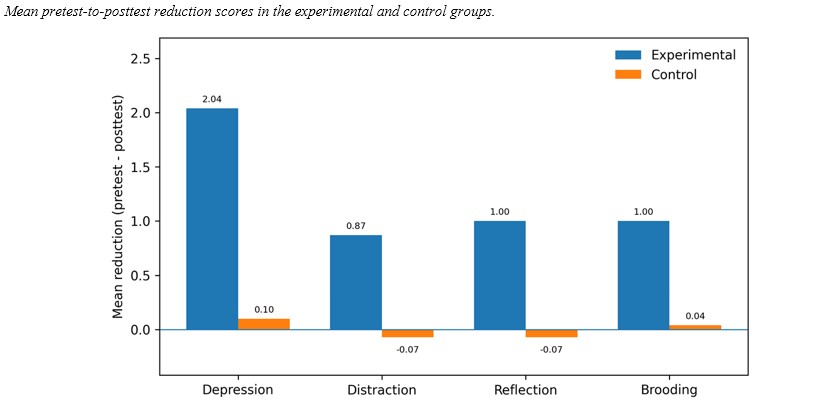
Depression is frequently maintained by repetitive negative thinking, particularly rumination, and by deeper maladaptive cognitive structures that shape how individuals interpret themselves, their emotions, and life events. This quasi-experimental study examined the effectiveness of schema-reconstruction-based cognitive behavioral therapy (CBT) in reducing depressive symptoms and rumination components among patients with depression. Thirty patients with depression who attended treatment clinics in Isfahan, Iran, in 2025 were selected from eligible volunteers and allocated to an experimental group (n = 15) and a control group (n = 15). Participants completed the Beck Depression Inventory and the Ruminative Response Scale before and after the intervention. The experimental group received eight 45-minute group sessions of schema-reconstruction-based CBT, while the control group received no psychological intervention during the active study period. The intervention focused on psychoeducation, identification of automatic thoughts, recognition of early maladaptive schemas, links between schemas and developmental experiences, cognitive restructuring, emotional and cognitive exposure to schemas, behavioral practice, and relapse prevention. Data were analyzed using one-way analysis of covariance in SPSS version 22. Compared with the control group, the experimental group showed lower posttest scores for depression, distraction, reflection, and brooding/absorption in thought. Group effects were significant for depression, F = 52.74, p <= .01; distraction, F = 10.73, p <= .01; reflection, F = 15.75, p <= .01; and brooding/absorption in thought, F = 16.89, p <= .01. Schema-reconstruction-based CBT was associated with meaningful reductions in depressive symptoms and all measured components of rumination. The findings support the value of targeting deeper cognitive schemas when treating depression characterized by repetitive negative thinking. Larger trials with follow-up assessments are recommended.
Downloads

Downloads
Published
Accepted
How to Cite