
Association of TNF-α Promoter Region (-308 G/A, rs1800629) Gene Polymorphism with Psoriasis Vulgaris in Northern Iran
Keywords:
Psoriasis vulgaris, TNF-α, rs1800629, Gene polymorphism, ARMS-PCR, Northern Iran.Abstract
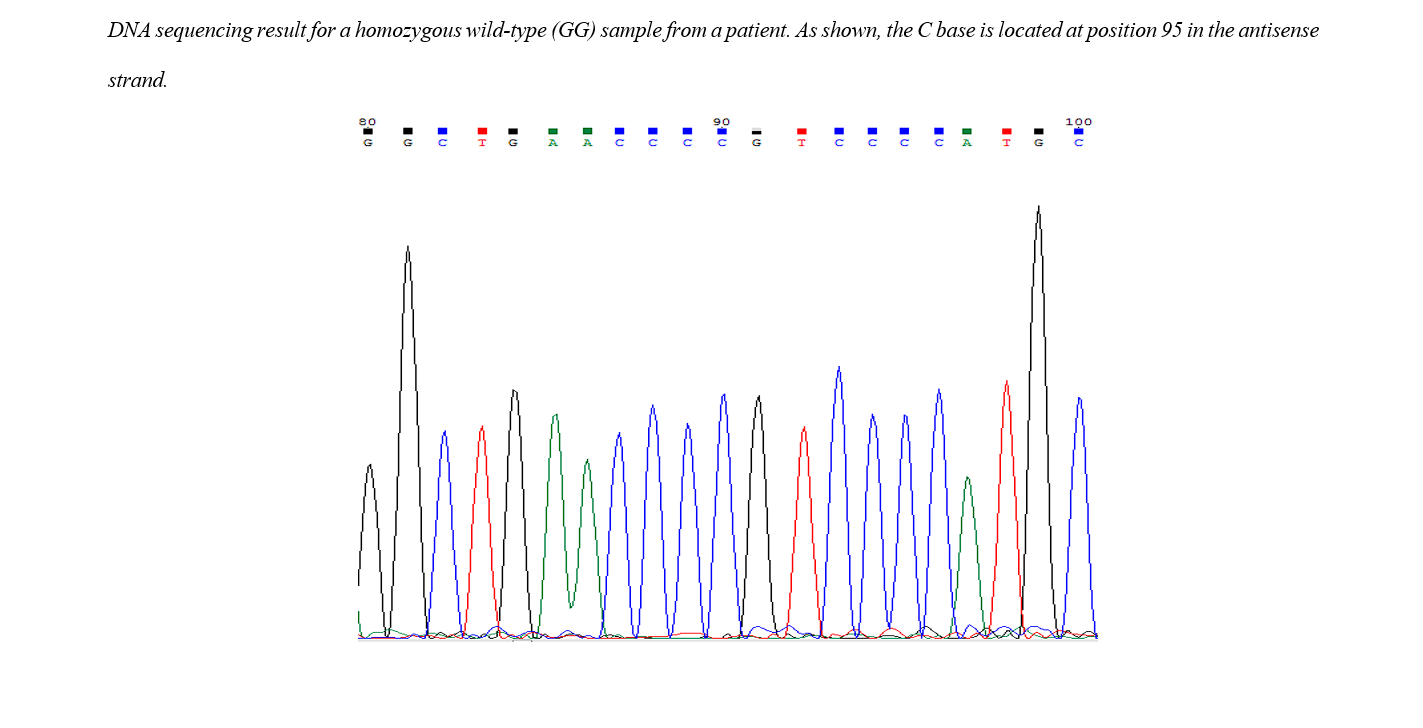
The present study aimed to investigate the association between the TNF-α promoter region polymorphism (-308 G/A, rs1800629) and psoriasis vulgaris in populations from western Mazandaran and eastern Guilan provinces in northern Iran. In this case–control study, whole blood samples were collected from 50 patients with psoriasis vulgaris residing in western Mazandaran and eastern Guilan, northern Iran, whose diagnosis had been confirmed by a dermatologist. Additionally, 30 whole blood samples were obtained from healthy individuals who met the inclusion criteria for the control group. Samples were collected from clinical laboratories located in the study regions. Genomic DNA was extracted from all samples, and genotyping of the TNF-α promoter region polymorphism (-308 G/A, rs1800629) was performed using the Amplification Refractory Mutation System–Polymerase Chain Reaction (ARMS-PCR) method. To validate the genotyping results and ensure the accuracy of the analysis, selected samples were further confirmed by DNA sequencing. The results of the statistical analyses revealed that the GG genotype (homozygous dominant) was the only genotype detected in both the patient and control groups. No individuals carrying the AA (homozygous recessive) or GA (heterozygous) genotypes were identified in either group. Consequently, the frequency of the A allele was zero in the study population. Overall, the findings demonstrated no significant difference in genotype or allele distribution between patients with psoriasis and healthy controls. Therefore, no statistically significant association was observed between the TNF-α rs1800629 polymorphism and susceptibility to psoriasis vulgaris in the studied population. Based on these results, this polymorphism cannot be considered a reliable genetic marker for the diagnosis or prediction of psoriasis in this region. Nevertheless, further studies involving larger sample sizes and broader populations are required to confirm these findings and clarify the potential role of this polymorphism in psoriasis pathogenesis.
Downloads
References
1. Strober B, Et Al. Feasibility And Utility Of The Psoriasis Symptom Inventory (Psi) In Clinical Care Settings: A Study From The International Psoriasis Council. American Journal of Clinical Dermatology. 2019;20(5):699-709. [PMID: 31228013] [PMCID: PMC6764927]
2. Mcdonald I, Connolly M, Tobin AM. A Review Of Psoriasis, A Known Risk Factor For Cardiovascular Disease And Its Impact On Folate And Homocysteine Metabolism. Journal of Nutrition and Metabolism. 2012;2012:1-4. [PMID: 22690330] [PMCID: PMC3368579]
3. Langley RGB, Krueger GG, Griffiths CEM. Psoriasis: Epidemiology, Clinical Features, And Quality Of Life. Annals of the Rheumatic Diseases. 2005;64(suppl 2):18-23. [PMID: 15708928] [PMCID: PMC1766861]
4. Bakshi H, Nagpal M, Singh M, Dhingra GA, Aggarwal G. Treatment Of Psoriasis: A Comprehensive Review Of Entire Therapies. Current Drug Safety. 2020;15:1-23. [PMID: 31994468]
5. Puscas AD, Catana A, Puscac C, Roman II, Vornicescu C, Somlea M. Psoriasis: Association Of Interleukin-17 Gene Polymorphisms With Severity And Response To Treatment (Review). Experimental and Therapeutic Medicine. 2019;18:875-80. [PMID: 31384317] [PMCID: PMC6639965]
6. Rendon A, Schäkel K. Psoriasis Pathogenesis And Treatment. International Journal of Molecular Sciences. 2019;20:1-28. [PMID: 30909615] [PMCID: PMC6471628]
7. Traks T, Keermann M, Prans E, Karelson M, Loite U, Kõks G. Polymorphisms In Il36G Gene Are Associated With Plaque Psoriasis. BMC Medical Genetics. 2019;20:1-8. [PMID: 30634937] [PMCID: PMC6330488]
8. Moradi M, Rencz F, Moradi A, Balogh O, Gulácsi L. Health Status And Quality Of Life In Patients With Psoriasis: An Iranian Cross-Sectional Survey. Archives of Iranian Medicine. 2015;18:153-9.
9. Kamiya K, Kishimoto M, Sugai J, Komine M, Ohtsuki M. Risk Factors For The Development Of Psoriasis. International Journal of Molecular Sciences. 2019;20(18):43-7. [PMID: 31491865] [PMCID: PMC6769762]
10. Di Meglio P, Mak RK. The Aetiopathogenesis Of Psoriasis In 2014: An Update. Metabolism. 2014;18:1-5.
11. Asadullah K, Sterry W, Stephanek K, Jasulaitis D, Leupold M, Audring H. Il-10 Is A Key Cytokine In Psoriasis: Proof Of Principle By Il-10 Therapy: A New Therapeutic Approach. Journal of Clinical Investigation. 1998;101:783-94. [PMID: 9466973] [PMCID: PMC508626]
12. Settin A, Hassan H, El-Baz R, Hassan T. Association Of Cytokine Gene Polymorphisms With Psoriasis In Cases From The Nile Delta Of Egypt. Acta Dermatoven APA. 2009;18:105-12.
13. Ermis E, Celik SK, Solak N, Genc GC, Dursun A. The Role Of Gnly Gene Polymorphisms In Psoriasis Pathogenesis. Anais Brasileiros De Dermatologia. 2019;94:198-203. [PMID: 31090825] [PMCID: PMC6486070]
14. Villarreal-Martinez A, Gallardo-Blanco H, Cerad-Flores R, Torres-Munoz I, Gomez-Flores M, Salas-Alanis J. Candidate Gene Polymorphisms And Risk Of Psoriasis: A Pilot Study. Experimental and Therapeutic Medicine. 2016;11:1217-22. [PMID: 27073425] [PMCID: PMC4812537]
15. Stenken JA, Poschenrieder AJ. Bioanalytical Chemistry Of Cytokines-A Review. Analytica Chimica Acta. 2015;853:95-115. [PMID: 25467452] [PMCID: PMC4717841]
16. Hugh JM, Weinberg JM. Update On The Pathophysiology Of Psoriasis. Cutis. 2018;102(5S):6-12.
17. Baran W, Szepietowski JC, Mazur G, Baran E. Il-6 And Il-10 Promoter Gene Polymorphisms In Psoriasis Vulgaris. Acta Dermato-Venereologica. 2008;88:113-6. [PMID: 18311435]
18. Ciebiera M, Włodarczyk M, Zgliczyńska M, Łukaszuk K, Męczekalski B, Kobierzycki C, et al. The Role Of Tumor Necrosis Factor Α In The Biology Of Uterine Fibroids And The Related Symptoms. International Journal of Molecular Sciences. 2018;19(12):1-26. [PMID: 30518097] [PMCID: PMC6321234]
19. Farajzadeh D, Dastmalchi S. Tumor Necrosis Factor-Alpha And Its Inhibition Strategies: Review Article. Tehran University Medical Journal. 2017;75(3):159-71.
20. Hagag MM, Chazy MM, Elhelbawy NG. Tumor Necrosis Factor-Α Gene Promoter -308 And -238 Polymorphisms And Its Serum Level In Psoriasis. Biochemistry and Biophysics Reports. 2021;27:1-6. [PMID: 34169157] [PMCID: PMC8209664]
21. Jang DI. The Role Of Tumor Necrosis Factor Alpha In Autoimmune Disease And Current Tnf-Α Inhibitors In Therapeutics. International Journal of Molecular Sciences. 2021;22(2719):1-16. [PMID: 33800290] [PMCID: PMC7962638]
22. Rajesh D, Chowdappa C, Gurumurthy R, Kutty AM, Balakrishna S. Profile Of Tumour Necrosis Factor Alpha-308 G/A Gene Polymorphism In Psoriatic Patients In Karnataka, India. Journal of Clinical and Diagnostic Research. 2017;11(2):GC01-GC4. [PMID: 28384885] [PMCID: PMC5376802]
23. Zhu J, Qu H, Chen X, Wang H, Li J. Single Nucleotide Polymorphisms In The Tumor Necrosis Factor-Alpha Gene Promoter Region Alter The Risk Of Psoriasis Vulgaris And Psoriatic Arthritis: A Meta-Analysis. PLoS One. 2013;8(5):1-10. [PMID: 23717605] [PMCID: PMC3662764]
24. Gallo E, Cabalerio T, Roman M, Abad-Santos F, Dauden E. Study Of Genetic Polymorphisms In The Tumor Necrosis Factor Alpha Promoter Region In Spanish Patients With Psoriasis. Actas Dermo-sifiliogr. 2012;103(4):301-7. [PMID: 22188951]
25. Li C, Wang G, Gao Y, Liu L, Gao T. Tnf-Α Gene Promoter-238G> A And-308G> A Polymorphisms Alter Risk Of Psoriasis Vulgaris: A Meta-Analysis. Journal of Investigative Dermatology. 2007;127(8):1886-92. [PMID: 17446901]
26. Zhuang L, Ma W, Cai D, Zhong H, Sun Q. Associations Between Tumor Necrosis Factor-Α Polymorphisms And Risk Of Psoriasis: A Meta-Analysis. PLoS One. 2013;8(12):1-7. [PMID: 24324571] [PMCID: PMC3850909]
27. Kim TG. Polymorphisms Of Tumor Necrosis Factor (Tnf) Α And Β Genes In Korean Patients With Psoriasis. Archives of Dermatological Research. 2003;295:8-13. [PMID: 12709814]
28. Alavi S, Shahbazi S, Mahdian R, Kamyab AR, Shokrgozar MA. Comparison Of The Sensitivity Between Real-Time PCR And Arms PCR On Detection Of Vwf Gene Q793X Mutation In Von Willeberand Disease Type 3 Patients. Scientific Journal Iran Blood Transfusion Organ. 2012;9:104-13.
29. Baena A. Tnf-A Promoter Single Nucleotide Polymorphisms Are Markers Of Human Ancestry. Genes and Immunity. 2002;3:482-7. [PMID: 12486607]
30. Tsunemi Y. Lack Of Association Between The Promoter Polymorphisms At Positions-308 And-238 Of The Tumor Necrosis Factor Alpha Gene And Psoriasis Vulgaris In Japanese Patients. Dermatology. 2003;207(4):371-4. [PMID: 14657629]
31. Baran W, Szepietowski JC, Mazur G, Baran E. A -308 Promoter Polymorphism Of Tumor Necrosis Factor Alpha Gene Does Not Associate With The Susceptibility To Psoriasis Vulgaris. No Difference Either Between Psoriasis Type I And Type Ii Patients. Acta Dermatoven APA. 2006;15(3):113-8.
32. Nishibu A, Oyama N, Nakamura K, Kaneko F. Lack Of Association Of Tnf-238A And-308A In Japanese Patients With Psoriasis Vulgaris, Psoriatic Arthritis And Generalized Pustular Psoriasis. Journal of Dermatological Science. 2002;29(3):181-4. [PMID: 12234707]
33. Murdaca G. Tnf-Α Gene Polymorphisms: Association With Disease Susceptibility And Response To Anti-Tnf-Α Treatment In Psoriatic Arthritis. Journal of Investigative Dermatology. 2014;134(10):2503-9. [PMID: 24594669]
34. Popadic S. Tnf, Il12B, And Ifng Gene Polymorphisms In Serbian Patients With Psoriasis. Annals of Dermatology. 2015;27(2):128-32. [PMID: 25834350] [PMCID: PMC4377400]
35. Patricia A, Layla M, Halabi MA. Association Study Between Psoriasis Vulgaris And Polymorphism Of The Gene Coding For Tumor Necrosis Factor Alpha In A Lebanese Population. Journal of Immunology Research and Immunotherapy. 2019;4(S1):23.
36. Aadil W, Ganai BA, Akhtar T, Narang T, Kaur R. Association Of Proinflammatory Cytokine Tumor Necrosis Factor-Α Gene Promoter -308 And -238 Polymorphism With Psoriasis In North Indian Population. Egyptian Journal of Dermatology and Venerology. 2018;38:12-7.
37. Moorchung N, Vasudevan B, Chatterjee M, Grewal RS, Mani NS. A Comprehensive Study Of Tumor Necrosis Factor-Α Genetic Polymorphisms, Its Expression In Skin And Relation To Histopathological Features In Psoriasis. Indian Journal of Dermatology. 2015;60(4):435-350. [PMID: 26286396] [PMCID: PMC4533530]
38. Gulel A, Inaloz HS, Nursal AF, Sever T, Pehlivan S. Association Of The Tnf-Α, Il-2, And Il-2Rb Gene Variants With Susceptibility To Psoriasis In A Turkish Cohort. Central European Journal of Immunology. 2018;43(1):50-7. [PMID: 29736146] [PMCID: PMC5927173]
39. Wang L, Zhou H. A Meta-Analysis Of The Relationship Between Tumor Necrosis Factor-Α Polymorphisms And Psoriasis. Dermatology. 2021;237:39-45. [PMID: 31775137]
40. Taj Sharghi A, Jorjani A, Aghdami N, Bozarpour S, editors. Study Of Tnf-Α And Ifn-Γ Gene Expression In Iranian Psoriasis Patients. First International Conference on New Findings in Science and Technology; 2015.
41. Kingo K, Koks S, Vasar E. Il-10 Promoter Polymorphisms Influence Disease Severity And Course In Psoriasis. Genes and Immunity. 2003;4:455-7. [PMID: 12944983]
Downloads
Publication Timeline
- Submitted
- Revised
- Accepted