The Association Between Sports Participation and Physical Fitness
DOI:
https://doi.org/10.61838/kman.intjssh.4.2.2Keywords:
Sports, Physical Activity, Physical Fitness, Cardiorespiratory FitnessAbstract
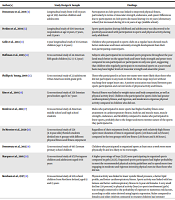
Context: The increasing extent of physical inactivity among children, adolescents, and adults is one of the greatest public health concerns. Sport is a type of leisure-time physical activity. With improved knowledge regarding the health advantages of physical activity, the role of sports in society has become increasingly important for the promotion of public health. Recognizing the significance of the effects of sports participation on physical fitness, this study presents a review of the association between sports participation and physical fitness. Evidence Acquisition: A search for literature was conducted on PubMed, Scopus, and Google Scholar using the terms “sports participation and physical fitness” to find the association between the key terms. A total of 21 studies met the inclusion criteria. Results: Sports participation was found to be positively associated with physical fitness. Participation in sports was associated with more physical activity, less sedentary behavior, and improved physical fitness. Participation in club sports led to improved physical fitness, especially endurance and strength. Sports participation resulted in improved cardiorespiratory fitness, improved anaerobic performance, and higher levels of muscular strength. Conclusions: Sports participation is associated with many health benefits, including improved physical fitness. As sports participation is a well-liked physical activity, making it easily accessible and spreading awareness about its benefits can lead to more healthy people and communities.Downloads
References
1. WHO. Physical activity. World Health Organization; 2020. Available
from: https://www.who.int/news-room/fact-sheets/detail/physical-activity.
2. Khan KM, Thompson AM, Blair SN, Sallis JF, Powell KE, Bull
FC, et al. Sport and exercise as contributors to the health of
nations. Lancet. 2012;380(9836):59–64. [PubMedID:22770457].
https://doi.org/10.1016/S0140-6736(12)60865-4.
3. World Health Organization. Global Recommendations on Physical
Activity for Health. Switzerland: WHO Press; 2010.
4. U.S. Department of Health and Human Services. Physical Activity
Guidelines for Americans. 2nd. Washington, DC: U.S. Department of
HealthandHumanServices;2018.
5. Guthold R, Stevens GA, Riley LM, Bull FC. Worldwide trends in
insufficient physical activity from 2001 to 2016: a pooled analysis
of 358 population-based surveys with 1.9 million participants.
Lancet Glob Health. 2018;6(10):e1077–86. [PubMedID:30193830].
https://doi.org/10.1016/S2214-109X(18)30357-7.
6. Eime RM, Harvey JT, Sawyer NA, Craike MJ, Symons CM, Polman RC,
et al. Understanding the contexts of adolescent female participation
in sport and physical activity. Res Q Exerc Sport. 2013;84(2):157–66.
[PubMedID:23930541].https://doi.org/10.1080/02701367.2013.784846.
7. Malm C, Jakobsson J, Isaksson A. Physical Activity and Sports-Real
Health Benefits: A Review with Insight into the Public Health
of Sweden. Sports (Basel). 2019;7(5). [PubMedID:31126126]. [PubMed
Central ID: PMC6572041].https://doi.org/10.3390/sports7050127.
8. Westerbeek H. Using sport to advance community health: An
international perspective. Nieuwegein: Arko Sports Media; 2009.
9. Deelen I, Ettema D, Kamphuis CBM. Sports participation in sport
clubs, gyms or public spaces: How users of different sports settings
differ in their motivations, goals, and sports frequency. PLoS One.
2018;13(10). e0205198. [PubMedID:30296286]. [PubMed Central ID:
PMC6175514]. https://doi.org/10.1371/journal.pone.0205198.
10. Vilhjalmsson R, Thorlindsson T. The Integrative and
Physiological Effects of Sport Participation:
A Study of
Adolescents.
The
Sociological
Quarterly.
https://doi.org/10.1111/j.1533-8525.1992.tb00148.x.
2016;33(4):637–47.
11. Drenowatz C, Greier K, Ruedl G, Kopp M. Association between Club
Sports Participation and Physical Fitness across 6- to 14-Year-Old
Austrian Youth. Int J Environ Res Public Health. 2019;16(18):3392.
[PubMedID:31547480]. [PubMed Central ID: PMC6766075].
https://doi.org/10.3390/ijerph16183392.
12. Perkins DF, Jacobs JE, Barber BL, Eccles JS. Childhood and Adolescent
Sports Participation as Predictors of Participation in Sports and
Physical Fitness Activities During Young Adulthood. Youth & Society.
2016;35(4):495–520. https://doi.org/10.1177/0044118x03261619.
13. Golle K, Granacher U, Hoffmann M, Wick D, Muehlbauer T. Effect
of living area and sports club participation on physical fitness in
children: a 4 year longitudinal study. BMC Public Health. 2014;14:499.
[PubMedID:24886425]. [PubMed Central ID: PMC4049502].
https://doi.org/10.1186/1471-2458-14-499.
14. Hoffman JR, Kang J, Faigenbaum AD, Ratamess NA. Recreational
sports participation is associated with enhanced physical fitness
in children. Res Sports Med. 2005;13(2):149–61. [PubMed ID: 16392445].
https://doi.org/10.1080/15438620590956179.
15. Phillips JA, Young DR. Past-year sports participation, current
physical activity, and fitness in urban adolescent girls. J Phys Act
Health. 2009;6(1):105–11. [PubMed ID: 19211964]. [PubMed Central ID:
PMC6013265].https://doi.org/10.1123/jpah.6.1.105.
16. Riso EM, Toplaan L, Viira P, Vaiksaar S, Jurimae J. Physical fitness
and physical activity of 6-7-year-old children according to
weight status and sports participation. PLoS One. 2019;14(6).
e0218901. [PubMedID:31237932]. [PubMed Central ID: PMC6592557].
https://doi.org/10.1371/journal.pone.0218901.
17. Renfrow MS, Caputo JL, Otto SM, Farley RF, Eveland-Sayers BM.
The Relationship between Sports Participation and Health-Related
Physical Fitness in Middle School and High School Students. Physical
Educator. 2011;68(3):118–23.
Physical
18. De Meester A, Wazir M, Lenoir M, Bardid F. Profiles
of Fitness and Fitness Enjoyment Among
Children:
Associations With Sports Participation. Res
Q Exerc Sport. 2022;93(1):26–35. [PubMedID:32903170].
https://doi.org/10.1080/02701367.2020.1788700.
19. Drenowatz C, Steiner RP, Brandstetter S, Klenk J, Wabitsch M,
Steinacker JM. Organized sports, overweight, and physical fitness
in primary school children in Germany. J Obes. 2013;2013:935245.
[PubMedID:23533728]. [PubMed Central ID: PMC3603420].
https://doi.org/10.1155/2013/935245.
20. MarquesA,EkelundU,SardinhaLB.Associationsbetweenorganized
sports participation and objectively measured physical activity,
sedentary time and weight status in youth. J Sci Med Sport.
2016;19(2):154–7. [PubMedID:25766508]. [PubMed Central ID:
PMC6235112]. https://doi.org/10.1016/j.jsams.2015.02.007.
21. Boreham CA, Twisk J, Savage MJ, Cran GW, Strain JJ. Physical
activity, sports participation, and risk factors in adolescents.
Med Sci Sports Exerc. 1997;29(6):788–93. [PubMedID:9219207].
https://doi.org/10.1097/00005768-199706000-00009.
22. Ara I, Vicente-Rodriguez G, Jimenez-Ramirez J, Dorado C,
Serrano-Sanchez JA, Calbet JA. Regular participation in sports is
associated with enhanced physical fitness and lower fat mass in
prepubertal boys. Int J Obes Relat Metab Disord. 2004;28(12):1585–93.
[PubMedID:15303104].https://doi.org/10.1038/sj.ijo.0802754.
23. Telford RM, Telford RD, Cochrane T, Cunningham RB, Olive LS,
Davey R. The influence of sport club participation on physical
activity, fitness and body fat during childhood and adolescence:
The LOOK Longitudinal Study. J Sci Med Sport. 2016;19(5):400–6.
[PubMedID:26111721]. https://doi.org/10.1016/j.jsams.2015.04.008.
24. Fransen J, Pion J, Vandendriessche J, Vandorpe B, Vaeyens R, Lenoir
M,etal. Differences inphysicalfitness andgrossmotorcoordination
in boys aged 6-12 years specializing in one versus sampling more
than onesport. J Sports Sci. 2012;30(4):379–86. [PubMed ID: 22214429].
https://doi.org/10.1080/02640414.2011.642808.
25. Kayihan G. Comparison of physical fitness levels of adolescents
according to sports participation: martial arts, team sports and
non-sports. ARCHBUDO.2014;10:227–32.
26. Zwinkels M, Verschuren O, Balemans A, Lankhorst K, Te Velde S,
van Gaalen L, et al. Effects of a School-Based Sports Program on
Physical Fitness, Physical Activity, and Cardiometabolic Health in
YouthWithPhysicalDisabilities: DataFromtheSport-2-Stay-FitStudy.
Front Pediatr. 2018;6:75. [PubMed ID: 29632853]. [PubMed Central ID:
PMC5879083].https://doi.org/10.3389/fped.2018.00075.
27. SilvaG,AndersenLB,AiresL,MotaJ,OliveiraJ,RibeiroJC.Associations
between sports participation, levels of moderate to vigorous
physical activity and cardiorespiratory fitness in childrenand
adolescents. J Sports Sci. 2013;31(12):1359–67. [PubMed ID: 23631663].
https://doi.org/10.1080/02640414.2013.781666.
28. Pastor Y, Balaguer I, Pons D, Garcia-Merita M. Testing direct
and indirect effects of sports participation on perceived
health in Spanish adolescents between 15 and 18 years
of age. J Adolesc. 2003;26(6):717–30. [PubMedID:14643742].
https://doi.org/10.1016/j.adolescence.2003.07.001.
29. Deforche B, Lefevre J, De Bourdeaudhuij I, Hills AP, Duquet
W, Bouckaert J. Physical fitness and physical activity in obese
and nonobese Flemish youth. Obes Res. 2003;11(3):434–41.
[PubMedID:12634442].https://doi.org/10.1038/oby.2003.59.
30. Agata K, Monyeki MA. Association Between Sport Participation,
Body Composition, Physical Fitness, and Social Correlates Among
Adolescents: The PAHL Study. Int J Environ Res Public Health.
2018;15(12):2793. [PubMedID:30544884]. [PubMed Central ID:
PMC6313443]. https://doi.org/10.3390/ijerph15122793.
31. Prat IA, Vinolas EC, Canas JCM, Wasley DA, Puig-Ribera A.
From secondary school to university: associations between
sport participation and total and domain-specific sedentary
behaviours in Spanish students. Eur J Pediatr. 2020;179(10):1635–45.
[PubMedID:32377976].https://doi.org/10.1007/s00431-020-03655-y.
32. Pisot R, Marusic U, Biolo G, Mazzucco S, Lazzer S, Grassi
B, et al. Greater loss in muscle mass and function but
smaller metabolic alterations in older compared with
younger men following 2 wk of bed rest and recovery. J
Appl Physiol (1985). 2016;120(8):922–9. [PubMedID:26823343].
https://doi.org/10.1152/japplphysiol.00858.2015.
33. Distefano G, Goodpaster BH. Effects of Exercise and Aging
on Skeletal Muscle. Cold Spring Harb Perspect Med. 2018;8(3).
[PubMedID:28432116]. [PubMed Central ID: PMC5830901].
https://doi.org/10.1101/cshperspect.a029785.
34. Chan LLY, Wong AYL, Wang MH. Associations between sport
participation and knee symptoms: a cross-sectional study
involving 3053 undergraduate students. BMC Sports Sci Med
Rehabil. 2020;12:20. [PubMedID:32226627]. [PubMed Central ID:
PMC7092581].https://doi.org/10.1186/s13102-020-00169-w.
35. Wilson MG, Ellison GM, Cable NT. Basic science behind the
cardiovascular benefits of exercise. Heart. 2015;101(10):758–65.
[PubMedID:25911667]. https://doi.org/10.1136/heartjnl-2014-306596.
36. Semsarian C, Sweeting J, Ackerman MJ. Sudden cardiac death in
athletes. Br J Sports Med. 2015;49(15):1017–23. [PubMed ID: 26184759].
https://doi.org/10.1136/bjsports-2015-h1218rep.
37. Adabag AS, Luepker RV, Roger VL, Gersh BJ. Sudden cardiac death:
epidemiology and risk factors. Nat Rev Cardiol. 2010;7(4):216–25.
Int J Sport StudHealth. 2021;4(2):e127001.
[PubMedID:20142817]. [PubMed Central ID: PMC5014372].
https://doi.org/10.1038/nrcardio.2010.3.
38. Appelqvist-Schmidlechner K, Kyrolainen H, Hakkinen A, Vasankari
T, Mantysaari M, Honkanen T, et al. Childhood Sports Participation
Is Associated With Health-Related Quality of Life in Young Men:
A Retrospective Cross-Sectional Study. Front Sports Act Living.
2021;3:642993. [PubMedID:33969295]. [PubMed Central ID:
PMC8100196].https://doi.org/10.3389/fspor.2021.642993.
39. Blake HT, Buckley JD, Stenner BJ, O’Connor EJ, Burgess SA,
Crozier AJ. Sport Participation and Subjective Outcomes of
Health in Middle-Aged Men: A Scoping Review. Am J Mens Health.
2022;16(2):15579883221084500. [PubMedID:35300537]. [PubMed
Central ID: PMC8935418]. https://doi.org/10.1177/15579883221084493.
Health
40. Meczekalski B, Katulski K, Czyzyk A, Podfigurna-Stopa
A.
in
2014;79(4):357–61.
older
women athletes. Maturitas.
[PubMedID:25281439].
https://doi.org/10.1016/j.maturitas.2014.08.004.
41. Jaarsma EA, Dijkstra PU, Geertzen JH, Dekker R. Barriers
to and facilitators of sports participation for people
with physical disabilities:
a systematic review. Scand J
Med Sci Sports. 2014;24(6):871–81. [PubMedID:24730752].
Downloads
Publication Timeline
Issue
Section
License

This work is licensed under a Creative Commons Attribution-NonCommercial 4.0 International License.