Comparative Effects of Continuous and Interval Aerobic Training on Cellular Respiration Indices (OCR) and ATP Content in Skeletal Muscle of Rats with Type 2 Diabetes
DOI:
https://doi.org/10.61838/Keywords:
type 2 diabetes mellitus, aerobic training, resistance training, AS160, GLUT4, glucose transport, skeletal muscleAbstract
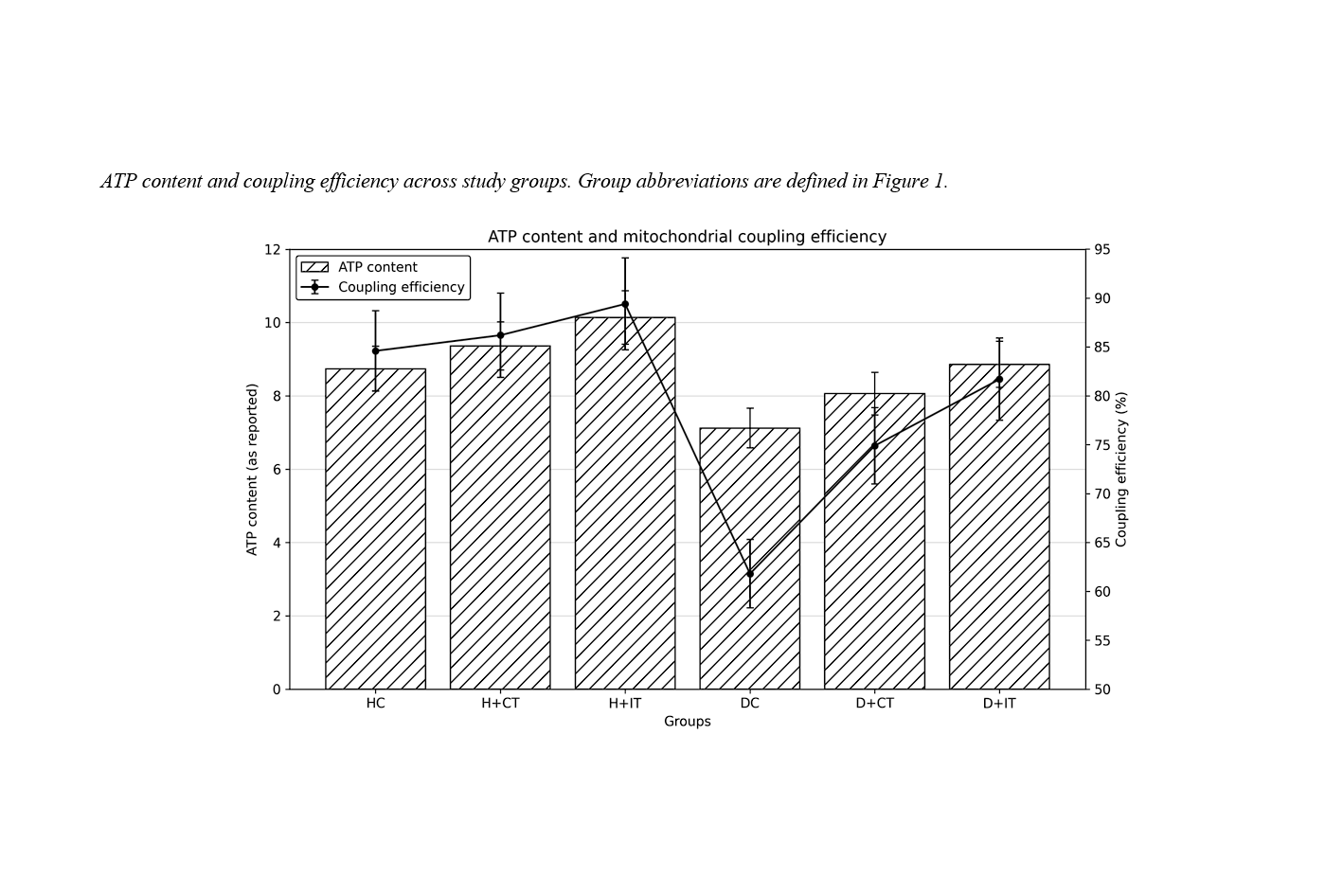
Type 2 diabetes impairs skeletal muscle energy metabolism, partly through mitochondrial respiratory dysfunction and reduced ATP-generating capacity. This experimental study compared the effects of continuous and interval aerobic training on cellular respiration indices and ATP content in the gastrocnemius muscle of male Wistar rats with type 2 diabetes. Male Wistar rats were allocated to six groups: healthy control, healthy + continuous training, healthy + interval training, diabetic control, diabetic + continuous training, and diabetic + interval training (n = 8 per group). Type 2 diabetes was induced using a high-fat diet followed by intraperitoneal streptozotocin injection. The exercise interventions were performed for eight weeks. After the intervention, gastrocnemius muscle samples were collected for analysis of mitochondrial respiratory indices, including basal respiration, ATP-linked respiration, maximal respiration, spare respiratory capacity, proton leak, coupling efficiency, and tissue ATP content. Data were analyzed using two-way analysis of variance followed by Tukey post hoc tests. Diabetes reduced mitochondrial respiratory indices, spare respiratory capacity, coupling efficiency, and ATP content. Both aerobic training protocols improved respiratory function and ATP content in diabetic rats. The interval training protocol produced larger improvements than continuous training in maximal respiration, spare respiratory capacity, and ATP content. Eight weeks of aerobic training partially restored diabetes-related impairments in skeletal muscle mitochondrial function. Interval aerobic training appeared to produce stronger respiratory adaptations than continuous training. These findings provide preclinical evidence for the role of exercise intensity structure in mitochondrial adaptation under diabetic conditions.
Downloads
References
1. International Diabetes F. IDF Diabetes Atlas. 11th ed: International Diabetes Federation; 2025.
2. World Health O. Diabetes. 2024.
3. Fealy CE, Mulya A, Axelrod CL, Kirwan JP. Mitochondrial Dynamics In Skeletal Muscle Insulin Resistance And Type 2 Diabetes. Translational Research. 2018;202:69-82. [PMID: 30153426]
4. Liesa M, Shirihai OS. Mitochondrial Dynamics In The Regulation Of Nutrient Utilization And Energy Expenditure. Cell Metabolism. 2013;17(4):491-506. [PMID: 23562075] [PMCID: PMC5967396]
5. Pinti MV, Fink GK, Hathaway QA, Durr AJ, Kunovac A, Hollander JM. Mitochondrial Dysfunction In Type 2 Diabetes Mellitus: An Organ-Based Analysis. American Journal of Physiology-Endocrinology and Metabolism. 2019;316(2):E268-E85. [PMID: 30601700] [PMCID: PMC6397358]
6. Colberg SR, Sigal RJ, Yardley JE, Riddell MC, Dunstan DW, Dempsey PC, et al. Physical Activity/Exercise And Diabetes: A Position Statement Of The American Diabetes Association. Diabetes Care. 2016;39(11):2065-79. [PMID: 27926890] [PMCID: PMC6908414]
7. Little JP, Gillen JB, Percival ME, Safdar A, Tarnopolsky MA, Punthakee Z, et al. Low-Volume High-Intensity Interval Training Reduces Hyperglycemia And Increases Muscle Mitochondrial Capacity In Patients With Type 2 Diabetes. Journal of Applied Physiology. 2011;111(6):1554-60. [PMID: 21868679]
8. Wang N, Liu Y, Ma Y, Wen D. High-Intensity Interval Versus Moderate-Intensity Continuous Training: Superior Metabolic Benefits In Diet-Induced Obesity Mice. Life Sciences. 2017;191:122-31. [PMID: 28843495]
9. Zheng L, Rao Z, Guo Y, Chen P, Xiao W. High-Intensity Interval Training Restores Glycolipid Metabolism And Mitochondrial Function In Skeletal Muscle Of Mice With Type 2 Diabetes. Frontiers in Endocrinology. 2020;11:561. [PMID: 32922365] [PMCID: PMC7456954]
10. Chavanelle V, Boisseau N, Otero YF, Combaret L, Dardevet D, Montaurier C, et al. Effects Of High-Intensity Interval Training And Moderate-Intensity Continuous Training On Glycaemic Control And Skeletal Muscle Mitochondrial Function In Db/Db Mice. Scientific Reports. 2017;7:204. [PMID: 28303003] [PMCID: PMC5427962]
11. National Research C. Guide for the care and use of laboratory animals. 8th ed: National Academies Press; 2011.
12. Percie Du Sert N, Hurst V, Ahluwalia A, Alam S, Avey MT, Baker M, et al. The Arrive Guidelines 2.0: Updated Guidelines For Reporting Animal Research. PLOS Biology. 2020;18(7):e3000410. [PMID: 32663219] [PMCID: PMC7360023]
Downloads
Additional Files
Publication Timeline
- Submitted
- Revised
- Accepted