An Examination of Athletes’ Attitudes Toward Sport and Their Quality of Life Levels Across Different Sports Disciplines
DOI:
https://doi.org/10.61838/kman.intjssh.5178Keywords:
attitude toward sport, quality of life, university athletes, sport participationAbstract
Objective: This study aimed to examine the relationship between athletes’ attitudes toward sport and their quality of life and to explore whether these variables differed across selected demographic characteristics among university athletes.
Methods: A cross-sectional design was used with 201 university athletes (52.7% female, 47.3% male; mean age = 23.25 ± 5.17 years). Data were collected using the Attitude Toward Sport Scale and the WHOQOL-BREF. Because the data did not meet parametric assumptions, non-parametric statistical analyses were conducted to examine correlations and group differences.
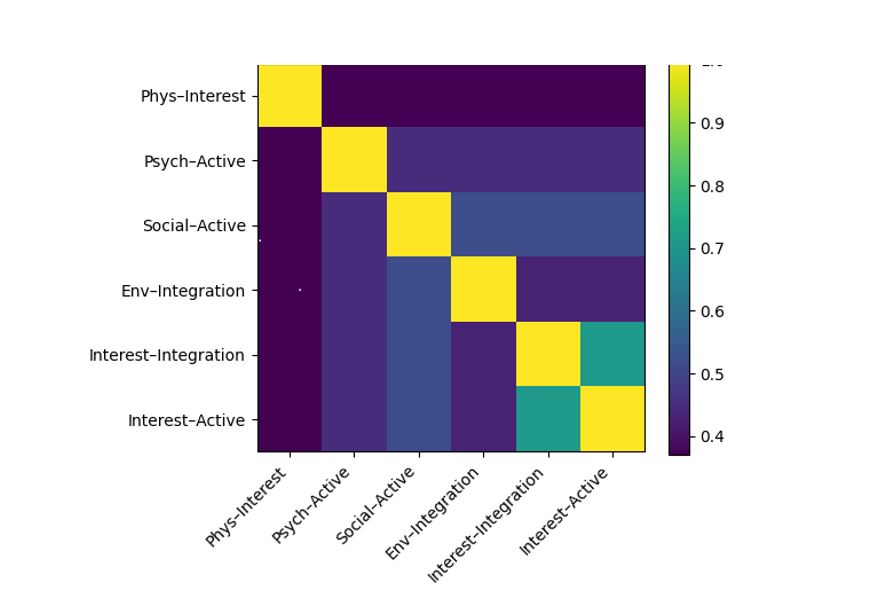
Results: Statistically significant positive correlations were found between attitudes toward sport and all dimensions of quality of life (p < .01), with coefficients ranging from r = .19 to r = .52. Strong associations were also observed among attitude sub-dimensions, particularly between interest in sport and sport–life integration (r = .71) and between interest in sport and active participation (r = .67). No significant differences were found between team and individual sports across most variables (p > .05), although athletes in team sports reported significantly higher scores in the environmental dimension of quality of life (U = 3971.50, p = .015). Gender differences were identified in physical health (U = 3979.00, p = .010) and environmental factors (U = 4004.00, p = .012), both favoring male participants, whereas attitudes toward sport did not differ significantly by gender (p > .05). Marital status was associated with significant differences in psychological state, general health, social relationships, interest in sport, and sport–life integration. Duration of sport participation also showed significant effects on physical health, environmental factors, and interest in sport.
Conclusion: More positive attitudes toward sport were associated with better quality of life among university athletes. These findings suggest that fostering favorable attitudes toward sport may contribute to broader well-being outcomes in this population.
Downloads
References
1. Şahin M, Ayhanci NN, Erdem M, Apak H, Parlak Özer Z, Ilkim M. The roles of body image, drive for muscularity, and spiritual well-being in the relationship between disordered eating and exercise addiction among sports science students: a moderated model. Journal of Eating Disorders. 2025;13(1):243. [PMID: 41163110] [PMCID: PMC12574077] [DOI]
2. Sarıakçalı B, Şahin FN, Başoğlu B, Ceylan L, Güler Ö, Yamak B, et al. The dual impact: physiological and psychological effects of rapid weight loss in wrestling. Frontiers in Psychology. 2025;15:1513129. [PMID: 39834765] [PMCID: PMC11743537] [DOI]
3. Mahiroğullari MA. The contributions of recreative activities conducted by community centers to social life (The sample of Sivas community center 1933-1950). Journal of ROL Sport Sciences. 2021;2(3):197-207. [DOI]
4. Parlakyildiz S, Kul Avan S. Gender roles and psychological well-being of university athletes. Journal of ROL Sport Sciences. 2024;5(1):151-75. [DOI]
5. Ünver G, Kara E, Kocaman H. Farklı branşlardaki öğretmenlerin spora yönelik tutumlarının incelenmesi. Beden Eğitimi ve Spor Bilimleri Dergisi. 2019;13(1):38-50. [DOI]
6. Yavuz C, Yücel AS. Spor yöneticiliği bölümü öğrencilerinin spora yönelik tutumlarının bazı değişkenlere göre incelenmesi. Elektronik Sosyal Bilimler Dergisi. 2019;18(72):2050-8. [DOI]
7. Çakır TF, Özdemir K. Üniversite öğrencilerinin serbest zaman fiziksel aktiviteleri ile yaşam kalitesi düzeylerinin incelenmesi (Bilecik ili örneği). Gümüşhane Üniversitesi Sağlık Bilimleri Dergisi. 2023;13(2):902-8. [DOI]
8. Önal L, Yılmaz HH, Kaldırımcı M, Ağduman F. Atatürk üniversitesi öğrencilerinin spora karşı tutumları ile yaşam kaliteleri arasındaki ilişkinin incelenmesi. Muş Alparslan Üniversitesi Uluslararası Spor Bilimleri Dergisi. 2017;1(1):26-34. [DOI]
9. Aksoy D, Canlı U, Atmaca K. Üniversite öğrencilerinin spora yönelik tutumlarının incelenmesi (Tekirdağ Namık Kemal Üniversitesi örneği). Mediterranean Journal of Sport Science. 2020;3(1):162-70. [DOI]
10. Alemağ S, Öncü E, Sakallıoğlu F. Sınıf öğretmeni adaylarının beden eğitimi dersine yönelik tutum ve öz-yeterlikleri. Abant İzzet Baysal Üniversitesi Eğitim Fakültesi Dergisi. 2014;14(2):45-60. [DOI]
11. Isen AM, Shalker TE. The effect of feeling state on evaluation of positive, neutral, and negative stimuli: When you "accentuate the positive," do you "eliminate the negative"? Social Psychology Quarterly. 1982;45(1):58-63. [DOI]
12. Özsarı A, Fişekçioğlu İB. Spora yönelik tutum, sosyal güvende hissetme ve memnuniyet ilişkisi. Mediterranean Journal of Sport Science. 2023;6(2):658-69. [DOI]
13. Şahin O, Yılmaz C, Sezer SY, Şahin FN, Ceylan L, Çelikel BE, et al. Muay Thai exercises improve quality of life, love of life and self-control. Frontiers in Psychology. 2025;16:1584160. [PMID: 40486897] [PMCID: PMC12141284] [DOI]
14. Çoban Ü, Bayazıt B, Uca M. Üniversite öğrencilerinin spora yönelik tutumlarının yaşam kalitesi düzeylerine etkisinin incelenmesi: Doğu Marmara bölgesi üniversiteleri örneği. OPUS Uluslararası Toplum Araştırmaları Dergisi. 2020;15(26):4362-85. [DOI]
15. Han MT, Polat E. Kış sporları ile ilgilenen sporcuların spora bağlılık ve yaşam doyumu arasındaki ilişkilerin incelenmesi. Spormetre Beden Eğitimi ve Spor Bilimleri Dergisi. 2022;20(3):80-91. [DOI]
16. Belli E, Bedir F, Turhan M. Üniversite öğrencilerinin spora yönelik tutumları ile yaşam doyumları arasındaki ilişkinin incelenmesi. Erzurum Teknik Üniversitesi Sosyal Bilimler Enstitüsü Dergisi. 2019(9):89-103. [DOI]
17. Turhan FH, İnce U, Aydogmus M, Yalçın İ. Spor yöneticiliği bölümü öğrencilerinin spora yönelik tutumları. İnönü Üniversitesi Beden Eğitimi ve Spor Bilimleri Dergisi. 2021;8(2):19-32. [DOI]
18. Eser E, Eser SY, Fidaner H, Fidaner C, Yalçın S, Elbi H, et al. Yaşam kalitesinin ölçülmesi. WHOQOL-100 ve WHOQOL-BREF. Psikiyatri Psikoloji Psikofarmakoloji Dergisi. 1999;7(2):5-13.
19. Şentürk HE. Spora yönelik tutum ölçeği: Geliştirilmesi, geçerliliği ve güvenirliği. CBÜ Beden Eğitimi ve Spor Bilimleri Dergisi. 2012;7(2):8-18. [DOI]
20. Varol R, Varol S, Türkmen M. Bartın üniversitesinde öğrenim gören öğrencilerin spora yönelik tutumlarının belirlenmesi. Uluslararası Kültürel ve Sosyal Araştırmalar Dergisi. 2017;3(2):316-29. [DOI]