Motor Learning in the Ecological-Dynamic Approach: A Systematic Review
Keywords:
Ecological dynamics approach, Motor learning, Motor task, Skills, TransferAbstract
Objective: This systematic review aimed to synthesize recent evidence on the ecological dynamics approach in motor learning, with particular attention to its application in sport and educational contexts.
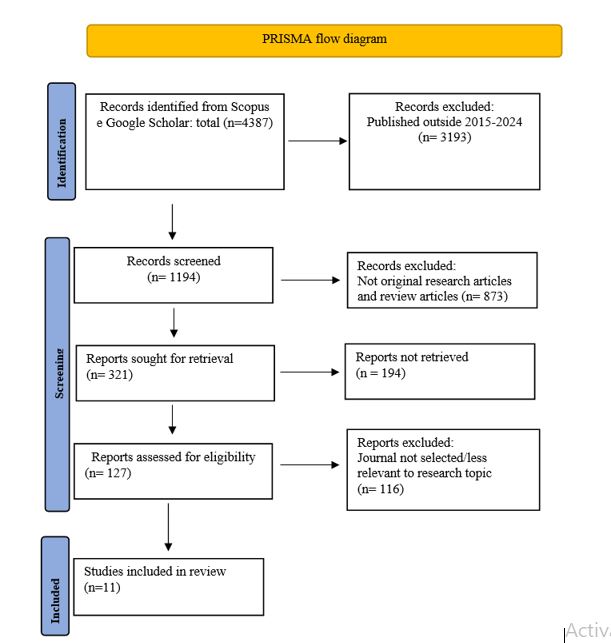
Methods and Materials: The review was conducted in accordance with PRISMA 2020 guidelines. Scopus and Google Scholar databases were searched for studies published between 2015 and 2024. A total of 4,387 records were identified, and 11 studies were included in the final synthesis. The included literature comprised heterogeneous study designs, including empirical studies and conceptual contributions, addressing technical skill acquisition, adaptability, creativity, perceptual-cognitive development, and pedagogical applications.
Findings: Overall, the findings suggest that ecological dynamics-informed approaches may support adaptive motor learning and functional variability, although conclusions should be interpreted cautiously due to variability in study design and methodological quality.
Conclusion: The results highlight the practical relevance of constraint-based approaches for coaches and physical education teachers, while emphasizing the need for more rigorous and comparable empirical research.
Downloads
References
1. Esposito G, Ceruso R, Raiola G. The impact of gentle physical activity on psychophysical well-being in older adults: A longitudinal study. Retos: Nuevas Tendencias en Educación Física, Deporte y Recreación. 2025;67:509-21. doi: 10.47197/retos.v67.112757.
2. Raiola G. Motor learning and teaching method. Journal of Physical Education and Sport. 2017;17(S5):2239-43. doi: 10.7752/jpes.2017.s5236.
3. Tomporowski PD, McCullick B, Pendleton DM, Pesce C. Exercise and children's cognition: The role of exercise characteristics and a place for metacognition. Journal of Sport and Health Science. 2015;4(1):47-55. doi: 10.1016/j.jshs.2014.09.003.
4. Clark ME, McEwan K, Christie CJ. The effectiveness of constraints-led training on skill development in interceptive sports: A systematic review. International Journal of Sports Science & Coaching. 2019;14(2):229-40. doi: 10.1177/1747954118812461.
5. D’Isanto T, Aliberti S, Raiola G, D’Elia F. Assessment of motor skills in 5–6 year old Italian children using the MABC-2: A preliminary study. Physical Activity Review. 2024;12(1):112-20. doi: 10.16926/par.2024.12.11.
6. Woods CT, McKeown I, Rothwell M, Araújo D, Robertson S, Davids K. Sport Practitioners as Sport Ecology Designers: How Ecological Dynamics Has Progressively Changed Perceptions of Skill “Acquisition” in the Sporting Habitat. Frontiers in Psychology. 2020;11:654. doi: 10.3389/fpsyg.2020.00654.
7. Ceruso R, Esposito G, D’Elia F. Analysis and evaluation of the qualitative aspects of the young players. Journal of Physical Education and Sport. 2019;19(S5):1814-9. doi: 10.7752/jpes.2019.s5266.
8. Kelso JS. Dynamic patterns: The self-organization of brain and behavior. Journal of Cognitive Neuroscience. 1996;8(4):385-6. doi: 10.1162/jocn.1996.8.4.385.
9. Raiola G. Motor control and learning skills according to cognitive and ecological dynamic approach in a vision on behaviorism, cognitive, Gestalt and phenomenology theories. Mediterranean Journal of Social Sciences. 2014;5(15):504-6. doi: 10.5901/mjss.2014.v5n15p504.
10. Raiola G. Basketball feint and non-verbal communication: empirical framework. Journal of Human Sport and Exercise. 2015;10(1):S360-S8. doi: 10.14198/jhse.2015.10.Proc1.26.
11. Invernizzi PL, Signorini G, Rigon M, Larion A, Raiola G, D’Elia F, et al. Promoting children's psychomotor development with multi-teaching didactics. International Journal of Environmental Research and Public Health. 2022;19(17):10939. doi: 10.3390/ijerph191710939.
12. Aliberti S, D’Isanto T, D’Elia F. Evaluating the impact of a laboratory-based program on children’s coordination skills using the MABC-2. Education Sciences. 2025;15(5):527. doi: 10.3390/educsci15050527.
13. Bailey R, Armour K, Kirk D, Jess M, Pickup I, Sandford R, et al. The educational benefits claimed for physical education and school sport: An academic review. Research Papers in Education. 2009;24(1):1-27. doi: 10.1080/02671520701809817.
14. D’Isanto T, Aliberti S, Altavilla G, Esposito G, D’Elia F. Heuristic learning as a method for improving students’ teamwork skills in physical education. International Journal of Environmental Research and Public Health. 2022;19(19):12596. doi: 10.3390/ijerph191912596.
15. Raiola G, D’Isanto T, Aliberti S, Merati G, D’Elia F. Active breaks to promote sustainable cognitive development in primary school children. Sustainability. 2025;17:6616. doi: 10.3390/su17146616.
16. Chow JY, Komar J, Davids K, Tan CWK. Nonlinear pedagogy and its implications for practice in the Singapore PE context. Physical Education and Sport Pedagogy. 2021;26(3):230-41. doi: 10.1080/17408989.2021.1886270.
17. Altavilla G, Esposito G, Ceruso R, Di Domenico F, D'Isanto T. Profile and differences in anthropometric data and jumping ability performance between elite and amateur U16 volleyball players. Physical Education: Theory and Methodology. 2022;22(2):237-41. doi: 10.17309/tmfv.2022.2.13.
18. D’Isanto T, Altavilla G, Esposito G, D’Elia F, Raiola G. Heuristic learning and sport: Theoretical lines and operational proposals. Encyclopaideia. 2022;26(64):69-80. doi: 10.6092/issn.1825-8670/14237.
19. Davids K, Button C, Bennett S. Dynamics of skill acquisition: A constraints-led approach: Human kinetics; 2008.
20. Seifert L, Button C, Davids K. Key properties of expert movement systems in sport: An ecological dynamics perspective. Sports Medicine. 2013;43(3):167-78. doi: 10.1007/s40279-012-0011-z.
21. Chow JY, Davids K, Button C, Renshaw I. Nonlinear pedagogy in skill acquisition: An introduction. 2nd ed: Routledge; 2022.
22. D’Isanto T, Di Domenico F, Aliberti S, D’Elia F, Raiola G. Criticisms and perspectives of heuristic learning in physical education. Pedagogy of Physical Culture and Sports. 2022;26(2):93-100. doi: 10.15561/26649837.2022.0203.
23. Sannicandro I, Colella D. From the ecological-dynamic approach to learning flexibility in the motor and sports training of the young athlete. Formazione & Insegnamento. 2023;21(2):146-52. doi: 10.7346/-fei-XXI-02-23_18.
24. Passos P, Davids K. Learning design to facilitate interactive behaviours in team sports. Revista Internacional de Ciencias del Deporte. 2015;11(39):18-32. doi: 10.5232/ricyde2015.03902.
25. Newell KM, Slifkin AB. The nature of movement variability. In: Piek JP, editor. Motor behavior and human skill: A multidisciplinary perspective: Human Kinetics; 1998. p. 143-60.
26. Renshaw I, Chow JY. A constraint-led approach to sport and physical education pedagogy. Physical Education and Sport Pedagogy. 2019;24(2):103-16. doi: 10.1080/17408989.2018.1552676.
27. Renshaw I, Davids K, Shuttleworth R, Chow JY. Insights from ecological psychology and dynamical systems: Theory can underpin a philosophy of coaching. International Journal of Sport Psychology. 2009;40(4):580-602.
28. Button C, Seifert L, Chow JY, Araújo D, Davids K. Dynamics of skill acquisition: An ecological dynamics approach. 2nd ed: Human Kinetics; 2020.
29. Esposito G, Ceruso R, Aliberti S, Raiola G. Ecological-dynamic approach vs. traditional prescriptive approach in improving technical skills of young soccer players. Journal of Functional Morphology and Kinesiology. 2024;9(3):162. doi: 10.3390/jfmk9030162.
30. Práxedes A, Pizarro D, Travassos B, Domínguez M, Moreno A. Level of opposition constrains offensive performance in consecutive game situations: An analysis according to game principles. Physical Education and Sport Pedagogy. 2022;27(3):291-303. doi: 10.1080/17408989.2021.1877269.
31. Wood MA, Mellalieu SD, Araújo D, Woods CT, Davids K. Learning to coach: An ecological dynamics perspective. International Journal of Sports Science & Coaching. 2023;18(2):609-20. doi: 10.1177/17479541221138680.
32. Caldeira P, Paulo A, Veloso A, Infante J, Davids K, Araújo D. How functional movement variability facilitates successful skill adaptation during the volleyball attack. International Journal of Sports Science & Coaching. 2024;19(2):668-76. doi: 10.1177/17479541231168012.
33. Marshall C, Renshaw I, Russell S, Moy B, Gorman AD. Using a constraints-led approach to provide the conditions to cultivate creativity in rugby union. Sport, Education and Society. 2024. doi: 10.1080/13573322.2024.2438250.
34. Adé D, Seifert L, McGann M, Davids K. Enactive and ecological dynamics approaches: Complementarity and differences for interventions in physical education lessons. Physical Education and Sport Pedagogy. 2022;27(2):130-43. doi: 10.1080/17408989.2021.1999919.
35. Rudd JR, Woods C, Correia V, Seifert L, Davids K. An ecological dynamics conceptualisation of physical ‘education’: Where we have been and where we could go next. Physical Education and Sport Pedagogy. 2021;26(3):293-306. doi: 10.1080/17408989.2021.1886271.
36. Woods CT, McKeown I, O’Sullivan M, Robertson S, Davids K. Theory to practice: Performance preparation models in contemporary high-level sport guided by an ecological dynamics framework. Sports Medicine – Open. 2020;6:27. doi: 10.1186/s40798-020-00268-5.
Downloads
Publication Timeline
- Submitted
- Revised
- Accepted