Associations of Training Load, Lifestyle Behaviors, and Recovery Status with Performance and Injury Risk in Collegiate Basketball
Keywords:
Basketball, Training Load, Athletic Performance, Recovery, Fatigue, Injury RiskAbstract
Objective: Effective management of training load, recovery status, and lifestyle behaviors is essential for optimizing performance and reducing injury risk in team sports. In collegiate basketball, the combined contribution of these factors remains insufficiently understood. This study examined the associations of training load, lifestyle behaviors, and recovery status with performance outcomes and injury risk.
Methods: A cross-sectional analytical study was conducted in 117 male collegiate basketball players (aged 19–24 years). Training load was assessed using training hours and perceived training intensity. Lifestyle behaviors included sleep duration and nutrition score, while fatigue level and recovery index were used as indicators of recovery status. Performance was evaluated using a composite performance score, and injury risk was classified into low, moderate, and high categories. Data were analyzed using Pearson correlation, multiple linear regression, and ordinal logistic regression, with statistical significance set at p < 0.05.
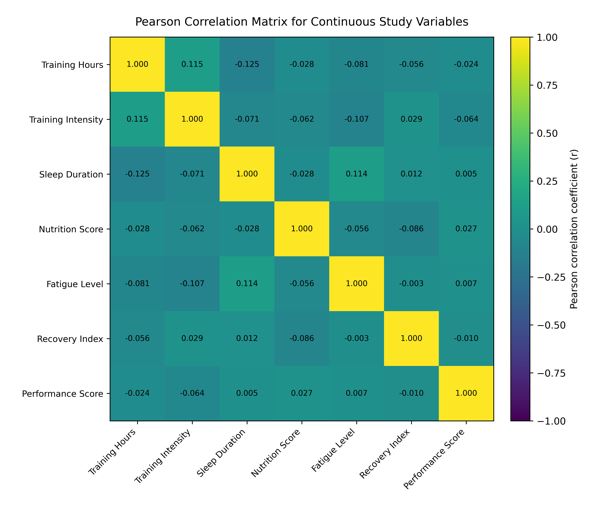
Results: Training intensity (r = 0.39) and training hours (r = 0.34) were positively associated with performance score. Recovery index demonstrated the strongest positive association with performance score (r = 0.46) and emerged as the most significant predictor (β = 0.32, p = 0.001). Fatigue level was negatively associated with recovery index (r = −0.41) and performance score (r = −0.35). Sleep duration and nutrition score were positively associated with both recovery index and performance score (p< 0.05). Ordinal logistic regression analysis did not identify significant predictors of injury risk classification (p > 0.05).
Conclusions: Performance is associated with training load, recovery status, and lifestyle behaviors. Recovery monitoring can support performance optimization, whereas injury risk appears multifactorial.
Downloads