Augmented Reality-Supported Small-Sided Games and Multistage Fitness Test Performance in Adolescent Futsal Players: A Controlled Pretest-Posttest Study
Keywords:
augmented reality, cardiorespiratory fitness, futsal, Multistage Fitness Test, small-sided gamesAbstract
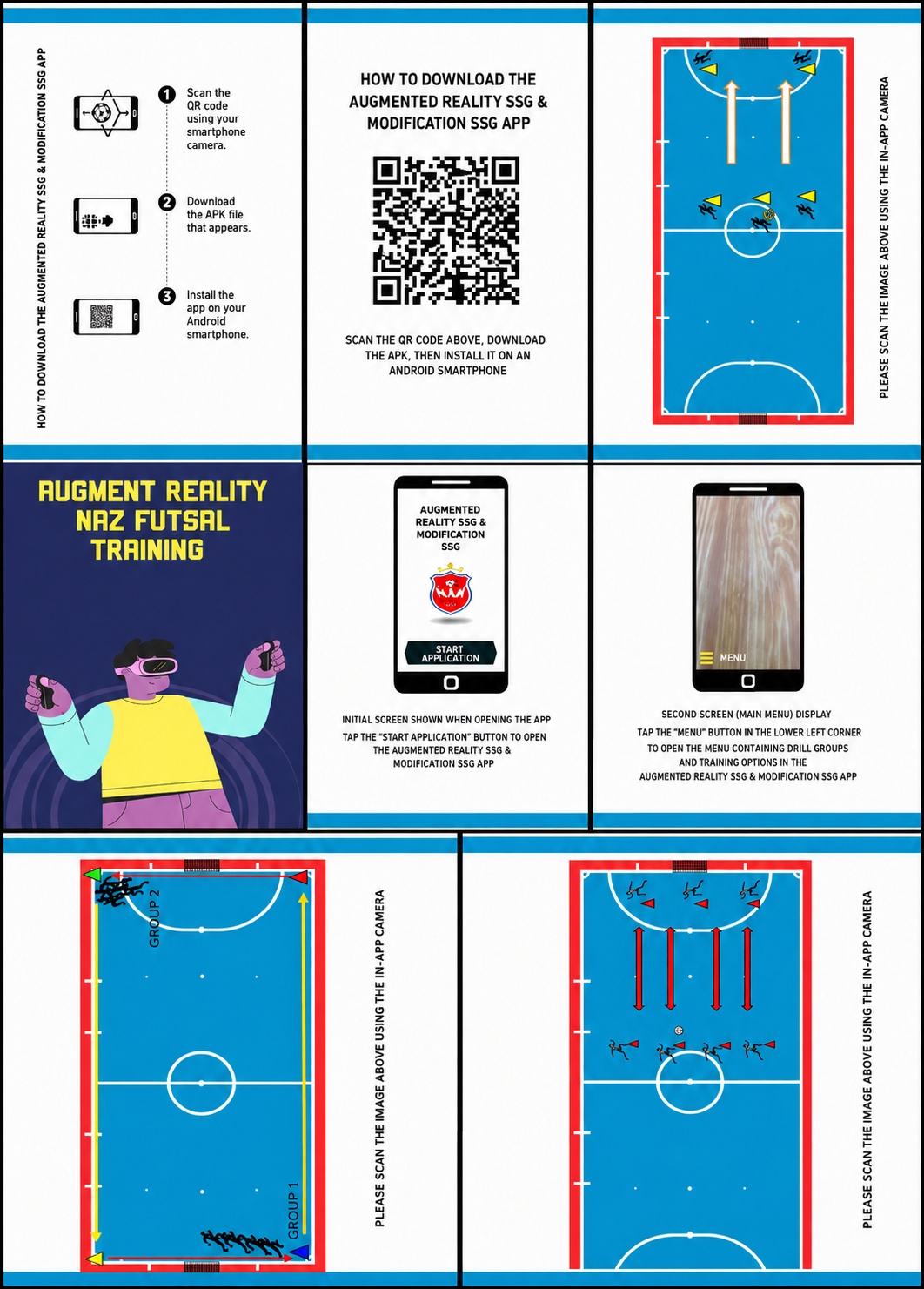
Objective: Augmented reality (AR) can provide visual movement cues during sport training, but whether AR-supported delivery is associated with greater cardiorespiratory-fitness improvement than the same planned small-sided-game (SSG) content delivered conventionally remains uncertain. This study compared changes in an archived standardized Multistage Fitness Test (MSFT)-derived score between AR-supported SSG and conventional SSG conditions.
Material and Methods: A controlled (non-randomized) pretest–posttest intervention included 60 academy futsal players aged 15–18 years, allocated at the squad level to an AR-SSG group (n = 30) or an SSG comparison group (n = 30). Both groups completed 18 sessions, three times per week over six weeks; each session comprised a standardized warm-up, an SSG block of repeated 4-minute game bouts with active recovery (work-to-rest ratio ≈ 4:3), and a cool-down. Training load was progressed across the intervention, and game intensity targeted a rating of perceived exertion of 6–8 on the Borg CR-10 scale. Cardiorespiratory fitness was assessed before and after the intervention using a standardized MSFT-derived score ranging from 0 to 100. The primary analysis was a two-way mixed analysis of variance with group as the between-participant factor and time as the within-participant factor.
Results: The AR-SSG condition improved from 77.97 ± 1.77 to 87.00 ± 2.31 points, whereas the SSG comparison condition improved from 77.94 ± 1.71 to 83.00 ± 2.22 points. The condition × time interaction was significant, F(1, 58) = 72.46, p < .001, partial η² = .555. Mean change was 9.03 ± 1.65 points in the AR-SSG condition and 5.06 ± 1.95 points in the comparison condition; the between-condition difference in change was 3.97 points (95% CI 3.04 to 4.90; Hedges g = 2.17).
Conclusions: Adding the documented AR visual module to SSG was associated with a greater improvement in the MSFT-derived cardiorespiratory fitness score than SSG alone. Because objective training load and intervention fidelity were not monitored, AR cannot be confirmed as the sole causal factor; conclusions are restricted to MSFT performance and do not extend to motivation, tactical learning, engagement, or match performance.
Downloads