The Effectiveness of Schema Therapy on Loneliness and Hope for Life in Mothers of Children with Autism
DOI:
https://doi.org/10.61838/kman.prien.5567Keywords:
Schema therapy, loneliness, hope for life, autismAbstract
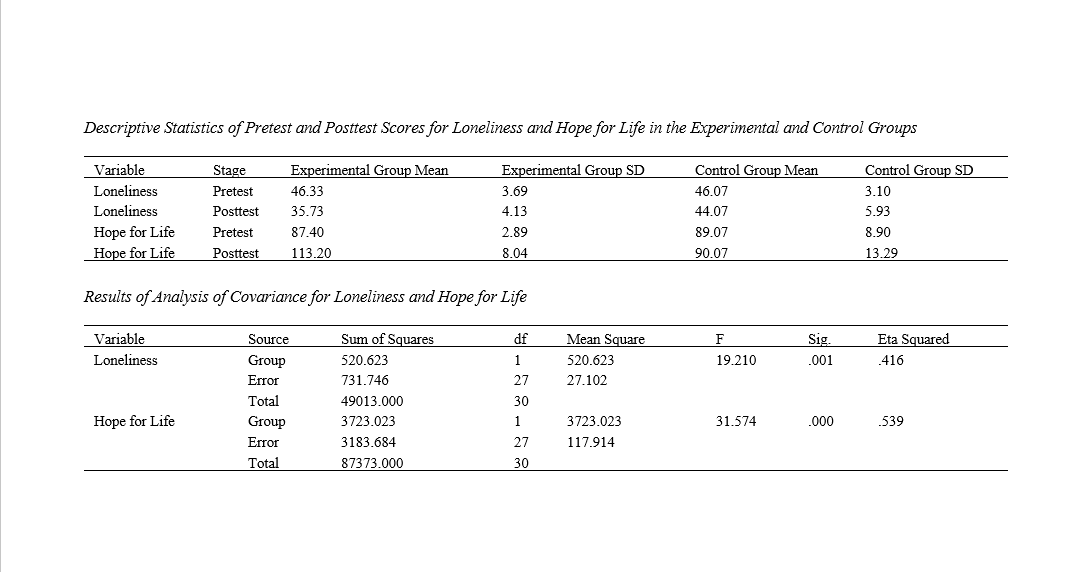
Mothers of children with autism face numerous financial, social, and psychological pressures that affect their psychological well-being. The present study was conducted to determine the effectiveness of schema therapy on loneliness and hope for life in mothers of children with autism. The present research employed a quasi-experimental pretest-posttest design with a control group. The study population consisted of all mothers of children with autism who referred to autism associations in the city of Tehran in 2025. Considering the inclusion and exclusion criteria, 30 participants who met the eligibility criteria were selected through convenience sampling and assigned to an experimental group (15 participants) and a control group (15 participants). Data collection instruments included the Russell Loneliness Questionnaire, the Snyder et al. (1991) Hope for Life Questionnaire, and a schema therapy protocol consisting of 12 sessions of 90 minutes each. Data were analyzed using SPSS-28 software and analysis of covariance (ANCOVA). Comparison of loneliness and hope for life scores between the pretest and posttest in the experimental group showed that these scores significantly decreased and increased, respectively (P < .05). It can be concluded that schema therapy was effective in reducing loneliness and increasing hope for life among mothers of children with autism. Therefore, it is recommended that psychotherapists utilize the schema therapy approach to improve the mental health of these mothers.
Downloads
References
Aflakian, M., Khayatan, F., & Atashpour, H. (2023). Comparison of the effectiveness of schema therapy based on psychosocial issues and cognitive behavioral therapy on early maladaptive schemas and anxiety in patients with obsessive compulsive disorder. Journal of Adolescent and Youth Psychological Studies, 4(5), 166-178. https://doi.org/10.61838/kman.jayps.4.5.12
Aghili, S. M., Asghari, A., & Namazi, M. (2021). The effectiveness of schema therapy on increasing self-efficacy and hope for life in divorced women and its effect on reducing early maladaptive patterns in their daughters. Interdisciplinary Women's Studies, 3(2), e725873.
Alhuzimi, T. (2021). Stress and emotional wellbeing of parents due to change in routine for children with Autism Spectrum Disorder (ASD) at home during COVID-19 pandemic in Saudi Arabia. Research in Developmental Disabilities, 108, 103822. https://doi.org/10.1016/j.ridd.2020.103822
Aliabadi, F., & Abdolkhodaei, M. S. (2022). The role of resilience and psychological sense of coherence in predicting coping styles of mothers of children with autism. Quarterly Journal of New Strategies in Psychology and Educational Sciences, 4(13), 214-226.
American Psychiatric, A. (2022). Diagnostic and Statistical Manual of Mental Disorders (5th ed.). American Psychiatric Publishing. https://doi.org/10.1176/appi.books.9780890425787
Anthony, J. C. (2017). Health Psychology. Virayesh.
Armenta, C. N., & Kane, L. (2022). Schema focused cognitive restructuring enhances hope and goal directed thinking. Journal of counseling psychology, 69(3), 214-229.
Arntz, A., Rijkeboer, M., Chan, E., & van Genderen, H. (2021). Schema therapy for personality disorders: A review of recent developments. Current psychiatry reports, 23(11), 73.
Barbosa, M. A., Chaud, M. N., & Gomes, M. M. (2018). Experiences of mothers of disabled children: A phenomenological study. Acta Paulista de Enfermagem, 21(1), 46-52. https://doi.org/10.1590/S0103-21002008000100007
Bozorgvari, A., & Khosh-Lahjeh Sedgh, E. (2024). The Effectiveness of Group Schema Therapy on Psychological Capital in Patients with Binge Eating Disorder Seeking Sleeve Gastrectomy / Gastric Bypass Surgery. Journal of Nursing Psychology, 12(6), 108-121. https://ijpn.ir/article-1-2516-en.html
Bujnowska, A. M., Rodriguez, C., Garcia, T., Areces, D., & Marsh, N. V. (2019). Parenting and future anxiety: The impact of having a child with developmental disabilities. International journal of environmental research and public health, 16(4), 668-669. https://doi.org/10.3390/ijerph16040668
Carlucci, L., D'Ambrosio, I., Innamorati, M., Saggino, A., & Balsamo, M. (2021). Co-rumination, anxiety, and maladaptive cognitive schemas: When friendship can hurt. Psychology research and behavior management, 11, 133. https://doi.org/10.2147/PRBM.S144907
Carr, S. N., & Francis, A. J. (2010). Early maladaptive schemas and personality disorder symptoms: An examination in a non clinical sample. Psychology and Psychotherapy: Theory, Research and Practice, 83(4), 333-349. https://doi.org/10.1348/147608309X481351
Dickhaut, V., & Arntz, A. (2020). Combined group and individual schema therapy for borderline personality disorder: A pilot study. Journal of Behavior Therapy and Experimental Psychiatry, 45(2), 242-251. https://doi.org/10.1016/j.jbtep.2013.11.004
Doosti, P., Doosti, P., & Yavari, A. H. (2023). The effectiveness of an integrated acceptance and commitment therapy and schema therapy model on loneliness and social problem solving in individuals with prolonged grief disorder. Rooyesh-e-Ravanshenasi, 12(11), 38-49.
Elahian, M. S., Rezakhani, S., & Dokanehifard, F. (2025). Relationship between Early Maladaptive Schemas and Psychological Capital in Children of Veterans; a Psychological Perspective. Iranian Journal of War & Public Health, 17(1). https://doi.org/10.58209/ijwph.17.1.9
Ellis, A. (1994). Reason and Emotion in Psychotherapy: A Comprehensive Method of Treating Human Disturbances. Citadel Press.
Farrell, J. M., & Shaw, I. A. (2018). Experiencing Schema Therapy from the Inside Out: A Self-Practice/Self-Reflection Workbook for Therapists. Guilford Publications.
Gonzalez, J. E., Nelson, J. R., Gutkin, T. B., Saunders, A., Galloway, A., & Shwery, C. S. (2004). Rational emotive therapy with children and adolescents: A meta analysis. Journal of Emotional and Behavioral Disorders, 12(4), 222-235. https://doi.org/10.1177/10634266040120040301
James, N., & Omondi, M. P. (2021). The efficacy of behavioral and rational emotive behavior therapies on conduct disorder among juvenile delinquents in selected rehabilitation schools in Kenya. American Journal of Applied Psychology, 10(1), 1-9. https://doi.org/10.11648/j.ajap.20211001.11
Khanjani, Z., Sohrabi, F., & Azami, M. (2021). Effectiveness of resilience training on mental health of working children. Journal of Health Psychology, 10(3), 54-71.
Landon, J., Shepherd, D., & Goedeke, S. (2018). Predictors of satisfaction with life in parents of children with Autism Spectrum Disorder. Journal of Autism and Developmental Disorders, 48(5), 1640-1650. https://doi.org/10.1007/s10803-017-3423-7
Li, R., Liu, H., & Chen, Y. (2019). Relationships among autonomy support, psychological control, coping, and loneliness: Comparing victims with nonvictims. Personality and individual differences, 138, 266-272. https://doi.org/10.1016/j.paid.2018.10.001
Lorzangeneh, S., & Esazadegan, A. (2022). The role of early maladaptive schema domains and childhood trauma in predicting cognitive distortions. Journal of Research in Psychopathology, 3(8), 1-8.
Mahzoon Khorasani, M., & Mousavi, M. (2020). The effectiveness of schema therapy on hope for life, quality of life, and psychological well-being of housewives in Tehran. Journal of Disability Studies, 10, 1-19.
Masley, S. A., Gillanders, D. T., Simpson, S. G., & Taylor, M. A. (2021). A systematic review of the evidence base for schema therapy. Cognitive behaviour therapy, 50(3), 177-195.
McCart, M. R., & Sheidow, A. J. (2016). Evidence based psychosocial treatments for adolescents with disruptive behavior. Journal of Clinical Child & Adolescent Psychology, 45(5), 529-563. https://doi.org/10.1080/15374416.2016.1146990
Mund, M., & Johnson, M. D. (2020). Lonely me, lonely you: Loneliness and the longitudinal course of relationship satisfaction. Journal of Happiness Studies, 1-23. https://doi.org/10.1007/s10902-020-00241-9
Nasirnia Samakoush, A., & Yousefi, N. (2023). An investigation of the effectiveness of schema therapy on the feelings of loneliness, cognitive emotion regulation, and distress tolerance among the women injured by marital infidelity. Psychology of Woman Journal, 4(2), 1-8. https://doi.org/10.61838/kman.pwj.4.2.1
Norouzi, M., & Zemestani, M. (2020). Comparative study of the relationship between childhood trauma and personality functioning and pathological traits in patients with borderline personality disorder and non patient group. Journal of Psychology and Psychiatry of Cognition, 7(6), 86-99. https://doi.org/10.52547/shenakht.7.6.85
Norouzi, M., & Zemestani, M. (2021). Comparative study of the relationship between emotion dysregulation and dissociative symptoms with personality functioning and pathological traits in patients with borderline personality disorder and non patient group. Journal of Psychology and Psychiatry of Cognition, 8(6), 2-16.
Ogeston, P. L., Mackintosh, V. H., & Myers, B. J. (2021). Hope and worry in mothers of children with an autism spectrum disorder or Down syndrome. Research in Autism Spectrum Disorders, 5(4), 1378-1384. https://doi.org/10.1016/j.rasd.2011.01.020
Ojaghloo, S., Ghodrati, S., & Vatankhah, H. R. (2022). The effectiveness of schema therapy on loneliness and alexithymia in couples with conflict. A New Approach to Children's Education, 4(3), 109-120.
Picardi, A., Gigantesco, A., Tarolla, E., Stoppioni, V., Cerbo, R., & Cremonte, M. (2018). Parental burden and its correlates in families of children with Autism Spectrum Disorder: A multicentre study with two comparison groups. Clinical Practice and Epidemiology in Mental Health, 14, 143-176. https://doi.org/10.2174/1745017901814010143
Pisula, E., & Porebowicz-Dorsmann, A. (2017). Family functioning, parenting stress and quality of life in mothers and fathers of Polish children with high functioning autism or Asperger syndrome. PLoS One, 12(10), 186-187. https://doi.org/10.1371/journal.pone.0186536
Powers, E. T. (2016). New estimates of the impact of child disability on maternal employment. American Economic Review, 91(2), 135-139. https://doi.org/10.1257/aer.91.2.135
Radfar, A., Asgharzadeh, S. A. A., Quesada, F., & Filip, I. (2018). Challenges and perspectives of child labor. Industrial Psychiatry Journal, 27(1), 17-20. https://doi.org/10.4103/ipj.ipj_105_14
Rashidi, K. (2013). Investigating the causes of sexual deviance in high school boys in Javanroud city Payame Noor University].
Renner, F., Lobbestael, J., Peeters, F., Arntz, A., & Huibers, M. (2016). Early maladaptive schemas in depressed patients: Stability and relation with depressive symptoms over the course of treatment. Journal of affective disorders, 136(3), 581-590. https://doi.org/10.1016/j.jad.2011.10.027
Roediger, E., Stevens, B. A., & Brockman, R. (2023). Advances in schema therapy: Emotional processing and resilience outcomes. Journal of Clinical Psychology, 79(5), 1204-1218.
Roskam, I., & Mikolajczak, M. (2023). Parental burnout in the context of special needs, adoption, and single parenthood. Children, 10(7), 1131. https://doi.org/10.3390/children10071131
Samakoush, A. N., & Yousefi, N. (2023). An Investigation of the Effectiveness of Schema Therapy on the Feelings of Loneliness, Cognitive Emotion Regulation, and Distress Tolerance Among the Women Injured by Marital Infidelity. PWJ, 4(2), 1-8. https://doi.org/10.61838/kman.pwj.4.2.1
Samani, S., Salehi, M., & Farrokhi, N. (2022). Predicting psychological capital based on early maladaptive schemas and personality traits in criminal offenders. Journal of Mashhad University of Medical Sciences Faculty of Medicine, 65(6), 2397-2405. https://mjms.mums.ac.ir/article_22373.html
Sangani, A., & Dashtbozorgi, Z. (2019). The effectiveness of schema therapy on mental health, rumination, and loneliness in divorced women. Psychological Achievements, 4(25), 201-216.
Talebi, G., Bagherian-Sararoudi, R., Rezaei Jamaloui, H., Oreyzi, H., & Bagherian-Sararoudi, P. (2025). The Effectiveness Of Emotional Schema Therapy On Hope And Illness Perception In Women With Breast Cancer: A Randomized Clinical Trial. Journal of Research in Behavioural Sciences, 23(2), 371-381.
Tan, Y., Chen, J., Lin, X., & Zhang, Y. (2021). Schema therapy improves emotional regulation in caregivers under chronic stress. Journal of affective disorders, 295, 456-464.
Tapia, G., Perez-Dandieu, B., Lenoir, H., Othily, E., Gray, M., & Delile, J. M. (2019). Treating addiction with schema therapy and EMDR in women with co-occurring SUD and PTSD: A pilot study. Journal of Substance Use, 23(2), 199-205. https://doi.org/10.1080/14659891.2017.1378743
Taylor, C. D. J., Bee, P., & Haddock, G. (2023). The impact of schema-based interventions on emotional regulation and well-being: A meta-analytic review. Clinical psychology review, 102, 102312.
Terjesen, M. D., Esposito, M., Kurasaki, R., & Kassay, K. (2009). Rational emotive behavior therapy (REBT) with children and adolescents: Theory, applications, and research. NYS Psychologist, 20(2), 13-20.
Waddington, H., van der Meer, L., & Sigafoos, J. (2021). Supporting parents in the use of the Early Start Denver Model as an intervention program for their young children with autism spectrum disorder. International Journal of Developmental Disabilities, 67(1), 23-36. https://doi.org/10.1080/20473869.2019.1585694
Woodman, A. C., Mawdsley, H. P., & Hauser-Cram, P. (2022). Parenting stress and child behavior problems within families of children with developmental disabilities: Transactional relations across 15 years. Research in Developmental Disabilities, 36(3), 264-276. https://doi.org/10.1016/j.ridd.2014.10.011
Yalom, I. D., & Leszcz, M. (2020). The Theory and Practice of Group Psychotherapy (6th ed.). Basic Books.
Young, J. E., Klosko, J. S., & Weishaar, M. E. (2016). Schema Therapy: A Practical Guide for Clinicians (Vol. 1). Arjmand.
Zamani, H., & Mohammadian Akerdi, E. (2020). The effectiveness of schema therapy on hope for life and happiness in girls with depression referred to counseling centers in Babol County. Seventh International Conference on New Research Achievements in Educational Sciences, Psychology, and Social Sciences, Isfahan.
Downloads
Additional Files
Publication Timeline
- Submitted
- Revised
- Accepted