




























Comparing the Effectiveness of Sexual-Education Training and Sensory–Proprioceptive–Tactile Exercises on Anxiety in High-Functioning Autistic Children
The objective of this study was to compare the effectiveness of sexual-education training and sensory–proprioceptive–tactile exercises on reducing anxiety in high-functioning autistic children aged 4 to 7 years. This quasi-experimental study employed a pretest–posttest design with a control group and included 30 high-functioning autistic children selected through convenience sampling from therapeutic clinics in Tehran. Participants were randomly assigned to a sexual-education intervention group, a sensory–proprioceptive–tactile intervention group, or a control group. Anxiety was measured using the Spence Children’s Anxiety Scale (SCAS), parent version, the sole standardized instrument administered in this study. The sexual-education program consisted of structured parent and child sessions focusing on bodily awareness, privacy rules, and protective skills, while the sensory–proprioceptive–tactile intervention included deep-pressure, proprioceptive, and tactile-modulation exercises designed to support physiological regulation. Data were analyzed using two-way repeated-measures ANOVA and Bonferroni post-hoc tests. Results demonstrated a significant main effect of time and a significant time × group interaction, indicating that anxiety decreased differently across interventions. The sensory–proprioceptive–tactile group showed the greatest reduction in anxiety from pretest to posttest, significantly outperforming both the sexual-education group and the control group. Bonferroni post-hoc analyses confirmed significant decreases within both intervention groups, with the sensory-based intervention producing a larger effect size, while the control group showed no significant change across time. Between-group comparisons at posttest further revealed that both intervention groups had significantly lower anxiety scores than the control group, with the sensory-based intervention demonstrating superior outcomes. The findings highlight that while both sexual-education and sensory-based interventions effectively reduce anxiety in high-functioning autistic children, sensory–proprioceptive–tactile exercises provide substantially greater therapeutic benefit, underscoring the importance of sensory-regulation approaches in early intervention.
Examining the Effectiveness of the Fernald Multisensory Approach on Body Self-Concept in Elementary Students with Learning Disabilities
Students with learning disabilities, in addition to academic difficulties, often experience psychological challenges such as negative body self-concept, which can adversely affect their social and academic functioning. This study aimed to determine the effectiveness of the Fernald multisensory approach on body self-concept in elementary school students with learning disabilities. This research employed a quasi-experimental design with a pretest–posttest structure and a control group. The statistical population consisted of students with learning disabilities in the city of Zahedan, from whom 40 students were selected through purposive sampling and randomly assigned to experimental and control groups (20 students per group). The experimental group received 15 instructional sessions based on the Fernald multisensory approach, while the control group received no intervention. The measurement instrument was the Marsh Body Self-Description Questionnaire, and data were analyzed using analysis of covariance. The findings indicated that instruction based on the Fernald multisensory approach had a significant positive effect on improving overall body self-concept and all of its components (physical, social, temperamental, academic, moral, and intellectual) in the experimental group compared to the control group (p < .001). These results suggest that the intervention, by creating successful learning experiences, substantially improved the students’ self-perceived body image. Based on the findings, it can be concluded that the Fernald multisensory approach is an effective and efficient intervention for enhancing body self-concept in students with learning disabilities. Therefore, incorporating this approach into school-based support and rehabilitation programs and counseling centers may contribute to simultaneous improvement in academic performance and psychological well-being among these students.
Effectiveness of the Cognitive Remediation Therapy (CRT) Program on Behavioral Problems in Children Aged 7 to 9 Years with Attention-Deficit/Hyperactivity Disorder
The purpose of this study was to determine the effectiveness of the CRT program on behavioral problems in children with ADHD. This research was a quasi-experimental study using a pretest–posttest design with a control group. The statistical population consisted of all children aged 7 to 9 years diagnosed with ADHD in Ahvaz in 2024. From this population, 30 children were selected through convenience sampling and randomly assigned to experimental and control groups. The CRT intervention was delivered in ten 60-minute sessions, one session per week, for the experimental group, while the control group received no intervention. Data were collected using the Child Behavior Checklist (CBCL). Descriptive statistics (mean and standard deviation) and inferential statistics (multivariate and univariate analysis of covariance) were used for data analysis, employing SPSS version 26. The results indicated that the CRT intervention had a significant effect on the variables of anxiety/depression, withdrawal/depression, social problems, thought problems, attention problems, and aggressive behavior, leading to improvement in these problems in the experimental group compared to the control group (p < .05). However, the intervention did not have a significant effect on somatic complaints or rule-breaking behavior. The findings of this study confirm the effectiveness of the CRT program as an intervention method for reducing several behavioral problems in children with ADHD. Accordingly, implementing this program alongside other psychological and educational interventions in clinical and school settings is recommended for this group of children. Nevertheless, the lack of impact on some areas, such as somatic complaints, highlights the necessity of complementing CRT with additional approaches or designing more specialized sessions.
Effectiveness of Short-Term Dynamic Psychotherapy on Identity and Self-Esteem in Families with Exceptional Children
This study aimed to investigate the effectiveness of short-term dynamic psychotherapy (STDP) on improving identity integration and self-esteem among parents of exceptional children. The study employed a quasi-experimental design with a pretest–posttest–follow-up format and a control group. The statistical population included all parents of exceptional children in Tehran in 2025. A total of 30 parents were selected using convenience sampling and randomly assigned to experimental and control groups (15 participants each). The experimental group received 15 weekly sessions of 90-minute Intensive Short-Term Dynamic Psychotherapy (ISTDP), while the control group received no intervention. The Self-Esteem Scale (Crocker et al., 2003) and the Marcia Identity Status Questionnaire (Adams & Bennion, 1986) were used to measure variables at three stages: pretest, posttest, and two-month follow-up. Data were analyzed using repeated-measures ANOVA in SPSS-26, along with Kolmogorov–Smirnov, Levene, Mauchly, and Box’s M tests to confirm statistical assumptions. Results indicated a significant improvement in the experimental group compared to the control group in both self-esteem (F = 4.688, p = .033, η² = .27) and identity integration (F = 15.703, p = .024, η² = .20). Within-group comparisons showed significant progress across all three stages in self-esteem (p < .001) and identity (p < .001). Interaction effects between group and time were also significant for both variables (p < .001), confirming the sustained positive impact of STDP during the follow-up phase. Bonferroni post-hoc analysis revealed consistent mean score increases in the experimental group compared to the control group at each stage. Short-term dynamic psychotherapy effectively enhances identity coherence and self-esteem among parents of exceptional children by addressing unconscious conflicts and facilitating emotional integration. It can be applied as a supportive intervention in counseling and rehabilitation settings for families facing the psychological challenges of disability.
The Effectiveness of Neurofeedback on Working Memory Performance and Cognitive Planning Ability in Children with Attention-Deficit/Hyperactivity Disorder
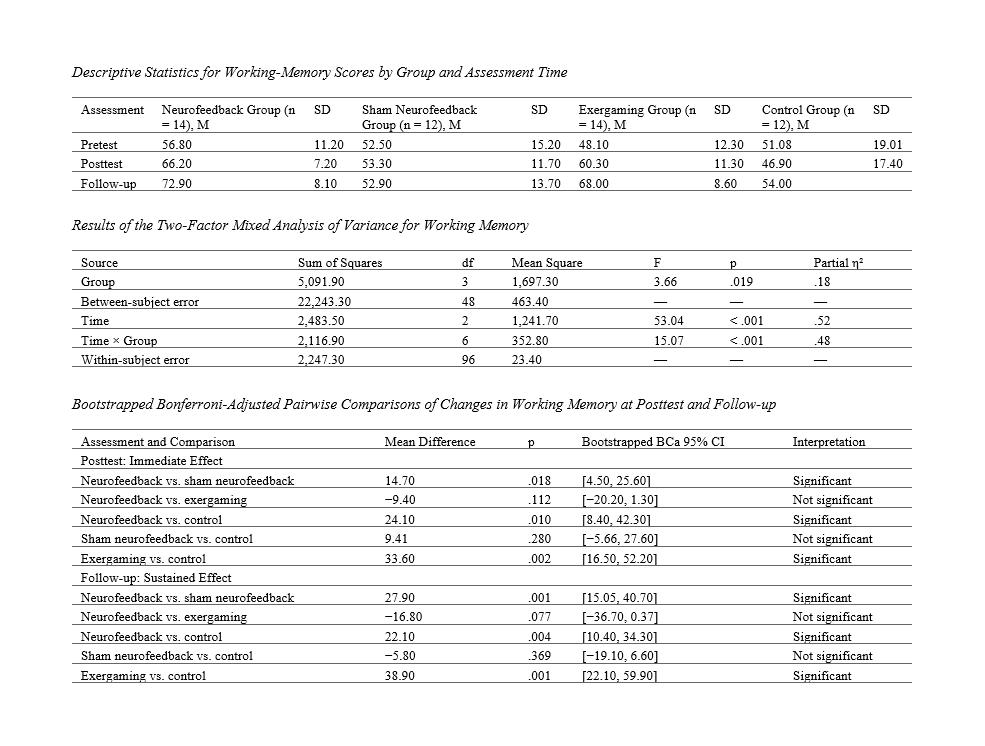
The present study aimed to examine the effectiveness of neurofeedback on working memory performance and cognitive planning ability in children with ADHD. This semi-experimental study employed a pretest–posttest control group design with a follow-up phase. The statistical population consisted of all children aged 7 to 14 years diagnosed with ADHD who attended the Shiva Counseling and Psychology Center in Rasht in 2025. From this population, 70 children (35 in the experimental group and 35 in the control group) were selected through purposive sampling. The experimental group received 20 sessions of neurofeedback training (two sessions per week, each lasting 30 to 40 minutes). The neurofeedback protocol involved reducing the theta/beta ratio in the F4 region, enhancing sensorimotor rhythm (SMR), and decreasing theta and delta activity in the frontal and Cz regions. Data collection instruments included the Conners-3 Questionnaire, the Wechsler Digit Span Subtest, the Corsi Block-Tapping Test for visuospatial memory, and the Tower of London Test for cognitive planning. Data were analyzed using descriptive statistics and mixed-design ANOVA with repeated measures in SPSS version 29. Results revealed that the mean scores of verbal and visuospatial working memory, cognitive planning ability, and the reduction of ADHD index significantly improved in the neurofeedback group compared to the control group in both posttest and follow-up stages (p < .001). The effects of time, group, and the interaction between time × group were significant across all variables (partial η² ranging from .43 to .70). Bonferroni post hoc tests indicated that the changes from pretest to posttest were significant and remained stable at the follow-up phase. Moreover, 76.5% of children in the neurofeedback group demonstrated a clinically significant reduction (more than 10 T-score points on the Conners Questionnaire). The findings suggest that neurofeedback, through the modulation of brainwave patterns in frontal and central regions, can produce lasting improvements in working memory and cognitive planning abilities among children with ADHD.
Improving Visual and Auditory Perception in Students with Specific Learning Disorder with Impairment in Reading through a Multisensory Educational Package
This study aimed to examine the effectiveness of a multisensory educational package (Colored Cubes) on improving visual and auditory perception in students aged 7–11 years with Specific Learning Disorder (SLD) with impairment in reading. This quasi-experimental study employed a pretest–posttest design with a control group and follow-up assessments. The statistical population consisted of children diagnosed with SLD with impairment in reading according to DSM-5 criteria, attending psychological centers in District 12 of Tehran during the 2024–2025 academic year. Thirty eligible participants were selected through convenience sampling and randomly assigned to experimental and control groups (15 each). The research instruments included the Frostig Developmental Test of Visual Perception and the Wepman Auditory Discrimination Test. The experimental group received a structured multisensory intervention—comprising colored cubes, age-appropriate flashcards, and phonological awareness activities—across twelve 45-minute sessions, while the control group received no intervention. Data were analyzed using repeated-measures ANOVA in SPSS-26 at a significance level of p < 0.05. The results of repeated-measures ANOVA revealed significant group-by-time interaction effects across all dimensions of visual perception—eye–hand coordination, figure–ground discrimination, form constancy, spatial perception, and spatial relations—as well as auditory discrimination (p < 0.001). Bonferroni post hoc comparisons indicated that improvements in all perceptual domains were maintained in both three- and six-month follow-ups. Effect size estimates (η² = 0.17–0.64) confirmed a strong and stable impact of the multisensory intervention over time compared with the control group. The multisensory educational package (Colored Cubes) effectively enhanced and sustained visual and auditory perceptual functions in children with SLD and reading impairment. The integration of visual, auditory, and kinesthetic modalities provides a promising framework for educational and therapeutic settings targeting perceptual deficits in dyslexic learners.
The Mediating Role of Attention Bias in the Relationship Between Anxiety Sensitivity and Academic Motivation in Children With Specific Learning Disorders
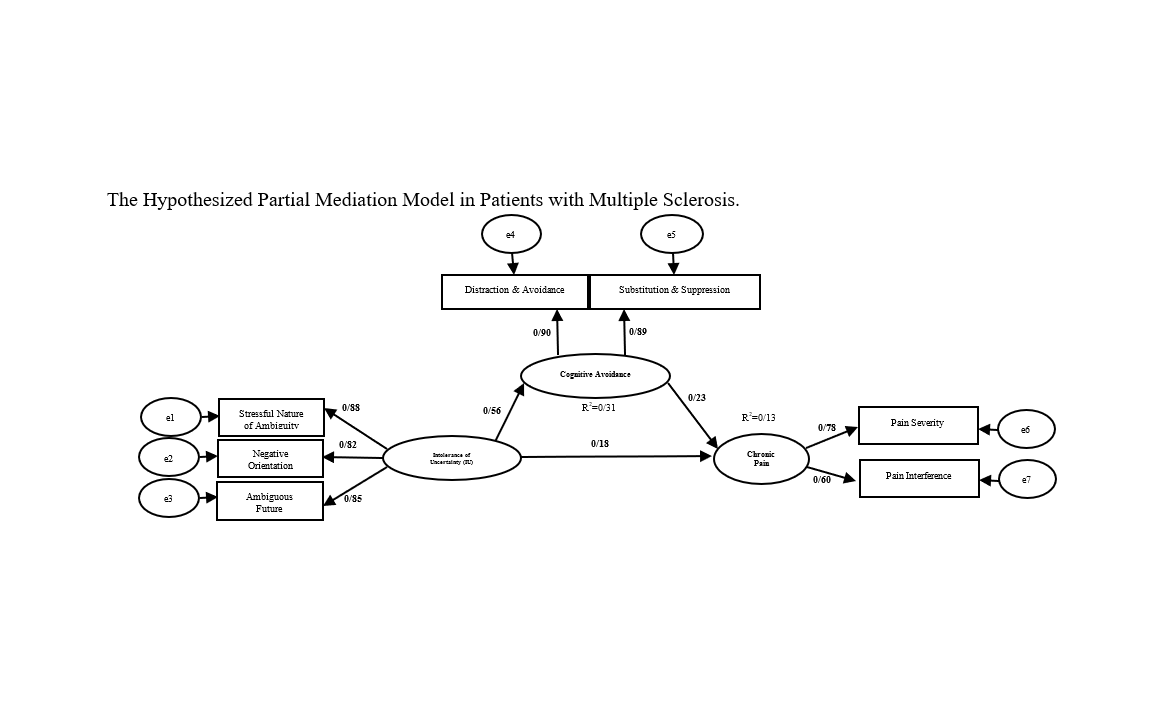
This study aimed to investigate the mediating role of attention bias in the relationship between anxiety sensitivity and academic motivation among children diagnosed with specific learning disorders (SLD). A descriptive–correlational design was used, involving 400 students with specific learning disorders enrolled in learning disability centers in Tehran during the 2024–2025 academic year. The sample size was determined using the Krejcie and Morgan table. Data were collected using three standardized instruments: the Academic Motivation Scale (AMS; Vallerand et al., 1992) to measure academic motivation, the Anxiety Sensitivity Index for Children (ASIC; Laurent et al., 1998) to assess anxiety sensitivity, and the Dot-Probe Task (MacLeod et al., 1986) to evaluate attention bias. Data analysis was performed using Pearson correlation coefficients and Structural Equation Modeling (SEM) through SPSS-27 and AMOS-21 software. Model fit was assessed using multiple indices including χ²/df, GFI, AGFI, CFI, TLI, and RMSEA. Results revealed that anxiety sensitivity was negatively correlated with academic motivation (r = −.42, p < .001) and positively correlated with attention bias (r = .47, p < .001). Attention bias was negatively correlated with academic motivation (r = −.36, p < .001). The SEM results indicated excellent model fit (χ²/df = 1.63, CFI = .97, TLI = .96, RMSEA = .039). Anxiety sensitivity significantly predicted attention bias (β = 0.47, p < .001) and academic motivation (β = −0.33, p < .001). The indirect effect of anxiety sensitivity on academic motivation through attention bias was also significant (β = −0.14, p = .002), confirming partial mediation. The findings suggest that attention bias partially mediates the relationship between anxiety sensitivity and academic motivation in children with specific learning disorders.
Effectiveness of Group Attachment Based Intervention (GABI) on Improving Emotional Safety and Perceived Stress of Vulnerable Children
This study aimed to assess the effectiveness of a group attachment-based intervention in enhancing emotional safety and reducing perceived stress among vulnerable children. The present study was semi-experimental research involving a pre-test-post-test design and a three-month follow-up period, with both a control group and an experimental group. The study focused on vulnerable children in care centers supervised by the Welfare Department in Tehran during the summer and fall of 2023. A total of 30 participants were selected through purposive sampling. The interventions were attachment-based and followed a program designed by the researcher, with eight sessions held twice a week, each lasting 45 minutes. These sessions took place in one of the center's offices for the experimental group. The evaluation tools used were the Belonging and Emotional Security Tool (BEST) and the Perceived Stress Questionnaire (PSQ). The data collected were analyzed using SPSS version 27 software, with descriptive statistics (mean and standard deviation) and statistical methods like Kruskal-Wallis H, repeated measure ANCOVA, and Bonferroni's post hoc test applied at a -value of 0.05. According to the findings of the study, the P-value for the emotional safety variable in the Between-Subjects Effects showed statistical significance (p<0.001). Likewise, the Within-Subjects Effects showed significance for the interaction effects between time and group in the emotional safety variable (p=0.004). On the other hand, there were no notable variations in the sense of belonging between the different groups. Additionally, the P-value for the perceived stress variable in Between-Subjects Effects was statistically significant (p<0.001). The findings of this research demonstrated that an intervention focused on group attachment can successfully lessen perceived stress and enhance emotional safety. It can serve as a beneficial approach for aiding at-risk and vulnerable children in enhancing their mental and emotional well-being.
About the Journal
- E-ISSN: 3060-6713
- Director in Charge: Dr. Ali Aghaziarati
- Editor-in-chief: Dr. Salar Faramarzi
- Owner: KMAN Research Institute
- Publisher: KMAN Publication Inc. (KMANPUB)
- Contact Email: PRIEN@kmanpub.com / journalprien@gmail.com
- Open Access: YES
The Psychological Research in Individuals with Exceptional Needs (PRIEN) Journal, established in 2023, is a pioneering international academic journal dedicated to the multifaceted field of psychology and its application to individuals with exceptional needs. The journal's scope encompasses a diverse range of topics such as developmental psychology, educational psychology, cognitive and behavioral therapy, neuropsychology, special education, adaptive technology, mental health, social integration, and policy development in support of individuals with disabilities or giftedness. Its primary aim is to promote the understanding, support, and advancement of individuals with unique psychological needs, whether they are developmental, emotional, cognitive, or gifted. PRIEN Journal invites contributions in the form of high-quality original research articles, comprehensive review articles (including narrative, scoping, systematic, and integrative reviews), thought-provoking editorials, concise short communications, and insightful letters to the editor. Committed to maintaining rigorous standards, the journal employs a thorough open peer review process to ensure research integrity and transparency. Adhering to a gold open access model, PRIEN Journal guarantees unrestricted online access to its content, fostering a global exchange of knowledge and ideas in this critical field.
About the Publisher
Publisher: KMAN Publication Inc.
Publisher Office: Unit 5‑10825 Yonge St, Richmond Hill, Ontario, Canada, L4C 3E3
https://journals.kmanpub.com
Email: kmanpu@kmanpub.com
Telegram: +1 (647) 656‑4401 | WhatsApp: +1 (437) 429‑3507
Germany Office: Dratelnstrasse, Wohnung A60, 21119 Hamburg, Germany (+4915207720487)
Current Issue