Inclusive Coaching : Supporting Children and Youth With Intellectual Developmental Disabilities Engaging in Sport
Keywords:
Special Olympics, Inclusion in Sports, Intellectual Developmental Disability, Coaching EducationAbstract
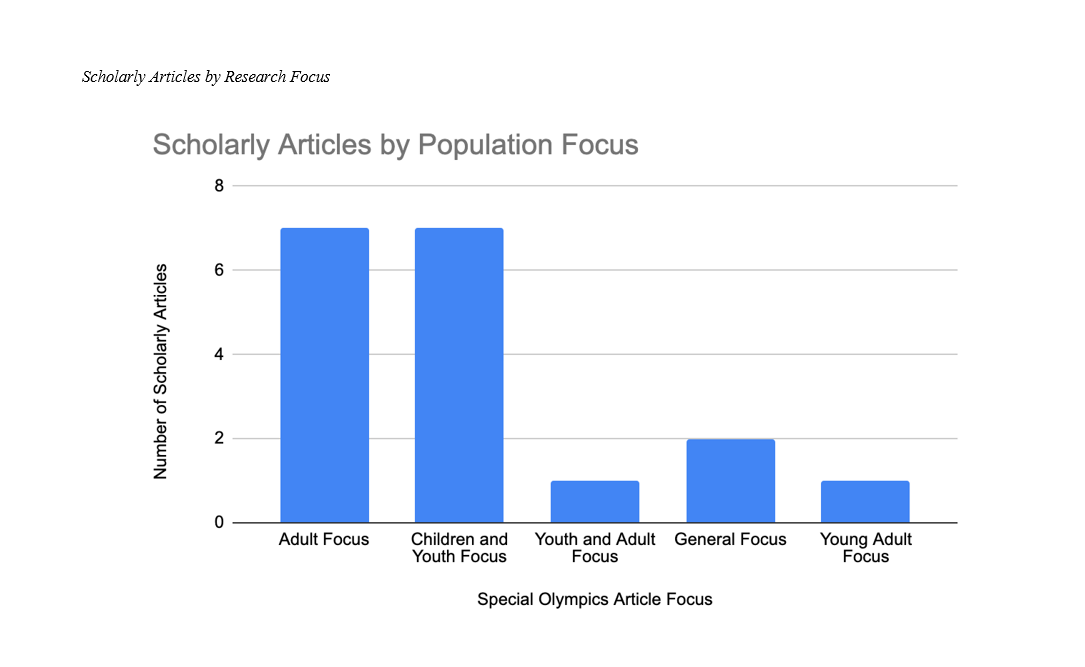
Special Olympics is an international movement committed to promoting inclusion and building community through sports and physical activity for individuals with intellectual disabilities. In Canada, the organization supports more than 40,000 athletes, offering structured athletic opportunities from early childhood through to adulthood. This critical literature review synthesizes 18 sources on coaching within Special Olympics, including peer-reviewed research around coaching Special Olympics, to examine trends, themes, and gaps in the field. Literature was reviewed from March 2025 to December 2025. It emphasizes the continuous, community-based nature of Special Olympics programming, which occurs regularly in local settings, rather than as infrequent high-profile events. The findings highlight both the benefits of athlete participation and the critical role of effective coaching, while also revealing a need for additional research focused on coaching practices, particularly among coaches who work with children and youth. Strengthening the evidence base in the Canadian context is essential to enhance coaching strategies, support athlete growth, support and guide future research opportunities and promote sustained success within the Special Olympics community.
Downloads
References
Ainscow, M., Booth, T., & Dyson, A. (2006). Improving schools, developing inclusion. Routledge. https://doi.org/10.4324/9780203967157
Alexander-Urquhart, D., Bloom, G. A., & Fraser, M. M. (2024). Understanding the career experiences and reflections of Special Olympics Canada's National Team Program coaches. Qualitative Research in Sport, Exercise and Health, 17(1), 32-46. https://doi.org/10.1080/2159676X.2024.2425430
Carter, N., & Williams, J. (2012). 'A genuinely emotional week': Learning disability, sport and television - notes on the Special Olympics GB National Summer Games 2009. Media, Culture & Society, 34(2), 211-227. https://doi.org/10.1177/0163443711430759
Clary, E. G., & Snyder, M. (1999). The Motivations to Volunteer: Theoretical and Practical Considerations. Current Directions in Psychological Science, 8(5), 156-159. https://doi.org/10.1111/1467-8721.00037
Coaches Association of Ontario. (2020). Home. https://www.coachesontario.ca/
Collins, K., & Staples, K. (2017). The role of physical activity in improving physical fitness in children with intellectual and developmental disabilities. Research in Developmental Disabilities, 69, 49-60. https://doi.org/10.1016/j.ridd.2017.07.020
Creswell, J. W. (2013). Qualitative inquiry and research design: Choosing among five approaches (3rd ed.). Sage.
Culver, D. M., Kraft, E., Trudel, P., Duarte, T., & Werthner, P. (2020). Coaching athletes with disabilities. Springer. https://doi.org/10.1007/978-3-030-63912-9_13
Cuskelly, G., Taylor, T., Hoye, R., & Darcy, S. (2006). Volunteer management practices and volunteer retention: A human resource management approach. Sport Management Review, 9(2), 141-163. https://doi.org/10.1016/S1441-3523(06)70023-7
Cybulski, S., Culver, D. M., Kraft, E., & Formeris, T. (2016). Special Olympics coaches: Examining the strategies they use to encourage their athletes to develop life skills. International Journal of Coaching Science, 10(2), 3-23. https://www.researchgate.net/profile/Diane-Culver/publication/310806282_Special_Olympics_coaches_Examining_the_strategies_they_use_to_encourage_their_athletes_to_develop_life_skills/links/5838611d08ae3a74b49d157e/Special-Olympics-coaches-Examining-the-strategies-they-use-to-encourage-their-athletes-to-develop-life-skills.pdf
Davies, T., Wiens, L., Trono, C., Wilson, A., Griffiths, G., & Griffiths, S. (2021). Long-term athlete development: Supporting quality sport experiences 2.0. Special Olympics Canada. https://www.specialolympics.ca/media/5wwpakz1/so-ltad2_en_final_web.pdf
Eliasson, I. (2017). The gap between formalised children's rights and children's real lives in sport. International Review for the Sociology of Sport, 52(4), 470-496. https://doi.org/10.1177/1012690215608516
Emerson, E., & Hatton, C. (2007). Mental health of children and adolescents with intellectual disabilities in Britain. British Journal of Psychiatry, 191(6), 493-499. https://doi.org/10.1192/bjp.bp.107.038729
Goodwin, D. L., & Watkinson, E. J. (2000). Inclusive physical education from the perspective of students with physical disabilities. Adapted Physical Activity Quarterly, 17(2), 144-160. https://doi.org/10.1123/apaq.17.2.144
Heenan, J. (2021). Special Olympics basketball: A guide for coaches. Special Olympics Ontario. https://www1.specialolympicsontario.com/resources/wp-content/uploads/sites/39/2021/10/Special-Olympics-Basketball-A-Guide-for-Coaches-Justin-Heenan.pdf
Heenan, J., & Sumner, S. (2025a). Coaching in the Special Olympics: A Comprehensive Annotated Bibliography of Resources and the Need for Continued Research in Canada. International Journal of Educational Studies, 8(4). https://doi.org/10.53935/2641533x.v8i4.436
Heenan, J., & Sumner, S. (2025b). From Margins to Movement: The Role of Special Olympics Ontario in Promoting Inclusive Sport for Children with Developmental Disabilities. Movement Matters. https://doi.org/10.29173/mm32
Lloyd, M., Temple, V. A., Foley, J. T., Yeatman, S., Lunsky, Y., Huang, A., & Balogh, R. (2022). Young adults with intellectual and developmental disabilities who participate in Special Olympics are less likely to be diagnosed with depression. Social Psychiatry and Psychiatric Epidemiology, 58, 1699-1708. https://doi.org/10.1007/s00127-022-02406-8
Lloyd, M., Temple, V. A., Foley, J. T., Yeatman, S., Lunsky, Y., Huang, A., & Balogh, R. (2024). Participation in Special Olympics reduces the rate for developing diabetes in adults with intellectual and developmental disabilities. Diabetic Medicine, 41(6). https://doi.org/10.1111/dme.15393
Lohani, G., Yadav, R., Khattar, S., Saxena, A., Kaushik, N., Sahni, S., & Meena, K. (2021). A qualitative study: Effect of sport participation on general mental health of athletes with intellectual disabilities from Special Olympics Bharat. The International Journal of Indian Psychology, 9, 498-513. https://doi.org/10.25215/0901.050
MacDonald, D. J., Beck, K., Erickson, K., & Côté, J. (2016). Understanding sources of knowledge for coaches of athletes with intellectual disabilities. Journal of Applied Research in Intellectual Disabilities, 29(3), 242-249. https://doi.org/10.1111/jar.12174
McGarty, A. M., & Melville, C. A. (2018). Parental perceptions of facilitators and barriers to physical activity for children with intellectual disabilities: A mixed methods systematic review. Research in Developmental Disabilities, 73, 40-57. https://doi.org/10.1016/j.ridd.2017.12.007
ParticipAction. (2020). The role of the family in the physical activity, sedentary and sleep behaviours of children and youth. https://www.participaction.com/the-science/2020-child-and-youth-report-card/
Paul, J., & Criado, A. R. (2020). The art of writing literature review: What do we know and what do we need to know? International Business Review, 29(4), 1-7. https://doi.org/10.1016/j.ibusrev.2020.101717
Slee, R. (2011). The Irregular School: Exclusion, Schooling and Inclusive Education. Routledge.
Special Olympics Canada. (2014a). Active Start: Program Leaders Guide. https://www.specialolympics.ca/media/vnfaosmm/sobc-activestart-programleadersguide-oct2014.pdf
Special Olympics Canada. (2014b). FUNdamentals: Program Leaders Guide. https://specialolympicsns.ca/wp-content/uploads/2022/12/2018-FUN-Guide-EN.pdf
Special Olympics Canada. (2021). Volunteer roles. https://www.specialolympics.ca/get-involved/volunteer-roles
Special Olympics Canada. (2024). Safe sport. https://www.specialolympics.ca/what-we-do/safe-sport/
Special Olympics Canada. (2025a). Sport rules & regulations. https://www.specialolympics.ca/programs/sportsrules
Special Olympics Canada. (2025b). Sports & coaching. https://resources.specialolympics.org/sports-essentials/sports-and-coaching
Special Olympics Canada. (2025c). Sports offered. https://www.specialolympics.org/what-we-do/sports/sports-offered
Special Olympics Canada. (2026). Our history. https://www.specialolympics.org/about/history
Special Olympics Ontario. (2021). Athlete eligibility. https://www1.specialolympicsontario.com/resources/athlete-eligibility-new/
Stynes, J., Pink, M., & Aumand, E. (2017). Stressors, coping strategies and effectiveness: A study of Special Olympics coaches at a major sporting event. International Sports Studies, 39(2), 21-34. https://doi.org/10.30819/iss.39-2.03
Sumner, S., & Heenan, J. (2025). At promise, not at risk: A literature review of Special Olympics impact on early childhood health. Canadian Journal of New Scholars in Education. https://journalhosting.ucalgary.ca/index.php/cjnse/article/view/80864
Temple, V. A., & Field, S. C. (2023a). Evaluation of the Special Olympics Canada Coaching Young Athletes Training: Part A. Palaestra, 37(2), 35-39. https://search.ebscohost.com/login.aspx?direct=true&profile=ehost&scope=site&authtype=crawler&jrnl=87565811&AN=172334651&h=68DgjA7vBlzyh5%2FLIfArM2aiRq3InjN4Z3RpcVQD%2B1AHBIz6hEFhIhV%2BAslOq07unxzFifbqPbjWA0BzNyRM3A%3D%3D&crl=c
Temple, V. A., & Field, S. C. (2023b). Evaluation of the Special Olympics Canada coaching young athletes training: Part B how's it going? A study of Active Start and FUNdamentals program implementation. Palaestra, 37(3), 35-39. https://js.sagamorepub.com/index.php/palaestra/article/view/12233
Thurston, R. J., Alexander, D. M., & Michaud, M. (2021). Practical considerations for coaching athletes with learning disabilities and neurodevelopmental disorders. International Sport Coaching Journal, 9(2), 244-251. https://doi.org/10.1123/iscj.2021-0008
Turgeon, S., Turgeon, J., & Morin, D. (2023). Coaching Special Olympics: A scoping review. International Journal of Sports Science & Coaching, 18(1), 304-323. https://doi.org/10.1177/17479541221134338
Válková, H. (2014). A detailed consideration of the effectiveness of the "maximum effort rule" in Special Olympics. Routledge. https://api.taylorfrancis.com/content/chapters/edit/download?identifierName=doi&identifierValue=10.4324/9781315818726-17&type=chapterpdf
van Putten, C. (2025). A formative and utilization-focused evaluation of assessment efficacy in Special Olympics coach education programmes across the Asia Pacific region. Journal of Sport for Development, 13(1), 45-60. https://jsfd.org/2025/03/03/a-formative-and-utilization-focused-evaluation-of-assessment-efficacy-in-special-olympics-coach-education-programmes-across-the-asia-pacific-region/
Wareham, Y., Burkett, B., Innes, P., & Lovell, G. P. (2017). Coaching athletes with disability: preconceptions and reality. Sport in Society, 20(9), 1185-1202. https://doi.org/10.1080/17430437.2016.1269084