A Reading of the Behavioral Voice Motivators of Internal Auditors in Developing Effective Voice
Keywords:
Behavioral Voice, Internal Audit Effectiveness, Professional Motivation, Internal Auditors, Organizational VoiceAbstract
Objective: This study aimed to investigate the effect of internal auditors’ behavioral voice motivators on the effectiveness of internal auditing in companies listed on the Tehran Stock Exchange.
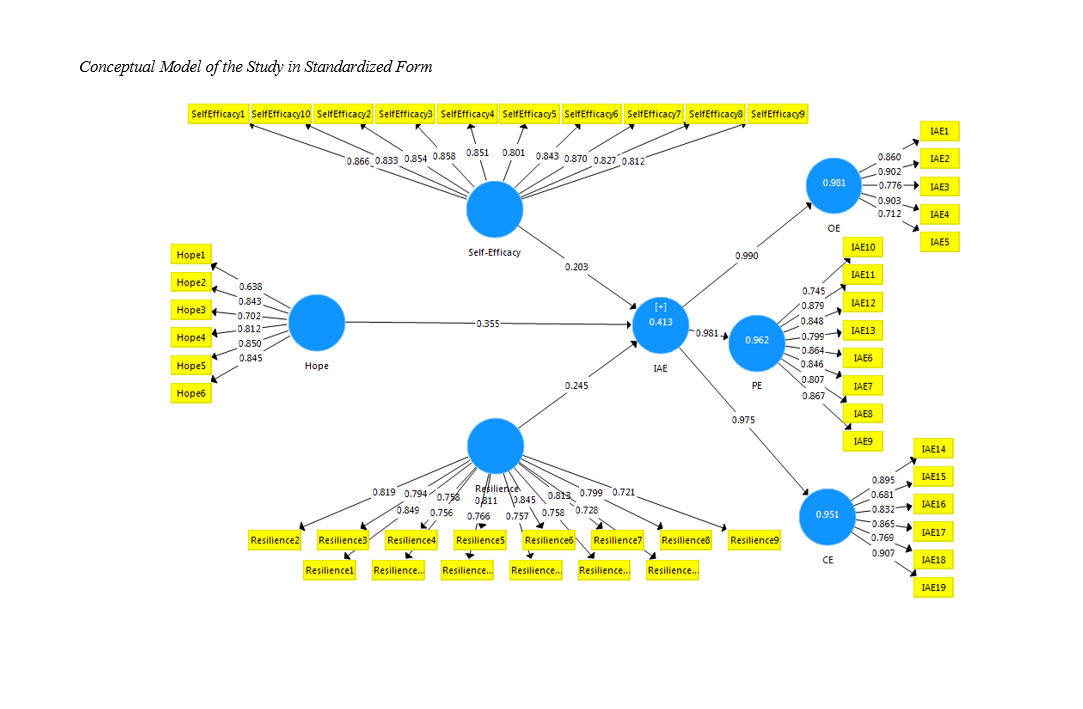
Methods and Materials: This applied study employed a descriptive-correlational research design. The statistical population consisted of internal auditors working in companies listed on the Tehran Stock Exchange. Using an appropriate sample-size determination procedure, 195 internal auditors were selected as the study sample, and questionnaires were distributed among them. Data were collected using a structured questionnaire designed to measure auditors’ behavioral voice motivators and internal audit effectiveness. The proposed research model and hypotheses were analyzed using Partial Least Squares Structural Equation Modeling (PLS-SEM). The analytical procedure was used to estimate the structural relationships between the dimensions of behavioral voice motivators and internal audit effectiveness and to determine the direction and statistical significance of the hypothesized effects.
Findings: The inferential findings indicated that all three dimensions of internal auditors’ behavioral voice motivators had positive and statistically significant effects on internal audit effectiveness in capital market companies. The results therefore supported all hypothesized relationships between behavioral voice motivators and internal audit effectiveness. In particular, motivational mechanisms associated with professional efficiency, hope, and resilience contributed significantly to explaining improvements in internal audit effectiveness. The findings further demonstrated that stronger behavioral voice motivators were associated with greater effectiveness in auditors’ professional performance and their capacity to communicate and disclose organizational and financial issues more effectively.
Conclusion: Behavioral voice motivators constitute significant determinants of internal audit effectiveness, suggesting that strengthening efficiency-oriented motivation, hope, and resilience among internal auditors can enhance their confidence, professional voice, and willingness to communicate financial realities more transparently.
Downloads
References
Ahmadi, A., & Rezaei, S. (2025). Evaluation and Improvement of Internal Audit Effectiveness in Iranian Industrial Companies. Financial Accounting Quarterly, 15(57), 45-62.
Aslani, M., Ataei, M., Gholamzadeh, D., & Mohtashami, A. (2026). Effective Implementation of Corporate Governance: The Role of Committees and Member Competencies. Management Accounting and Auditing Knowledge, 14(55), 231-247.
Badaruddin, B. (2025). Leveraging Employee Voice Behavior for Organizational Change: The Role of Commitment and Engagement in a Digital Era. Journal of Information Systems Engineering & Management, 10(14s), 191-199. https://doi.org/10.52783/jisem.v10i14s.2184
Bandarian. (2025). The Effect of Audit Committee Characteristics and Effective Corporate Governance on Opportunistic Earnings Management Arising from Classification Shifting of Income Statement Items in the Tehran Stock Exchange. https://www.magiran.com/paper/2889312
Bouaziz, D., Moalla, M., & Jarboui, A. (2025). Does external audit quality moderate the relationship between audit committee effectiveness and earnings management? Evidence from France. Euromed Journal of Business. https://doi.org/10.1108/EMJB-06-2024-0153
Dillard, J. (2000). Management accounting and control: Competing ideas and divergent voices. Accounting, Auditing & Accountability Journal, 13(3), 302-332.
Ebrahimi, A., Gerayli, M. S., & Valiyan, H. (2022). Effects of External and Internal Drivers of Individual Behavior Voice on the Moral Courage and Internal Auditors’ Effectiveness. Journal of Accounting & Organizational Change, 19(5), 735-764. https://doi.org/10.1108/jaoc-08-2021-0099
Joseph, S., & Shetty, N. (2022). An empirical study on the impact of employee voice and silence on destructive leadership and organizational culture. Asian Journal of Business Ethics, 11(Suppl 1), 85-109. https://doi.org/10.1007/s13520-022-00155-0
Kim, S. B., Lee, S. H., & Rhee, S. J. (2022). The Influence of Inclusive Leadership on Employee Voice Behavior: A Mediating Effect of Psychological Safety and Moderating Effects of Learning Goal Orientation and Power Distance Orientation. Korean Academy of Organization and Management, 46(3), 73-106. https://doi.org/10.36459/jom.2022.46.3.73
Kohandel, Z., Doaei, M., & Zamanianfar, L. (2025). The Effectiveness of Cognitive Biases on Audit Error Based on the Structural Equation Modeling Approach. Investment Knowledge, 14(4), 507-526.
Lento, A., & Pando, M. (2025). The Impact of Information Technology on the Effectiveness of Internal Auditing: The Mediating Role of Audit Quality [Advance online publication]. Journal of Accounting and Information Systems.
Meilani, A., Tifani, M., Wijaya, N. N., & Rosnidah, I. (2025). The Influence of Internal Audit Effectiveness in Using Information Technology to Improve Audit Quality. International Journal of Business, Economics, and Social Development, 6(4), 537-542.
Men, L. R., Thelen, P. D., & Qin, Y. S. (2024). The Impact of Diversity Communication on Employee Organizational Identification and Employee Voice Behaviors: A Moderated Mediation Model. Public Relations Review, 50(4), 102492.
Mirghafouri, S., Aghazadeh Bafq, M., & Saffari Darbarzi, A. (2024). The Effect of Synergistic Leadership Behaviors on Knowledge Hiding of Kashan Teachers: The Mediating Role of Professional Learning Community and Organizational Voice. Strategic Management of Organizational Knowledge, 7(3), 11-20. https://doi.org/10.47176/SMOK.2024.1779
Mohammadpour, V., Zarean, M., & Bakhshipour Roudsari, A. (2025). The Effectiveness of Cognitive Rehabilitation on Perceptual Reasoning, Processing Speed, and Visual and Auditory Working Memory in Children with Attention-Deficit/Hyperactivity Disorder. Ravan-Parastari, 13(1), 124-135.
Panchapakesan, A., Anandaram, H., Sridevi, L., Sathish, K. M., Dhivya, P., Parameswari, S., & Kapadia, H. (2025). Enhancing audit effectiveness through strategic data analytics. In (pp. 231-252). IGI Global Scientific Publishing. https://doi.org/10.4018/979-8-3693-8186-1.ch009
Pham, T. M. L. (2025). Exploring Organizational Drivers of Internal Audit Effectiveness: Insights from an Emerging Market. Journal of Accounting in Emerging Economies.
Pourghafari, S., Manzari Tavakoli, S., Salajegheh, S., & Dehghani, S. (2024). The Impact of Organizational Culture on Employee Voice, with the Mediation of Employee Empowerment. Journal of Management Studies for Improvement and Transformation, 32(108), 223-273.
Shadkami, M., Bokharaeian, M., Naderian, A., & Gorganli Davaji, J. (2025). Applying fuzzy Delphi approach for diagnosis and determination effective factors on information technology internal audit. International Journal of Nonlinear Analysis and Applications, 16(8), 19-34. https://doi.org/10.22075/ijnaa.2024.33066.4920
Soltani, M. (2022). The Impact of Authentic Leadership on Organizational Voice in Iranian Universities of Medical Sciences. Health Management Journal, 24(3), 45-60.
Veledar, B., Gadzo, A., & Bajric, N. (2025). The Impact of Various Factors on the Effectiveness of Internal Audit in the Public Sector: The Case of Bosnia and Herzegovina. Journal of Forensic Accounting Profession, 4(2), 1-19. https://doi.org/10.2478/jfap-2024-0006
Xie, B. (2024). Influence of Organizational Cultural Identification on Employees’ Voice Behavior in Railway Engineering Enterprises. Journal of Railway Science and Engineering, 21(5). https://doi.org/10.19713/j.cnki.43-1423/u.T20231277
Yahaya, O. A. (2026). Audit committee effectiveness, earnings management, and audit quality: Evidence from listed firms in Nigeria. Journal of Financial Reporting and Research, 31(3), 1-28.
Downloads
Additional Files
Publication Timeline
- Submitted
- Revised
- Accepted