Definition, Classification, and Characteristics of Indicator Systems: A Systematic Review
DOI:
https://doi.org/10.61838/kman.ijimob.4391Keywords:
Characteristics, Higher Education Studies, review, Indicator Systems, IndicatorsAbstract
Objective: The purpose of this article is to summarize the definitions, classifications, and characteristics of indicator systems and to create a foundation for understanding and developing a common system through a systematic review.
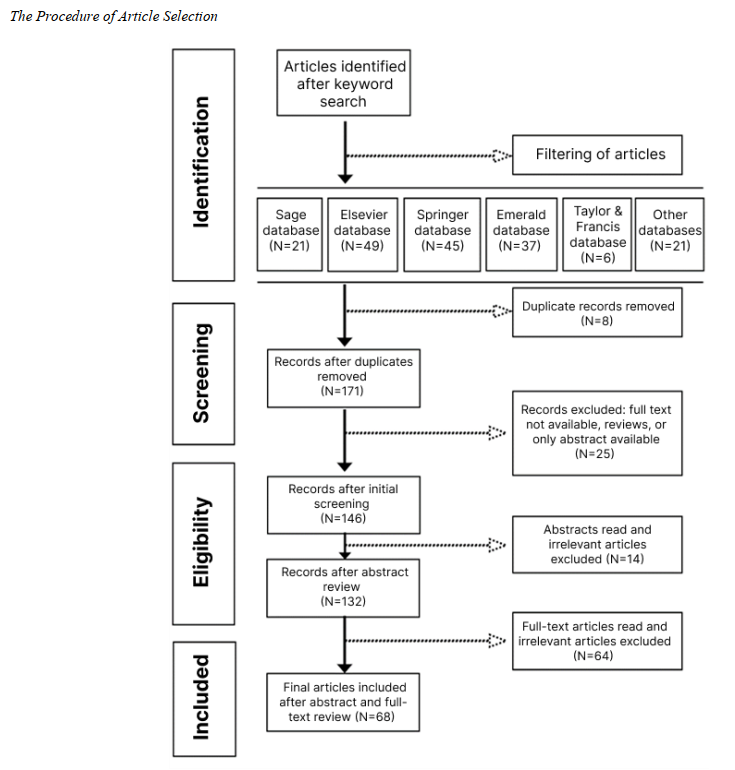
Methodology: Through a review study, using two English keywords, "Indicator System" and "System of Indicators", five databases—Springer, Sage, Elsevier, Taylor & Francis, and Emerald—were systematically searched. After applying exclusion criteria, a total of 68 documents, which based on PRISMA indicators demonstrated acceptable quality for this study, were selected and analyzed. Data analysis in this research was conducted using Altheide’s method.
Findings: According to the identified components, the indicator system “refers to a set of characteristics that, through quantitative and qualitative indicators, are influenced by three dimensions—temporal, environmental, and content-related—as well as the target audience, thereby enabling the reflection of changes, the simplification of understanding phenomena, and the measurement and provision of meaningful information about them.” Furthermore, the review of existing classifications in the design and development of indicator systems led to the proposal of a new taxonomy, structured into 40 levels and 14 categories, which are consolidated into six overarching themes: the nature of the indicator, the nature of indicator data, the degree of importance and order of operational steps, application and performance (thematic), number of indicators, and level.
Conclusion: In addition, the findings of this study identified the characteristics of indicators as essentially descriptive, prescriptive, and deductive. It also provided explanations regarding the selection of good indicators, which will be further elaborated in the following sections.
Downloads
References
Abdullah, K., & Usman, A. M. (2022). Development of comprehensive carbon footprint and environmental impact indicators for building transportation assessment. Frontiers in Engineering and Built Environment. https://doi.org/10.1108/febe-11-2021-0053
Ali Turk, Z., Daryai, A. A., & Mohammadi Khoshuyi, H. (2024). Macroeconomic Instability, Good Governance Indicators, and Profit Management in the Iranian Capital Market. Journal of Financial Accounting, 11(42), 129-159.
Alomoto, W., Niñerola, A., & Pié, L. (2021). Social Impact Assessment: A Systematic Review of Literature. Social Indicators Research. https://doi.org/10.1007/s11205-021-02809-1
Bajo Marcos, E., Fernández, M., & Serrano, I. (2022). Happy to belong: Exploring the embeddedness of well-being in the integration of migrant and refugee minors. Current Psychology. https://doi.org/10.1007/s12144-022-03341-2
Bajo Marcos, E., Ordóñez-Carabaño, Á., Rodríguez-Ventosa Herrera, E., & Serrano, I. (2023). Identifying the Core Indicators of Migrant and Refugee Children's Integration Using the Delphi Method: A Multi-Input Strategy for Definition of Consensus. International Journal of Qualitative Methods, 22, 160940692211494. https://doi.org/10.1177/16094069221149487
Baniasadi, A., Salehi, K., Khodaie, E., Bagheri Noaparast, K., & Izanloo, B. (2022). Fairness in Classroom Assessment: A Systematic Review. The Asia-Pacific Education Researcher. https://doi.org/10.1007/s40299-021-00636-z
Barati, M., Qandahari, M. T., & Mohtari, M. (2024). Identifying financial health indicators based on good governance in government organizations. Accounting and Management Perspectives, 7(89), 130-139. https://www.jamv.ir/article_198075.html
Berger, L., Henry, A. D., & Pivo, G. (2022). Orienteering the landscape of urban water sustainability indicators. Environmental and Sustainability Indicators, 100207. https://doi.org/10.1016/j.indic.2022.100207
Blancas, F. J., Contreras, I., & Lozano-Oyola, M. (2023). Evaluating destinations' efforts to improve sustainability in tourism using the inter-temporal decomposition of a composite indicator. Environmental Impact Assessment Review, 98, 106947. https://doi.org/10.1016/j.eiar.2022.106947
Boumahdi, I., & Zaoujal, N. (2023). Regional Well-Being Disparities in Morocco and its OECD Partners. Social Indicators Research. https://doi.org/10.1007/s11205-023-03097-7
Camanho, A. S., Stumbriene, D., Barbosa, F., & Jakaitiene, A. (2023). The assessment of performance trends and convergence in education and training systems of European countries. European Journal of Operational Research, 305(1), 356-372. https://doi.org/10.1016/j.ejor.2022.05.048
Capecchi, S., Cappelli, C., Curtarelli, M., & Di Iorio, F. (2023). Synthetic indicators to analyze work-related physical and psychosocial risk factors: evidence from the European Working Conditions Survey. Quality & Quantity. https://doi.org/10.1007/s11135-023-01617-8
Cavicchia, C., Sarnacchiaro, P., Vichi, M., & Zaccaria, G. (2023). A model-based ultrametric composite indicator for studying waste management in Italian municipalities. Computational Statistics. https://doi.org/10.1007/s00180-023-01333-9
Chai, N., Shi, B., Meng, B., & Dong, Y. (2023). Default Feature Selection in Credit Risk Modeling: Evidence From Chinese Small Enterprises. Sage Open, 13(2), 215824402311652. https://doi.org/10.1177/21582440231165224
Chatziioannou, I., Nikitas, A., Tzouras, P. G., Bakogiannis, E., Alvarez-Icaza, L., Chias-Becerril, L., Karolemeas, C., Tsigdinos, S., Wallgren, P., & Rexfelt, O. (2023). Ranking sustainable urban mobility indicators and their matching transport policies to support liveable city Futures: A MICMAC approach. Transportation Research Interdisciplinary Perspectives, 18, 100788. https://doi.org/10.1016/j.trip.2023.100788
Chen, R., Wang, S., Zhu, Z., Yu, J., & Dang, C. (2023). Credit ratings of Chinese online loan platforms based on factor scores and K-means clustering algorithm. Journal of Management Science and Engineering. https://doi.org/10.1016/j.jmse.2022.12.003
De Wolf, C., Cordella, M., Dodd, N., Byers, B., & Donatello, S. (2023). Whole life cycle environmental impact assessment of buildings: Developing software tool and database support for the EU framework Level(s). Resources, Conservation and Recycling, 188, 106642. https://doi.org/10.1016/j.resconrec.2022.106642
Duan, P., Xiang, J., Niu, H., & Han, C. (2023). Construction of Evaluation Index for Chinese Engineering Undergraduates Based on CIPP Model. Sage Open, 13(1), 215824402211494. https://doi.org/10.1177/21582440221149415
Etis. (2022). The European Tourism Indicator System (ETIS) and Accessible Tourism Awards 2016. https://www.accessibletourism.org/?i=enat.en.events.1938
Facchinetti, S., & Siletti, E. (2021). Well-being Indicators: a Review and Comparison in the Context of Italy. Social Indicators Research, 159(2), 523-547. https://doi.org/10.1007/s11205-021-02761-0
Font, X., Torres-Delgado, A., Crabolu, G., Palomo Martinez, J., Kantenbacher, J., & Miller, G. (2021). The impact of sustainable tourism indicators on destination competitiveness: the European Tourism Indicator System. Journal of Sustainable Tourism. https://doi.org/10.1080/09669582.2021.1910281
Gallego, I., González-Rodríguez, M. R., & Font, X. (2023). A multi-criteria, composite index methodology to measure the suitability of target markets for the hotel industry. Tourism Management Perspectives, 47, 101104. https://doi.org/10.1016/j.tmp.2023.101104
Gleißner, W., Günther, T., & Walkshäusl, C. (2022). Financial sustainability: measurement and empirical evidence. Journal of Business Economics, 92. https://doi.org/10.1007/s11573-022-01081-0
Habib, A., Bencharki, B., & Said, H. (2022). A critical analysis of water economics in public water and sanitation services in Morocco. Arab Gulf Journal of Scientific Research, 40(3), 280-301. https://doi.org/10.1108/agjsr-04-2022-0034
Hakimi, N., Fathi, Z., & Pourbahrami, B. (2024). Application of Metacombination Technique in the Financial Flow Based on Blockchain Technology in the Hospital Ecosystem. Dynamic Management and Business Analysis, 2(4), 74-93. https://doi.org/10.22034/dmbaj.2024.2035663.1036
Homer, S. T. (2022). British Gen Z perceptions of sustainable fisheries: developing a measurement instrument. Quality & Quantity. https://doi.org/10.1007/s11135-022-01579-3
Hu, Z., Zhou, X., & Lin, A. (2023). Evaluation and identification of potential high-value patents in the field of integrated circuits using a multidimensional patent indicators pre-screening strategy and machine learning approaches. Journal of Informetrics, 17(2), 101406. https://doi.org/10.1016/j.joi.2023.101406
Huang, H., Li, R., Wang, W., Qin, T., Zhou, R., & Fan, W. (2023). Concepts, models, and indicator systems for urban safety resilience: A literature review and an exploration in China. Journal of Safety Science and Resilience, 4(1), 30-42. https://doi.org/10.1016/j.jnlssr.2022.10.003
Kraeger, P., Phillips, R., Kuenzi, K., & Ugboya, I. (2022). Exploring Select US Community Foundations and COVID-19 Responsive Community Philanthropy. International Journal of Community Well-Being, 5(2), 241-257. https://link.springer.com/article/10.1007/s42413-021-00161-3
Lapatinas, A., & Katsaiti, M.-S. (2023). EU MECI: A Network-Structured Indicator for a Union of Equality. Social Indicators Research. https://doi.org/10.1007/s11205-023-03079-9
Li, Z., Zhao, H., Liu, J., Zhang, J., & Shao, Z. (2022). Evaluation and promotion strategy of resilience of urban water supply system under flood and drought disasters. Scientific reports, 12(1), 7404. https://www.nature.com/articles/s41598-022-11436-w
Liu, C., Tu, J., & He, Y. (2023). Measurement of China's Human Development Index and Analysis of Its Influencing Factors from the Perspective of New Development Concept. Social Indicators Research, 167(1), 213-268. https://link.springer.com/article/10.1007/s11205-023-03105-w
Liu, T., Zhou, N., Wu, Q., Wang, D., & Hu, X. (2022). Toward a sustainable energy system in China: Status and influencing factors. Energy Exploration & Exploitation, 40(2), 580-598. https://journals.sagepub.com/doi/abs/10.1177/01445987211054224
Magrini, A., & Giambona, F. (2022). A Composite Indicator to Assess Sustainability of Agriculture in European Union Countries. Social Indicators Research. https://doi.org/10.1007/s11205-022-02925-6
Martin, J., Khurshid, Z., Moore, G., Carton, M., Fitzsimons, J. J., Henry, C., & Flynn, M. A. (2023). Applying a new approach to the governance of healthcare quality at board level. International Journal of Health Governance. https://doi.org/10.1108/ijhg-10-2022-0088
Mihalic, T., & Kuščer, K. (2021). Can overtourism be managed? Destination management factors affecting residents' irritation and quality of life. Tourism Review, ahead-of-print(ahead-of-print). https://doi.org/10.1108/tr-04-2020-0186
Mohammadi Yazdi, A., Mirsepasi, N., Mousakhani, M., & Hanifi, F. (2024). Investigating the Status of Human Resource Management Development Indicators Based on Competency Components in the e-Commerce Development Center of the Ministry of Industry, Mines and Trade. Dynamic Management and Business Analysis, 2(4), 180-199. https://doi.org/10.22034/dmbaj.2024.2035663.2412
Na, K., & Han, K. (2023). How leaderboard positions shape our motivation: the impact of competence satisfaction and competence frustration on motivation in a gamified crowdsourcing task. Internet Research. https://doi.org/10.1108/intr-12-2021-0897
Oecd. (2021). Enhancing the effectiveness of sub-national biodiversity policy: Practices in France and Scotland, United Kingdom (OECD Regional Development Papers, Issue.
Oecd. (2022). The Circular Economy in Ireland (OECD Urban Studies, Issue.
Owusu-Manu, D. G., Debrah, C., Oduro-Ofori, E., Edwards, D. J., & Antwi-Afari, P. (2020). Attributable indicators for measuring the level of greenness of cities in developing countries: lessons from Ghana. Journal of Engineering, Design and Technology, 19(3), 625-646. https://doi.org/10.1108/jedt-06-2020-0257
Pan, W., Wu, Z., Shen, W., Wen, C., Li, Z., Liao, X., & Wu, M. (2023). Green credit operation performance evaluation of commercial banks in the context of epidemic and carbon reduction. Energy Exploration & Exploitation, 014459872311629. https://doi.org/10.1177/01445987231162994
Perchinunno, P., Massari, A., L'Abbate, S., & Mongelli, L. (2023). Ecological Transition and Sustainable Development, A Multivariate Statistical Analysis to Guide the Policies of the National Recovery and Resilience Plan. Social Indicators Research. https://doi.org/10.1007/s11205-023-03078-w
Punzo, G., Trunfio, M., Castellano, R., & Buonocore, M. (2022). A Multi-modelling Approach for Assessing Sustainable Tourism. Social Indicators Research, 163(3), 1399-1443. https://doi.org/10.1007/s11205-022-02943-4
Qian, H., Ye, M., Liu, J., & Gao, D. (2022). Evaluation of and Policy Measures for the Sustainable Development of National Experimental Teaching Demonstration Centers in Chinese Universities and Colleges. Sage Open, 12(1). https://doi.org/10.1177/21582440211068517
Ricciolini, E., Rocchi, L., Cardinali, M., Paolotti, L., Ruiz, F., Cabello, J. M., & Boggia, A. (2022). Assessing Progress Towards SDGs Implementation Using Multiple Reference Point Based Multicriteria Methods: The Case Study of the European Countries. Social Indicators Research. https://doi.org/10.1007/s11205-022-02886-w
Sánchez, A., & Jiménez-Fernández, E. (2022). European Union Cohesion Policy: Socio-Economic Vulnerability of the Regions and the COVID-19 Shock. Applied Research in Quality of Life. https://doi.org/10.1007/s11482-022-10116-1
Scaccabarozzi, A., Mazziotta, M., & Bianchi, A. (2022). Measuring Competitiveness: A Composite Indicator for Italian Municipalities. Social Indicators Research. https://doi.org/10.1007/s11205-022-02990-x
Shi, H., Zhang, L., Song, B., & He, C. (2022). The impact of ecotourism on local rural households' livelihood around Wolong Nature Reserve. Forestry Economics Review. https://doi.org/10.1108/fer-06-2021-0013
Tool, M. D. F. (2023). Indicators - Toolkit sport for development | Mdf tool indicators. https://pdf4pro.com/docs/mdf-tool-indicators-1675f4.html
Tu, W., Zhang, L., Sun, D., & Mao, W. (2023). Evaluating high-tech industries' Technological Innovation Capability and Spatial Pattern Evolution characteristics: Evidence from China. Journal of Innovation & Knowledge, 8(1), 100287. https://doi.org/10.1016/j.jik.2022.100287
Tu, Y., Zhao, Y., Liu, L., & Nie, L. (2022). Travel route planning of core scenic spots based on best-worst method and genetic algorithm: a case study. Management System Engineering, 1(1). https://doi.org/10.1007/s44176-022-00004-1
Ulitskaya, I., Shlippe, I., Matantseva, O., & Grishaeva, Y. (2023). Quality Management of Transport Service in the Russian Federation in the Sphere of Cargo Transportation. Transportation Research Procedia, 68, 81-90. https://doi.org/10.1016/j.trpro.2023.02.010
Ulitsky, M., Dreizen, M., Serbian, O., Mashkin, A., & Sokolova, N. (2023). Study of Opportunities to Increase Financial Transparency of Railway Transport. Transportation Research Procedia, 68, 70-80. https://doi.org/10.1016/j.trpro.2023.02.009
Unaids. (2020). An IntroductIon to IndIcAtors UNAIDS Monitoring and Evaluation Fundamentals. https://www.unaids.org/sites/default/files/sub_landing/files/8_2-Intro-to-IndicatorsFMEF.pdf
Wang, Y., Peng, Q., Jin, C., Ren, J., Fu, Y., & Yue, X. (2023). Whether the digital economy will successfully encourage the integration of urban and rural development: A case study in China. Chinese Journal of Population, Resources and Environment, 21(1), 13-25. https://doi.org/10.1016/j.cjpre.2023.03.002
Xu, S., & Gao, K. (2022). Green finance and high-quality development of marine economy. Marine Economics and Management. https://doi.org/10.1108/maem-01-2022-0001
Yin, K., Cao, Y., Zhou, S., & Lv, X. (2022). Research on optimization of index system design and its inspection method: data quality diagnosis, index classification and stratification. Marine Economics and Management, 5(2), 105-146. https://doi.org/10.1108/maem-05-2022-0005
Zhang, J., Prettner, K., Chen, S., & Bloom, D. E. (2023). Beyond GDP: Using healthy lifetime income to trace well-being over time with estimates for 193 countries. https://www.sciencedirect.com/science/article/pii/S0277953623000291
Zhao, X., Xiang, H., & Zhao, F. (2023). Measurement and spatial differentiation of farmers’ livelihood resilience under the COVID-19 epidemic outbreak in rural China. Social Indicators Research, 166(2), 239-267. https://link.springer.com/article/10.1007/s11205-022-03057-7
Zhao, Y., Song, Z., Chen, J., & Dai, W. (2023). The mediating effect of urbanisation on digital technology policy and economic development: Evidence from China. Journal of Innovation & Knowledge, 8(1), 100318. https://www.sciencedirect.com/science/article/pii/S2444569X23000148
Zhou, X. (2022). On equalization of fundamental education in Tibet: a case study on the trend of conditions of primary and middle schools running. International Journal of Anthropology and Ethnology, 6(1), 19. https://link.springer.com/article/10.1186/s41257-022-00078-5
Downloads
Additional Files
Publication Timeline
- Submitted
- Revised
- Accepted
Issue
Section
License
Copyright (c) 2025 Sepehr Rahimian (Corresponding Author); Keyvan Salehi (Author)

This work is licensed under a Creative Commons Attribution-NonCommercial 4.0 International License.