A Green Transformation: Designing Sustainable Innovation Indicators in the Home Appliance Industry
DOI:
https://doi.org/10.61838/kman.ijimob.5.2.8Keywords:
green research and development, home appliance industry, green management, green innovationAbstract
Objective: The aim of this study is to explore green research and development (R&D) in the home appliance industry.
Methods and Materials: This research is applied in nature, and the data collection method is descriptive-survey. Initially, by reviewing the literature and using qualitative content analysis, 30 factors were extracted as indicators for green development and formulation, categorized into five dimensions: green management, product and stakeholder performance, internal environment management, green innovation, and energy and resource consumption management. In the second stage, the fuzzy Delphi technique was employed, with a two-stage survey conducted among 15 experts selected through purposive sampling to achieve group consensus and filter the findings from the first stage. Finally, to assess the opinions of employees in the home appliance industry regarding green R&D indicators, a questionnaire was distributed among 170 employees, selected through Cochran’s formula and simple random sampling. The results were analyzed using SPSS software and a one-sample t-test.
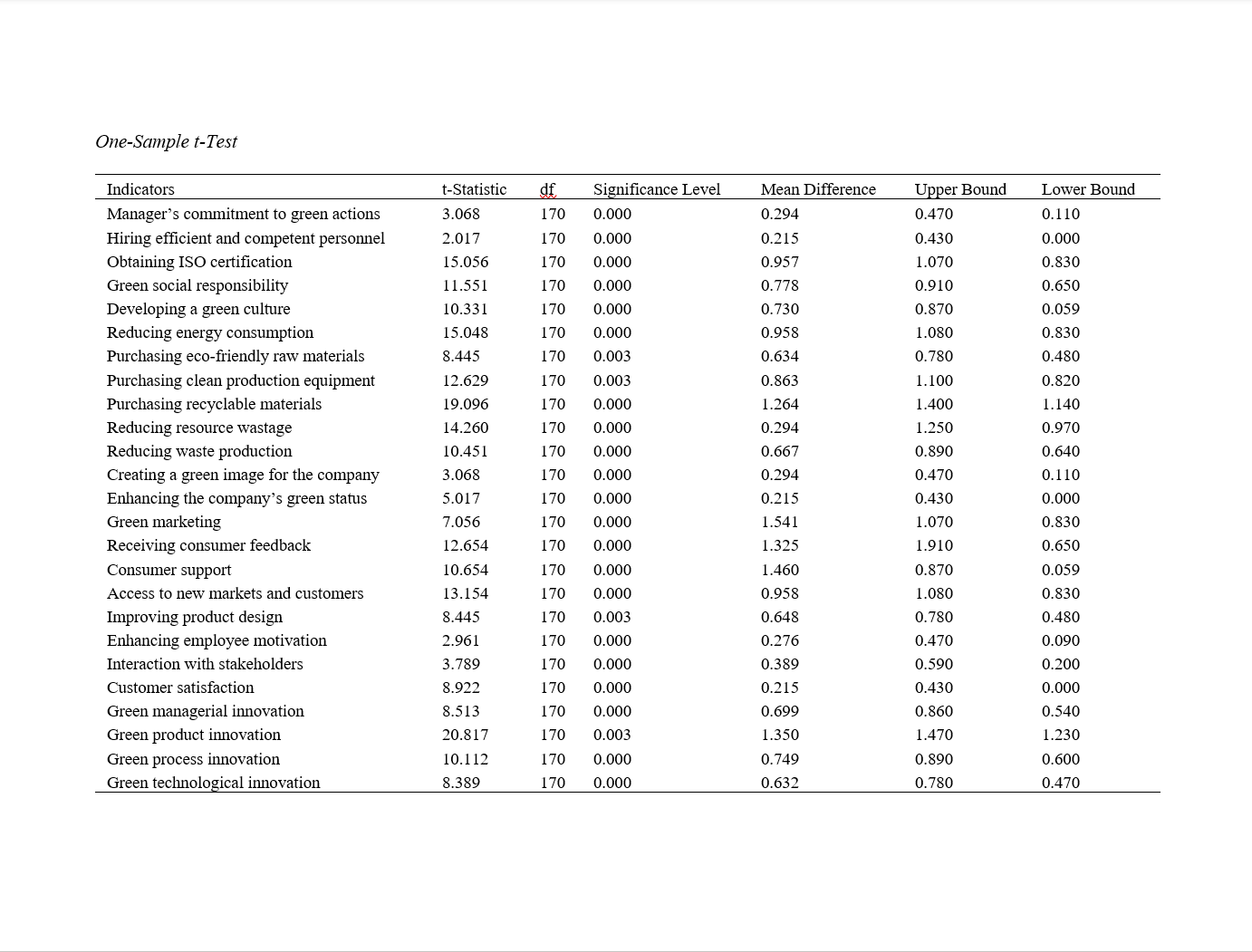
Findings: The findings showed that all these indicators were significantly identified as green R&D indicators in the home appliance industry at a 95% confidence level. Based on the results, the product design improvement indicator, with an average score of (4.18), received the highest rating from employees. This was followed by access to new markets and customers with an average score of (4.14), a green image of the company with an average score of (4.11), green product innovation with an average score of (4.10), and enhancing the company's green position with an average score of (4.02), respectively.
Conclusion: The findings highlight the significance of improving product design, accessing new markets, and promoting a green company image as crucial factors for achieving sustainable development.
Downloads
References
Govindan, K. (2024). How Artificial Intelligence Drives Sustainable Frugal Innovation: A Multitheoretical Perspective. Ieee Transactions on Engineering Management. https://doi.org/10.1109/tem.2021.3116187
Hernawati, M. (2024). The Influence of Cultural Intelligence on Sustainable Innovation Behavior Mediated by Knowledge Sharing and Moderate by Organization Culture. Journal of Social Research, 3(2). https://doi.org/10.55324/josr.v3i2.1925
Jones, K. L., Krishnan, G. V., & Melendrez, K. (2008). Do models of discretionary accruals detect actual cases of fraudulent and restated earnings? An empirical analysis. Contemporary Accounting Research, 25(2), 285-309. https://doi.org/10.1506/car.25.2.8
Kanwar, S., & Evenson, R. (2003). Does intellectual property protection spur technological change? Oxford Economic Papers, 55(2), 235-264. https://doi.org/10.1093/oep/55.2.235
Malek, R. (2024). Toward Sustainable Global Product Development Performance: Exploring the Criticality of Organizational Factors and the Moderating Influence of Global Innovation Culture. Sustainability, 16(10), 3911. https://doi.org/10.3390/su16103911
Martinez, F., Gonzalez, P., & Rodriguez, L. (2019). The role of government in promoting green R&D: Evidence from European countries. Environmental Economics and Policy Studies, 21, 743-767. https://doi.org/10.1007/s10018-018-0220-8
Mehrgan, N., & Soltani Sahat, L. (2014). Research and Development Expenditure and Total Factor Productivity Growth in the Industry Sector. Strategic and Macro Policies, 2(5), 1-... https://www.jmsp.ir/article_6591.html?lang=en
Murat Ar, I. (2012). The impact of green product innovation on firm performance and competitive capability: the moderating role of managerial environmental concern. Procedia - Social and Behavioral Sciences, 62, 854-864. https://doi.org/10.1016/j.sbspro.2012.09.144
Noailly, J., Nowzohour, L., & van den Heuvel, M. (2022). Does environmental policy uncertainty hinder investments in the low carbon economy? NBER Working Paper. https://doi.org/10.3386/w30361
Sang-Ho, L., Sanghoon, P., & Taehyoung, K. (2015). Review on investment direction of green technology R&D in Korea. Renewable and Sustainable Energy Reviews, 50, 186-193. https://doi.org/10.1016/j.rser.2015.04.158
Shahabadi, A., Ghasemi Far, S., & Haj Mousavi, S. S. (2023). The Interactive Effect of Entrepreneurship and Financial Development on Economic Complexity. Financial Economics(4), 1-24. https://journals.iau.ir/article_707976.html
Singjai, K., Winata, L., & Kummer, T. (2019). Green initiatives and their competitive advantage for the hotel industry in developing countries. International Journal of Hospitality Management, 75, 131-143. https://doi.org/10.1016/j.ijhm.2018.03.007
Downloads
Additional Files
Publication Timeline
- Submitted
- Revised
- Accepted
Issue
Section
License
Copyright (c) 2024 Mohammad Abedi (Author); Zahra Aabedi (Corresponding Author); Nazanin Pilehvari (Author)

This work is licensed under a Creative Commons Attribution-NonCommercial 4.0 International License.