Evaluating the Efficacy of Paradoxical Therapy within the Psychoanalytic Framework for Mental Health and Symptoms of Prolonged Grief Disorder
DOI:
https://doi.org/10.61838/kman.jayps.4476Keywords:
grief, paradox therapy, prolonged grief disorder, paradoxical therapy, free associationAbstract
Objective: Prolonged grief disorder (PGD) is associated with various maladaptive psychological consequences. The present study aimed to examine the effectiveness of Paradoxical Therapy within a psychoanalytic framework on mental health indices and symptoms of prolonged grief.
Methods and Materials: This study employed a single-case experimental design. Three clients, during 2024 at the University of Tehran Psychology Clinic, received psychotherapy using Paradoxical Therapy. The research design followed a baseline–intervention–follow-up (ABA) model. Interventions consisted of six individual sessions grounded in the principles of psychoanalytic Paradoxical Therapy. Assessment tools included a diagnostic interview, the Treatment Outcome Subjective Rating Scale (TOSRS), and the Symptom Checklist-90 (SCL-90).
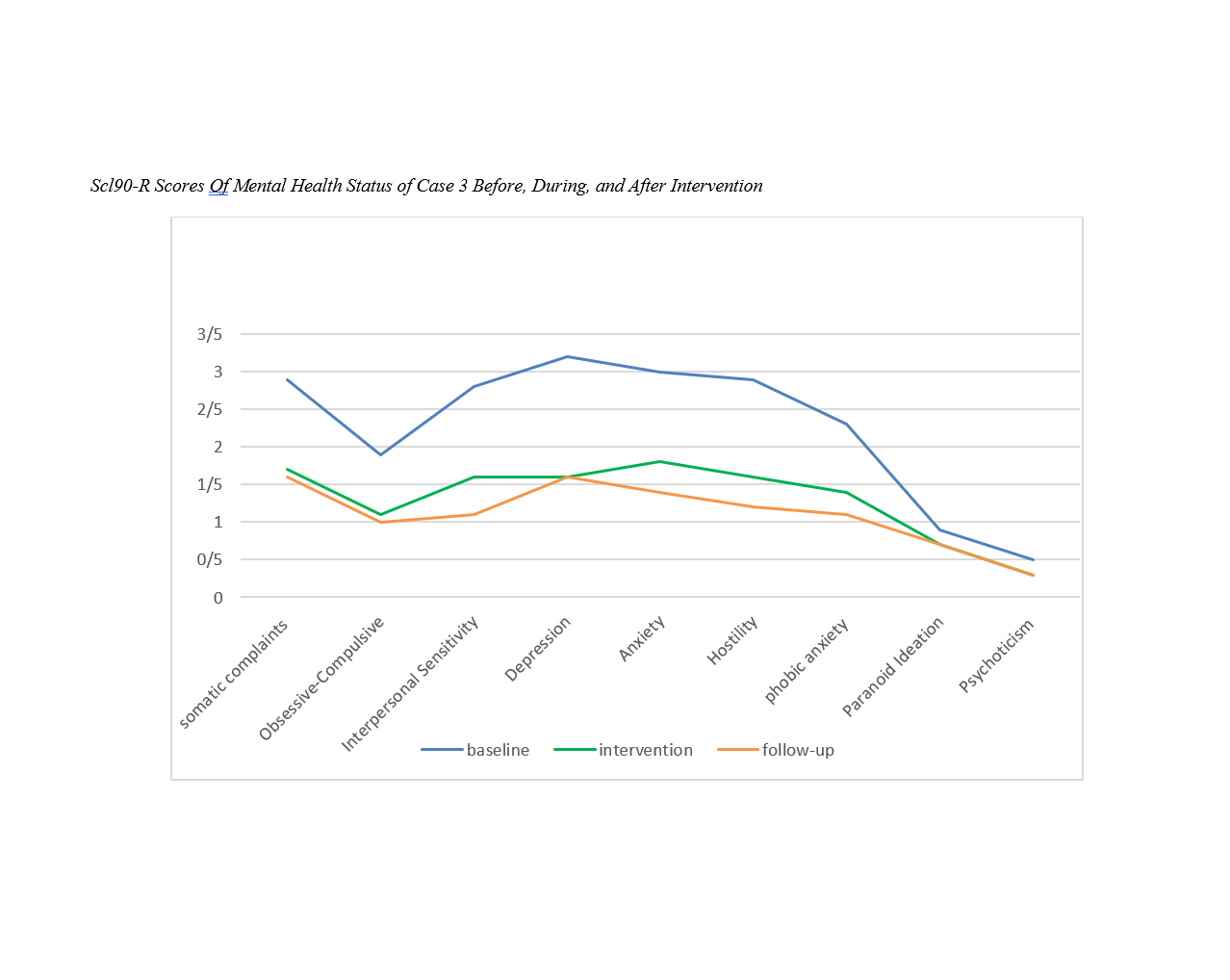
Findings: Findings indicated a marked reduction in grief-related symptom severity and sustained improvement in psychological well-being indices on the SCL-90, including somatization, interpersonal sensitivity, depression, anxiety, hostility, and phobic anxiety. Additionally, qualitative data revealed positive changes in emotion regulation, emotional self-awareness, and meaning reconstruction of loss, as reported by both clients and the therapist. The results suggest that psychoanalytic Paradoxical Therapy—emphasizing free association and emotional experiencing through structured daily exercises—was highly effective.
Conclusion: Six- and twelve-month follow-ups confirmed that therapeutic gains were satisfactory, consistent, and stable over time, with no evidence of relapse. This approach may serve as a promising intervention for complicated and prolonged grief. Further controlled studies are recommended to substantiate these findings.
Downloads
References
Akbari, A., Ysefpoor, N., Ahangari, E., & samari, a. a. (2017). An Investigation of the Effectiveness of Psychotherapy based on the Life Quality Improvement on the Reduction of Depression of those Suffering from Complicated Grief. Research in Clinical Psychology and Counseling, 7(1), 21-37. https://doi.org/10.22067/ijap.v7i1.54663
Akbari, F., & Aref, M. (2021). Effectiveness of Rational Emotive Behavior Therapy, Logotherapy-based Group Counseling, and Their Combination on the Treatment of Grief Caused by Adolescent Girls' Love Trauma [Research Article]. Pajouhan Scientific Journal, 19(2), 1-9. https://doi.org/10.52547/psj.19.2.1
American Psychiatric Association. (2022). Diagnostic and statistical manual of mental disorders (5th ed., text rev.). https://doi.org/10.1176/appi.books.9780890425787
Asayesh, M. H., & Parsakia, K. (2025). Paradoxical Timetable Therapy and Psychological Problems: Mechanisms of Change and Implications. Mental Health and Lifestyle Journal, 3(3), 1-21. https://doi.org/10.61838/mhlj.3.3.11
Babaie, v., abolmaali alhosseini, k., & hobbi, M. b. (2024). Comparing the effectiveness of paradoxical time table therapy and virtual reality technology therapy on the focused – attention and symptoms of social anxiety disorder [Research]. Journal of Psychological Science, 23(133), 59-78. https://doi.org/10.52547/jps.23.133.59
Baker, J. (2001). Mourning and the transformation of object relationships: Evidence for the persistence of internal attachments. Psychoanalytic Psychology, 18, 55-73. https://doi.org/10.1037//0736-9735.18.1.55
Basharpoor, S., Narimani, M., Gamari-Give, H., Abolgasemi, A., & Molavi, P. (2011). Effect of cognitive processing therapy and holographic reprocessing on reduction of posttraumatic cognitions in students exposed to trauma. Iran J Psychiatry, 6(4), 138-144. https://pubmed.ncbi.nlm.nih.gov/22952539/
Baumann, I., Künzel, J., Goldbeck, L., Tutus, D., & Niemitz, M. (2022). Prolonged Grief, Posttraumatic Stress, and Depression Among Bereaved Parents: Prevalence and Response to an Intervention Program. OMEGA - Journal of Death and Dying, 84(3), 837-855. https://doi.org/10.1177/0030222820918674
Besharat, M. (2020). The application of paradox therapy for the treatment of body dysmorphic disorder: a case report [Research]. Journal of Psychological Science, 19(95), 1371-1387. http://psychologicalscience.ir/article-1-1025-en.html
Besharat, M. A. (2003). Development of the Treatment Outcome Subjective Rating Scale (TOSRS). [Research Report].
Besharat, M. A. (2016). Psychometric properties of the Treatment Outcome Subjective Rating Scale (TOSRS) [Research Report].
Besharat, M. A. (2019a). Evaluating the effectiveness of paradox therapy for the treatment of obsessive-compulsive disorder: A case study. Journal of Psychological Studies, 14(4), 7-36. https://doi.org/10.22051/psy.2019.23631.1801
Besharat, M. A. (2019b). Evaluating the effectiveness of paradox therapy for the treatment of social anxiety disorder: A case study [Research]. Journal of Psychological Science, 18(76), 383-396. http://psychologicalscience.ir/article-1-383-en.html
Besharat, M. A. (2023). Paradoxical psychotherapy: A practitioner’s guide [doi:10.1007/978-3-031-27717-7]. Springer Nature Switzerland AG. https://doi.org/10.1007/978-3-031-27717-7
Boelen, P. A., Lenferink, L. I. M., Nickerson, A., & Smid, G. E. (2018). Evaluation of the factor structure, prevalence, and validity of disturbed grief in DSM-5 and ICD-11. Journal of Affective Disorders, 240, 79-87. https://doi.org/https://doi.org/10.1016/j.jad.2018.07.041
Boelen, P. A., & Smid, G. E. (2017). Disturbed grief: prolonged grief disorder and persistent complex bereavement disorder. BMJ, 357, j2016. https://doi.org/10.1136/bmj.j2016
Bryant, R. A., Azevedo, S., Yadav, S., Cahill, C., Kenny, L., Maccallum, F., Tran, J., Choi-Christou, J., Rawson, N., Tockar, J., Garber, B., Keyan, D., & Dawson, K. S. (2024). Cognitive Behavior Therapy vs Mindfulness in Treatment of Prolonged Grief Disorder: A Randomized Clinical Trial. JAMA Psychiatry, 81(7), 646-654. https://doi.org/10.1001/jamapsychiatry.2024.0432
Bryant, R. A., Kenny, L., Joscelyne, A., Rawson, N., Maccallum, F., Cahill, C., Hopwood, S., & Nickerson, A. (2017). Treating Prolonged Grief Disorder: A 2-Year Follow-Up of a Randomized Controlled Trial. J Clin Psychiatry, 78(9), 1363-1368. https://doi.org/10.4088/JCP.16m10729
Delavar, A. (2016). Theoretical and practical foundations of research in human and social sciences. Nashr Roshd. https://roshdpress.ir/product
Drożdżowicz, A. (2020). The difficult case of complicated grief and the role of phenomenology in psychiatry. Phenomenology and Mind, 18(98–109). https://doi.org/10.17454/pam-1808
Dunlap, K. (1930). The National Institute of Psychology. Science, 71, 130-131. https://doi.org/10.1126/science.71.1831.130
Eatesamipour, R., Moghadam, K. R., & Amirpour, B. (2022). Effectiveness of Paradox Therapy on COVID-19 Anxiety in Adult Population in Jahrom. Modern Care Journal, 18(4), 1-. https://www.magiran.com/paper/2381378
Etemadi, M., Nabiei, M., Rajaei, Y., Naeiji, M. R., Rahmanian, M., Abdollahi Chirani, E., Amraei, A., & Mirzai, F. (2025). How the Paradoxical Timetable Cure (PTC) Fosters Post-Traumatic Growth and Self-Compassion Among Long-Term Grief Sufferers Following COVID-19 Bereavement. International Journal of Body, Mind and Culture, 12(2), 33-41. https://doi.org/10.61838/ijbmc.v12i2.744
Frankl, V. E. (1960). Paradoxical intention: A logotherapeutic technique. American Journal of Psychotherapy, 14, 520-535. https://psycnet.apa.org/record/1961-06613-001
Freud, S. (1913). On the beginning of treatment. http://www.sas.upenn.edu/~cavitch/pdf-library/Freud_BeginningTreatment.pdf
Freud, S. (1915). Thoughts for the time of war and death (B1915). In J. Strachey (Ed. & Trans.). In The standard edition of the complete psychological works of Sigmund Freud (Vol. 14, pp. 273–302). Hogarth Press. http://www.sas.upenn.edu/~cavitch/pdf-library/Freud_War_and_Death.pdf
Freud, S. (1916). On transience. In J. Strachey (Ed. & Trans.). In The standard edition of the complete psychological works of Sigmund Freud (Vol. 14, pp. 303–311). Hogarth Press. http://www.sas.upenn.edu/~cavitch/pdf-library/Freud_Transience.pdf?itid=lk_inline_enhanced-template
Freud, S. (1917/2001). Mourning and melancholia. In J. Strachey (Ed. & Trans.). In The standard edition of the complete psychological works of Sigmund Freud (Vol. 14, pp. 237–258). Hogarth Press. https://www.sas.upenn.edu/~cavitch/pdf-library/Freud_MourningAndMelancholia.pdf (Original work published 1917)
Freud, S., & Rank, O. (2012). The letters of Sigmund Freud and Otto Rank: Inside psychoanalysis. Johns Hopkins University Press. https://psycnet.apa.org/record/2012-00567-000
Gall, M. D., Gall, J.P. and Borg, W.R. (2006). Educational Research: An Introduction. Pearson Education. https://www.researchgate.net/publication/232559864_Educational_Research_An_Introduction
Ghadimi Nouran, M., Shafiabady, A., Khodabakhshi Koolaee, A., & Asgari, M. (2020). Develop a Therapy Protocol Based on the Paradoxical Timetabling Model and Its Effectiveness on Binge Eating Disorder among Women [Research]. Research in psychological health, 14(2), 81-94. https://doi.org/10.52547/rph.14.2.81
Gibbons, R. (2024). The mourning process and its importance in mental illness: a psychoanalytic understanding of psychiatric diagnosis and classification. BJPsych Advances, 30(2), 80-88. https://doi.org/10.1192/bja.2023.8
Hagman, G. (1995). Mourning: A review and reconsideration. Routledge/Taylor & Francis Group. https://psycnet.apa.org/record/1996-15129-001
Healy, J. (1976). Family psychotherapy (B. S. Zaker, Trans.). Amirkabir. https://amirkabirpub.ir/book/25970
Henderson, L., & Black, A. (2021). Opening to the Hauntings of Grief and Mourning. In (pp. 49-60). https://doi.org/10.4324/9780429326493-6
Hoseininezhad, S. N., & Rezaeian Faraji, H. (2022). The Effectiveness of the Cognitive-Behavioral Treatment on the Experience of Grief, Depression and Anxiety by Bereft Families of Covid-19 Victims. Journal of Psychological Studies, 18(2), 63-76. https://doi.org/10.22051/psy.2022.39774.2589
Jahanpanah, M., Besharat, M. A., and Asayesh, M. H. . (2023). The Effectiveness of Paradox Therapy on Symptoms of Complicated Grief in Women Involved in Grief. The 9th Scientific & Research Conference on the Development and Promotion of Educational Sciences & Psychology of Iran, https://civilica.com/doc/1839207
Jaisoorya, T., Rao, G., Reed, G., Vs, B., Kandavel, T., Stein, D., Maré, K., Lochner, C., Pacheco, J. Á., & Benegal, V. (2025). Examining the Psychometric Properties of the Flexible Interview for ICD-11 (FLII-11) among Adults in India. Journal of Psychiatric Research, 184, 439-445. https://doi.org/10.1016/j.jpsychires.2025.03.024
Jensen, M. P., & Karoly, P. (2001). Self-report scales and procedures for assessing pain in adults. In Handbook of pain assessment, 2nd ed. (pp. 15-34). The Guilford Press. https://psycnet.apa.org/record/2011-03491-002
Jensen, M. P., Karoly, P., & Braver, S. (1986). The measurement of clinical pain intensity: a comparison of six methods. Pain, 27(1), 117-126. https://doi.org/10.1016/0304-3959(86)90228-9
Kächele, H., Schachter, J., & Thomä, H. (2011). From Psychoanalytic Narrative to Empirical Single Case Research: Implications for Psychoanalytic Practice. From Psychoanalytic Narrative to Empirical Single Case Research: Implications for Psychoanalytic Practice, 1-470. https://doi.org/10.4324/9780203891865
Katz, J. (1984). Symptom prescription: A review of the clinical outcome literature. Clinical Psychology Review, 4(6), 703-717. https://doi.org/10.1016/0272-7358(84)90013-8
Khaleghi, M, Mohammadkhani, Sh, & Hasani, J. (2016). Effectiveness of Emotional Schema Therapy in Reduction of Worry and Anxiety's Signs and Symptoms in Patients with Generalized Anxiety Disorder: Single-Subject Design. Journal of Clinical Psychology, 8(2), 43-55. https://doi.org/10.22075/jcp.2017.2235
Khalilizadeh Mahani, F., Mohammad Khani, P., & Abuei, A. (2022). The Effectiveness of Acceptance and Commitment Therapy (ACT) on Symptoms of Grief and Emotional Distress caused by Corona in First-Degree Survivors [Research]. Razi Journal of Medical Sciences, 29(3), 194-202. http://rjms.iums.ac.ir/article-1-8653-en.html
http://rjms.iums.ac.ir/article-1-8653-en.pdf
Khodayarifard, M., Parand, A., & Hakiminejad, F. (2015). Psychological assessment and testing (Revised ed., based on DSM-5). University of Tehran Press.
McKay, E. (2008). Reflective Practice: Doing, being and becoming a reflective practitioner. In (pp. 55-72). https://www.researchgate.net/publication/260988495_Reflective_Practice_Doing_being_and_becoming_a_reflective_practitioner
MOHAMMADI, Z., SOLEIMANI, A., FATHI, A. A., ASHRAFI, E., & Mokhberi, K. (2019). Comparison of the effectiveness of Paradoxical Time Table Therapy, Exposure and Response Prevention and pharmacotherapy on Reducing Symptoms in Patients with Obsessive-Compulsive Disorder. https://jdisabilstud.org/article-1-1637-en.pdf
Mousavi, S. N., Hasanzadeh, R., & Dousti, Y. (2019). Effectiveness of Time Perspective Therapy on Depression and Social Well-being of Bereaved Women [Research]. Journal of Research in Behavioural Sciences, 17(2), 205-213. https://doi.org/10.52547/rbs.17.2.205
Newton, J. R. (1968). Considerations for the psychotherapeutic technique of symptom scheduling. Psychotherapy: Theory, Research & Practice, 5(2), 95-103. https://doi.org/10.1037/h0088674
O'Connor, M.-F., Wellisch, D. K., Stanton, A. L., Eisenberger, N. I., Irwin, M. R., & Lieberman, M. D. (2008). Craving love? Enduring grief activates brain's reward center. NeuroImage, 42(2), 969-972. https://doi.org/10.1016/j.neuroimage.2008.04.256
Pascual-Leone, A., Amedi, A., Fregni, F., & Merabet, L. B. (2005). The plastic human brain cortex. Annu Rev Neurosci, 28, 377-401. https://doi.org/10.1146/annurev.neuro.27.070203.144216
Peluso, P. R., & Freund, R. (2023). Paradoxical interventions: A meta-analysis. Psychotherapy, 60(3), 283-294. https://doi.org/10.1037/pst0000481
Price, R. B., & Duman, R. (2020). Neuroplasticity in cognitive and psychological mechanisms of depression: an integrative model. Mol Psychiatry, 25(3), 530-543. https://doi.org/10.1038/s41380-019-0615-x
Prigerson, H. G., Kakarala, S., Gang, J., & Maciejewski, P. K. (2021). History and Status of Prolonged Grief Disorder as a Psychiatric Diagnosis. Annual Review of Clinical Psychology, 17(Volume 17, 2021), 109-126. https://doi.org/10.1146/annurev-clinpsy-081219-093600
Reed, G. M., Maré, K. T., First, M. B., Jaisoorya, T. S., Rao, G. N., Dawson-Squibb, J.-J., Lochner, C., van Ommeren, M., & Stein, D. J. (2024). The WHO Flexible Interview for ICD-11 (FLII-11). World Psychiatry, 23(3), 359-360. https://doi.org/10.1002/wps.21227
Rice, T. (2023). Children who lose a parent in the COVID-19 era: Considerations on grief and mourning. The Psychoanalytic Study of the Child, 76(1), 35-50. https://doi.org/10.1080/00797308.2022.2120336
Rohrbaugh, M., Tennen, H., Press, S., & White, L. (1981). Compliance, defiance, and therapeutic paradox: Guidelines for strategic use of paradoxical interventions. American Journal of Orthopsychiatry, 51(3), 454-467. https://doi.org/10.1111/j.1939-0025.1981.tb01393.x
Roland, M., & Morris, R. (1983). A study of the natural history of back pain. Part I: development of a reliable and sensitive measure of disability in low-back pain. Spine (Phila Pa 1976), 8(2), 141-144. https://doi.org/10.1097/00007632-198303000-00004
Rubin, S. S., Malkinson, R., & Witztum, E. (2020). Traumatic Bereavements: Rebalancing the Relationship to the Deceased and the Death Story Using the Two-Track Model of Bereavement. Front Psychiatry, 11, 537596. https://doi.org/10.3389/fpsyt.2020.537596
Salehin, M., Asayesh, M. h., & Naghsh, Z. (2025). The Effectiveness of Paradox Therapy (PTC) on Test Anxiety and Self-Confidence of Female High School Students in Tehran: A Single-Subject Design [Applicable]. Journal of counseling research, 24(93), 118-149. https://doi.org/10.18502/qjcr.v24i93.19071
Sarmad, Z., Bazargan, A., & Hejazi, E. (2004). Research methods in behavioral sciences. Agah Publication.
Shear, M. K., Wang, Y., Skritskaya, N., Duan, N., Mauro, C., & Ghesquiere, A. (2014). Treatment of complicated grief in elderly persons: a randomized clinical trial. JAMA Psychiatry, 71(11), 1287-1295. https://doi.org/10.1001/jamapsychiatry.2014.1242
Shedler, J. (2010). The efficacy of psychodynamic psychotherapy. Am Psychol, 65(2), 98-109. https://doi.org/10.1037/a0018378
Shenhav, A., Botvinick, Matthew M., & Cohen, Jonathan D. (2013). The Expected Value of Control: An Integrative Theory of Anterior Cingulate Cortex Function. Neuron, 79(2), 217-240. https://doi.org/10.1016/j.neuron.2013.07.007
Soltani, M., & Fatehizade, M. A. (2020). The Effectiveness of Compassion Focused Therapy on Depression and Rumination after romantic Relationship Breakup: A single case study. Clinical Psychology Studies, 10(37), 63-90. https://doi.org/10.22054/jcps.2020.50657.2304
Stampfl, T. G., & Levis, D. J. (1967). Essentials of implosive therapy: A learning-theory-based psychodynamic behavioral therapy. Journal of Abnormal Psychology, 72(6), 496-503. https://doi.org/10.1037/h0025238
Stegmeir, D. (2023). Prolonged Grief Disorder: Recognition and Provision of Care Along the Bereavement Journey. J Christ Nurs, 40(3), 166-170. https://doi.org/10.1097/cnj.0000000000001074
Stelzer, E. M., Zhou, N., Merzhvynska, M., Rohner, S., Sun, H., Wagner, B., Maercker, A., & Killikelly, C. (2020). Clinical Utility and Global Applicability of Prolonged Grief Disorder in the ICD-11 from the Perspective of Chinese and German-Speaking Health Care Professionals. Psychopathology, 53(1), 8-22. https://doi.org/10.1159/000505074
Tahernejad Javazm, Z., Besharat, M. A., Belyad, M. R., Hosseinzadeh Taghvaei, M., & Peyvandi, P. (2022). Evaluating and Comparing the Effectiveness of Paradox Therapy and Reality Therapy on Ego Strength and Integrative Self-knowledge in 20-40 Years Old Women with Spinal Cord Injury [Original Research Article]. Middle Eastern Journal of Disability Studies, 12(0), 214-214. http://jdisabilstud.org/article-1-2545-en.html
Tang, S., Peng, W., Qian, X., & Chen, Y. (2024). Healing grief - an online self-help intervention programme for bereaved Chinese with prolonged grief: study protocol for a randomised controlled trial. Eur J Psychotraumatol, 15(1), 2323422. https://doi.org/10.1080/20008066.2024.2323422
Thurschwell, P. (2009). Sigmund Freud (2nd ed. Routledge. https://doi.org/10.4324/9780203888063
Watzlawick, P., Weakland, J. H., & Fisch, R. (1974). Change: Principles of Problem Formation and Problem Solution
W.W. Norton. http://www.sietmanagement.fr/wp-content/uploads/2016/04/Watzlawick-Change.pdf
Weeks, G. R., & L'Abate, L. (1982). Paradoxical Psychotherapy: Theory & Practice With Individuals Couples & Families (1st ed.). Routledge. https://doi.org/10.4324/9780203776124
Westoby, R., McNamara, K. E., & Clissold, R. (2022). Ways of healing in the Anthropocene. Climate and Development, 14(1), 67-74. https://doi.org/10.1080/17565529.2021.1881425
World Health Organization. (2022). ICD-11 for mortality and morbidity statistics. https://icd.who.int/browse11/l-m/en
Yates, A. J. (1958). The application of learning theory to the treatment of tics. The Journal of Abnormal and Social Psychology, 56(2), 175-182. https://doi.org/10.1037/h0040699
Zhang, X., Ge, T. T., Yin, G., Cui, R., Zhao, G., & Yang, W. (2018). Stress-Induced Functional Alterations in Amygdala: Implications for Neuropsychiatric Diseases. Front Neurosci, 12, 367. https://doi.org/10.3389/fnins.2018.00367
Zisook, S., Simon, N. M., Reynolds, C. F., Pies, R., Lebowitz, B., Young, I. T., Madowitz, J., & Shear, M. K. (2010). Bereavement, complicated grief, and DSM: Part 2. Complicated grief. Journal of Clinical Psychiatry, 71(8), 1097–1098. https://doi.org/10.4088/jcp.10ac06391blu
Downloads
Additional Files
Publication Timeline
- Submitted
- Revised
- Accepted