The Effectiveness of Emotional Schema Therapy on Executive Functions in Adolescents with Emotional Dysregulation in Isfahan
DOI:
https://doi.org/10.61838/Keywords:
Emotional Schema Therapy, Executive Functions, Emotional Dysregulation.Abstract
Objective: The present study aimed to investigate the effectiveness of Emotional Schema Therapy on the executive functions of adolescents with emotional dysregulation.
Materials and Methods: This study employed a quasi-experimental design with a pretest–posttest control group. The statistical population consisted of middle and high school students in Isfahan during 2025 who had been referred to educational counseling centers. The sample included 30 adolescents selected through purposive sampling from individuals with low emotion regulation scores and randomly assigned to an experimental group and a control group (15 participants in each group). The research instruments included the Executive Functions Questionnaire and the Difficulties in Emotion Regulation Scale. The experimental group received Emotional Schema Therapy in twelve 60-minute sessions. Data were analyzed using Multivariate Analysis of Covariance (MANCOVA).
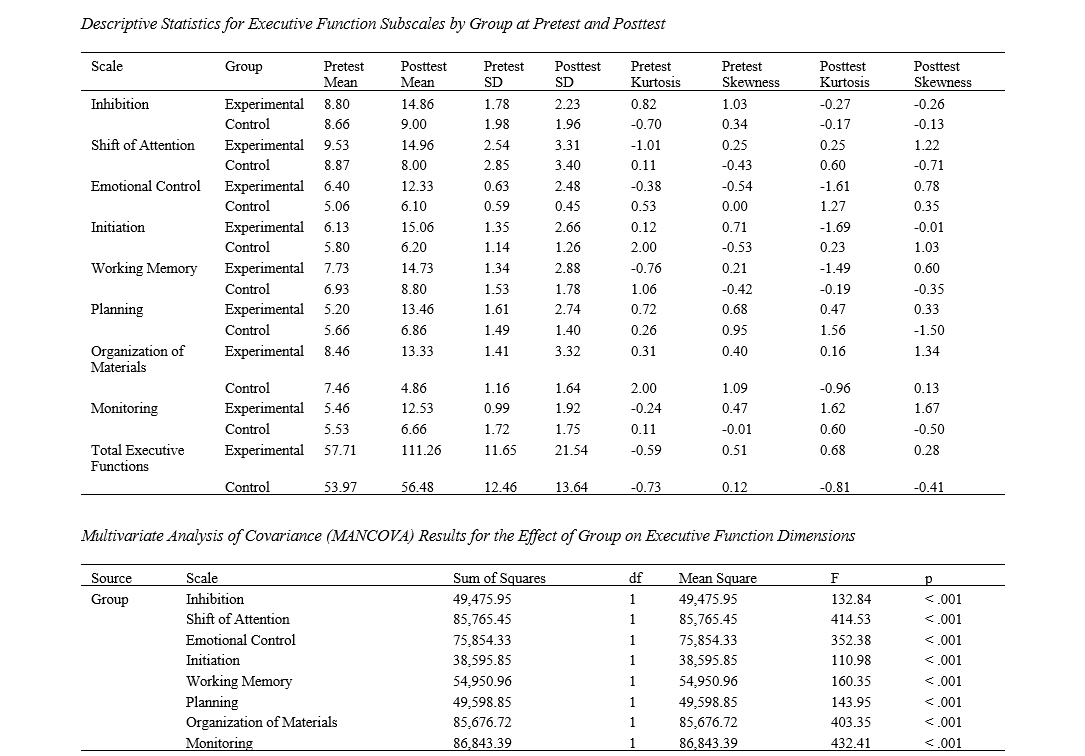
Findings: The results indicated that after the intervention, there was a significant difference between the experimental and control groups regarding the dimensions of executive functions (p < .01). Specifically, executive functions improved in the experimental group.
Conclusion: The findings suggest that Emotional Schema Therapy is effective in improving the cognitive-behavioral components of adolescents with emotional dysregulation. This therapeutic approach may serve as an effective intervention in counseling and treatment programs for adolescents.
Downloads
References
Ahmadi, F., & Kadkhodaei, M. (2023). Effects of Emotional Schema Therapy on Psychological Distress, Quality of Life, and Cognitive Emotion Regulation in Adolescents with Social Anxiety Disorder. Educational Psychology Skills Quarterly, 14(2), 1-15. https://journals.iau.ir/article_705486.html?lang=en
Anisi, J., Salimi, S. H., Mirzamani Bafghi, S. M., Raeisi, F., & Niknam, M. (2007). An Investigation of Behavioral Problems in Adolescents. Journal of Behavioral Sciences, 1(2), 163-170. https://sid.ir/paper/448352/fa
Bamelis, L. L., Evers, S. M., Spinhoven, P., & Arntz, A. (2014). Results of a Multicenter Randomized Controlled Trial of the Clinical Effectiveness of Schema Therapy for Personality Disorders. American Journal of Psychiatry, 171(3), 305-322. https://doi.org/10.1176/appi.ajp.2013.12040518
Ghaitasi, J., & Amani, A. (2025). The Effectiveness of Emotional Schema Therapy on Emotion Regulation Strategies in Adolescents with Oppositional Defiant Disorder. Research in Clinical Psychology and Counseling, 14(2), 5-28. https://doi.org/10.22067/tpccp.2024.77697.1316
Harmancı, P., & Yıldız, E. (2023). The Effects of Psychoeducation and Motivational Interviewing on Treatment Adherence and Functionality in Individuals with Bipolar Disorder. Archives of Psychiatric Nursing, 45, 89-100. https://doi.org/10.1016/j.apnu.2023.04.026
Jiang, Z., Xu, Z., Zhou, M., Zhang, H., & Zhou, S. (2025). The Mediating Role of Psychological Equilibrium in the Relationship between Dietary Variety and Self-Reported Health among Older Adults in Rural China. Scientific reports, 15(1), 4240. https://doi.org/10.1038/s41598-025-88835-2
Khakpour, R., & Paeizi, L. (2024). The Effect of Emotional Schema Therapy (EST) on Emotional Self-Regulation and Grief Symptoms. Psychology and Educational Sciences in the Third Millennium(34), 13-29. http://akhlagh.saminatech.ir/fa/Author/24319
Lazaridou, F., & Heinz, A. (2021). Perspective Chapter: Cultivating Environments of Belonging in Psychiatry, Clinical Psychology and the Allied Mental Health Fields. In Effective Elimination of Structural Racism. IntechOpen. https://doi.org/10.5772/intechopen.99925
Massen, J. J., Luyten, I. J., Spruijt, B. M., & Sterck, E. H. (2011). Benefiting Friends or Dominants: Prosocial Choices Mainly Depend on Rank Position in Long-Tailed Macaques (Macaca fascicularis). Primates, 52(3), 237-247. https://doi.org/10.1007/s10329-011-0244-8
Mohseni, N., & Ahadinezhad, H. (2002). Developmental Psychology: Fundamental Concepts in Adolescent and Young Adult Psychology (10th ed.). Pardis 57 Publishing. https://www.gisoom.com/book/1237241/کتاب-روانشناسی-رشد-مفاهیم-بنیادی-در-روانشناسی-نوجوانی-و-جوانی/
Saadatian, S., & Shirafkan, A. (2018). The Effect of Family-Centered Interventions on Parenting Styles and Happiness of Adolescents with Behavioral Problems in Mashhad. Ta'ali-e Mashavereh va Ravandarmani Quarterly (Excellence in Counseling and Psychotherapy). https://sanad.iau.ir/Journal/jci/Article/932276
Shahvarooghi Farahani, H. (2022). Prediction of Adolescent Social Skills Based on Parenting Styles and Incompatible Schemas of Parents. jnip, 13(17). http://jnip.ir/article-1-729-fa.html
Wang, Y., Ma, S., Yang, C., Cai, Z., Hu, S., Zhang, B., Tang, S., Bai, H., Guo, X., Wu, J., & Du, H. (2020). Acute Psychological Effects of Coronavirus Disease 2019 Outbreak among Healthcare Workers in China: A Cross-Sectional Study. Translational psychiatry, 10(1), 348. https://doi.org/10.1038/s41398-020-01031-w
Young, J. E., & Klosko, J. S. (2003). Schema Therapy: A Practitioner's Guide to Treating Emotional Disorders. Guilford Press.
Downloads
Additional Files
Publication Timeline
- Submitted
- Revised
- Accepted