Design and Validation of a Psychological Empowerment Program for University Students from Divorced Families
Keywords:
Parental divorce, psychological empowerment, university students, thematic analysis, psychological resilience, content validationAbstract
Objective: This study aimed to design and validate a psychological empowerment program grounded in the lived experiences and specific psychosocial needs of university students from divorced families.
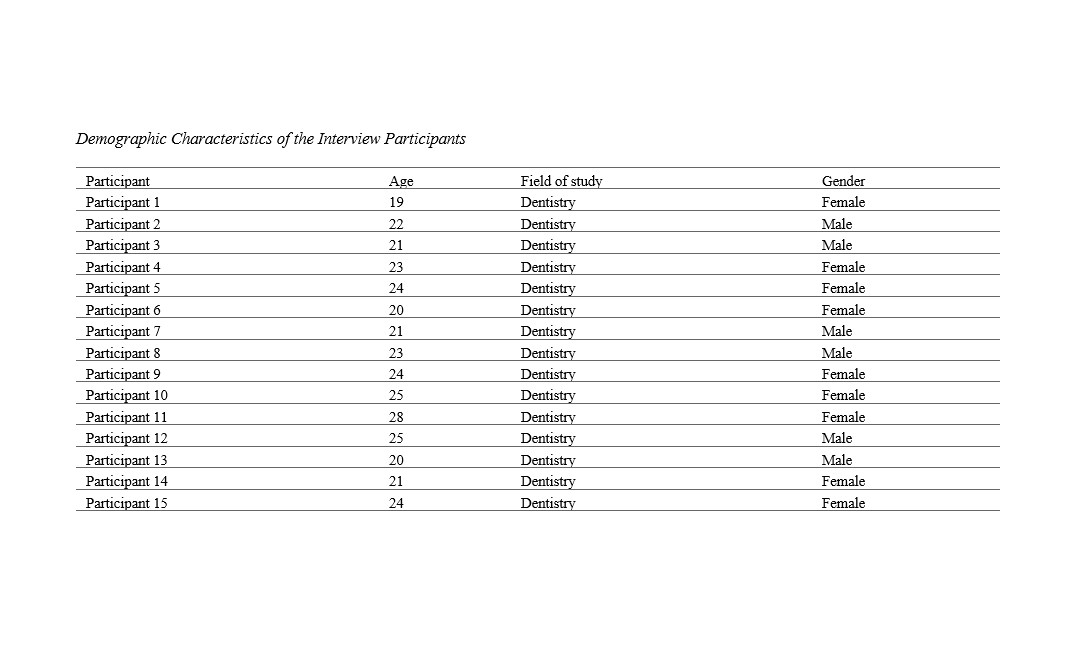
Methods and Materials: The study employed a qualitative developmental design. Participants included 15 dentistry students from divorced families, aged 19–28 years, who were selected through purposive sampling, with recruitment continuing until thematic saturation was reached. Data were collected through in-depth semi-structured interviews addressing the psychological, emotional, relational, social, educational, and economic consequences of parental divorce. The interview transcripts were analyzed using thematic analysis based on Attride-Stirling’s thematic-network approach with the assistance of MAXQDA software. The extracted themes were integrated with relevant psychological theories and intervention models to develop a ten-session psychological empowerment program. Content validation was subsequently conducted by 12 experts in clinical psychology, counseling, health psychology, and family studies. Expert judgments concerning necessity, relevance, clarity, simplicity, sequencing, and feasibility were examined using the Content Validity Ratio and Content Validity Index.
Findings: The analysis generated 397 initial codes, which were consolidated into 79 basic themes, 15 organizing themes, and five global themes: the lived experience of difficulties associated with parental divorce, psychological resilience, strengthening communication skills, personal and cognitive development, and development of social support. These themes informed ten intervention sessions focused on acceptance, resilience, cognitive reconstruction, communication, coping, self-compassion, future planning, support-network development, integration, and maintenance. In the initial validation, the overall Content Validity Ratio was 0.72 and the Content Validity Index was 0.89. Following expert-recommended revisions, all sessions exceeded the required validity threshold, while the overall indices increased to 0.73 and 0.91, respectively.
Conclusion: The developed program demonstrated adequate conceptual coherence and content validity and provides a multidimensional, context-sensitive framework for strengthening psychological empowerment among university students from divorced families.
Downloads
References
Eslami, M., Haj Hosseini, M., & Ejjei, J. (2017). Hope in the Attitude of Single-Parent Students: Children of Divorce. New Educational Thoughts, Faculty of Educational Sciences and Psychology, Alzahra University, 13(2), 25-52. https://jontoe.alzahra.ac.ir/author.index?vol=0&vl=%D9%87%D9%85%D9%87%20%D8%AF%D9%88%D8%B1%D9%87%20%D9%87%D8%A7
Gholami, A., Rashid, K., & Yarmohamadi, M. (2019). Formulation of training protocol for treating with children of divorce for mothers and its effect on the mothers' behavior. Knowledge & Research in Applied Psychology, 20(77), 44-54. https://www.magiran.com/p2028877
Gorjinpor, F., Alipour, G., Jelveh, M., & Abdi, M. (2020). Effectiveness of compassion-focused therapy in enhancing self-esteem and functional flexibility of children of divorce. Applied Family Therapy Journal (AFTJ), 1(2), 1-22. https://journals.kmanpub.com/index.php/aftj/article/view/236
Guttmann, J., & Rosenberg, M. (2003). Emotional Intimacy and Children's Adjustment: A comparison between single-parent divorced and intact families. Educational Psychology, 23(4), 457-472. https://doi.org/10.1080/01443410303213
Hatami Varzaneh, A., & Imani, Z. (2025). Representation of the Lived Experiences of Children of Divorced Women in the Process of Mothers' Potential Remarriage: A Qualitative Study in a Cultural Context.
Hoseini Yazdi, S. A., Mashhadi, A., Kimiaee, S. A., & Asemi, Z. (2015). Effectiveness of Children of Divorce Intervention Program (CODIP) on externalized and internalized problems in children of divorce. Iranian Journal of Family Psychology, 2(1), 3-14. https://sid.ir/paper/250013/fa
Hoseini Yazdi, S. A., Mashhadi, A., Kimiaee, S. A., & Asemi, Z. (2021). Effectiveness of Children of Divorce Intervention Program (CODIP) on externalized and internalized problems in children of divorce. Journal of Family Psychology, 2(1), 3-14. https://www.ijfpjournal.ir/article_245500_63e8e2e7557228f2f62dffe704935ef6.pdf
Hosseini Yazdi, S. A., Asemi, Z., & Kimiaei, S. A. (2015). The Effectiveness of an Intervention Program for Children of Divorce on Improving Self-Concept and Increasing Resilience. Educational Psychology Skills, 6(2), 48-58.
Khandandel, S., Mohammadzadeh, R., Abbasi Asfajir, A. A., & Sadeghi, J. (2023). Investigating the psychological status of children of divorce in adulthood using a qualitative method. Journal of Adolescent and Youth Psychological Studies (JAYPS), 4(5), 36-46. https://doi.org/10.61838/kman.jayps.4.5.4
Miralles, P., Godoy, C., & Hidalgo, M. D. (2023). Long-term emotional consequences of parental alienation exposure in children of divorced parents: A systematic review. Current Psychology, 42(14), 12055-12069. https://doi.org/10.1007/s12144-021-02537-2
Moradi, S., & Akhani, E. (2020). Comparison of psychological disorders among the children of divorce and their normal peers. Rooyesh-e-Ravanshenasi, 8(11), 111-118. https://frooyesh.ir/article-1-1273-fa.html
Ramazanzadeh, S., Etemadi, A., & Asenjarani, F. (2023). Effectiveness of the Intervention Program for Children of Divorce on Children's Perceptions of Parental Divorce: A Single-Case Study. Applied Psychology, 17(1), 127-149.
Soleimani, S., Amirfakhrayi, A., Karamati, K., & Samavi, A. (2022). The Effectiveness of Integrated Psychoeducational Therapy on the Lack of Pleasure Seeking and Emotional Expressiveness in Children of Divorced Parents in Bandar Abbas. Journal of Disability Studies, 12. http://jhpm.ir/browse.php?a_id=1183&sid=1&slc_lang=fa&ftxt=0
Soleymani, S., Amirfakhraei, A., Keramati, K., & Samavi, A. (2020). Comparison the Effectiveness of “Cognitive Behavioral Treatment” and “Unified Trans diagnostic Treatment” on Emotional Expression and Fear of Intimacy in Children of Divorce. jhpm.ir, 9(6), 83-95. http://jhpm.ir/article-1-1183-en.html
Sorek, Y. (2019). Children of divorce evaluate their quality of life: The moderating effect of psychological processes. Children and Youth Services Review, 107, 104533. https://doi.org/10.1016/j.childyouth.2019.104533
Vahedi, S., Haji Mir Aqa, M., & Najarian, Z. (2021). Effectiveness of Positive Psychology-Based Intervention on Internalized Problems in Children of Divorce. Family Psychology Biannual, 8(1), 34-46. https://www.ijfpjournal.ir/article_247982.html
Zolghadri, S., Borjali, A., & Hoseinsabet, F. (2024). The Effect of Acceptance and Commitment Group Therapy on the Psychological Well-being and Happiness of Children of Divorce. Journal of Applied Psychological Research, 15(3), 371-387. https://japr.ut.ac.ir/article_95162.html?lang=en
Downloads
Additional Files
Publication Timeline
- Submitted
- Revised
- Accepted